
Note From George
This is a fast-moving story. Numbers and quotes below are current as of Friday morning. We’ll update if the picture changes before Wednesday.*
Here’s the number that should stop you scrolling: 102,000.
That’s how many Canadian jobs disappear if CUSMA breaks down, according to a new Oxford Economics report prepared for the Canadian American Business Council. On the other side of the ledger - if Carney’s team gets a renegotiated deal - Canada adds 98,000 jobs instead. South of the border, the swing is even bigger: 214,000 American jobs lost in a breakdown scenario, 137,000 gained in a good deal.
Add it up and you get a 351,000-job swing for the US and 200,000 for Canada, decided inside the next few days.
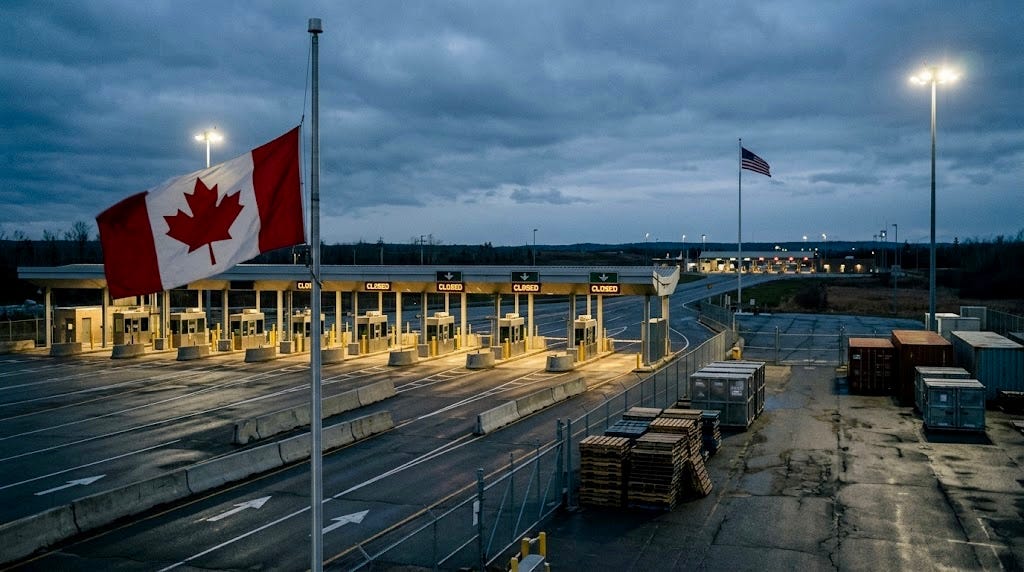
Wednesday is the hard deadline. That’s when the Trump administration’s Section 338 tariffs on billions in Canadian exports are scheduled to hit - unless something changes before then.
**What we know is happening.** US Trade Representative Jamieson Greer met with Canadian negotiators Thursday and came out using language he hasn’t used before. Trump and Carney will “now be given options,” he told CBC News, calling the talks “good” and “cordial.” That’s a notable shift in tone from an administration that’s spent months treating Canada as a tariff target rather than a negotiating partner.
The media leaks back it up. Word is the administration may stand down on the Section 338 threat entirely and instead reduce existing Section 232 tariffs - the ones hitting autos, steel, aluminum, copper, and softwood lumber. One proposal floating around: cut the 25 percent tariff on autos, trucks, and parts down to somewhere between 10 and 15 percent.
**What Canada’s offering in return.** This is the part that should get more attention than it’s getting. Ottawa has reportedly proposed getting the provinces to drop their bans on selling US alcohol, and to amend dairy import quotas - both in exchange for lower Section 232 rates.
Comments
Nothing yet. Say the first thing.
Sign in to join the conversation.