
A note before we start.
Dear reader,
I want to explain why I’m running this as a Special Report, because I think it matters.
Most of us have grown up believing our healthcare system is one of the things that makes Canada, Canada. Universal coverage, care based on need and not on money. That’s a value worth protecting, and I’m not writing this to talk anyone out of it.
But here’s what I keep coming back to. The doctors leaving aren’t burned out because they stopped believing in universal care. They’re leaving because the system underneath that idea hasn’t been rebuilt in decades, while the number of people relying on it keeps growing. You can hold onto the principle and still admit the machinery running it needs work. Those aren’t opposites. In fact, protecting the principle might require fixing the machinery, not defending it exactly as it is.
I also think this stopped being a medical story a long time ago. Doctors can’t rebuild how the system is funded. Nurses can’t tear down the walls between provinces that stop a licensed professional in one place from working in another. Only the people we elect can do that — which means every year this goes unfixed isn’t a mystery. It’s a choice somebody made, or avoided making.
So this report isn’t an argument for privatizing Medicare or walking away from what it stands for. It’s an argument for asking why a system we all pay for, and largely still believe in, keeps producing outcomes this bad — and for looking honestly at places where a different design gets better results without abandoning the same values. I think that’s a conversation worth having before the next headline like this one.
Given what’s at stake here, this report is free for everyone, no paywall. Some stories matter more than the subscriber count.
If you want to see more coverage like this — the healthcare system, and the other stories that actually affect your life instead of just the news cycle — going paid is what makes that possible.
— George
One in 10 ER Doctors Are Leaving — And the System Was Built to Get Here
Politicians have known about this for years. The question isn’t whether Canada’s healthcare system is broken. It’s whether the way we’re trying to fix it can ever catch up to how fast it’s breaking.
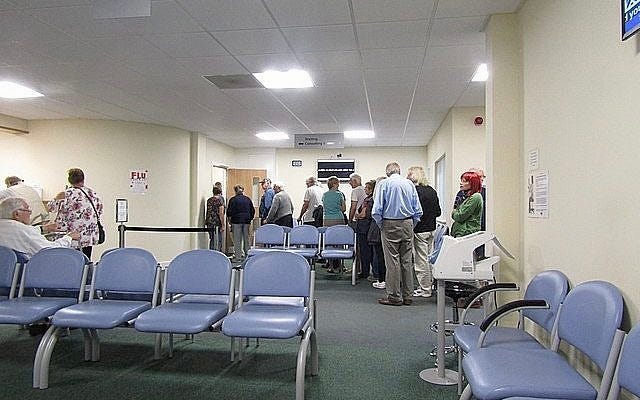
A new national survey published in the Canadian Medical Association Journal found that 10% of Canadian emergency physicians have already left the specialty, 48% have cut back their hours, and 20% have taken time off — with the highest attrition among women and younger doctors, the ones who should have decades of practice ahead of them. CMAJ’s deputy editor didn’t mince words: Canada’s 50-year investment in building a specialized emergency medicine workforce “could be squandered.” One Vancouver ER doctor described a patient who nearly died after waiting eight hours in a packed waiting room in septic shock. Another recalled delivering a cancer diagnosis in a hallway because there was no private room available.
This isn’t a new alarm. It’s the same one that’s been ringing for decades, just louder. And you don’t need an ER story to see it. Someone close to me has arthritis in her hip. A cortisone injection has worked before — quick, effective, done. This time: a week just to get the doctor’s referral. Then the clinic that actually administers the shot said it would take another week before anyone even looks at the fax the doctor sent over. Two weeks of a person in pain, for a treatment everyone involved already agrees she needs, lost entirely to paperwork moving at the speed of a fax machine. That’s not a crisis. It’s just what “working as designed” looks like now — and it’s the same disconnect that, scaled up and left untreated, turns into the emergency department numbers above.
Why hasn’t this been fixed — when everyone in Ottawa and every provincial capital has known for years?
The honest answer is structural, not just political. Healthcare has been a provincial responsibility since the Constitution Act of 1867, which means any national fix requires ten-plus governments to agree on something politically painful, and Canada’s federal system is built for compromise, not speed — researchers studying the system have described it as effectively “frozen in time” as a result. Ottawa and the provinces spend as much energy fighting over who should pay — the federal government currently covers about 22% of healthcare costs through the Canada Health Transfer, provinces want that closer to the historical 35% — as they do fixing delivery.
And the money argument, the one politicians reach for first, doesn’t actually explain the failure. Canada spends close to $400 billion a year on healthcare — roughly 12.5% of GDP, among the highest shares in the OECD, well above Australia, the Netherlands, and most European peers. Despite that spending, Canada has some of the longest wait times, the fewest doctors per capita, and among the lowest numbers of hospital beds in the developed world. The problem isn’t that we’re cheap. It’s that the money is aimed at the wrong target — funding institutions and procedure volume rather than patient outcomes, which means a system that reacts to crises instead of preventing them.
Is this a collision course — capacity that takes years to build against demand that’s growing faster?
Yes, and the numbers make the timeline uncomfortably clear. A hospital construction project typically takes five-plus years from planning to opening. Meanwhile, Ontario’s population aged 65 and over — the group that uses the system most — is growing at twice the rate of the rest of the province. One recent hospital-system report found Ontario needs a 22% increase in both bed capacity and staffing over the next four years just to keep pace with an aging, growing population; the government’s actual trajectory is under 4%. Health administrators in fast-growing regions have said it plainly: capital projects are “phased with different timelines, meaning capacity will come on gradually rather than all at once,” while demand doesn’t wait for phase two. Nationally, hospital construction spending is projected to keep climbing through the rest of the decade — but pouring concrete faster still can’t outrun a population that’s aging and growing at the same time.
So yes: unless something changes in how demand itself is managed — not just how many beds get built — this is a race capacity was never going to win on brick-and-mortar alone.
A tale of two diagnoses
Picture a woman who finds a lump and gets referred for a suspected breast cancer workup. Here’s what happens next, in each country.
In Canada: One documented case — a B.C. patient whose story became public — took about 10 weeks from her first hospital visit to diagnosis and surgery. That part wasn’t the failure. What came after was: she then waited eight more weeks for her first oncology appointment, and another three weeks for test results. By the time she got them, the cancer had spread to her bones and lungs. Canada’s own national benchmark says 90% of cancer patients should see an oncologist within four weeks of referral. In B.C., only about half actually do — and for the slowest 10% of patients, the real wait to see an oncologist runs eight to ten weeks, not four.
In Germany: Population studies of breast cancer patients there put the median time from a patient first walking into a doctor’s office to the start of actual treatment at 15 days — two weeks, not two-plus months.
Same disease. Same urgency. The Canadian system isn’t failing because the surgery or the doctors are worse. It’s failing in the gap between diagnosis and the next step — the queue for an oncologist, sitting open while the disease doesn’t wait with it.
How Germany actually enforces that four-week limit
The short answer: they built a legal obligation and gave it an owner. Canada has neither.
Germany’s outpatient system is organized into 17 regional physician associations called Kassenärztliche Vereinigungen (KVs). Each one carries a specific legal duty called the Sicherstellungsauftrag — a statutory obligation to guarantee adequate medical care in its region. That’s not a mission statement. It’s a legal responsibility assigned to a specific organization, the way a utility company is legally on the hook for keeping the lights on.
In 2015, Germany passed a law — the Terminservice- und Versorgungsgesetz — that gave that obligation teeth for wait times specifically. It created the Terminservicestelle, reachable through the 116117 hotline, and made it legally mandated to find any patient with an urgent, coded referral a specialist appointment within four weeks. If the assigned KV can’t produce one, the law requires it look outside its own network — even into hospital outpatient departments — until it does. The patient doesn’t get to choose the doctor, but the four-week clock is not optional for the system to meet.
Canada has the opposite setup on every count. The wait-time “benchmarks” — four weeks to see an oncologist, four weeks for radiation to start — were adopted in 2004 as a voluntary agreement among the provinces’ first ministers. No law backs them. No single body is legally on the hook for missing them. And there’s no equivalent of the 116117 safety valve — no service any patient in Canada can call that is legally required to find them care within a set window if their own hospital can’t. When a Canadian benchmark is missed, as it is for nearly half of B.C. cancer patients, nothing happens. There’s no penalty, no enforcement, no accountable party — just a number on a report that gets published and then explained away in a press release.
That’s the actual gap. It’s not that Germany has more doctors or more money. It’s that Germany turned “patients shouldn’t wait too long” into an enforceable legal duty assigned to a specific organization, and Canada turned the same idea into a voluntary target nobody is required to hit.
On the “not my job” problem — this is real, and it’s already starting to change
This is where interjurisdictional and scope-of-practice barriers do measurable damage. For years, a paramedic trained and certified to stitch a minor wound couldn’t do it in the field — the patient got loaded into an ambulance and driven to an ER instead, tying up a bed and a doctor for something that didn’t need either. A pharmacist capable of prescribing for a minor ailment couldn’t, so that patient went to a walk-in clinic or an ER too. A nurse practitioner licensed in Nova Scotia couldn’t practice in Ontario without months of re-registration, even during a staffing crisis.
Some of that is finally moving. Ontario’s “As of Right” framework now lets doctors and nurses licensed in another province start working within 10 business days, and as of this year extends that same fast-track to 16 more regulated professions — dentists, optometrists, pharmacists, midwives, and more. Ontario has also expanded pharmacists’ scope to prescribe for common ailments and administer more vaccines — more than 2 million Ontarians have already used an expanded pharmacy service, taking pressure off walk-in clinics and ERs. Saskatchewan is consulting on letting paramedics stitch wounds and nurse practitioners admit and discharge hospital patients directly. These are exactly the kind of “it’s not my job” walls the system needs torn down — not because any one professional isn’t willing, but because outdated licensing rules never let them do the job they’re actually trained for.
What actually needs to happen
Three things, based on what’s shown results elsewhere: fund the system around patient outcomes instead of institutional activity, the way Germany does. Give Canada’s own wait-time benchmarks the legal force Germany’s have — an enforceable maximum with an accountable body behind it, not a voluntary target with no consequence for missing it. And stop trying to build our way out of a demand problem with concrete alone — every dollar spent expanding what pharmacists, paramedics, and nurse practitioners are legally allowed to do relieves pressure faster than any hospital wing that won’t open until 2030.
The doctors leaving aren’t the ones nearing retirement. They’re three, five, ten years into their careers, walking away from jobs they trained for because the system underneath them was never built to hold. That’s not an inevitability. It’s a choice governments have been making, one delay at a time, for decades — and it shows up everywhere from a packed ER to a fax machine nobody’s looked at yet.
If this report matters to you, help it travel further than it will on its own — share it with someone who’s waited too long for care, or who still needs to see the case for change.
If you want more coverage like this — the stories that actually affect your life, not just the news cycle — going paid is what makes that possible.
And if you’ve lived this, or you see it differently, say so. Comments are open and I read every one.
No posts
Comments
Nothing yet. Say the first thing.
Sign in to join the conversation.