
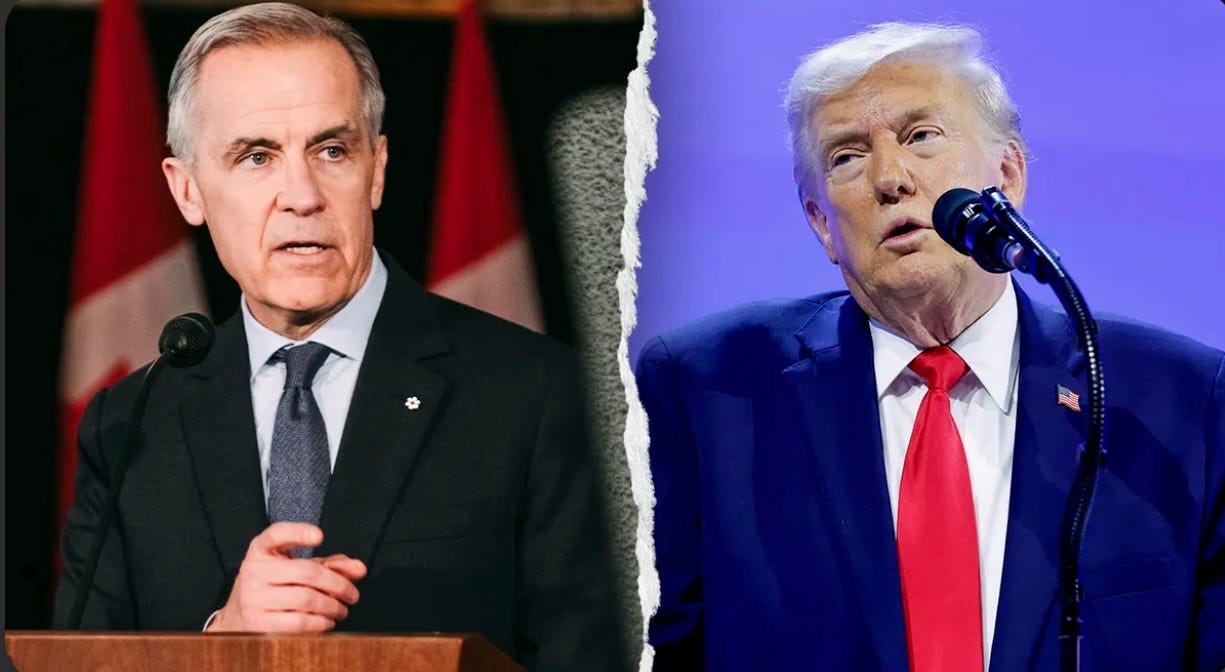
Two days before U.S. President Donald Trump’s tariff deadline hits, Monday delivered two developments that only make sense together.
In St. John’s, Prime Minister Mark Carney stood alongside Newfoundland and Labrador Premier Tony Wakeham and Quebec Premier Christine Fréchette to announce a new Churchill Falls energy agreement - replacing the 1969 contract that saw Quebec buy Labrador hydro power at rock-bottom prices for more than half a century. Ottawa is calling it the largest clean energy investment in North American history, valued at nearly $70 billion. The package includes $10 billion in federal financing to expand the Churchill Falls generating station, build the long-discussed Gull Island hydroelectric project, construct new transmission lines, and add a 2,000 megawatt onshore wind project in Labrador. Together, the projects will nearly triple Churchill Falls’ current output - enough new power to light, heat, and cool every home in Toronto, Montreal, and Vancouver combined - and are expected to support 23,000 jobs.
Buried in the technical details is the line that matters most for Washington: the deal locks in guaranteed transmission access of 985 megawatts through Quebec, letting Newfoundland and Labrador sell Churchill River power into markets beyond Canada’s borders. Massachusetts has already been floated as one potential buyer. That’s not incidental. Hydro-Québec is facing a tightening domestic supply picture of its own, and demand tied to artificial intelligence and data centre growth is straining electricity grids on both sides of the border. Churchill Falls now represents new export capacity aimed squarely at that U.S. shortfall.
Carney made his intentions explicit: when he speaks with Trump, Churchill Falls comes up first, before trade. It’s a deliberate sequencing. Lead with what Canada can offer - a massive, reliable new power source at a moment U.S. demand is outpacing supply - before getting into what Canada wants relief from.
That trade conversation is already underway, and Monday’s session in Washington carried more weight than the rounds that came before it. Commerce Secretary Howard Lutnick joined U.S. Trade Representative Jamieson Greer at the table with Canada’s Dominic LeBlanc and chief negotiator Janice Charette - the first time he’s sat in on this stage of the talks. The distinction matters: Greer’s office has led the broader negotiations for weeks, but it’s Lutnick’s department that holds formal, direct authority over the Section 232 tariffs on steel, aluminum, autos, and forest products - the two areas identified as the real sticking points in the “phase one” deal under discussion. Greer can negotiate around those issues; he can’t unilaterally move them. Lutnick can.
His arrival now, two days before the deadline and at the session expected to produce the “options” going to Carney and Trump, is not a routine check-in. It suggests Washington may be preparing to actually move on autos and metals rather than run out the clock to Aug. 19 - and it raises the stakes if talks stall anyway, since the person with sign-off authority was in the room.
The expected next step: today’s session concludes, options go to both Carney and Trump, and the two leaders speak directly. Carney has said repeatedly he won’t accept a “bad deal.” Whether Churchill Falls softens the ground before that call remains to be seen. Two days to the deadline.
This is a developing story. We’re tracking both threads closely and will post updates as they warrant.
No posts
Comments
Nothing yet. Say the first thing.
Sign in to join the conversation.