
You’re going to get sick like me. But when you do, Mommy can take you to Dr. Haller, too, and get you medicine, and it will make you better. That’s what my sister told me—after I got raped for the first time at 8 years old, after I confided in her, “Daddy did to me what he did to you.” Our tiny bodies were huddled underneath his computer desk, nestled in the corner of the basement he lived in, treating it like a storm shelter from his inevitable return. “He raped you?” she replied, eyes wide. It was my second time ever hearing the word, the first being when she’d screamed it at our father in a meltdown two years prior, when I was only 6, when I had witnessed it once but not known what I’d witnessed. This time, having experienced it, the context clues were enough to infer the word’s meaning. A bit uncertain, still, I nodded my head. “With his penis?” She asked. “With his fingers,” I whispered back—because when he had tried to put his penis in, I cried in pain and pleaded for him to stop, and he offered his fingers as an alternative, a “compromise” of sorts. “That’s not rape,” my sister replied, matter-of-factly. A precocious 9 year old, soon to be 10, she had somehow located the definition of rape on the internet all by herself as a means of putting words to what was happening to her, and perhaps 20 years ago the definition had not yet been specified to include any and all forms of forced penetration. My 8 year old self conceded to the authority of my older and wiser sister, who we used to call “a walking dictionary,” though to be honest, I truly didn’t care what the precise meaning of this new word was, I simply cared that something terrifying had just happened to me, something I’d seen before, but still couldn’t begin to understand. Her insistence, “That’s not rape,” functioned briefly as a reassurance of sorts, that perhaps what had happened to me wasn’t as bad as whatever had previously happened to her. Yet moments after this declaration, her entire disposition wilted like a dying flower. She went silent, and got small, so incredibly small, before telling me “I’m sorry,” refusing to look me in the eye as she sunk her head down, repeating, “I’m sorry,” and beginning to cry for me. She thought she could have protected me, I think. I know, in fact—that in “letting” herself be sacrificed to my father God knows how many times, she believed she was protecting me actively, protecting my body from being sacrificed like hers. Little did she know, it was only a matter of time. I didn’t quite understand her remorse because I didn’t quite understand just how bad the act was yet, and how bad could it be, really, if it was coming from our loving father? She repeated, “I’m so sorry,” as she cried, as I received it all with a blank stare, frozen, devoid of feeling. Then, in a flash, she pulled herself together, shut off her tears, and moved into pure business mode—as if my teacher, some kind of wise elder, in the way older kids seem to hold so much more knowledge, such vaster life experience, despite being alive a mere 16 months longer than me—and that’s when she warned me, with utmost certainty, “You’re going to get sick like me.”
“But when you do, Mommy can take you to Dr. Haller, too, and get you medicine, and it will make you better. And eventually, you’ll forget about this, and things will be normal again,” she assured me, “I’ll be here for you.” And by that point, she was really all I had left. I had already taken the possibility of ever telling our mother off the table. Two years prior, when I’d first walked in on my father raping my sister, when my world shattered before my eyes, every instinct in my 6 year old body screamed out the necessity to tell our mother. “What was that?” I had asked my sister when I first found her afterwards, and she simply explained, “Daddy does this when he misses Mommy. He does it to me because I look like her,” to which I replied, “We need to tell Mommy.” She immediately freaked out, a panic I’d never seen before blazing behind her eyes, before fiercely threatening to kill herself if I ever said a word. “If you tell anyone, I’ll kill myself,” she blurted out. And I believed her, of course. It was the first time I ever heard of the concept of suicide, only 6 years old, but I knew what kill meant. It meant my sister would die. It meant if I ever spoke on what I had seen that day, my sister would die. And I couldn’t risk my sister dying. Thus, I couldn’t risk speaking. I shut up for a decade, believing my words had the power to kill. And when my father raped me for the first time, he piled on the threats even further—“If you tell anyone, Daddy will go to jail, and Mommy will never be happy again.” Now, my silence was keeping not only my sister safe, but the entire family. Keeping my mother happy, keeping my father free, and keeping my sister alive. It was all resting on my shoulders, all resting on my silence. Everyone I loved most, their fates entirely dependent on my secrecy. No sweat.
At that age, I didn’t know much about the world, but I believed what these older and wiser people had to say, and to not heed their warnings—or threats—would have been unthinkable. With only 6 years of emotional development, of course I believed it was possible for someone to be so utterly changed by an event so heartbreaking they’d never experience joy another day in their life. I believed my father was merely protecting my mother’s happiness. I knew my own happiness, the next decade of my childhood ahead of me, would inevitably be coloured by my mother’s happiness, or lack thereof. The idea of my mother never smiling a single smile again? It would have crushed me, plagued me with guilt, and shrivelled up my entire future. It was easy enough for me to understand that my wellbeing, to a large degree, rested on her wellbeing. As kids, our caretakers hold that kind of power. Equally, my father convinced me that “letting” him rape me was the key to his own happiness, and who was I to deny him that? In an enmeshed family, the happiness of one is the happiness of all. I just wanted my parents to be happy. I just wanted to be a good kid—a good sister, too. I wanted to keep the people in my life happy, keep them safe, and keep them alive. A mighty task at just 6, but I managed.
I kept my mouth shut as I watched my sister deteriorate over the next few years, having regular “meltdowns,” sobbing daily, and eventually being taken to the child psychiatrist bi-weekly. One of the first times she was brought there, in the early stages of their assessments, they invited me in to join her for play therapy, to observe how she played with her younger sister with toy figurines in the sandbox—a group of little plastic people that were supposed to signify different family members, for the sake of gleaning insights into our family dynamics based on our play decisions. “Show us your family,” they instructed us. We laid out four figures in a happy grouping and introduced them as the two of us kids, our mother, and our stepfather. “Where’s your father?” the psychiatrist then asked us. Upon being directed to include him in the scene—otherwise, we never would have—we grabbed one more figurine, turned him upside-down, and buried his head face-down into the sand, in the furthest corner of the opposite end of the sandbox. No hesitation. An easy decision. A message, loud and clear. We snickered to ourselves, giggling in our shared knowing of two kids with an inside joke, which I’m sure they may have written it off as, if not for the palpable darkness in the air. If not for the looming, undeniable truth hanging over our heads like a storm cloud. When kids don’t have the words yet, or are barred from saying them, they find other ways to tell the truth. We told the truth.
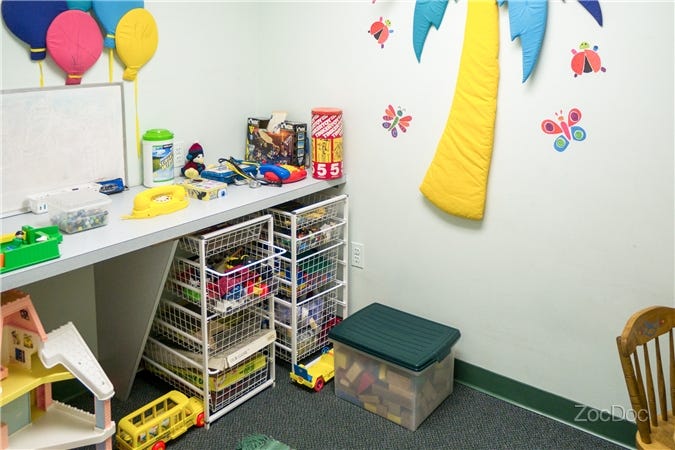
“These kids have a major issue with their dad,” Dr. Haller reported back to our mother after the session. That was obvious. Still, he didn’t press her with any of the important follow-up questions, and our mother wrote off our display—because she knew that already. Of course she knew we had a major problem with him, in our weekly pleas to please, please not send us off to him—because we simply didn’t like him, because he was mean, she told herself. “Mean” was our most commonly used descriptor for the man. But how mean could a father really be for his kids to hold such a grudge, to lead them to wordlessly act out their revenge fantasies in a sandbox, in silent, mutual understanding? Kids tend to be quite forgiving, if you can recall. Kids find ways to keep loving you, through thick and thin, to keep idealizing you, in fact, unless you do something really, really bad. It’s too bad these adults were all so clueless, too delusional to see the writing on the walls. Were they, though? Or could they see it all? Could they see it all, clear as day, out in the open—as incest always is—and still be blinded by a truth so glaring it was able to make them deny their clear vision just as quickly? To make them forget, just as quickly as the pills they shoved down our throats made us forget?
I watched my sister take pills every morning for over a year, made to believe she was sick—inherently, tragically sick—until the fated day of my first rape came, when she connected the dots for me, when she told me my future like a fortune teller. At age 9, going on 10, my sister knew deep down what had caused her sickness. “You’re going to get sick like me,” she declared directly after I disclosed my rape. She drew out the causal relationship intuitively, as if it was the most obvious fact in the world. Rape makes you sick. Like an infection, you can’t reverse it. All you can do now is take pills to dilute the symptoms, to keep the infection subdued, to keep it from spreading, overtaking your entire body, your entire life, to keep it from flaring too visibly, giving itself away too loudly, like a rash written all over your face. Take the pills to manage it. Take the pills to hide it. My sister drew a clear connection at age 9 that to this day, psychiatrists who spend a decade in higher education are still either too slow, or too brainwashed, to recognize. The simple truth a child could discern from the basic reality of living in her own body. It was a simple truth that proved true for me, too, like clockwork. Like prophecy. I got sick. I got sick in the same way my sister got sick, haunted by disturbing intrusive thoughts that followed me as soon as I was alone in my bedroom each night, plagued by visions that got labelled “OCD,” and got me a prescription for Lexapro.
I think? Or was it Mirtazapine? No, wait, it was both—they told me they’d work better together.
Comments
Nothing yet. Say the first thing.
Sign in to join the conversation.