
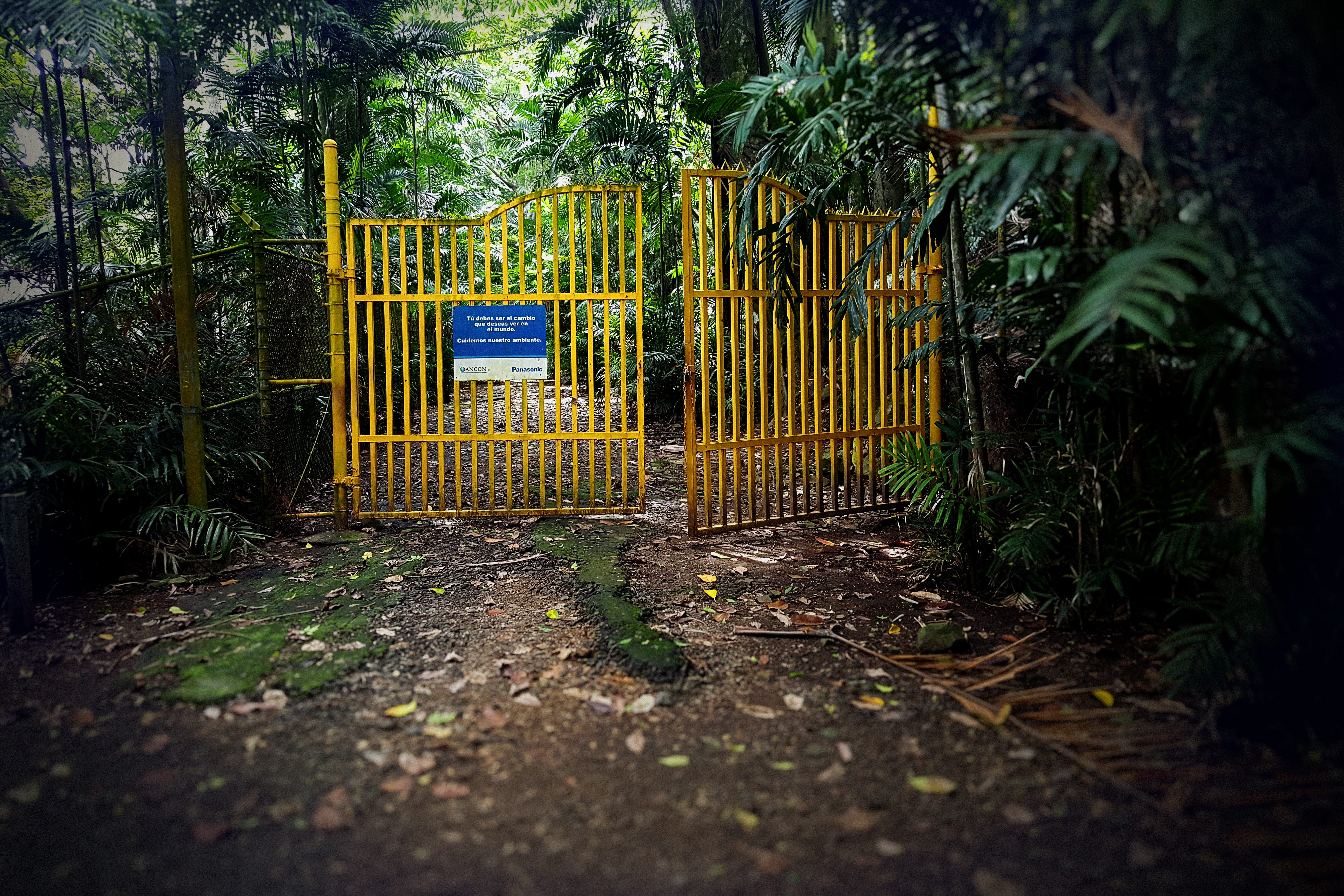
There is a question that follows former Canal Zone residents for the rest of their lives.
Where are you from?
It sounds simple. It never is. The passport says one thing. The memory says another. And somewhere between those two answers lives the Canal Zone — a place that shaped people so completely that decades later, a hard rain, a frozen treat with crema, the smell of something tropical and half-remembered, can bring it back without warning.
I moved to Quarry Heights in 1981, eleven years ole brat, arriving in the tropics for the first time. I didn’t know then that the next several years would become the frame through which I’d measure everything else. Most of us didn’t know. It was just another Tuesday.
What follows are four accounts of the Canal Zone. They span forty years of its existence. They come from people who lived in different communities, under different circumstances, with different relationships to the place and to Panama itself. They are not the same story. But they are, unmistakably, the same experience.
Cocoli, Fort Kobbe, Curundu / 1943–1953
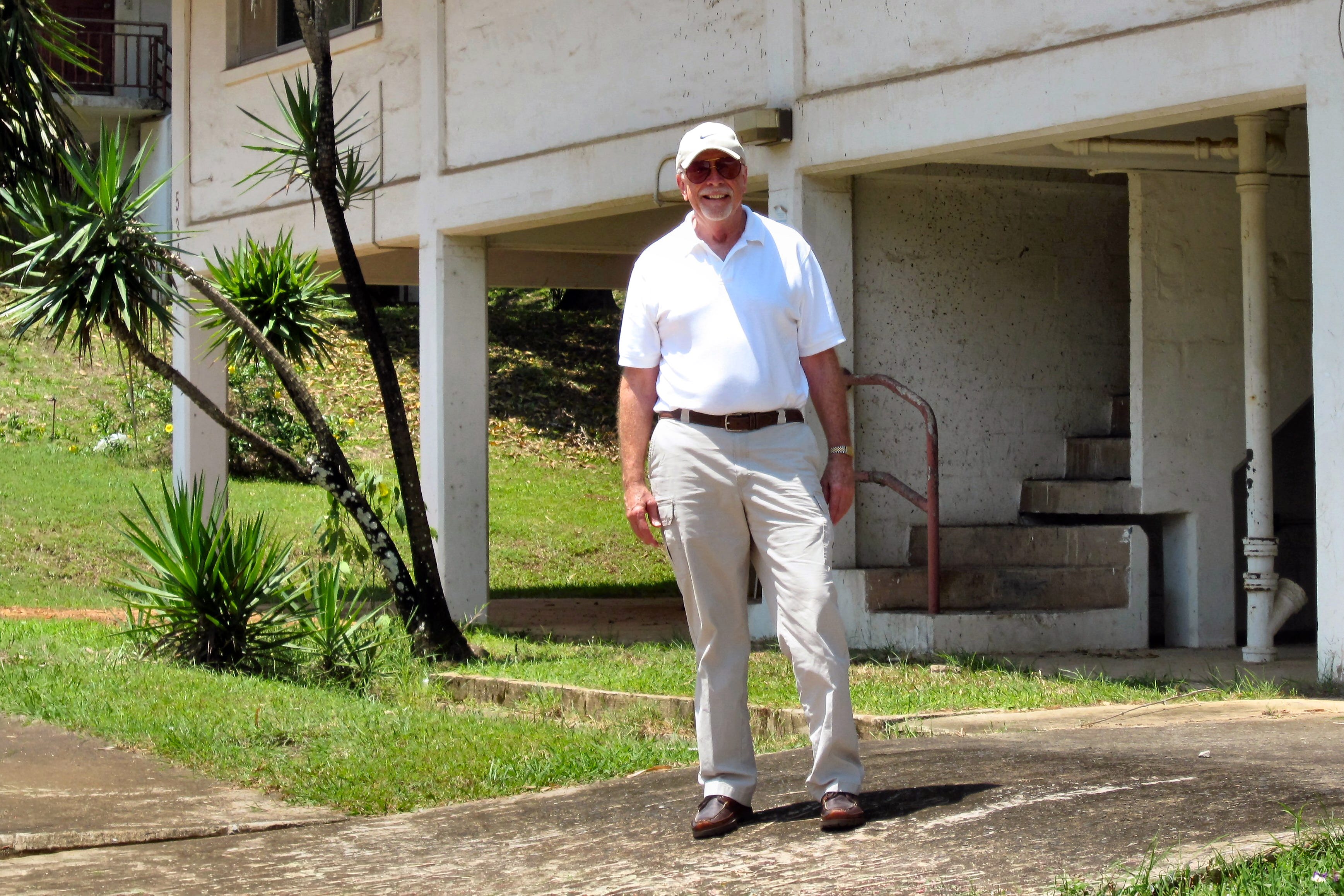
The Canal Zone ran in Carlos Miller’s blood before he ever set foot there.
His grandfather, Ora Miller, had arrived in Panama in 1903 as an engineer in the U.S. Army Quartermaster Corps, dispatched to the construction project that would reshape the world’s shipping lanes. There he met Hilda von Lindeman, a Panameña, and married her in 1907. Over the next two decades they raised seven children. The Millers were first-generation Canal Zonians.
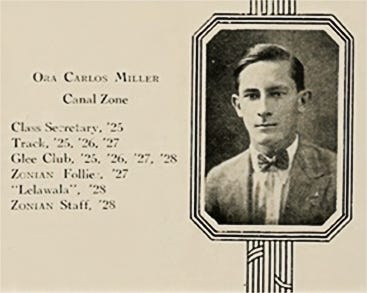
Carlos’s father, Carlos Ora Miller, was the oldest of those seven. He graduated from Balboa High School in 1928. He married an American woman, Norma Ledson, and their son Carlos was born in Los Angeles in 1938. But Panama had a way of pulling people back.
Shortly after the United States entered World War II, Carlos’s father returned to the Isthmus, his bilingualism making him a valuable asset to the U.S. government’s Institute of Inter-American Affairs. The assignment made the family eligible to live in the Canal Zone. In 1943, five-year-old Carlos and his mother left Los Angeles and joined him there.
For the next decade, the Miller family moved between two worlds — Canal Zone communities including Cocoli, Fort Kobbe, and Curundu on one side of Fourth of July Avenue, and Panama City neighborhoods including La Cresta, Bella Vista, and San Francisco de la Caleta on the other. Carlos attended school in the Zone throughout: Ancon, Cocoli, Diablo, Balboa. He crossed that border as naturally as breathing.
It was during those years in San Francisco de la Caleta that Carlos’s family came to live at Rancho So La La; a sprawling estate whose name alone suggested something beyond ordinary life. An L-shaped hacienda sat atop a slight knoll behind eight-foot cinderblock walls. The Kuna Indian brothers who maintained the grounds lived in a tile-roofed bungalow in the corner. Across the street lay an undeveloped expanse thick with mango and guinep trees. A Canadian boy named Chuck Denton lived in one of the small houses along the side street — close enough for friendship, far enough that Carlos mostly roamed alone.
On school days he caught chivas into Panama City and walked across Fourth of July Avenue to his classroom. On Saturdays he made the five-mile trip to the Balboa clubhouse on his English racing bike — movies, a swimming pool, a pinball machine waiting at the end of the ride. Some Sundays, while his mother attended the Christian Science Church in Ancon, Carlos spent his morning honing his pinball skills at the clubhouse, unbothered and unsupervised in the way that seemed to define Canal Zone childhood.
Those two years at Rancho So La La ended the way most things in the Canal Zone eventually ended. His mother told him they were moving to Louisiana. His father wouldn’t be joining them.
More than four decades would pass before Carlos returned to Panama. When he finally did — in 1996, researching a novel — he made his way back to San Francisco de la Caleta looking for Rancho So La La. He couldn’t find it. His guide drove back and forth through the surrounding streets. The estate, the wall, the mango trees across the road — all of it appeared to be gone.
It was only in 2012, on a second return, that he found it. Walking toward General Noriega’s abandoned estate with his friend Allan Hawkins, something across a side street caught his eye. A smaller house. A familiar silhouette.
That was Chuck Denton’s house!
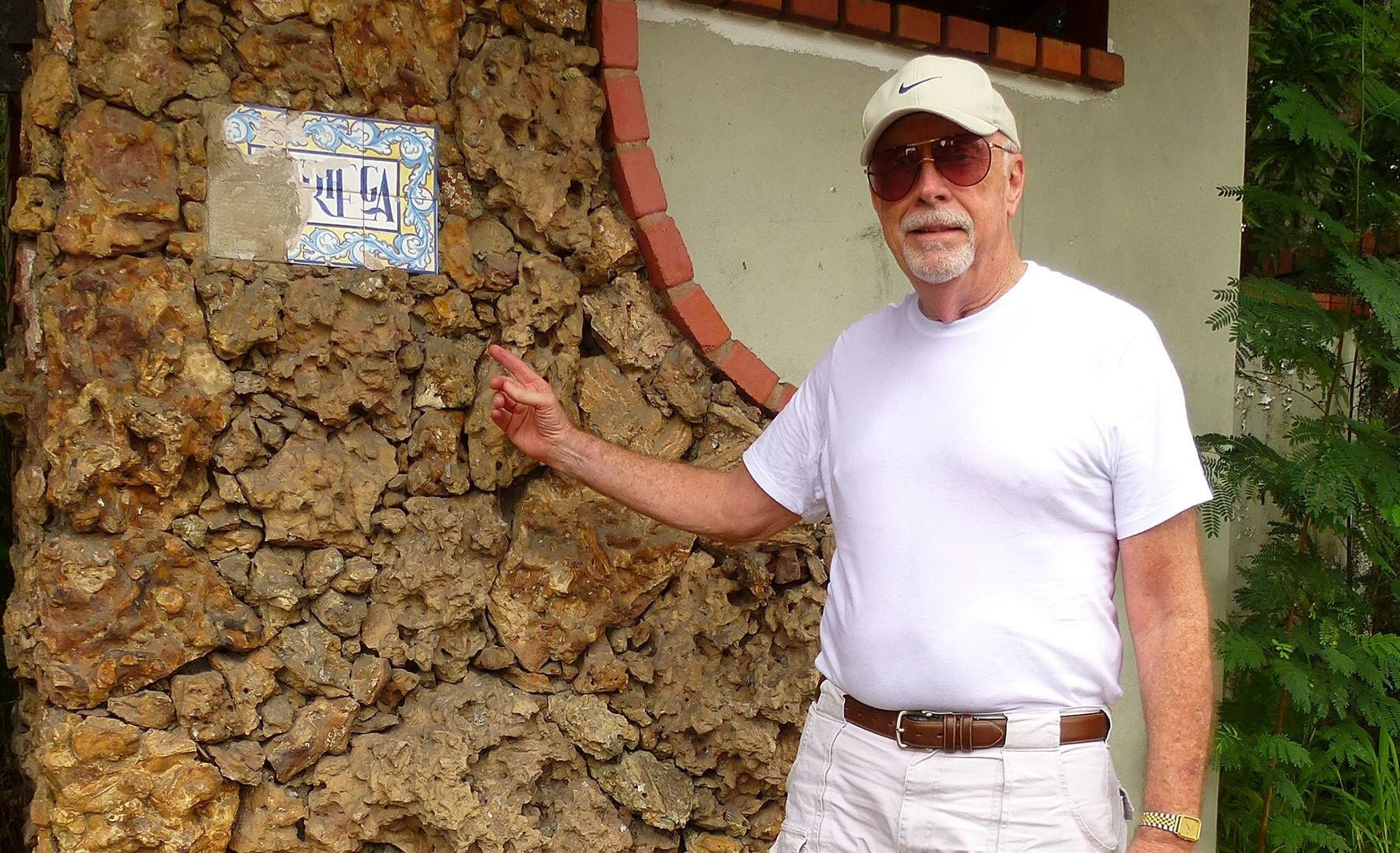
Which meant the walled fortress next door — abandoned, deteriorating, reclaimed by decades of tropical weather and neglect — was Rancho So La La. General Noriega had enclosed the entire estate within his own perimeter wall. A fortress within a fortress.
Carlos stood at the corner and looked at what remained.
He had found it.
Discover Carlos Miller books at: carlosledsonmiller.com
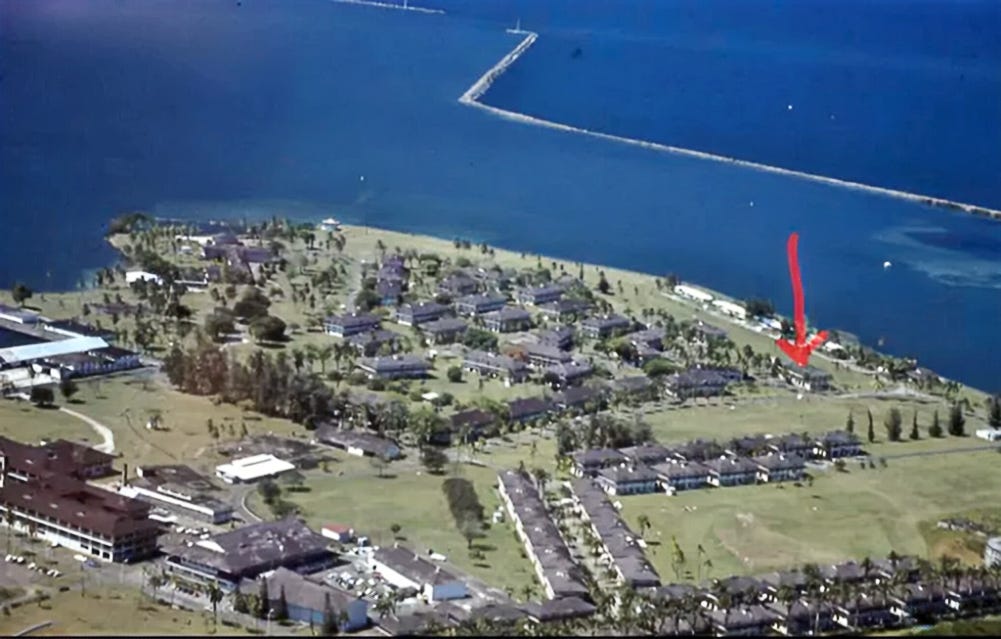
Coco Solo, Margarita / Early 1950s–1982
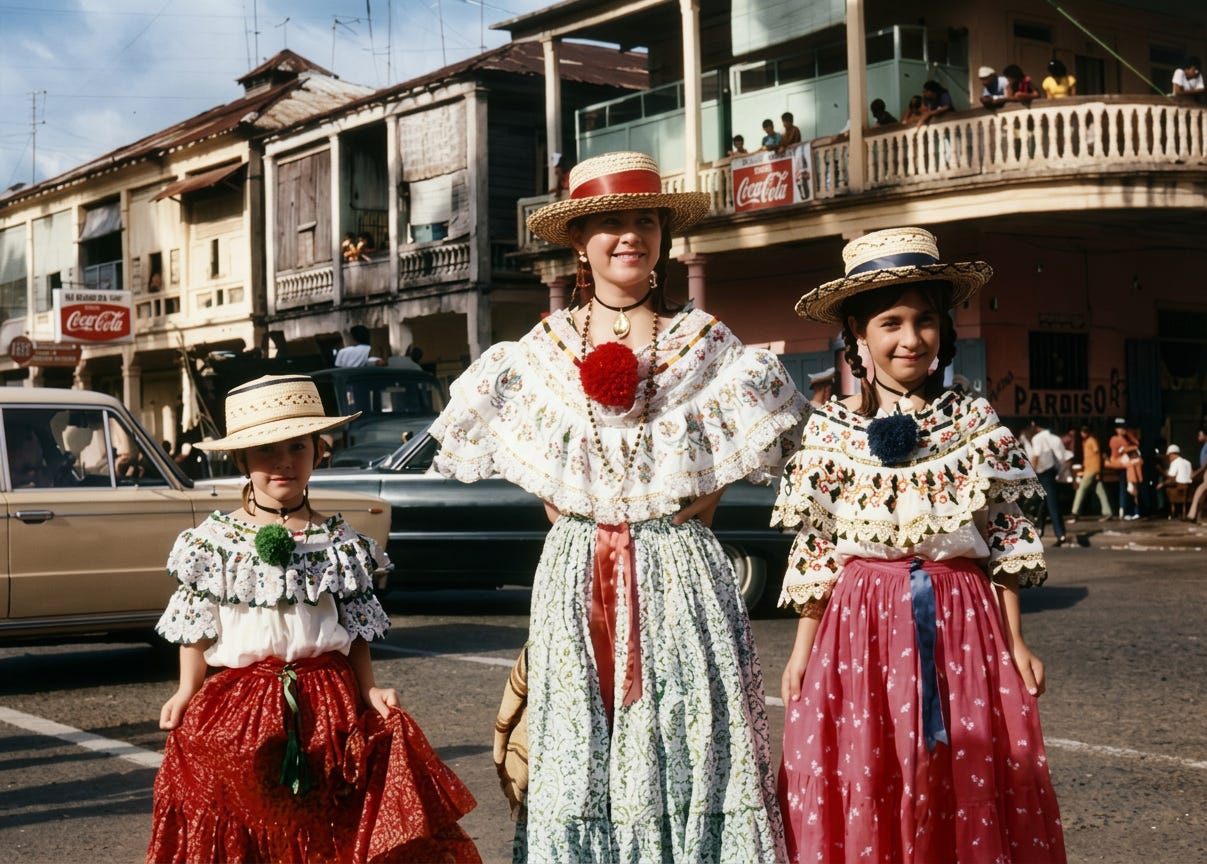
Jen Beck grew up between two worlds so different from each other that the distance between them sometimes felt less like geography than identity.
Her father was a U.S. Navy man stationed at Rodman Naval Air Station in the early 1950s. Her mother was Panamanian. They married and stayed. Jen was born in Panama City but grew up in the Canal Zone — Coco Solo and Margarita — holding dual citizenship in a place that didn’t always know what to do with people who belonged to both sides of the line.
Her mother had learned English, but she carried a thick accent and Panamanian ways that were a reminder, in certain moments, that Jen's family straddled two worlds. The mixed-marriage families — American and Panamanian, American and whatever else the Canal Zone had drawn to the Isthmus — were part of the fabric of the Zone. They found each other naturally, the way people do when they recognize something of themselves in someone else.
Her uncle by marriage was Arturo Sucre Pereira, Vice President of Panama in 1972. On weekends the family would cross into Panama City, and what Jen remembers most clearly about those visits is what she couldn’t do there. In the Canal Zone she and her friends ran freely — through neighborhoods, across fields, between communities, unsupervised and unhurried. In Panama City, at her cousin’s home, the children stayed behind the walls. High walls. There were people with security responsibilities outside. Her cousins weren’t allowed to go to the park. She and her family would go to Canal Zone football games on Friday nights and to the Presidential Palace the following weekend for a cousin’s birthday, and the contrast between those two worlds was something a child felt in her body before she could name it in words.
What the Canal Zone provided was comprehensive in ways Jen only fully understood years later. School buses arrived in the neighborhood. Books, pencils, paper, gym clothes — all provided. Healthcare. Immunizations. Housing. Infrastructure managed quietly in the background. It was a complete system, and growing up inside it felt less like a government program than simply like the way life worked. You didn’t think about it. It was just Tuesday.
The Johnny Mazetti moment came years after she left. A fellow Zonian, recognizing Jen as someone who had grown up in the Zone, asked if she had the recipe. Jen had no idea what Johnny Mazetti was. The woman laughed — how had Jen grown up in Panama and not known Johnny Mazetti? The baked pasta casserole with ground beef, tomato sauce, cheese, and green olives had been a staple of Canal Zone community tables for generations. But Jen’s table had been set differently — Panamanian traditions alongside American ones, Spanish alongside English, two cultures sharing the same kitchen without always sharing the same recipes.
She left in 1982 at nineteen, taking the oath at Howard Air Force Base and joining the U.S. Air Force. She was stationed in Spain for three years. She retired from the U.S. Postal Service at 58. She still keeps in touch with her Panamanian cousins.
What she carries from the Canal Zone is not a single memory but a disposition — an openness to different cultures, a comfort with complexity, an ability to hold more than one identity at once without needing to choose. The Canal Zone gave her that. The two worlds she grew up between prepared her for all the others that followed.
Panama is home. It always has been.
Gamboa, Balboa, Ancon / 1972–1983
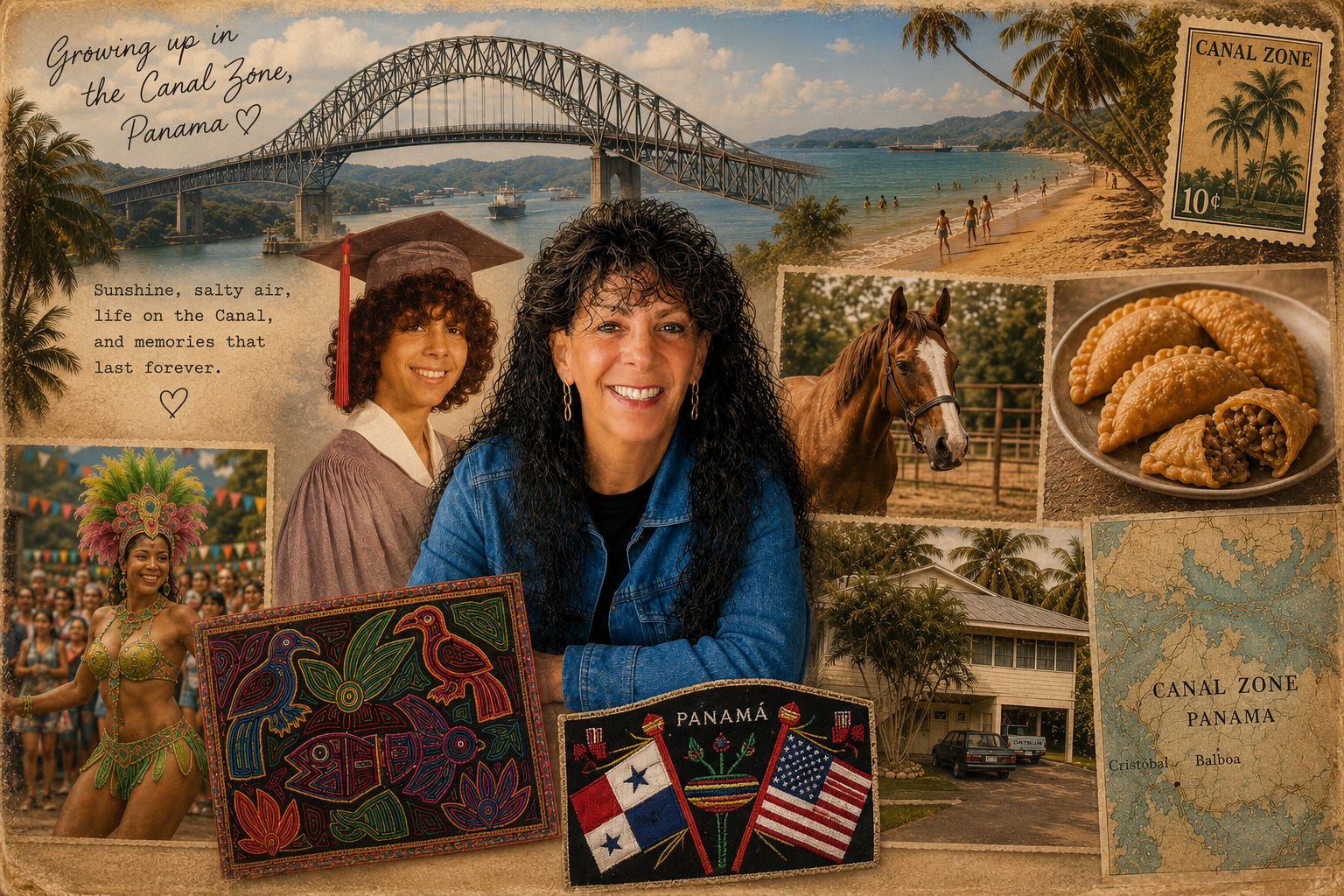
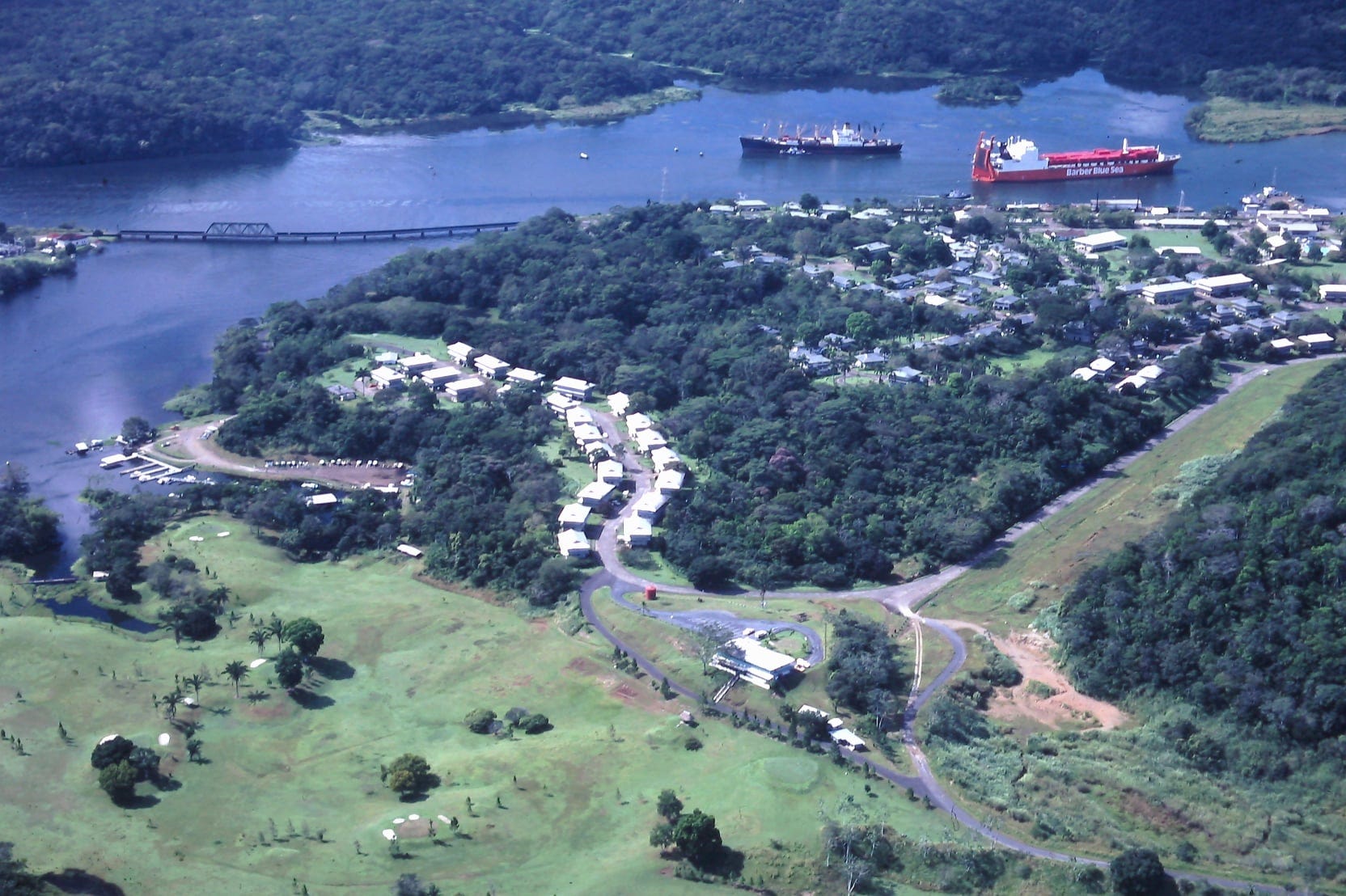
Naomi Bell arrived in Gamboa in 1972 for fifth grade and stepped into a world that felt, from the first moment, like somewhere a person could belong completely.
The rainforest pressed against the edges of everything. Monkeys moved through the canopy. Parrots crossed overhead. The Chagres River ran nearby. These were not exotic details — they were simply the neighborhood. Before long the family moved to Balboa, then to Bayano in the Ancon area, then to a single cottage on Bougainvillea just outside the Amador Gate. Each move brought a new address and the same essential world: lush, warm, alive with things that had no equivalent anywhere she would later live.
At Albrook Stables she kept horses and rode the Canal Zone trails in the kind of unsupervised freedom that seems, in retrospect, almost impossible to imagine. Weekends meant beaches. Coronado, where her boyfriend Sven Wage’s family had a beach house. Kobe Beach. Amador Beach with its shark nets. Rio Mar. Each one its own personality, its own rhythm, its own particular shade of Pacific afternoon.
The island of Taboga required a ferry ride, and the ferry ride was part of the trip — seagulls dive-bombing passengers, the water opening up around the boat, the island slowing everything down once you arrived. You had to watch the sandbar when the tide came in or you’d be stranded until the water receded. Being stranded on Taboga was not, Naomi recalls, a terrible fate.
San Blas meant crystal water and snorkeling and more fresh lobster than seemed reasonable — for breakfast, lunch, and dinner, every day, and it never got old. Las Tablas at Carnival meant music and costumes and dancing and a kind of joy that had no American equivalent. The Bridge Teen Club. DJ Robby Icaza. The roller rink. The Balboa Bowling Alley. The Causeway at whatever hour felt right.
The food speaks its own language in Naomi’s memory. The crispy wontons at the Gamboa Golf Club and the Balboa YMCA. The empanadas at Curundu Junior High School, which she insists have never been matched. She has eaten in a lot of places since 1983. Nothing has quite duplicated those flavors.
She left for Florida State University that year, and what she didn’t understand until much later was that she was leaving something that couldn’t be returned to. Panama City and the former Canal Zone changed significantly in the years that followed. Buildings that were familiar became unfamiliar. Structures that had shaped daily life were repurposed or left to the elements. The version of the place that formed her; the trails, the stables, the beaches, the wontons — existed now only in the people who had been there.
People ask her where she’s from. It has never been a simple question.
She grew up in paradise. She still lives there, within.
Quarry Heights / 1981–1988
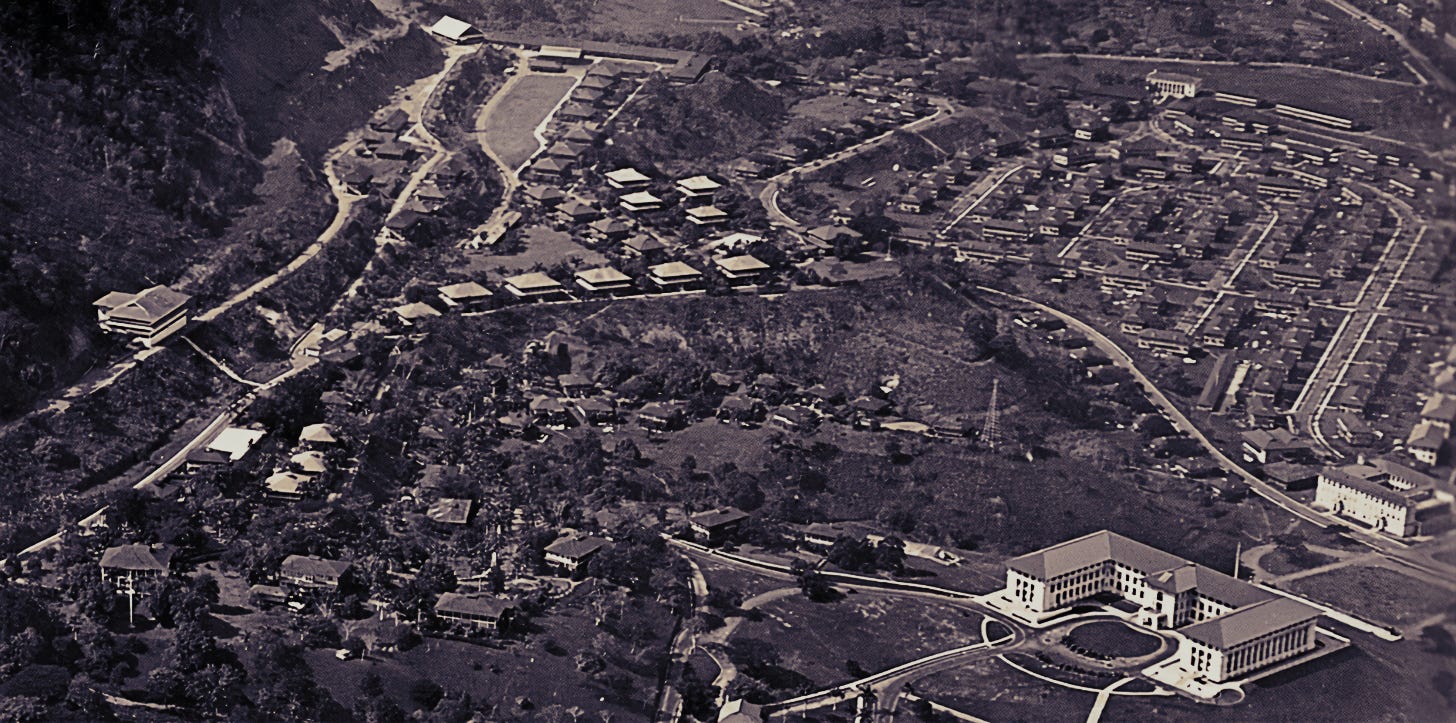
My father was a Green Beret, E-9, and we moved to Quarry Heights in 1981 when I was eleven years old. We lived on the upper level of the terraced SouthCom, beneath the scarred face of the old quarry on Ancon Hill.
The first thing my brothers David and Mitchell noticed was the lizards. Red-headed, black-bodied ones. Brown ones. They ran across old stone walls and disappeared into cracks before we could catch them. We tried anyway, repeatedly, because we had just arrived in a place where the walls themselves were alive, and we needed to understand what we were dealing with. We just wanted to hold them and look. We always let set them free.
Just beneath the quarry face, above the terraced levels of Quarry Heights, surrounded by the jungle; there was a concrete half-circle lookout point with a short wall that looked out over Balboa, the canal, and everything below. I was standing there once with my father discussing the view the way solider discuss views — and he explained to me, in the matter-of-fact tone he used for most things, that this was a perfect sniper position. The sightlines. The cover. The escape route back into the hill. I listened and nodded. It did not occur to me until years later that most fathers did not have this conversation with their young sons. It was just another Tuesday in the tropics.
My friend Jerry Smith and I climbed the quarry cliff one afternoon. The face rises several hundred feet — Ancon Hill sits at 654 feet above sea level, and the cliff runs nearly half that height before it reaches 90 degrees and then, in places, angles back beyond vertical. There is nothing reliable to grip. Quarry rock doesn’t hold. Jerry made it about halfway up and stopped, which was the smarter decision. I felt the challenge in my bones and kept going.
Somewhere near the top, at a section that jutted out past vertical, I looked down at the large rocks below — approximately 200 feet — and made some promises to Whomever was listening. Then I kept climbing. I made it over the lip and into tall grass at the top, took a step, and fell into a shallow hole. For one moment I was completely certain I had stepped off the edge of the cliff. I had not. I lay in the grass catching my breath and thought: what a good story.
I had a painting hanging at Gorgas Hospital for a period — parrots in a tree, roughly two by three feet, done when I had attended Curundu Junior High. I never retrieved it when we left. My art has never felt sacred to me. It is a moment, a record, a step in the progression of a craft. The painting is still there somewhere, in whatever form old things take when they are left behind in a place that has since changed hands.
We left before my senior year. I pleaded with my father to let me stay one more year, finish at Balboa High School with my class. I had been asked to work on the yearbook. There is no arguing. No is no, and whining invites consequences. I left the tropics for upstate New York in what felt, at now eighteen, like a verdict.
What brings it back now: a hard rain, if it comes down the right way. And once or twice, not too long ago, my sister made us raspados on a hot summer day in Idaho, the kind with sweet condensed milk drizzled over shaved ice. We don’t live close to each other anymore. Kids are grown. Our parents are gone. She and my brothers live in Idaho. I live in Utah. It was a rare Tuesday afternoon.
Sabroso. Delicious. The Canal Zone came back in one cold, sweet mouthful.
Four people. Four eras. Gamboa and Quarry Heights and Coco Solo and the fourth-floor apartment above a Panama City street where a boy rode chiva buses to school and didn’t think anything of it.
What connects these accounts is not nostalgia, exactly — though nostalgia is present in all of them. It is something more precise than that. It is the recognition, arriving slowly and then all at once, that the place where you grew up was unlike any other place on earth. That the freedom you had there was not ordinary freedom. That the community you belonged to was not ordinary community. That the end of it; whether you left in 1953 or 1983 or stood at the gate on December 31, 1999 — meant something different to everyone who lived it, and something profound to all of them.
The Canal Zone no longer exists. Some of its buildings still stand, changed by decades of tropical weather and different hands. The locks still operate. The water still moves through. But the world that these four people grew up inside: the schools, the clubhouses, the commissaries, the stone walls with red-headed lizards slipping through the cracks, that world exists now only in the people who lived it.
This is why it has to be documented. Not because the past deserves to be mourned — though some mourn it, and that is honest too. But because the Canal Zone occupied a chapter of history that is now closed, and the people who lived inside it carry something the rest of the world has not yet had the chance to know.
That is worth preserving. That is worth telling.
Canal Zone Documentary is collecting firsthand accounts from across the Zonian community. If you have a story, a photograph, or a memory worth preserving, reach out at archive@canalzonedocumentary.com. Subscribe at canalzonedocumentary.substack.com.
No posts
Comments
Nothing yet. Say the first thing.
Sign in to join the conversation.