
⭐ Before you begin
If this content resonates with you, we’d love for you to subscribe, share it with someone who might benefit, drop a comment with your thoughts, and/or follow us on Instagram! Every share, like, and conversation helps us reach more people and build a stronger community around these crucial topics. We’re grateful for you.
In many places around the world, April is Sexual Assault Awareness Month (SAAM). Across Canada, both April and May are recognized in different provinces as SAAM. There is a lot of value in having an awareness month – more discussions are happening, more content being created and consumed, and just generally seeing sexual violence a bit closer to the forefront in the zeitgeist.
However, just like other awareness days and months, there needs to be direct calls to action included in these discussions & content. It’s not enough to just acknowledge SAAM. Although education & awareness is an important part of developing effective prevention & intervention strategies and initiatives, without action and change, we are leaving major gaps in supporting survivors and holding perpetrators accountable.
Before we get into the calls to action: if you're reading this as a survivor, this post is for you too — and you are not obligated to take any of it on. The labour of prevention should never fall on the people who've already carried the weight of harm. If what you need this month is rest, distance, or simply to be witnessed without being asked to do anything — that is enough.
These calls to action are directed at all of us, but especially at those who haven't yet been asked to show up in this way. For everyone else — and especially those of you who are in a position to act — here's where to start.
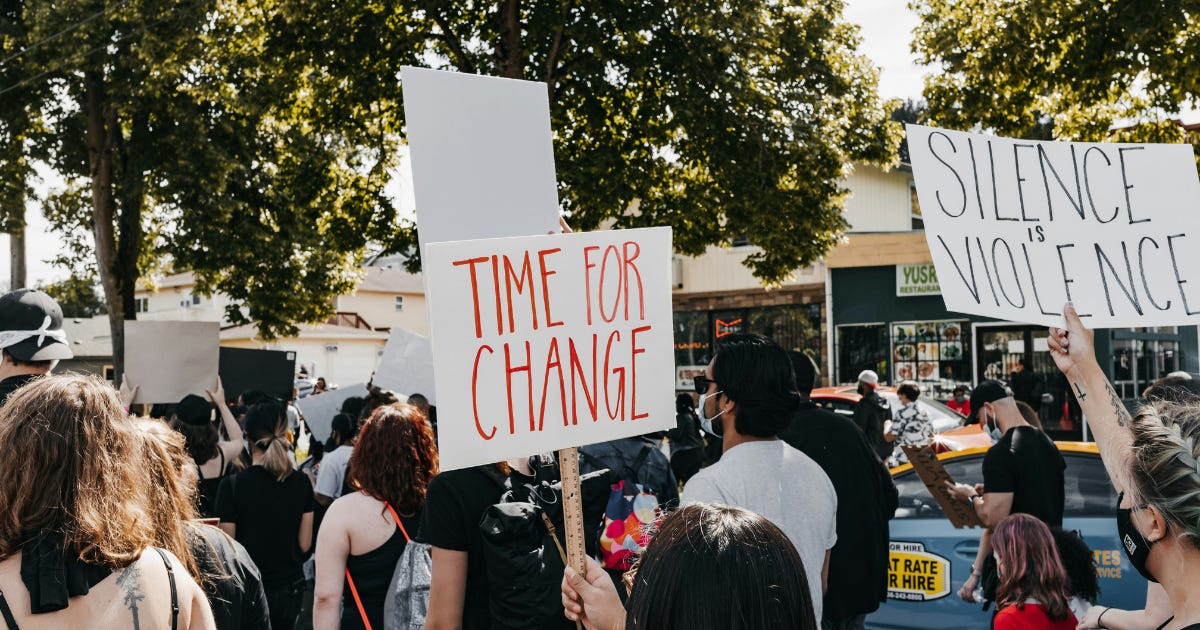
So, what does action actually look like?
It doesn’t have to be sweeping or systemic — though we need that too. It can start with the choices you make this month, and the habits you carry forward from here.
1. Learn from & amplify the voices of folks with lived experience and expertise.
Some of the most important voices in sexual violence prevention aren’t in academia or policy: they’re survivors, advocates, and community educators sharing their work in real time. Following and subscribing to those voices is a meaningful act of amplification. It signals to algorithms and institutions alike that this content matters. Look for accounts and newsletters rooted in survivor-centered, trauma-informed frameworks — ones that educate without exploiting. (If you’re looking for a place to start, we’d love to have you: follow us at @campusconsentculture on Instagram and subscribe here on Substack.)
2. Have honest conversations.
Not a debate, not a lecture — conversation. With a friend, a partner, a sibling, a student, a colleague. Talk about what consent actually looks like in practice. Talk about what you’d do if someone you loved disclosed to you. Talk about the culture in your workplace, your campus, your community. Research consistently shows that social norms shift through interpersonal influence (meaning the conversations happening in your living room matter more than you might think).
3. Commit to unlearning something.
Most of us were never formally taught about consent, coercion, or sexual violence — we absorbed myths, scripts, and silence instead. Self-education isn’t just about adding new information; it’s about examining what you already believe and asking where it came from. This month, pick one thing to dig into: maybe it’s understanding what coercive control actually looks like, or why survivors so often don’t report, or how rape myths persist even in people who consider themselves informed. Read an article, listen to a podcast, take a free online course. The goal isn’t to become an expert — it’s to become someone who’s actively in the process of knowing better.
4. Push for structural accountability at your institution.
If you’re a student, staff member, or faculty at a post-secondary institution, you exist inside a system with formal obligations around sexual violence response — and those systems are often underfunded, undertested, or actively avoided by survivors. Ask questions. Attend consultations. Advocate for trauma-informed training for everyone in a position of authority. Structural change doesn’t happen without people on the inside asking for it out loud.
5. Commit to something after April ends.
This one is perhaps the most important. Awareness months create momentum, but momentum has an expiration date if it’s not converted into habit. Choose one thing from this list — or something else entirely — and commit to it past April and May. Sexual violence prevention is not a campaign. It's the slow, cumulative work of showing up over and over, in ways that often go unseen.
A few questions to consider:
Which of these five actions feels most accessible to you right now — and which one are you most likely to avoid? What does that tell you?
Who in your life would you feel comfortable having a genuine conversation about consent or sexual violence with? Who wouldn’t you? What’s the difference?
Is there a myth or belief about sexual violence you’ve had to actively unlearn? What shifted it for you?
What would it look like for your campus, workplace, or community to take structural accountability seriously — not just during SAAM, but year-round?
SAAM gives us permission to talk about something our culture usually asks us to stay quiet about. Use that permission. And then keep using it, long after the awareness month graphics stop appearing in your feed. Sexual violence prevention isn't a month. It's something quieter and more continuous than that — it lives in the conversations you have, the things you're willing to unlearn, the moments you choose to show up. Pick one place to begin. The rest tends to follow.
Comments
Nothing yet. Say the first thing.
Sign in to join the conversation.