
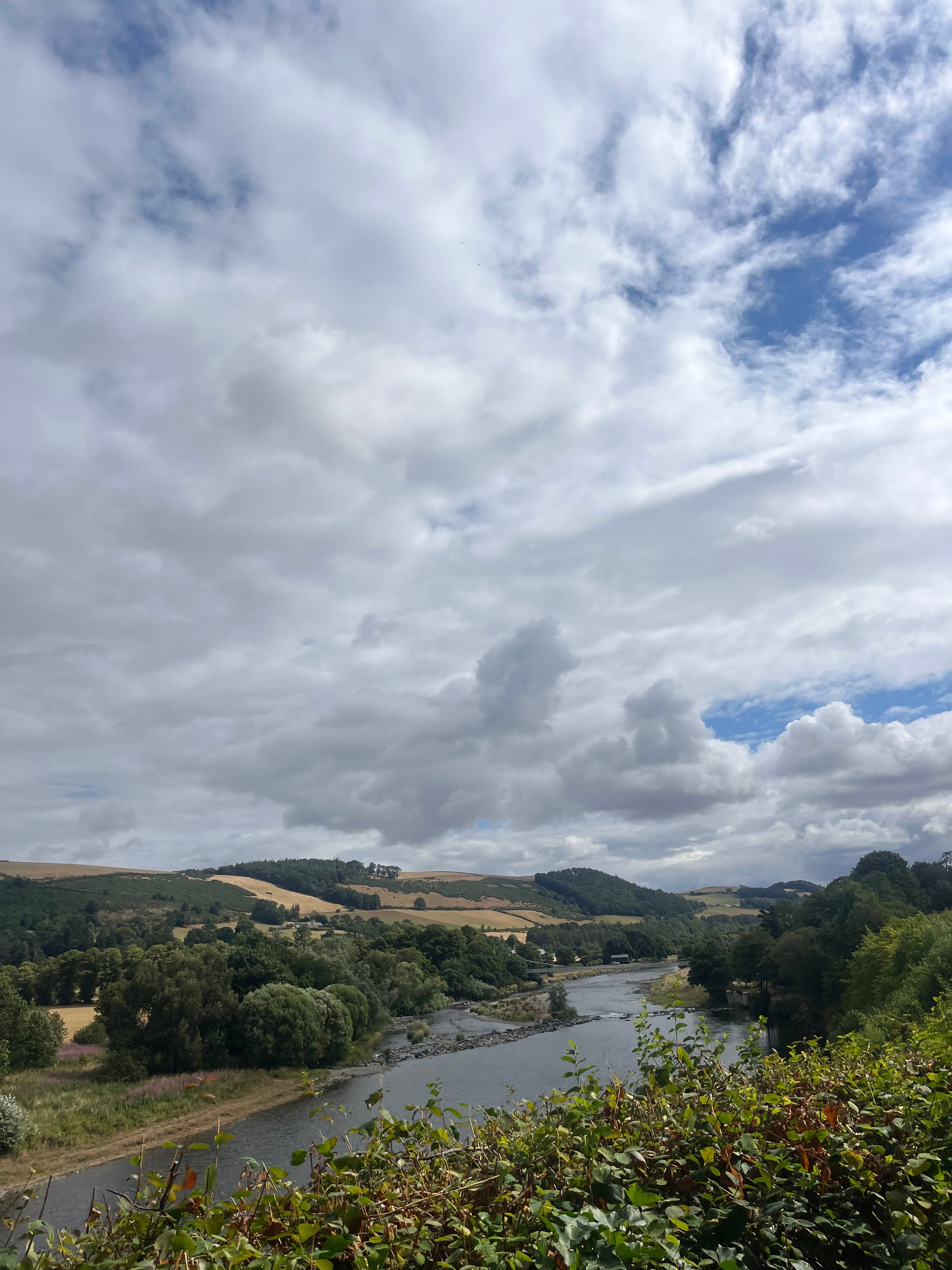
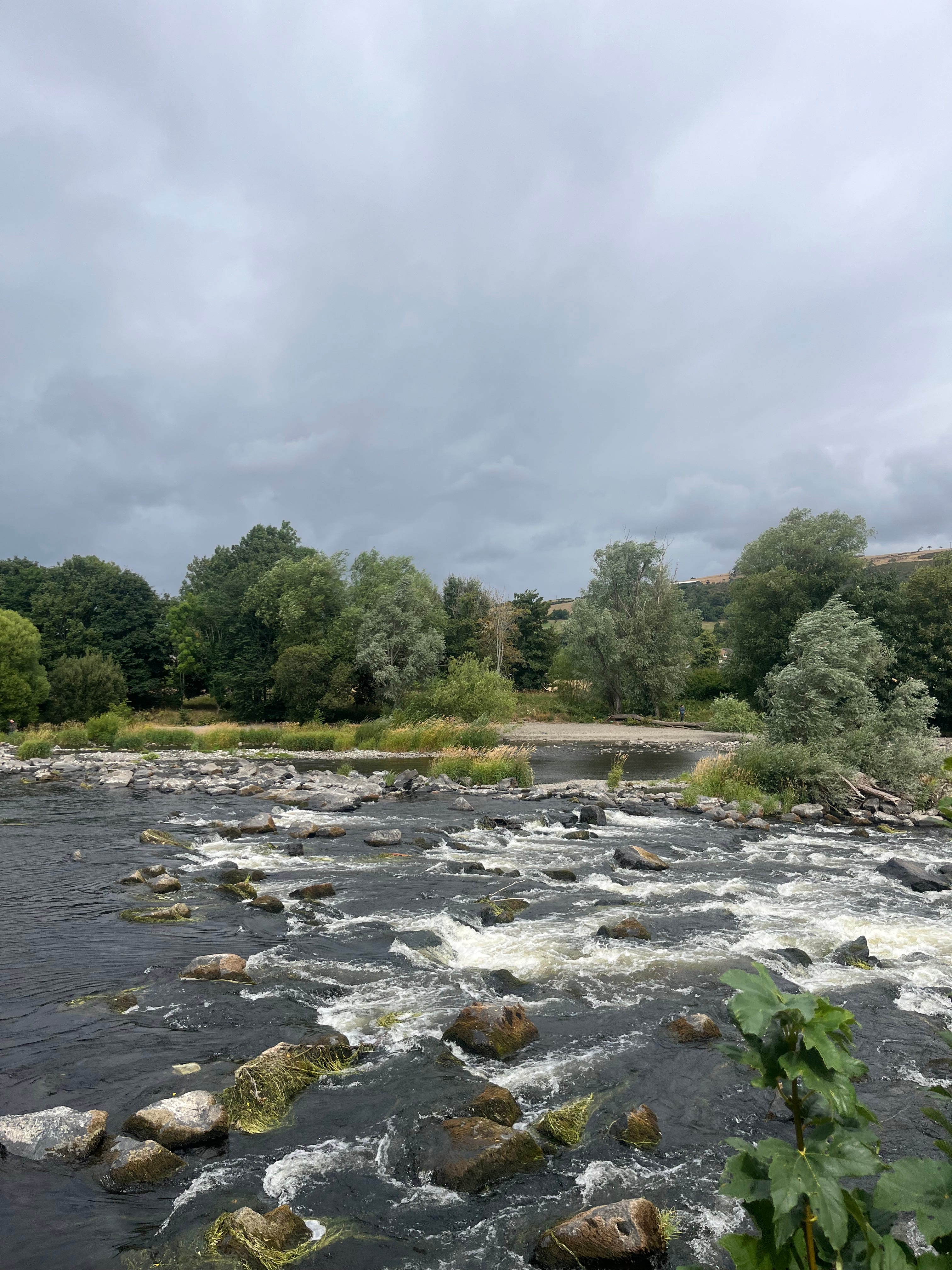
Last weekend I went to the Trimontium Museum’s inaugural Roman and Iron Age festival in the borders (most underrated part of the country) . We walked from Tweedbank station along the river Tweed to Melrose, one of my favourite villages as the skyline is dominated by the Melrose Abbey ruins, then onto the Trimontium fields, where the camps once were, just outside of hamlet Newstead.
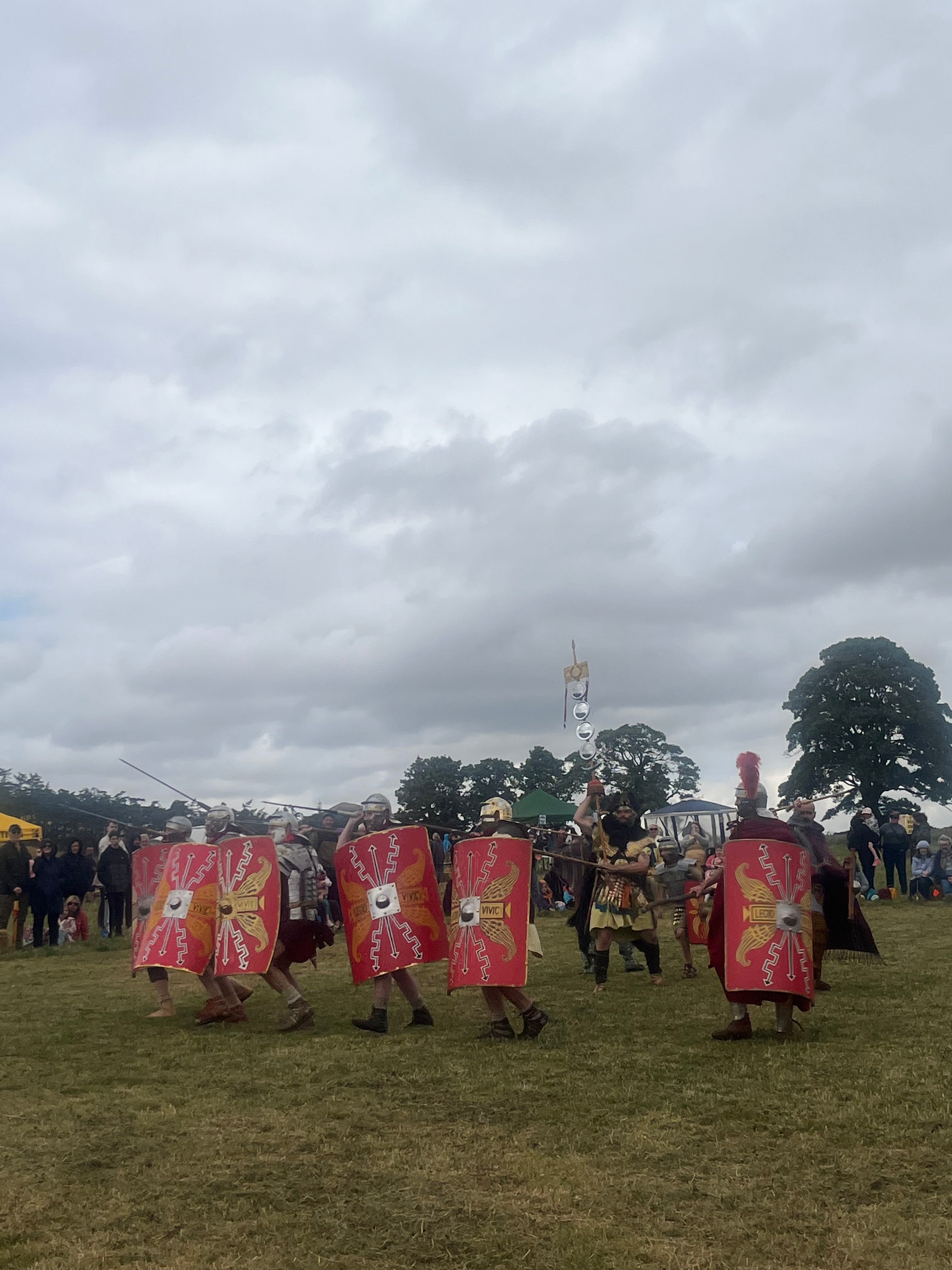
There were stalls about Roman food, blacksmithing, ancient paint pigments and brushes and a historian/dancer did an interpretation of Roman dancing, it was lovely, like looking at a fresco, and there was an Asterixish demonstration of a Roman army march. The standard bearer wore a fake bearskin, a good detail as the Roman empire imported bears from Caledonia for gladiator games. That was about it for resources and usefulness up here which is why they didn’t stay and colonise what is now Scotland the way they did England which had copper and tin. The Roman soldier cosplayers had an excellent manly camp set up where they were eating leek stew and ancient style army biscuits. Below too are some examples of Roman medical tools.
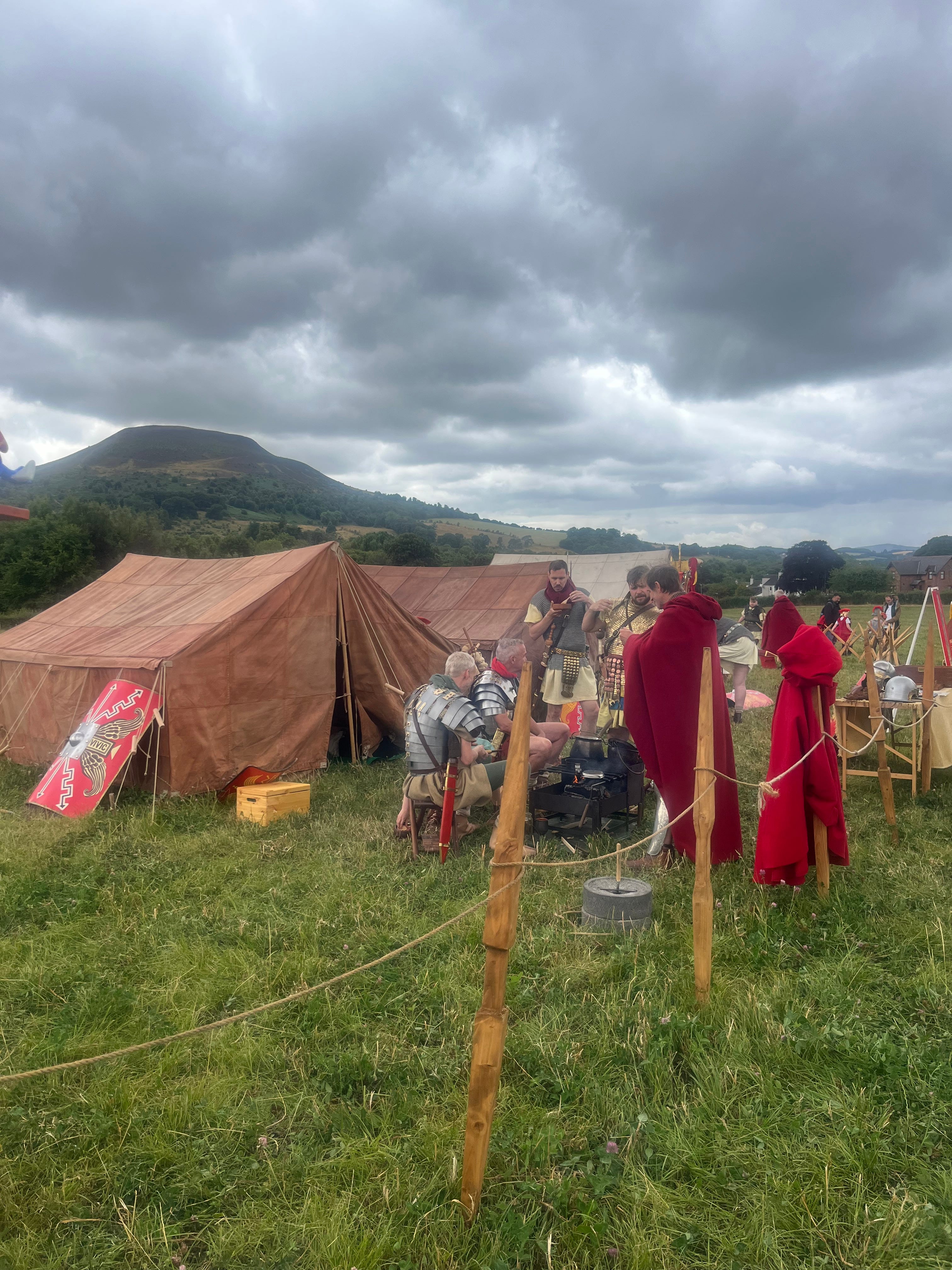
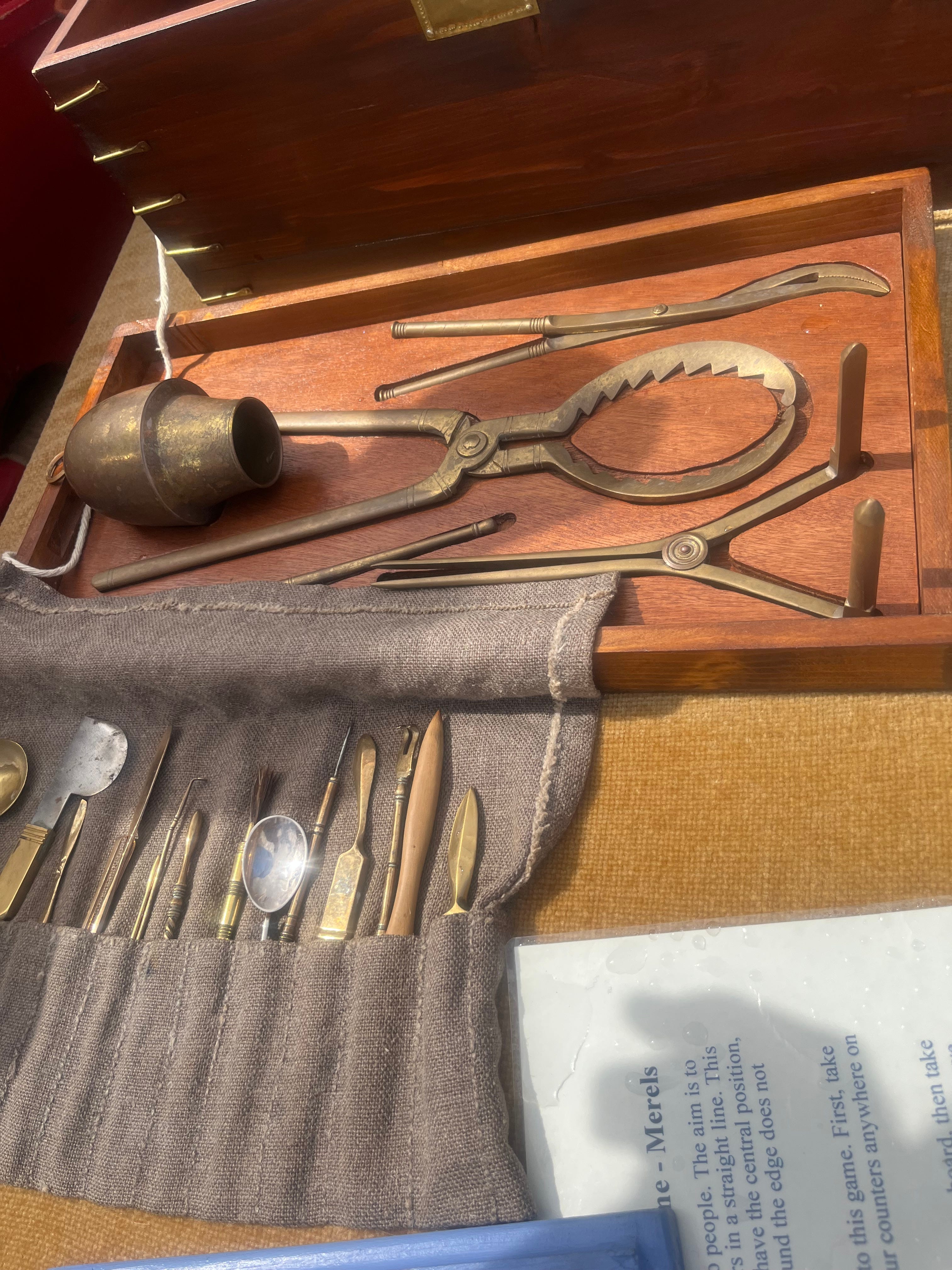
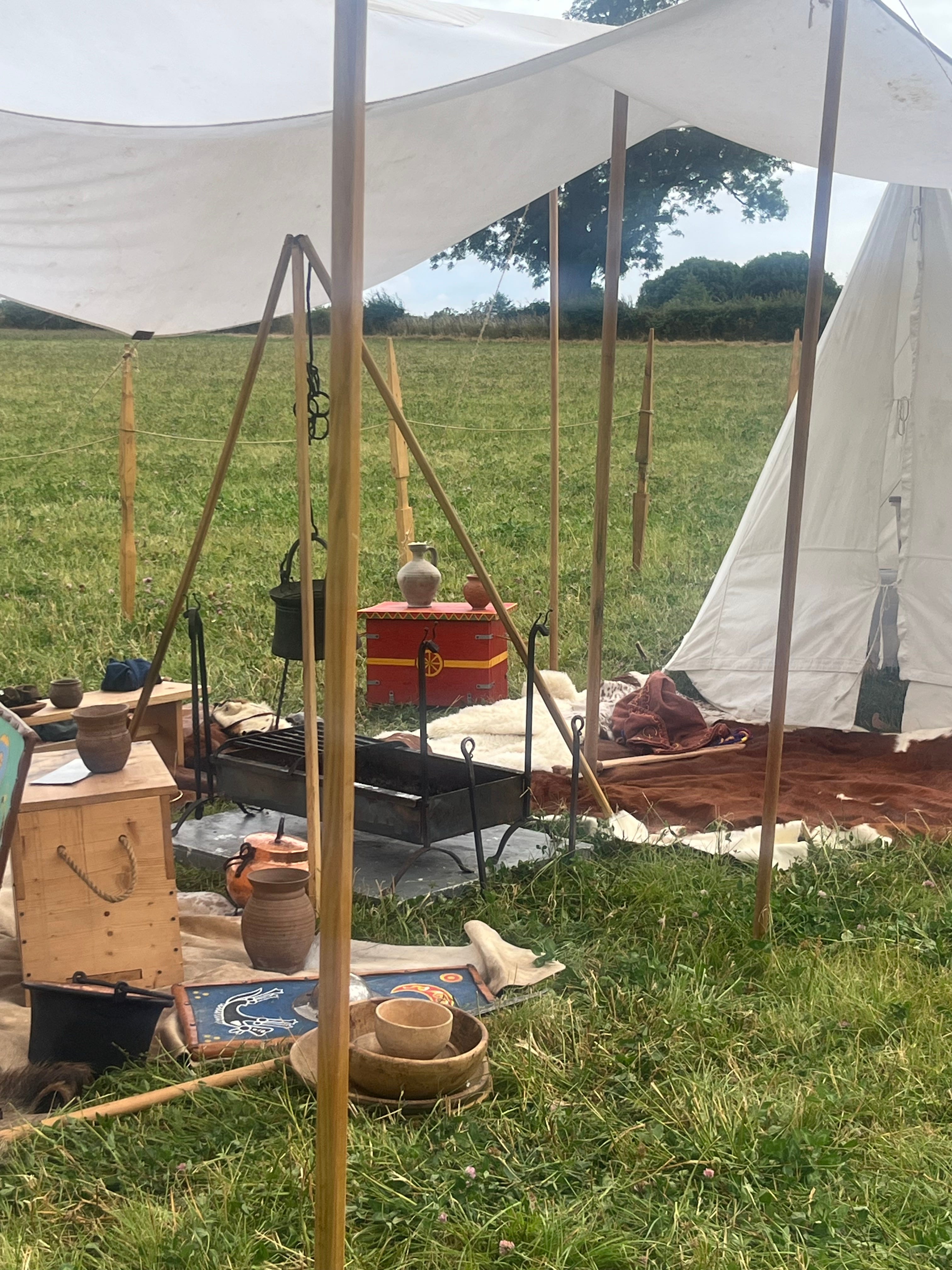
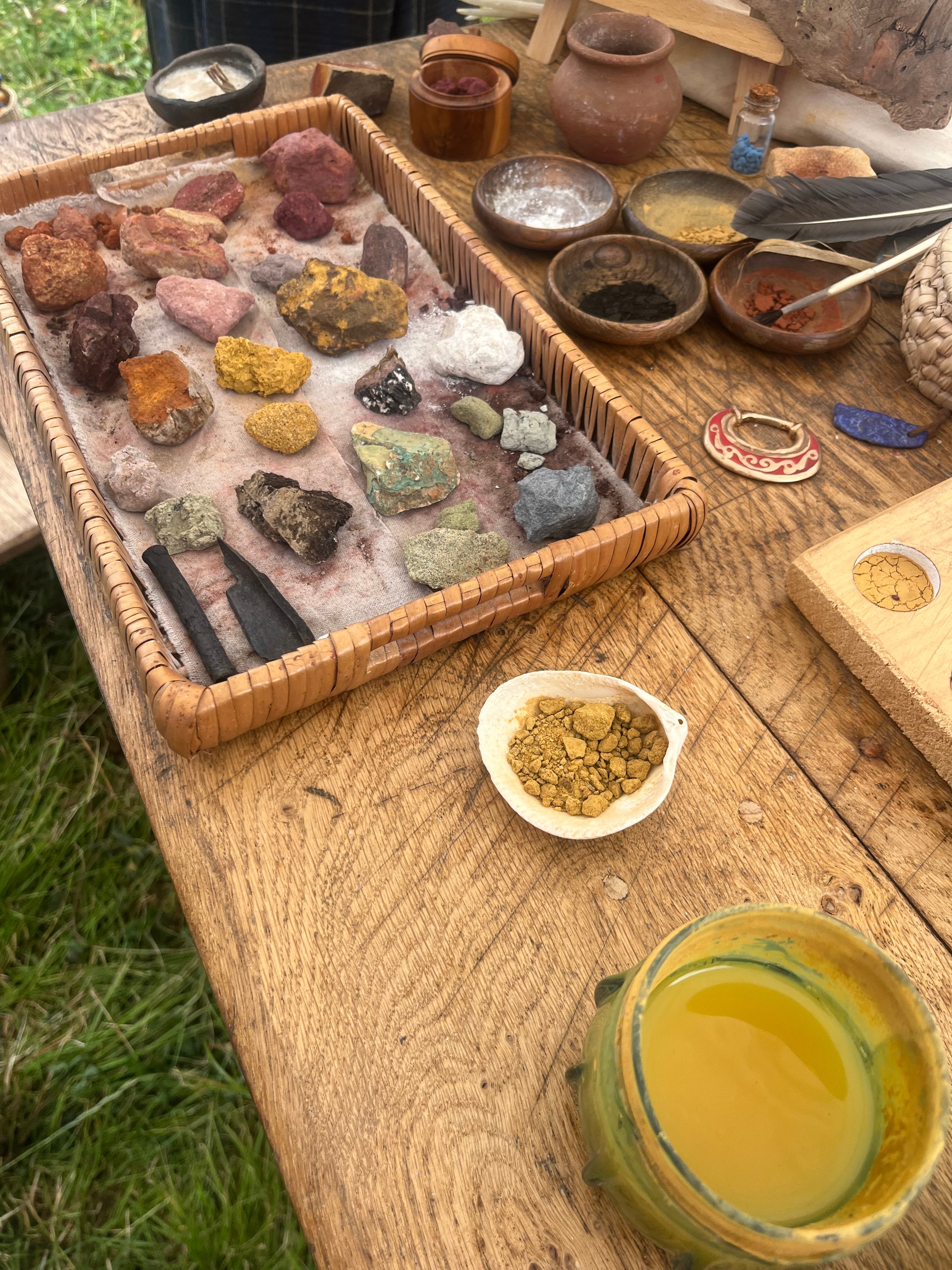
The paint specialist showed everyone how to make a brush from a feather, and had all sorts of minerals on display. Egg tempura painting which i associate with Byzantium much older than i thought. The blacksmiths talked about the brief copper age and its importance as an ancient tool as it could be mended by the person using it due to its pliability. The blacksmith had an assistant with a pair of bellows to keep a small fire going, it was so mesmerising, I wonder if people in previous ages with less entertainment would just go and stare at the local blacksmith for something to do. I wish there was a stoic philosophy tent, a wine tent (there was beer..) orgy tent with cosy fake lion and bearskins and oil lamps, and a bathhouse (it was a very rainy cold day) the emphasis was definitely on Romans in Britain and the local ‘Iron Age’ people’s more rudimentary technology and culture rather than seeing how a brick or concrete was made or a Roman toilet flushed. These kind of fairs focus on material culture but it would just be really fun if they had ancient philosophy, rhetoric, politics and so forth, an alternative both to universities and learning on the internet something egalitarian and affordable but also face to face and immersive.
A friend and I have vowed to throw a Roman party, around Saturnalia probably but late empire included so we can have Byzantium eunuchs!! My vision is that everyone has to be wear a kilo of makeup and fake gold, and eat a bowl of tripe.
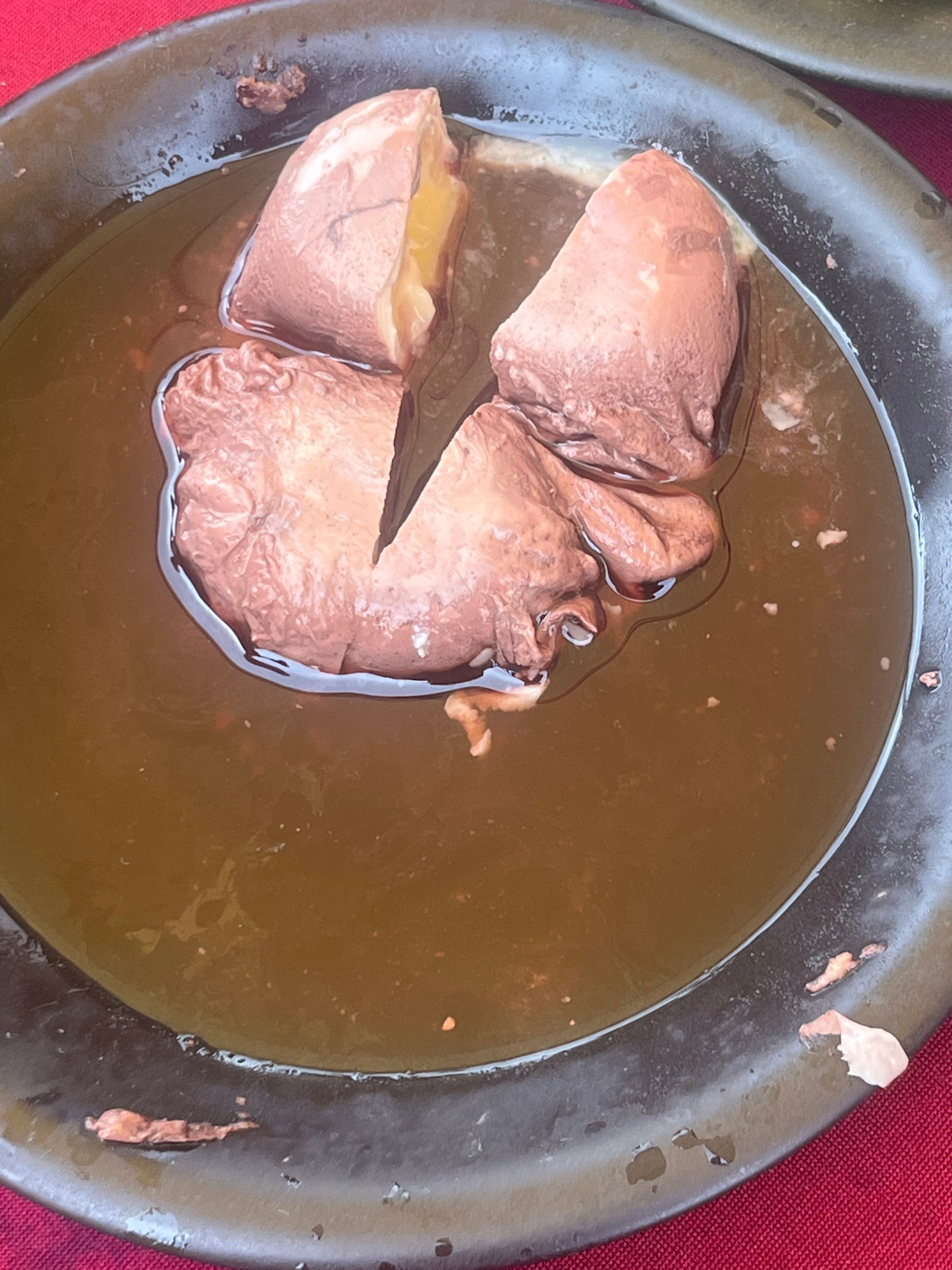
This is an egg poached in wine. We learned that alot of things were boiled in wine rather than water.
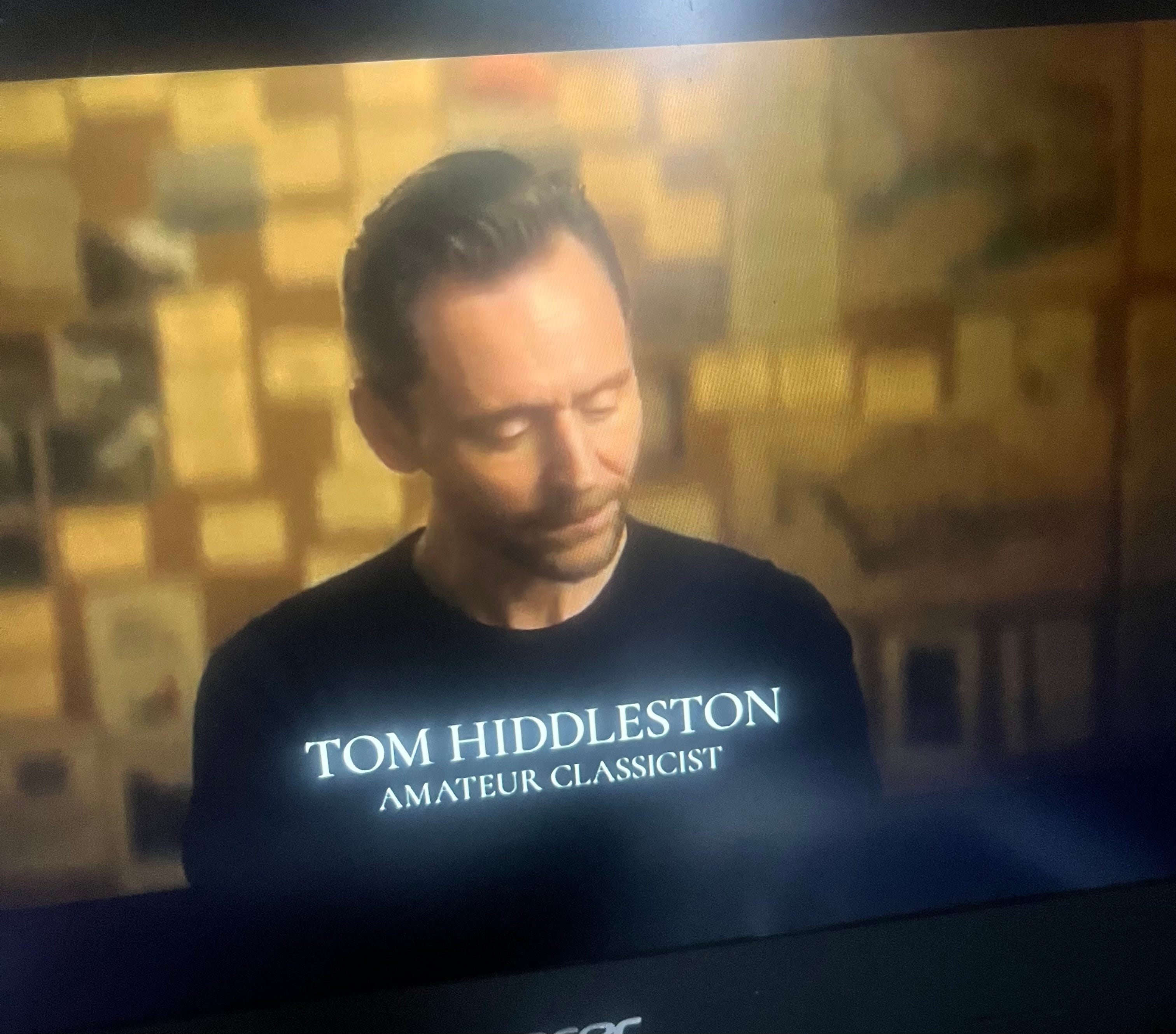
Still in my long ongoing Roman mood, a friend and I decided for fun to watch Tom Hiddleston’s new doc on Pompeii. We watched about twenty minutes of it before giving up. We didn’t learn a thing. TH has nothing on iron age blacksmith dude from the fair who was miles more charismatic and informative. Tom Hiddleston in a Buffy the Vampire-esque library with a bow tied ‘professor’looking at ‘vhs’ tapes of ancient Pompeii reenactments. As Disney, when showing a “woman owned business” which was so obviously a brothel they refused to call it as such. We created a drinking game: take a gulp of wine every time Tom Hiddleston makes the scrunched up sigh face an English man does when trying to express empathy he doesn’t feel. We are all having a Tom Hiddleston summer however, after the release of The Odyssey:
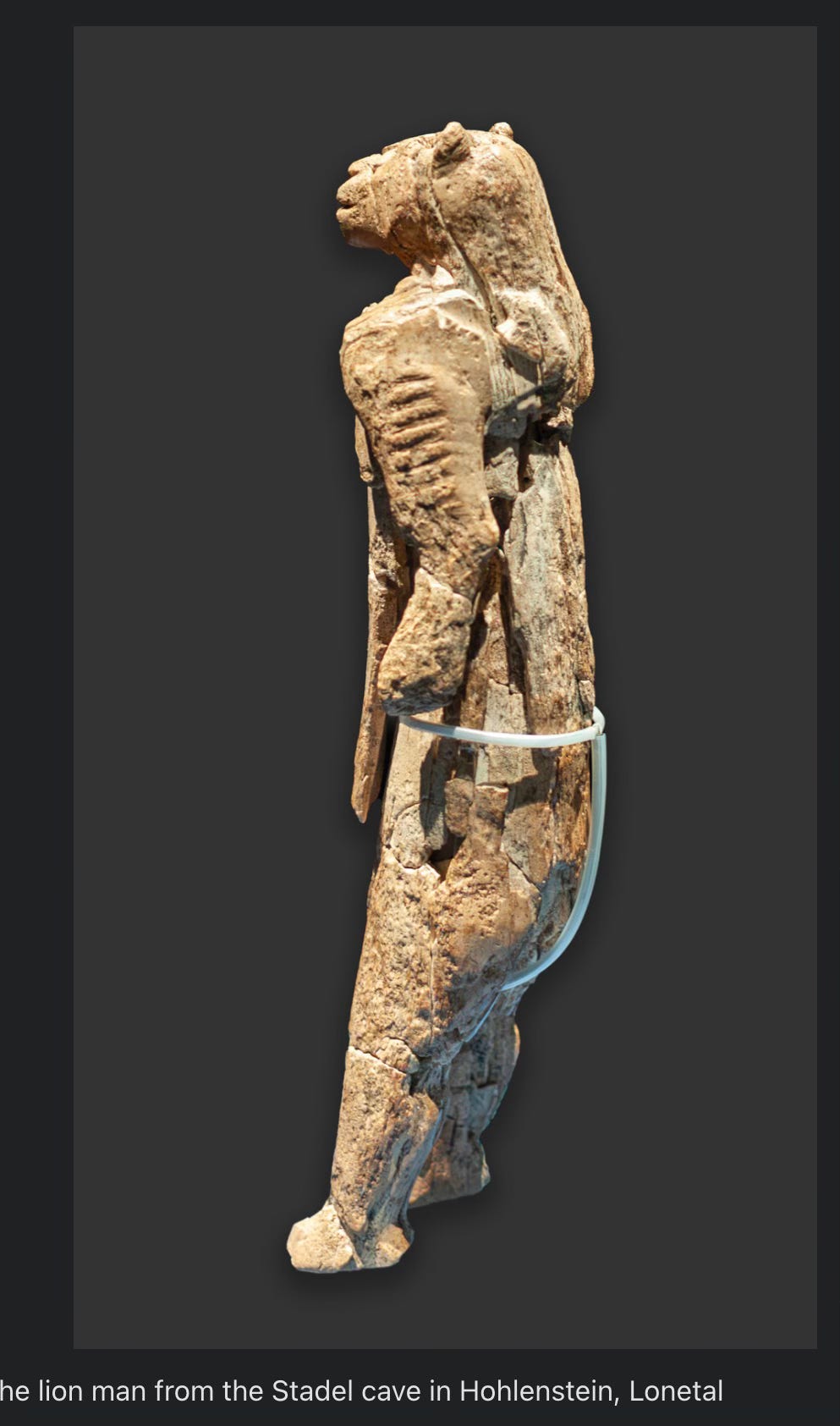
Last Thursday I interviewed Elizabeth Sulis Kim for the launch of The Book of Beasts which looks at a really interesting selection of animals (salmon, bear, lion, whale, deer and others) through folklore, history, science and both exploitive and mythological use by humans.( the bearskin standard bearer!) I’ve become obsessed by this prehistoric lion man sculpture mentioned she discusses in the lion chapter, which is just in a small, provincial German museum. An especially important book to read now, as countless acres of wild habitat, home to bears and wolves, around the world, including Canada, is burning thanks to our causing climate change.
In the Guardian I saw another novel reviewed about the art world and visual artists/ Why are there so many novels, particularly in the UK, about the art world past and present? How did these two worlds, visual art and literature, become so intertwined? Going beyond the fact we live in a very visual world now I suppose the greed and corruption of the art world, its strong economic presence compared to other arts, is an easy attraction to the novelist, but I because I went on an E.M Forester kick and now a Thomas Mann one, and classical music plays such a large role in their work, it made me think how there are not many contemporary novels about music and other arts in comparison to visual arts. I include myself as part of this phenomena, I've written multiple short stories about visual artists, I’m invested in Nabokov’s idea of the reader as a spectator and I want to force the reader to create a specific mental image according to my aesthetic law. I don’t like dialogue heavy writing which produces no mental images for me. I admit, I would find reading a novel about say, an indie musician, or god forbid a saxophonist, too cheesy, (though I am going to read Knausgaard’s The Third Realm about death metal?) but I love works about classical musicians (The Loser, Bernhard) but why were many early to mid 20th century writers attracted to writing about classical music when its peak was the previous two centuries ( Tolstoy’s Kreutzer Sonata perhaps started the trend, in 1889). My thought is that music was part of the standard bourgeois education in the late 19th to mid 20th century and isn’t now, music literacy of the reader wasn’t taken for granted, but then again most, people, middle class and bourgeois included , now don’t have basic skills in painting and drawing (photography, yes) though we feel this kinship with it . I can’t read music, and this has made Thomas Mann’s Doctor Faustus difficult but Mann can also describe music so beautifully you don’t even have to stop to listen to it. I was also reading a Frank Kermode essay (Thank you to the person on here which recommended I read them!) ‘Poet and Dancer Before Diaghilev’ on writer’s- particularly poet’s, obsession with dance and dancers at the turn of the century into the 20th, when the obsession exploded with the Ballet Russes, but before, Lois Fuller and Isadora Duncan, Jane Avril. Yeats, Mallarmé, Valéry. ‘The Ninties poets wrote endlessly about dancers, welcomed foreign troupes and prepared the way for the serious impact the Japanese Noh’. Of Valéry he writes ‘‘Again and again he returns to the dance as a satisfactory emblem of a desirable poetry. It best illustrates what he calls non-usage- ‘the not saying’ “it is raining’”- this is the language of poetry; and movement which is not instrumental, having no end outside itself, is the language of dancing, Poetry, like dancing is action without an end.’”
In Mann’s Doctor Faustus the tortured composer is a stand in for the tortured novelist. There is an interesting section in Doctor Faustus on the idea of music written to be read, visually like a text and ‘heard’, akin to writing, rather than performed, an interesting analogy between reading music/ reading literature vs reading it out loud. There is a really good old In our Time episode on Mann’s Death in Venice where they discuss how certain passages of the novella replicate the sound of a heartbeat, sound, rhythm, harmony are all important to Mann. Now, if not writing fiction about writers directly, we write fiction about visual artists as stand in for writers. We ‘see’ our literature making like producing pictures instead of symphonies or dances, and see the finished stories or novels as visual experiences.
You can read the first bit of my story in The Little Review here if you haven’t, and if intrigued buy the issue. One of the best new British magazines, please do support them! I have a new story out in the New Nottingham Journal this fall I am quite excited about, my story is about Titus Andronicus and technology.
No posts
Comments
Nothing yet. Say the first thing.
Sign in to join the conversation.