
At the time of writing this, my watchlist on Letterboxd has 2,450 movies on it. The majority of these movies I do not recognize or remember adding. In a two-pronged assault on watcher’s indecision and writer’s block, I will be shuffling my watchlist and selecting a movie to watch and write about from the first row. The less popular, the better. Let’s plumb the depths. I will not cheat, and if I do cheat, I will not tell you. I am the Watchlist Warrior.
Wow since the last one of these I did my watchlist has actually gone up by almost a hundred movies. That’s crazy. I started this blog to try and write more and it turns out it worked but the stuff I’ve been writing isn’t destined for blogging. So here’s a post like this. Let’s watch something weird.

I’ve always been a found footage fan and Japanese found footage is hard to beat for me. The Japanese had such a strong handle on technology as horror before anybody else really figured it out. People are still chasing the vibe of Ring and Pulse, as a couple horror movies in theaters right now might suggest. Found footage horror really blew up after The Blair Witch Project in 1999 of course, but Japan was plugging away a decade before that with movies like Psychic Vision Jaganrei, or today’s Watchlist Warrior pick: Report on Latent Narcotic Substances in the Brain: Drugless. What an incredible title.

Drugless is a mockumentary that follows reporter Keiichi Shimizu’s investigation into the mysterious death of a girl named Naoko Mochida. She apparently died of exhaustion, but it doesn’t take much scrutiny to uncover her involvement in a mysterious cult known as the Anfini Society. Through a series of interviews with cannabis growers, health magazine publishers, and medical professionals, Shimizu learns that Anfini is teaching secret techniques to achieve a drugless high. The clandestine group is attempting to unlock the true primordial pleasure inherent to the human body.
This drugless high is caused by endorphins. Somehow the Anfini Society has found a way to harness the endorphins already present within the human brain, creating a narcotic that is fully legal and requires no outside stimulus. A lot of emphasis is put on the legality of this technique throughout the movie. It seems like one of the scariest parts of this story to the filmmakers is that this “latent narcotic substance” would be completely allowed if it was real. Imagine a horrifying world where people could trip not by ingesting illegal substances but by (spoiler alert) getting an occult operation to open their third eye.

Yes, this movie culminates in Shimizu infiltrating an Anfini Society seminar to learn their technique while wearing the most hilariously obtrusive hidden camera I’ve seen in a movie like this. Eventually he captures footage of the procedure that is both unlocking infinite pleasure and killing young people in Tokyo: a robed figure makes an incision in his forehead and inserts a piece of pure platinum.
The last ten minutes of the movie are dominated by a sequence where scientists use a machine called the Brain Image Energizer to reproduce the images Shimizu is experiencing onto a CRT screen. This is probably the best part of the movie to me– lots of super low-quality psychedelic imagery with weird distorting faces and timelapse driving footage. I almost wish they didn’t bother with introducing a “Brain Image Energizer” at all. I’m always deeply taken by a camera capturing more than physically possible, like the ending of Koji Shiraishi’s Occult. Though it may stretch the bounds of logic, a video camera capable of recording emotions, hallucinations, and thoughts into a digital file feels incredibly apt and poetic for a found footage movie.
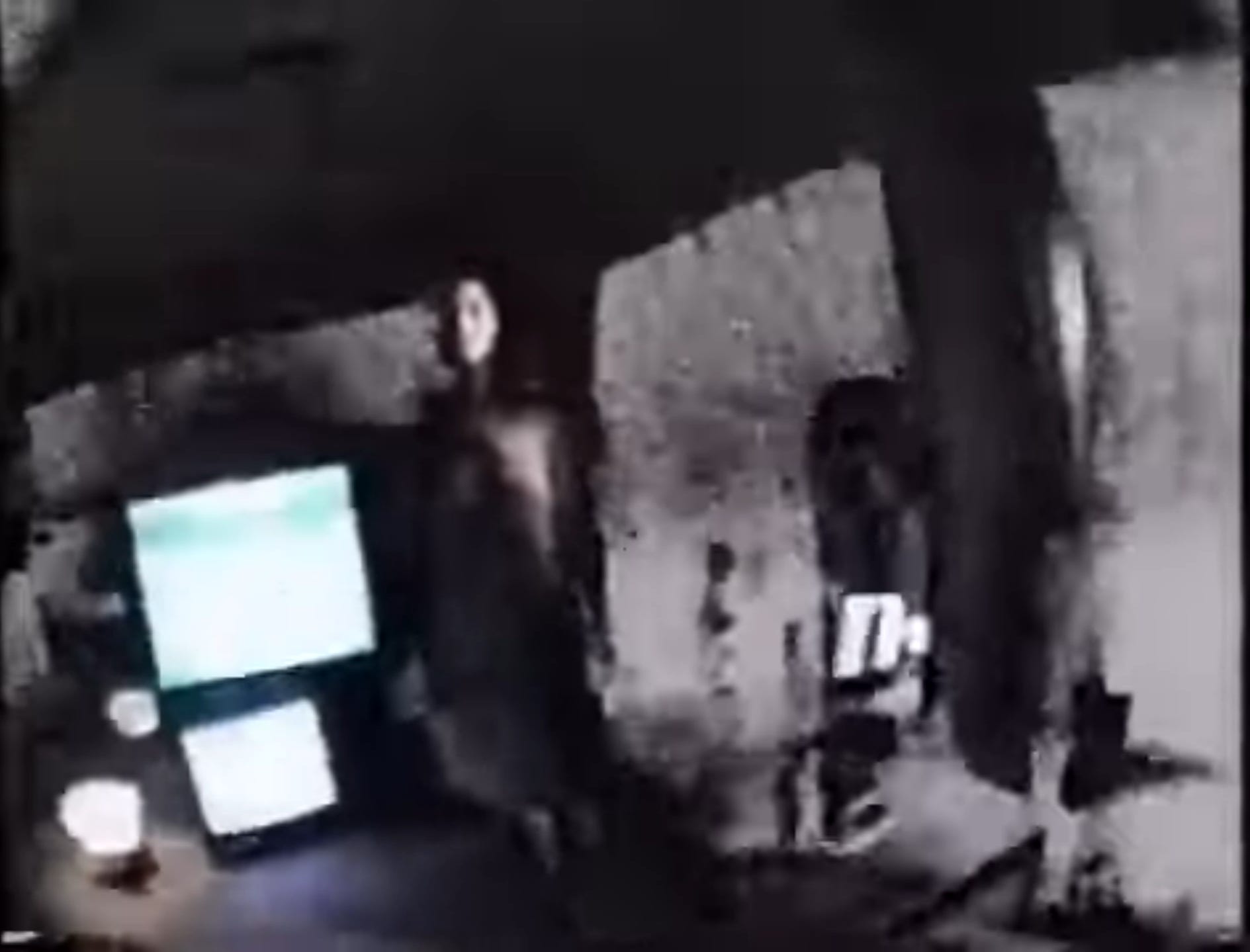
In terms of visuals, it doesn’t get much better than that ending sequence. If you are, like me, a fan of hypercompressed shot-on-video footage just in general, this might be enough for you. Otherwise you might find it dull. Personally I love when things are blocky and I can’t really tell what I’m looking at but I imagine that’s not for everyone. There are some fun little documentary-style graphics but a lot of it is just people walking around. I wanted more CGI transitions and diagrams. It’s funny that in 2026 I can watch this movie from 1991 and complain that they didn’t leverage their aesthetic enough when it wasn’t even really an aesthetic at the time. That was just how some stuff looked.
The main thing that struck me while watching Drugless was how decidedly un-technological it was. You can really tell this mockumentary about drugless pleasure was made in 1991. Obviously they couldn’t have known what the future would look like but it’s funny because, out of the four feel-good hormones, you hear almost nothing about endorphins anymore I feel like. It’s all about dopamine and serotonin these days, and those things feel pretty inextricably tied to technology. If you were to imagine a Japanese found footage movie about a drugless high I think you’d end up with something more cyberpunky, but maybe that’s just me. Drugless’s focus on mysticism makes it feel a bit more unique but also less relevant. There’s even a line about how Anfini is corrupting the infinite pleasure method by carrying it out artificially instead of through pure mental technique, but that artificiality is represented only by a piece of metal.
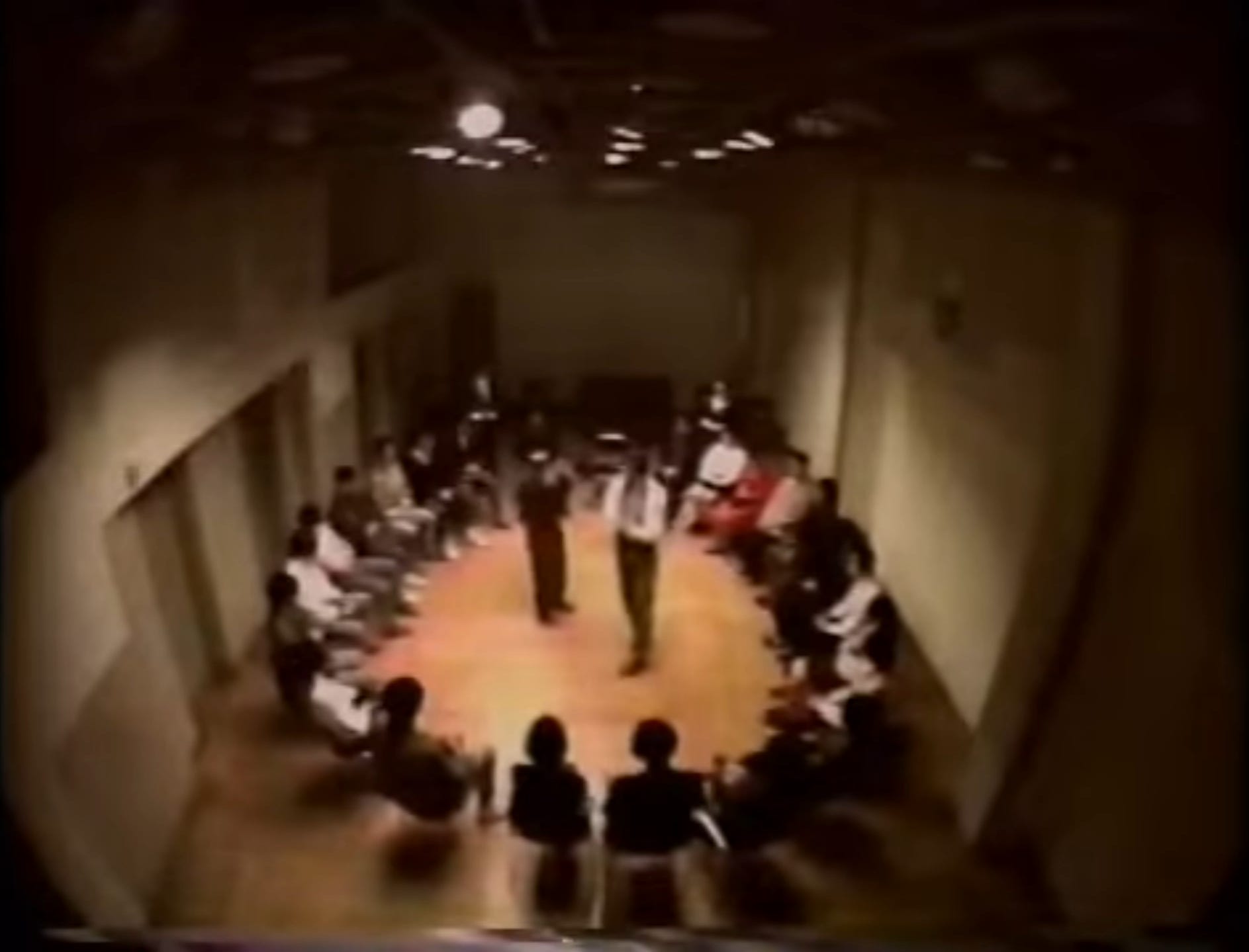
It’s absolutely unfair to imply this movie should have anticipated the modern internet. Kiyoshi Kurosawa’s Pulse was mind-blowingly prescient about the effects of being online and this movie came out a decade before that. So that’s not what I’m doing, even though I’m doing it a little bit. It just seems alien to imagine a world where people dying from fried pleasure receptors is a result of Indian mysticism instead of overexposure to Instagram reels. I think this is a rare case of a movie being too ahead of its time– tackling a topic that will soon develop deeper and unforeseen implications. Funnily enough, the other movie I felt this way about was also a found footage movie: The McPherson Tape from 1989. I think that one’s worth a watch if you’re at all interested in genre history, but I really did not find it enjoyable.
There are plenty of interesting and even good pre-Blair Witch found footage movies: Man Bites Dog, Cannibal Holocaust, and The Legend of Boggy Creek jump to mind. But I don’t think anybody would disagree that the genre never really caught on until after Blair Witch hit theaters in 1999. Those ten years before Blair Witch fever are really fascinating to me. People were making shot-on-video mockumentaries but clearly something was missing that kept the general public from latching onto them. That something was the internet. Even though The Blair Witch Project didn’t really invoke the internet within the text, the meta element of the marketing and word-of-mouth discussion made it clear that online was the hidden key to the genre. Found footage is a genre of information, investigation, research, uncovering awful secrets, and witnessing true, unadulterated horror. I mean, that’s the internet, through and through.
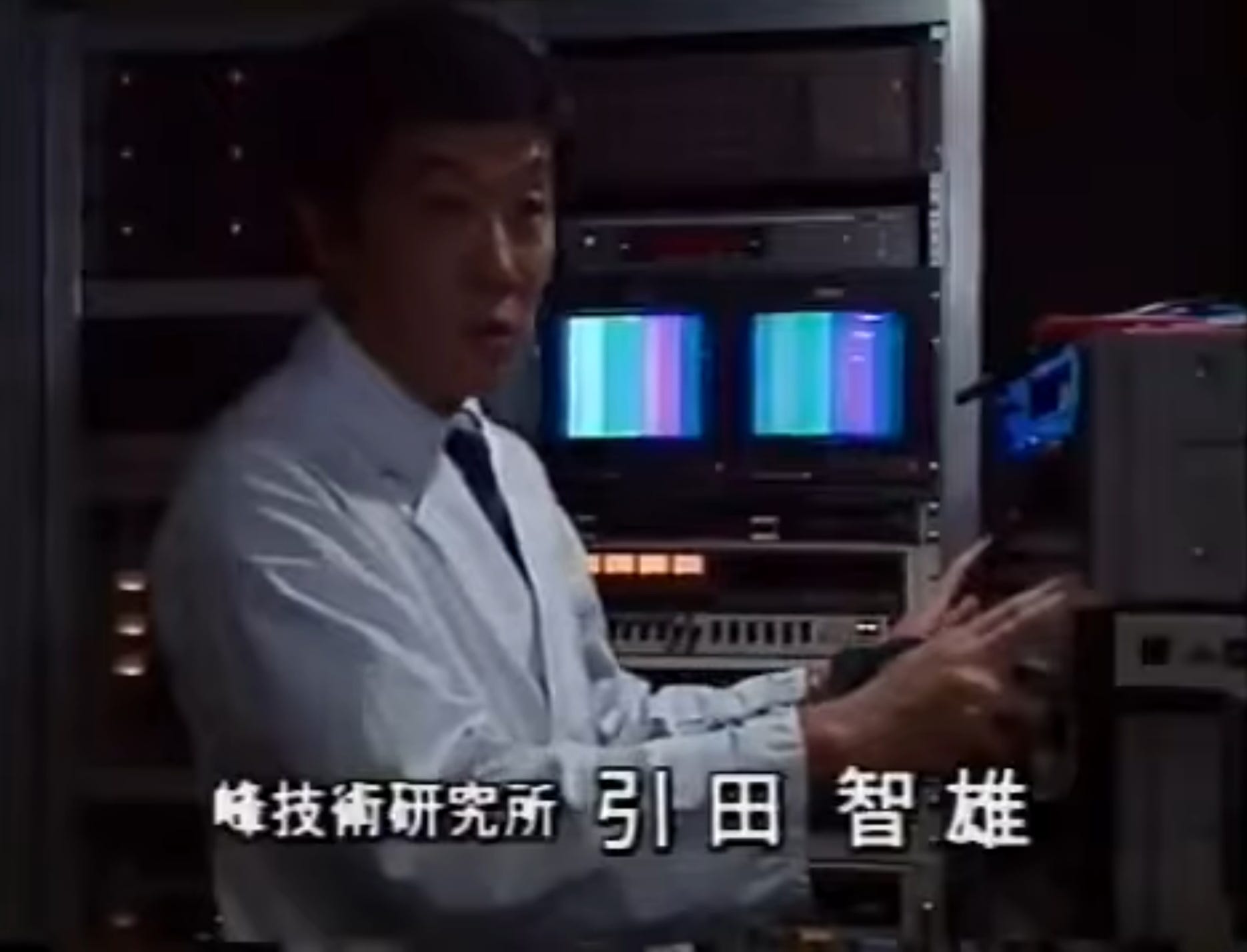
So while I didn’t find Report on Latent Narcotic Substances in the Brain: Drugless to be all that enjoyable on its own merits, I did enjoy the thoughts it provoked in me. It is undeniably ahead of its time. It doesn’t quite know how to utilize its ideas, but the genre it’s working in basically didn’t exist yet, so how can you blame it? Its biggest fault is that it’s hard to watch without imagining what a version made ten to fifteen years later might look like. And I don’t know if you can even consider that a fault. Three stars I think?

No posts
Comments
Nothing yet. Say the first thing.
Sign in to join the conversation.