
A creator-first film scene wouldn’t begin by asking permission to create a creator-first film scene.

No more waiting for broadcasters, studios, streamers, agents, funding body’s, festival programmers, or sales agents to decide if we’re worth taking seriously. I think it would look more like the foundation of local culture where filmmakers are visible before they’re validated.
At the moment too many indie filmmakers develop in private…. forever. Writing scripts no one reads and working on pitch decks no one’s requested. We wait for institutional approval while our relationship with an audience stays theoretical.
A city can have crews, gear, locations, tax credits, vendors, post houses, and professional discipline, and still fail to produce an independent film scene. A service industry is not a scene. It can leave local filmmakers culturally homeless.
Building off the “indie infrastructure” idea we’ve been developing. Perhaps starting a legit creator-first film scene with screenings that have purpose beyond just filling seats, might be a good starting point. Curated screenings that are eventized, like a micro-budget thriller screened alongside a conversation about genre as a survival strategy. Or a “first feature” as a case study on how local crews, favours, locations, and audience-building really work.
A healthy scene needs audiences who understand what they are watching and why it’s important. Our local audiences should not be treated as an after thought when festivals, streamers, and distributors pass. We shouldn’t be pleading for them to buy a ticket,

but instead cultivating early and inviting them into the process. Test screenings, work-in-progress nights, table reads, proof-of-concept events, and post-screening conversations can and will build cultural memory around local work.
As film makers, we don’t need more applause…
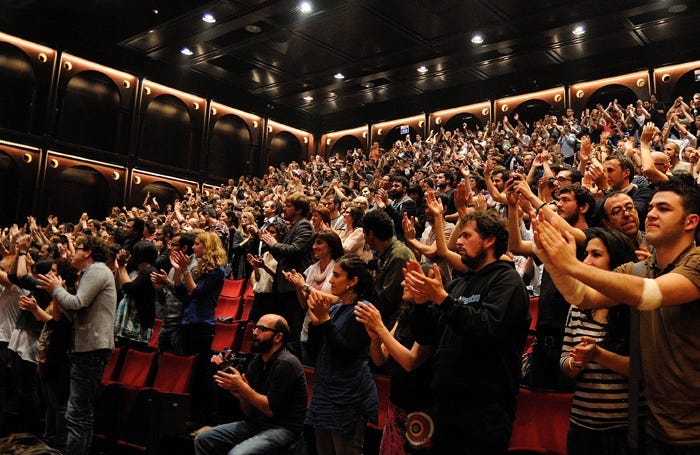
We need feedback. We need repeat viewers, collaborators, mailing lists, advocates, donors, sponsors, and people willing to say, “I saw the early version of this, and it’s grown into something amazing”.
We’ve all attended the film discussion panels and they can be useful. But too often they feel like congratulatory theatre for people already inside the system. The room fills with polite advice and nothing gets built
A creator-first scene builds practical labs. A practical lab leaves people with something concrete. A revised finance plan. A stronger pitch email. A chain-of-title checklist. A one-page audience strategy. A working budget. A distribution map. A proof-of-concept plan. A sponsorship deck. A better answer to the question every filmmaker hates: “who’s this for?”

Everyone in the indie ecosystem needs to know how to produce on some level. Film schools graduate writers, directors, actors, cinematographers, editors, and almost none of them are hired onto their first feature or series at the level they trained for. A cinematographer who wants to actually DP something usually has to create that opportunity from the ground up. And creating that opportunity means producing it. Producer capacity is the missing ingredient in most independent scenes. A strong scene doesn’t just need great craft, it needs producers who understand money, rights, schedules, insurance, audience design, partnerships, impact, sales, and the psychology of keeping a project alive without lying to themselves about where it stands.
This skill set doesn’t appear on its own. It has to be built, taught, and valued. A creator-first scene treats producing as a creative discipline. Producing is the architecture that allows fragile work to survive contact with reality and emerging producers need spaces where they can package a project without inflating it, ask for money without sounding desperate, talk to sponsors without selling the soul of the film, and collaborate with civic partners without turning art into municipal branding.
And yes, civic partners and sponsors are important. Not because they need to control the work, but because independent film culture needs more than filmmakers talking to other each other. Libraries, universities, small businesses, credit unions, arts councils, cultural offices, mental health organizations, immigrant-serving organizations, and local media all become part of a stronger film ecology if the invitation is clear
Our pitch has to be stronger than “support my dream.” It needs to say “support our local cultural platform”. Support public conversation. Support youth access. Support career pathways. Support neighbourhood audiences. Support our city where stories are made by the people who actually live here.
Our scene needs to create productive pressure, not hype. Our filmmakers shouldn’t be allowed to disappear into endless development without consequence. At some point, a project needs to meet the world as a reading, a teaser, a rough cut, a community screening, or a short proof-of-concept.
Private development feels safe because no one can reject what they cannot see. It’s also where many projects go to die.
A Vancouver creator-first scene can make unfinished work feel less like its happening in a vacuum and finished work less invisible. It cab create a rhythm where filmmakers show up, share progress, learn practical skills, meet audiences, find collaborators, and build evidence that our work has life beyond our laptop.
The future of independent film belongs to the communities that build their own proof. Not just better scripts or more pitches, but more public contact. A shared infrastructure.
Lets screen our work with intention. Teach the skills people actually need. Build producers, not just projects. Invite audiences before the final cut. Give civic partners a reason to care. Let sponsors support culture without owning it. Create public momentum before institutional validation arrives.
No posts
Comments
Nothing yet. Say the first thing.
Sign in to join the conversation.