The idiosyncrasies of tabular data
The things that make tabular data different

I write about AI, CS, and a lot of other topics that interest me.
Subscribe:.rss.atom.json.md.m3u.pls
Dormant Last read · last published · next check
Read 2 days ago and current, but nothing has been published for 12 months.
The things that make tabular data different
Or, why MLMs are not "CLMs, but bidirectional"
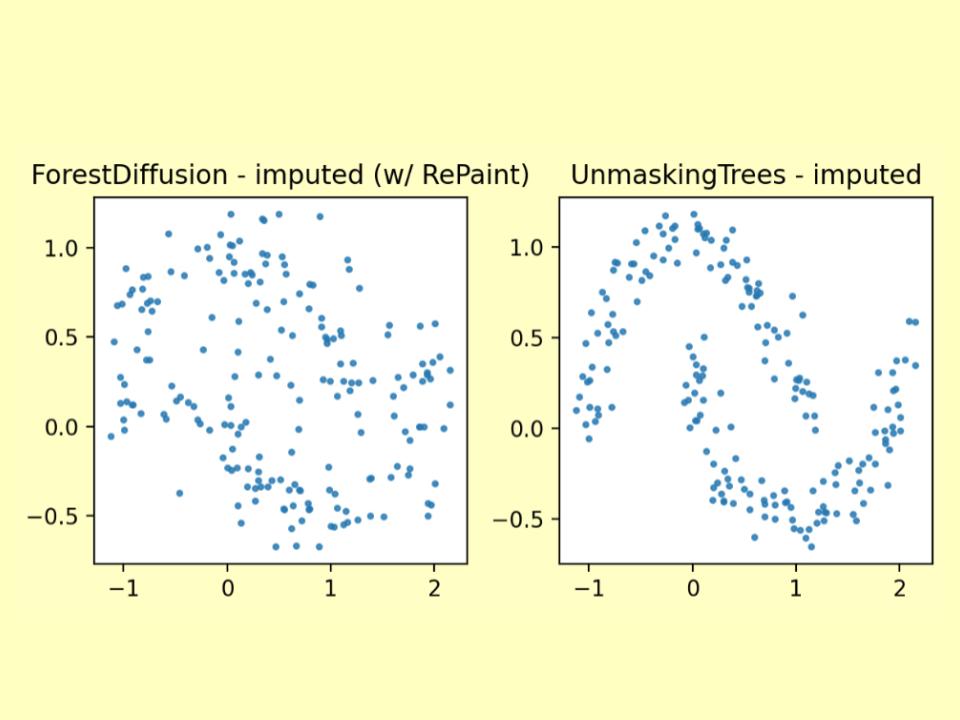
When tabular imputation is the vibe, unmasking is low-key goated
Tanner Greer at Scholar’s Stage has written an informative report describing the Chinese government’s ambition to lead the next techno-scientific revolution. In this essay, he repeats his earlier skepticism about the prospects for digital technology to produce such revolutionary advancements.
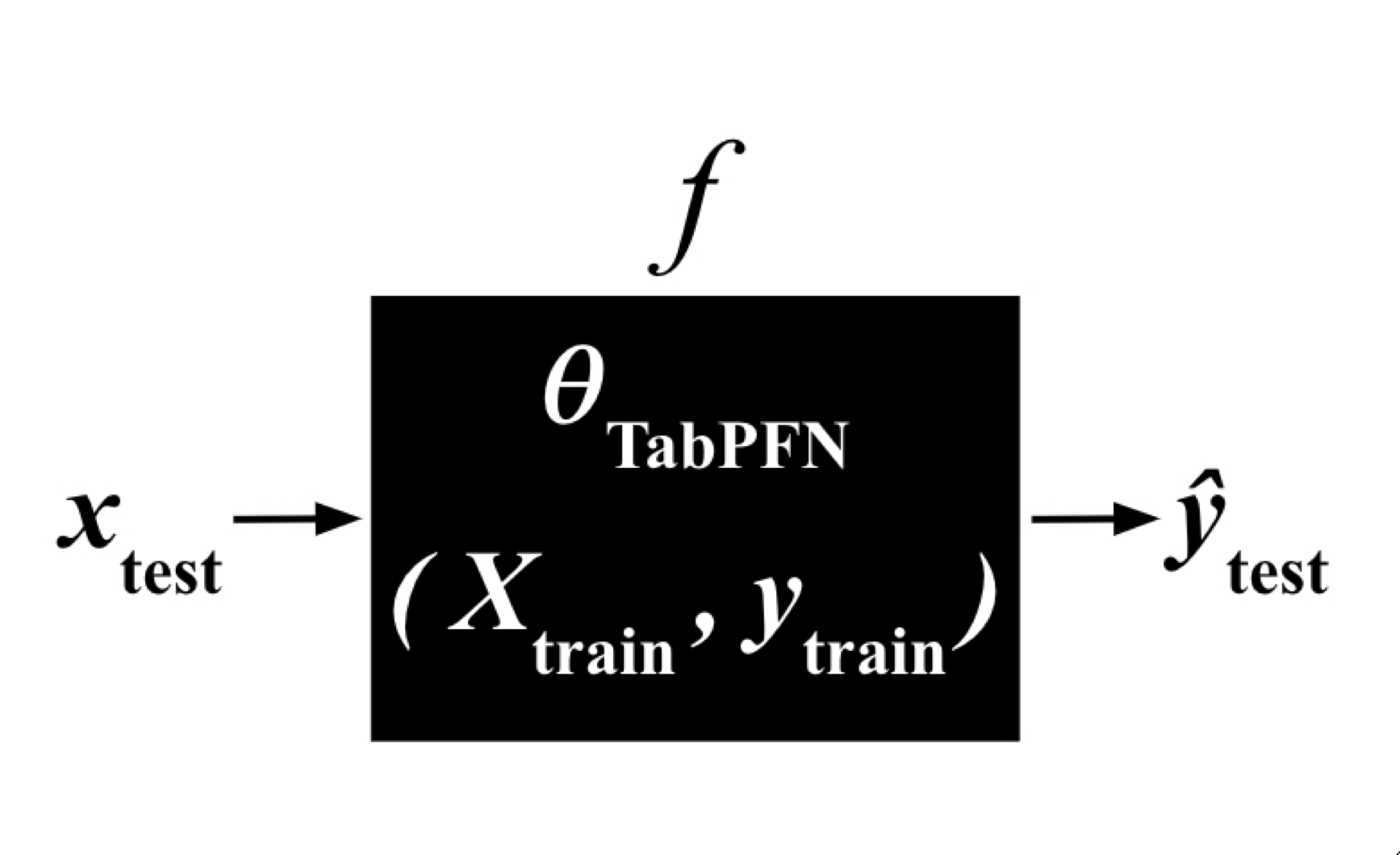
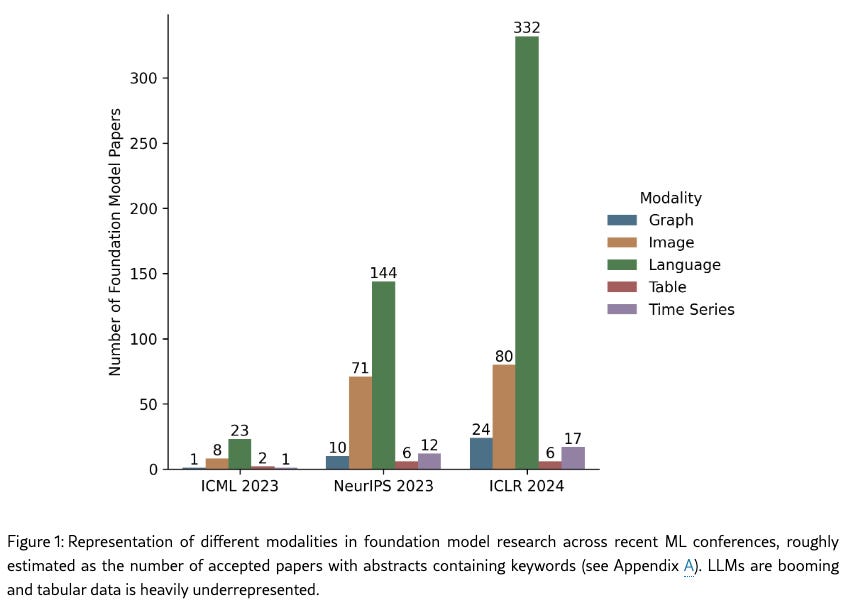
TabPFN [Hollmann et al., 2023], a Transformer model pretrained to perform in-context learning on fresh tabular classification problems, was presented at the last ICLR conference.
I make frequent reference to this text in conversations with right-leaning friends.
In the popular mind, the Great Divergence (or European growth miracle) is associated with Gutenberg’s 1440 invention of the printing press, Columbus’s 1492 voyage to the Americas, Luther’s 1517 initiation of the Protestant Reformation, Locke’s 1689 Essay Concerning Human Understanding,
In a recent episode of the excellent InControl podcast, Alberto Padoan asked Stephen Boyd about the value of convex optimization.
Stephen Boyd, of convex optimization fame, was interviewed by Alberto Padoan in a recent episode of the InControl podcast. What follows is a short segment from their fascinating conversation.
Suppose you have two multivariate Gaussian distributions \( S\) and \(T\), parameterized as \( N(\mu_S, \Sigma_S)\) and \( N(\mu_T, \Sigma_T)\).
Suppose you have \(K\) multivariate Gaussian distributions, each of dimensionality \(N\).
The softmax function \(\sigma(\mathbf{z})\) maps vectors to the probability simplex, making it a useful and ubiquitous function in machine learning.
What follows is an excerpt from Albert Jay Nock’s 1918 essay, Advertising and Liberal Literature. Nock describes how the London Mercury, founded in 1682 as an anti-royalist newspaper, survived and thrived on advertising revenue.
A fascinating exchange happened on the latest All In podcast: the besties started talking about personal servers as the future architecture of AI deployment.
The educated man, as some still think, is one whose existence is not isolated in the present, whose intellectual and emotional life is consciously joined to the deep currents of evolution, moving from the far past to the invisible future.
I'm pretty bullish on 3d printing.
Nathan Tankus recently wrote about the quandary faced by central banks and regulators.
The mysterious, haunting lyrics to Avalanche by Leonard Cohen have received a variety of interpretations. The speaker of the song is said to be a supernatural figure — God or Satan, or a mere human — a jilted lover or a lonely hunchback. But the speaker can instead be understood as a personification of Planet Earth.
I think Adam Mastroianni has done a fine job critiquing peer review as a barrier to entry and as a service to paper-readers, but that's not how it really functions in practice, for better or worse.
Most of modern ML is heavily reliant on gradient descent and its variants.