
This week, juries in California and New Mexico found that design features on social media platforms contributed to harm and mental health distress in cases involving young users. “The verdicts feel like a shift. Not the end of this dystopia, but a shift,” said First Partner Jennifer Siebel Newsom.
While these decisions may shape how platforms are designed in the future, many families are still grappling with their effects right now. This piece offers ideas for building communication and connection so that even tricky conversations about technology feel more possible.
Have you seen the new trailer for Toy Story 5?
We return to our favorite toys in the middle of Bonnie’s imaginative play. Then something new arrives: a tablet. Within moments, Bonnie is glued to the screen.
It’s up to Woody and Buzz to get this tablet out of here!
This premise lands because it feels so familiar to families today. Many parents start with a tablet for a long car ride or some educational games. But before long, the device becomes a fixation—and managing it turns into an endless power struggle.
Families who have tried simply taking devices away know that it’s rarely that simple. One parent told us:
“I started noticing my son couldn’t take his eyes off his phone. It was like he was in a trance. And once I turned it off, his reaction was shocking—he was completely overstimulated, and it was very hard to settle him down.”
In moments like these, it’s tempting to focus on the device itself. But screens are often a symptom of something deeper: boredom, social pressure, curiosity, or the simple pull of a digital world designed to keep our attention.
Before reacting with new rules or restrictions, pause and ask a few questions about what’s really going on. Those conversations can open the door to helping our kids navigate both the virtual and real worlds confidently and responsibly.
Just as opening too many tabs on a computer can crash a browser, trying to address every worry about screens at once can feel overwhelming—for both you and your child. It may help to pinpoint what concerns you most right now. Is it cyberbullying, exposure to harmful content, the conflicts that are arising in your family over devices, or something else? Naming the concern makes it easier to focus the conversation.
As parents, we’re often called on to play multiple roles at once: leader, enforcer, caregiver, confidant. When those roles are in tension, it can help to return to the heart of all relationships: connection. Taking time to talk with kids—about technology, their experiences online, and the pressures they face—helps build the trust that makes guidance possible. When children feel heard and supported, they’re more likely to turn to us when something goes wrong.
No one knows your child better than you do, and meaningful conversations will look different in every family. Sometimes it helps to start in an ordinary moment—while cooking, walking, or driving—when no one feels put on the spot. Open-ended questions invite kids to reflect on their own experiences online, such as:
How do you usually feel before you get online? What about after?
Have you ever seen something online that upset you? What did you do?
Is it ever hard to stop scrolling or gaming? Why do you think that is?
When kids have space to talk—and we resist the urge to jump in too quickly with solutions—they often share more than we expect. Kids are, after all, experts in their own lives. As child and family therapist Mercedes Oromendia put it:
“Get to know your child’s world a little more before you come down and start imposing all these rules because you might be surprised. Stay curious and connected.”
The reality is that screens are everywhere, and they aren’t going away. As parents, our job has always been to prepare our kids for the real world—guiding them through age-old challenges like peer pressure and bullying, and now the specific challenges of the digital world.
Taking a device away might solve a problem in the moment. But starting a dialogue with your child about what’s really going on can address deeper issues and strengthen your relationship for the long run.
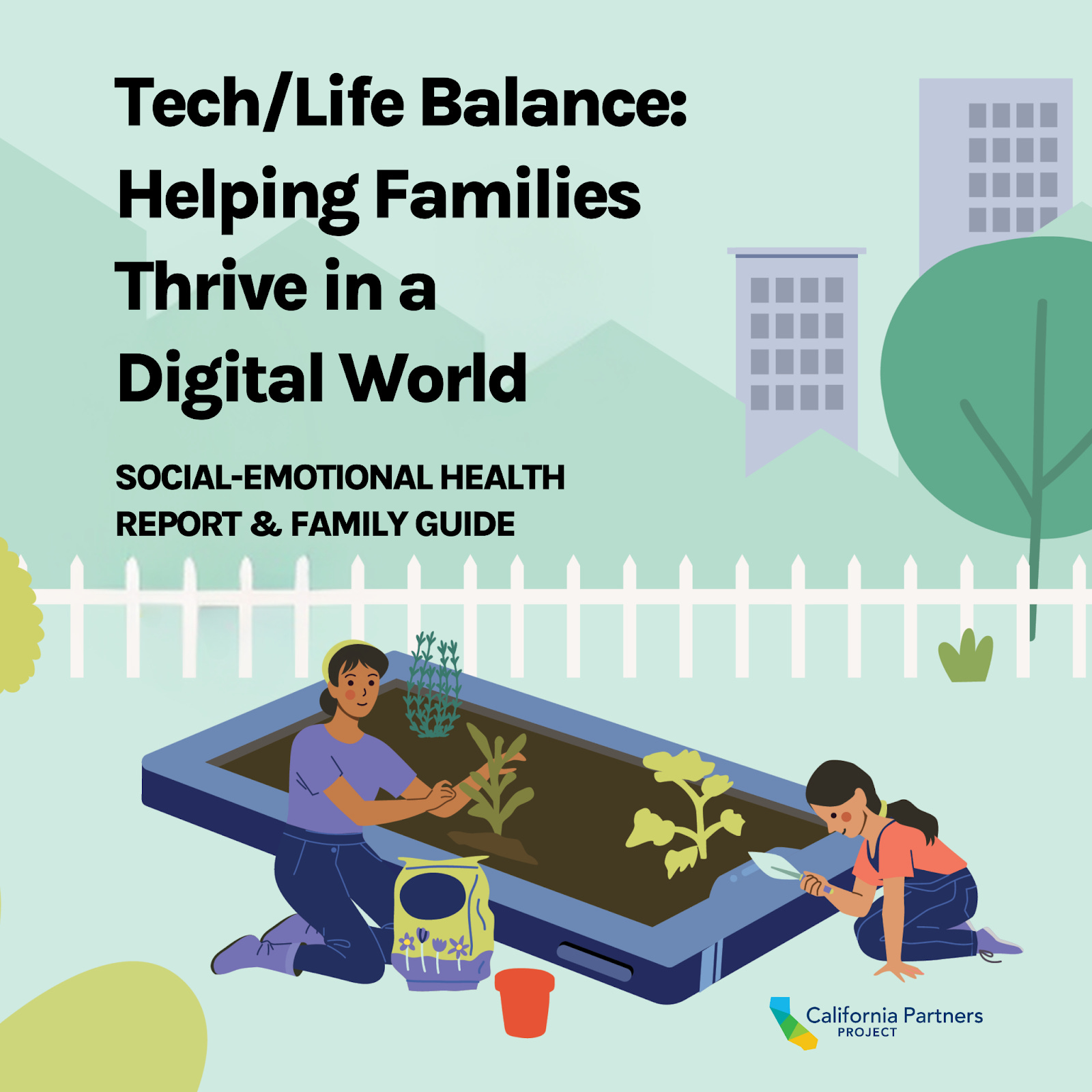
For more ideas about how to raise connected kids in a screen-obsessed world, check out the Social Emotional Health Family Guide, part of the Tech/Life Balance series from First Partner Jennifer Siebel Newsom and the California Partners Project.
No posts
Comments
Nothing yet. Say the first thing.
Sign in to join the conversation.