
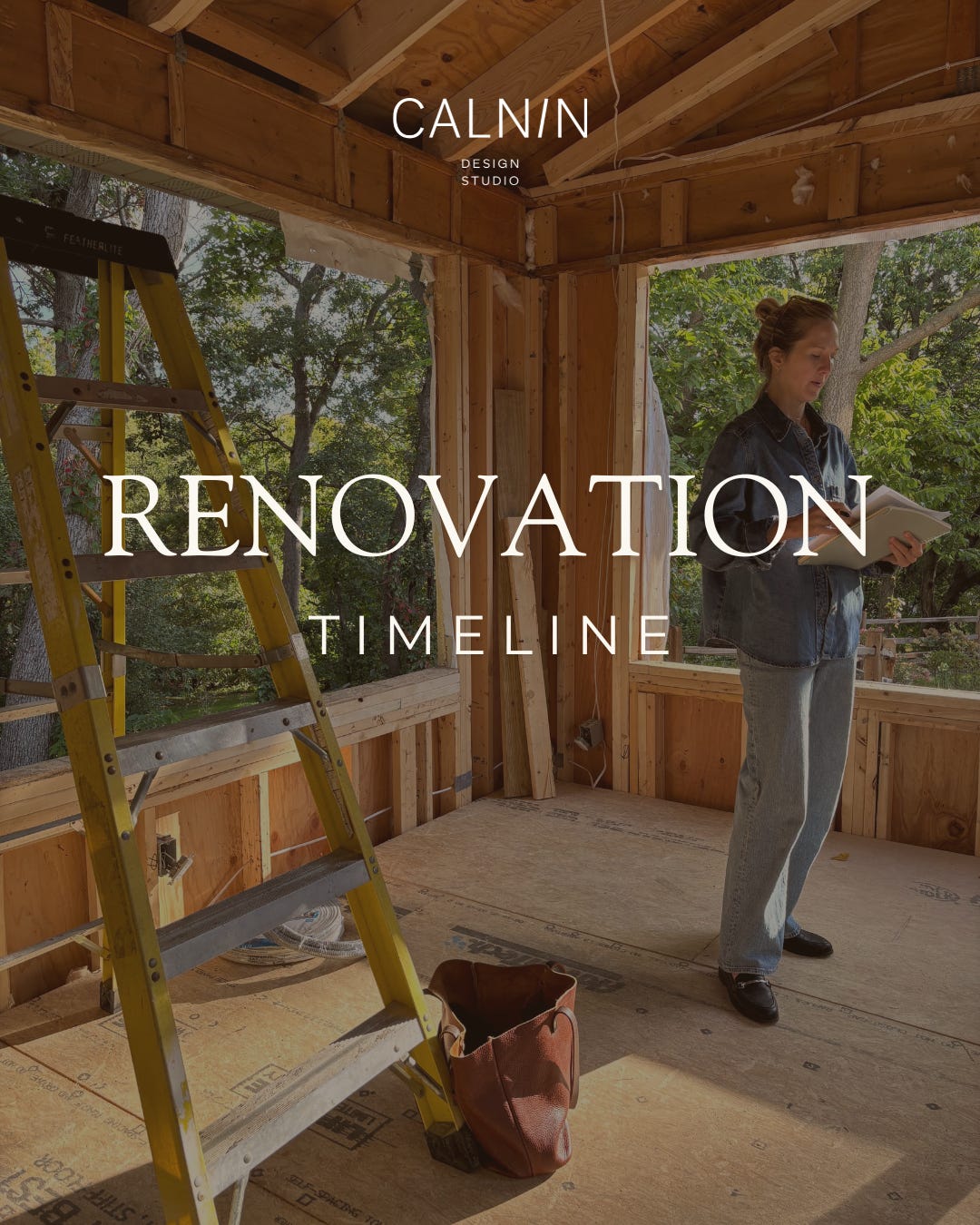
From concept to move-in, a renovation isn’t just about what you’re changing; it’s about when you can actually live in your home again and get back to life. For time-strapped clients who juggle work, family, and a tight schedule, clarity and buffers aren’t luxuries—they’re essentials.
Living in your home during any remodel or renovation process is not for the faint of heart. There are trades coming and going through out the day, which can feel strange and exciting all at once. That’s why we have come up with a timeline for our clients to feel in control and flexible with the changes, for a stress free process.
They create predictability in a project that often feels uncertain.
Milestones let you track progress and flag issues before they derail plans.
Built-in buffers absorb weather, supply delays, or design tweaks, so you can stay on track without constant stress.
Discovery and scope alignment (1–3 weeks)
What happens: define goals, get to know you and your family’s lifestyle, confirm budget, outline key spaces, and determine the scope.
Why it matters: this sets a solid foundation before design work begins, keeping everyone on the same page and clear about expectations, resulting in a beautiful and intentional home.
Design concept and selection ideas (4–8 weeks)
What happens: layout schemes for every room, material discussions, cabinet styles, color story, and setting budget expectations.
Why this matters: this points the compass in the direction we’re headed. It can get messy when there are so many ideas or too many options. We narrow it down, ensuring the design aligns with the house, the architectural history, and your personal desires.
Tips: lock in critical decisions early to avoid design drift later.
Design development and selections (4–8 weeks)
What happens: refine layout schemes, elevations, renderings, material selections, lighting and plumbing fixtures are chosen, electrical plans, and construction documentation.
Why this matters: we present the design, in its entirety, so that you can envision what your home will look and feel like once it’s complete.
Tips: hand off a complete set of construction documentation to builders so that less decisions are made on the spot and painful and expensive mistakes are avoided.
Construction Administration - Permitting and procurement (2–6 weeks)
What happens: once your builder has the plans, they can submit their documents for permits (if required), order long-lead items such as windows and doors, and finalize suppliers and trades.
Why it matters: delays are inevitable through construction, but we can plan and prepare with parallel work alongside the builder as a team to get things back on track.
Tips: depending on the scope, we recommend weekly meetings with your builder to update you on the progress, problem solve any issues, and keep everyone informed.
Construction (6–24 weeks or 12+ months for whole home)
What happens: site demo and prep, framing, mechanical rough-ins, insulation, drywall, flooring, paint, and mid-construction inspections.
Milestones to watch: framing lock, rough-in complete, and final inspections scheduled.
Buffers: expect weather, backorder materials, and change orders—build in extra weeks as a safety net.
Finishes and move-in prep (4–8 weeks)
What happens: cabinetry, countertops, tiling, lighting + plumbing fixtures, finishes, wallpaper, painting touch-ups, cleaning, and punch-list completion.
Milestones: all finishes installed, final punch list signed off, and move-in ready checklist completed.
Move-in and post-move-in adjustments (1–2 weeks)
What happens: minor tweaks, warranty items, and any scheduling of follow-up visits.
Why it matters: ensures lasting satisfaction and reduces post-move stress.
Why buffers matter: they absorb weather delays, supply hiccups, design clarifications, and unanticipated site conditions.
How much buffer: aim for 10–20% of the project duration, applied across phases and especially before construction starts.
Practical ways to create buffers:
Schedule milestones with built-in 1–2 week slack for decisions.
Pre-book key trades and order long-lead materials early.
Establish a single point of contact for timely decisions (you or your project manager).
Define a move-in date and work backward.
Identify your top 3 must-have design decisions and lock them in early.
Choose a general contractor or project manager who provides a detailed, milestone-based timeline.
Create a simple decision calendar: set deadlines for approvals (e.g., 3–5 days to respond).
Build a realistic budget cushion for contingencies (e.g., 5–10% of total budget).
Designate a clean “drop zone” and a plan to keep daily life as uninterrupted as possible.
Document changes in a single place to avoid drift (a shared board or project folder).
Schedule weekly 15–20 minute check-ins to stay aligned.
Have a clear process for mover dates and temporary living arrangements if needed.
Plan for inspection windows and permit approvals in your calendar.
I want to note the importance of staying flexible during any home project - we cannot predict what issues will arise (and they 100% will happen), but it’s how you can prepare that is the difference between a huge costly headache, or having a team in place to problem solve for the best possible outcome.
I hope you enjoyed this post and it gives you clarity on how to approach your home renovation! As you can see from the timeline, it can take a significant amount of time, so plan early, get your team in place, and let’s RALLY.
Until next time,
Hugs, Katie
Comments
Nothing yet. Say the first thing.
Sign in to join the conversation.