
In a Callo meeting today, we were trying to find the name of the investor that said to us in 2023 with conviction, “YouTube creators don’t want to be on TV or in cinema” …
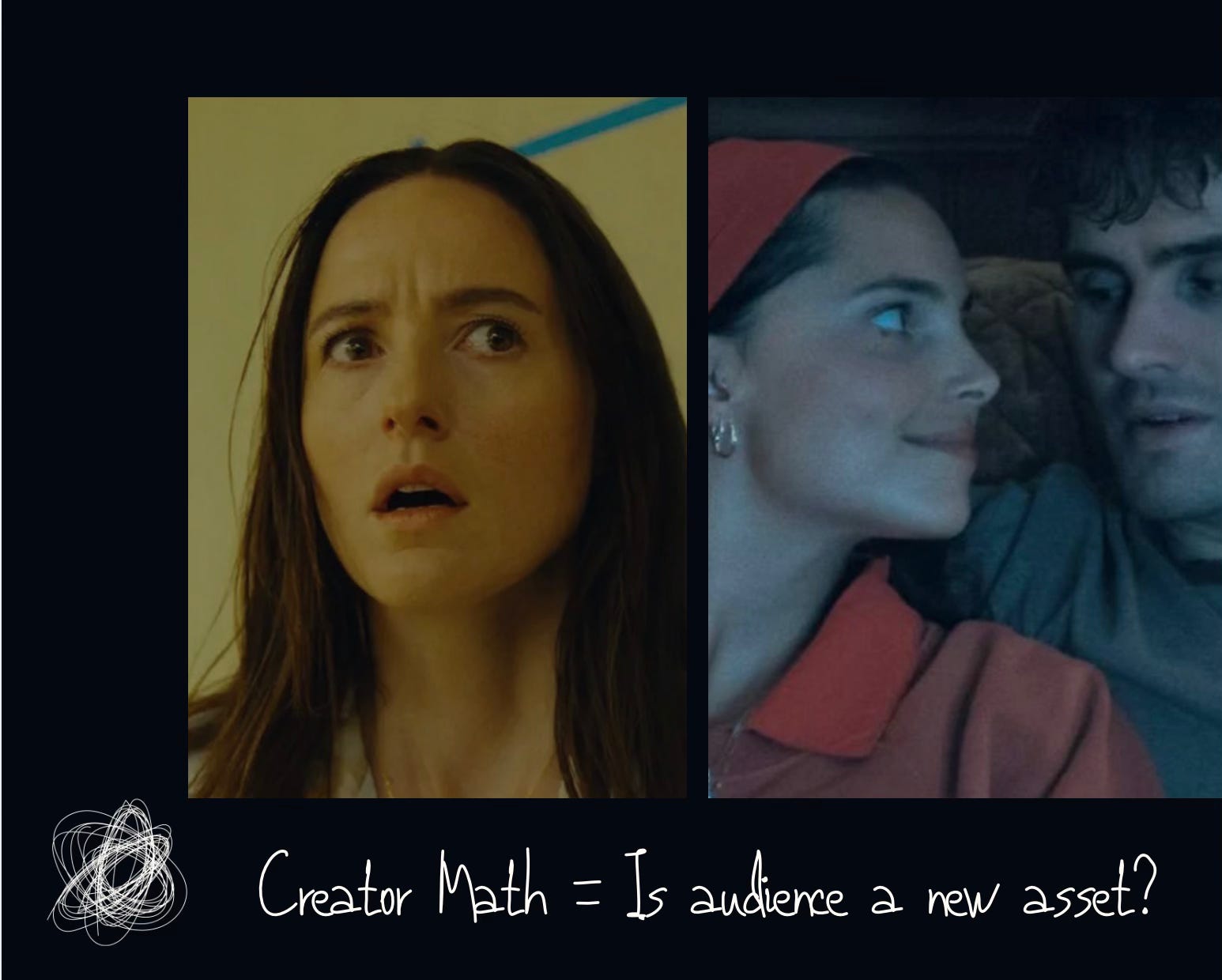
This past Sunday, we caught a post from a partner of the community Simon Pulman, a lawyer & Partner of Entertainment division at Pryor Cashman, breaking down the economics behind YouTube creator Curry Barker’s film Obsession. Reports put the film’s budget at between $750,000 and $1 million, and this weekend its box office reached $148 million worldwide.
Pulman’s post, which you can read “back of the envelope math” post, is about how creator-led horror is starting to look like a durable business model. The hits Backrooms, Obsession, Iron Lung, says it’s proof that creator-led is becoming a real lane. What we like about his numbers breakdown is that it forces the conversation back to reality from the countless headlines.
When a movie breaks out, everybody wants to talk about the box office number. The headline becomes the story. The problem is that the headline is usually the least interesting part of the business.The business is what happens underneath the headline.
A real signal is forming here with a movie becoming a massive success with audiences, but still have a complicated economic path to success for the people who made it. That’s not some dark secret we are telling you about the nature of independent filmmaking. Money moves through distributors, exhibitors, sales agents, lawyers, financiers, guild obligations, and participation structures before it reaches the people whose names are on the poster. But that may be about to change for this new era of independent film in an increasingly expensive world.
The bigger reason Obsession matters, though, has less to do with where the money goes and more to do with where the value came from in the first place. The creator model always asked creators to carry the risk while someone else controlled the keys to bigger distribution engine, we might not still be there yet, but we are no doubt working towards a more hybrid system.
We wrote about the Creative Super Class in May We Be Blunt? For a long time, independent financing was built around a fairly simple question: how can we reduce risk on this project?
Sometimes that was a movie star.
Sometimes it was a distributor relationship.
Sometimes it was a festival premiere.
Now we’re watching a new answer emerge: Audience.
Not in the abstract. Not as a marketing buzzword, but as an actual asset.The old pipeline was never especially great at turning attention into momentum, it was always a couple of degrees away from their customer. Creator-led originated with the thesis that they can have direct relationships with their fans, engaging with them in comments, understanding what works and what didn’t for them, first hand data and analytics.
Now we are in the early stages of new math that opens the door for what gets financed tomorrow. It seems like underneath it all we’re talking about audience acquisition stories where a creator with millions of view and / or subscribers is increasingly functioning like a pre-sold foreign sales asset just like a recognizable actor has a pre-existing relationship with their audiences based on previous films.
This is such a rare moment we’re seeing unravel in real time. Let’s get into it.
If you like what you’ve read thus far, it gets better below, so share, like comment.
What looks like a simple indie windfall is actually a complex layered system of distribution fees, residuals, recoupment, and waterfall math determining who really gets paid.
Here’s the “aha” from that lens:
1. The MG is not the same as real upside
That $15M acquisition fee that Obsession received from Focus Features sounds huge, but it’s not just “found money” for the filmmakers. From the distributor side, that’s a hedge, not a gift. And if the film is split across territories, the money doesn’t even all flow through one clean pipeline.
Translation: the “movie made $100M” headline means different based on the size of the project’s budget and which side of the table you sit on.
2. Distribution takes more than it looks like it takes
A 25% fee already sounds heavy, and that’s before P&A, overhead, interest, legal, delivery, and all the other stuff that gets loaded in. On a breakout indie, those costs can get wild fast.
Translation: the distributor can look like a partner while still eating big first and taking less risk downstream.
3. “Net profit” is mostly a fantasy word
People love saying “we’ll all share in the net,” but net is where deals go to disappear. Back end residuals, guilds, music, legal, all make sure everyone eats while the accounting gets unclear real fast.
Translation: if a film actually has meaningful net, that’s already unusual.
4. Not all points are equal
Some people get paid above the waterfall. Some get direct bonuses. Some get first-dollar gross. Some get whatever is left after everyone else has taken their slice.
Translation: backend is not one thing, it’s a hierarchy.
When a creator shows up with an audience that has already demonstrated attention, loyalty, they’re bringing something investors understand and distributors want. They reduce uncertainty. And every financing structure in Hollywood, at its core, exists to manage uncertainty.
It changes the trajectory by turning indie film from a gatekept category into a format with its own flywheel becoming audience first, proof second, financing third, distribution last. That doesn’t erase traditional indies, but it does force competition on a different axis where community, identity, and direct demand matter more than institutional approval and basically saying the lane is no longer just “YouTube creators making movies,” but a vertically integrated creator studio model that can move fandom into theaters, retail, and localized mobilization.
That’s why these creator-led films matter. Not because every filmmaker should run out and become a full-time content creator. Not because traditional filmmaking is dead and not because followers automatically translate into ticket sales.
The market is beginning to recognize that audience itself has value before a frame of the movie is shot. More filmmakers may be able to get projects financed. More creators may be able to make the jump into long-form storytelling which is the middle layer of the business that has been under pressure for years could start to pulse and expand again.
But it’s also worth remembering that whenever a new source of value appears, the industry gets very interested in figuring out how to pounce and participate.
We’re not being cynics. That’s just the business. We respect any model that lets filmmakers keep authorship, build direct relationships with audiences, and avoid being flattened by outdated studio logic.
The audience may be new to the financing conversation but the contracts, the waterfall, the recoupment are not. If the internet built these Creators and IP, does it have the same weight, impact when a studio get’s their hands on it?
In some ways, it resembles the story of a pet boa constrictor quietly sizing up its owner before its next meal. The attention may feel flattering and validating at first. But it is worth understanding exactly why everyone suddenly wants to be in the room.
Creators and filmmakers are entering a marketplace where their leverage is increasing, but leverage only matters if you understand how the deal works. The hard part is still making something genuinely undeniable for less.
The new model just focuses on de-risking in the internet era. The industry now recognizes a new asset class and is studying how to build structures to capture it. We’re in the audience-backed independent media phase that is not at a studio scale or a micro-budget passion project, but something in between.
An individual making great stories with:
500K YouTube subscribers + millions of views talking about filmmaking
100K newsletter readers + paid subscribers writing short stories that capture a feeling
1M+ TikTok followers diving into a specific niche
a unique, repeatable creative voice that’s multi-medium
suddenly becomes investable in a way they weren’t five years ago where audience is the IP, audience is the marketing, audience is the de-risk mechanism that drives distribution in ways they haven’t before. The filmmakers who understand both the creative side and the economic side of that shift are going to be in a much stronger position than the ones who only understands just creative or just money.
Callo sees creator-led film as a new financing and audience layer on top of filmmaking. It’s one that gives filmmakers more ways to build leverage before they ever enter the room. This is the real opening for independents, not to fight the creator-led wave but to learn how to use it without losing control over what makes independent film so compelling in the first place: creating for audiences.
Are you developing, packaging, or taking your projects to market? The platform independent producers, writers, and directors are using right now to run their slates is Callo. → apply at www.wearecallo.com or set up a demo calendly.com/callo
Comments
Nothing yet. Say the first thing.
Sign in to join the conversation.