

The closing bells just rang across the major exchanges. While the retail crowd is staring at superficial numbers on their screens, celebrating speculative tech headlines, the structural shifts beneath the market floorboards are accelerating. If you spent your day insulated from the real macroeconomic wires, the perimeter has fundamentally moved.
Washington is pushing for a record $1.5 trillion defense budget while hosting back-to-back White House meetings on two active wars.
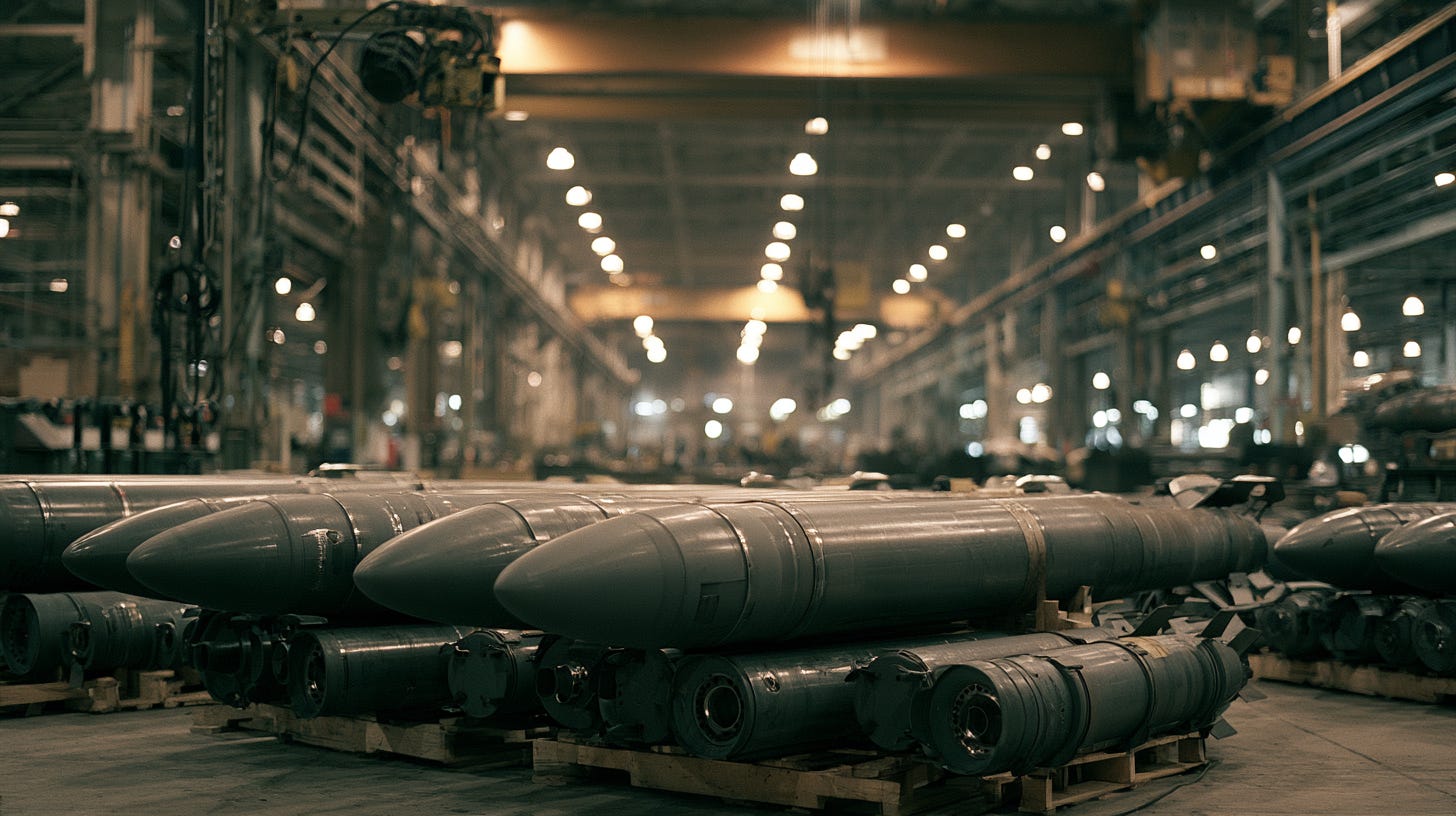
While cable news hawks hype a “defense stock rally,” they are ignoring a massive bottleneck on the factory floor. Defense procurement demand has surged over 200%, yet contractor capital investment remains frozen at ~3% of revenue. The industrial base physically cannot build what Washington is ordering.
The real financial damage isn’t staying at the Pentagon—it’s landing directly on your retirement balance sheet.
To fund these trillion-dollar checks, the U.S. Treasury is flooding primary dealers with massive waves of new debt. With 10-Year Treasury yields anchored at 4.68%, the paper value of “safe” bond allocations and target-date funds inside your 401(k) is taking a silent, direct hit.
I’ve stripped away the political noise to trace the physical line from jammed shipyards and sub-tier supplier failures straight to your quarterly statement.
Read the Full Macro Audit: The $1.5T Defense Ask & Your Portfolio
The $87.6 Billion Emergency Supplemental: Fiscal Deficits and Duration Risk
The $111 Billion Freeze: Antitrust Fragmentation and the Mechanics of M&A Arbitrage
A New Banking Shift Has Already Reached 121 Institutions (Ad)
Structural Fuel Inflation: How $5.10 Diesel Compresses Fund Earnings
Structural Asymmetry: How Millisecond News Feeds Cost Passive Portfolios
The $1.5 Trillion Year-to-Year Lease: Inside the USMCA Sunset Deadlock
(ad)
Three things, then you decide.
What it is: Immersed - the #1 AR/VR productivity platform. 1.5M+ users. 75,000+ on the waitlist for the Visor headset.
Why now: 4,000% valuation growth. $36M+ raised from 9,500+ investors.
The catch: the $0.79/share Reg A+ round - open to all investors - closes soon. Up to 20% bonus shares while it’s open.
Disclaimer: Immersed is offering securities through the use of an Offering Statement that has been qualified by the Securities and Exchange Commission under Tier II of Regulation A. The valuation is set by the Company and there is currently no public market for the Company’s Common Stock. Please read the offering circular and related risks at invest.immersed.com. Nasdaq ticker “IMRS” has been reserved by Immersed and any potential listing is subject to future regulatory approval and market conditions.
⛽ National Average Diesel - $5.14 / gallon
High fuel inputs sustain severe upward pressure on freight surcharges, directly compressing corporate operating margins.
🚗 National Average Gas - $3.98 / gallon
Dips briefly below the $4.00 mark as crude oil futures pull back following temporary strike pauses in energy corridors.
📈 10-Year Treasury Yield - 4.68%
Elevated yields keep corporate borrowing costs high while depressing the paper value of fixed-income fund allocations.
🏗️ Defense Sector CapEx Ratio - ~3.0
Contractor CapEx relative to revenue remains severely depressed, signaling persistent physical supply chain bottlenecks.
Following the Department of Defense confirmation that precision strike operations in the Middle East have been temporarily paused due to munition inventory shortfalls, international energy benchmarks experienced an immediate downward repricing. Brent crude futures dropped back toward $92 per barrel after briefly breaching $100, driving a short-term pull-back in domestic wholesale gasoline and diesel pricing.
Art’s Take: Do not confuse a tactical supply-chain pause with a structural resolution. The drop in crude oil futures is a temporary market reaction to an operational pause caused by physical inventory exhaustion, not diplomatic stabilization.
The underlying energy transit risks in the Strait of Hormuz remain un-hedged, and refining capacity constraints continue to cap distillate production.
Institutional portfolios should view this commodity pullback as a temporary volatility dip rather than a trend reversal. As soon as procurement lines attempt to rebuild depleted munition stockpiles and maritime patrols resume, energy risk premiums will re-assert upward pressure on input costs.
The Federal Reserve has opened its two-day policy meeting, with interest rate swaps pricing in a near-certain decision to maintain the federal funds rate at current elevated levels. Institutional market participants are focusing entirely on central bank guidance regarding persistent cost-push inflation driven by energy inputs, supply-side tariffs, and continuous fiscal deficit expansion through late 2026.
Art’s Take: The central bank is caught in a structural policy trap. Central bankers cannot engineer rate cuts while the executive branch and Congress deploy $1.5 trillion defense proposals funded entirely by debt.
Sustained fiscal expansion injects liquidity directly into the real economy, countering monetary tightening efforts and keeping underlying inflation sticky.
For fixed-income investors and corporate debt markets, this FOMC meeting will confirm that the high-interest-rate regime is fully locked in through the end of 2026. Mid-cap industrial firms face an extended period of high capital costs, making debt refinancing a major hurdle for corporate profit margins over the next six quarters.
Keep your eyes on the data rows, not the political theater.
No posts
Comments
Nothing yet. Say the first thing.
Sign in to join the conversation.