

The closing bells just rang across the major exchanges. While the retail crowd is staring at superficial numbers on their screens, celebrating speculative tech headlines, the structural shifts beneath the market floorboards are accelerating. If you spent your day insulated from the real macroeconomic wires, the perimeter has fundamentally moved.

Washington just pulled over 175,000 workers out of the U.S. economy overnight. While cable news anchors are busy screaming about the politics of immigration, they are completely ignoring the physical math of the supply chain.
When regional logistics hubs, food processors, and mid-cap construction firms suddenly lose a chunk of their workforce, the assembly line doesn’t just pause. Emergency overtime skyrockets, federal compliance audits drain cash reserves, and corporate profit margins collapse. If you think this sudden labor shock won’t quietly inflate your grocery bill and drag down your 401(k) before the end of the quarter, you are already behind the curve.
Stop arguing over the political headlines and start tracking the money. I just broke down the exact math of how this visa bottleneck is squeezing businesses and passing the hidden bill directly to your wallet.
Read the Full Audit: The 175,000 Visa Shock & The Labor Cost Squeeze
The $67 Billion Replenishment Trap: Why Weapon Stockpiles Can’t Be Fixed Overnight
The Birthright Citizenship Executive Order: Fact-Checking the 14th Amendment Push
The Texas Quorum Bust: What a 5-Seat Political Walkout Means for Your Portfolio
Senate Bargaining and IRS Audit Shields: Deconstructing the DOJ’s Settlement Retreat
(ad)
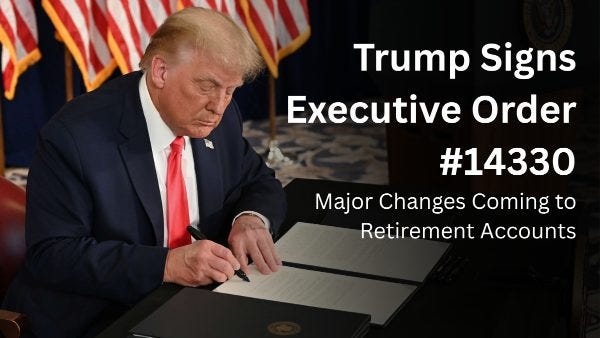
On August 7th President Trump signed Executive Order #14330.
For the first time ever, Americans will soon be able to hold precious metals (like gold & silver) inside 401(k)s.
That means more than $12 trillion in retirement savings could soon start flowing into the precious-metals market, creating one of the largest wealth shifts in modern history.
Since the announcement, gold prices have soared from $3,400 to over $4,000 per ounce, a 17% jump in just months.
And the momentum may just be getting started.
Once the order takes effect in 2026, J.P. Morgan believes the demand could send gold prices toward $6,000 per ounce.
Billionaire investor Ray Dalio now recommends keeping 10–15% of your portfolio in gold to protect against inflation, debt, and market volatility.
To help investors stay ahead of the curve, Cedar Gold Group released the 2026 Wealth Protection Playbook — a free guide revealing a little-known strategy for buying and storing gold BEFORE this executive order takes effect.
(Yes, this works with 401(k), IRA, TSP, 403(b), or even cash.)
When the 401(k) floodgate opens, being in on gold early could make all the difference.

Get Your Free 2026 Wealth Protection Playbook
Don’t wait. With demand accelerating after this executive order, waiting could cost you.
Click here to get your free guide and learn how it works.
⛽ National Average Diesel - $5.12 / gallon
High transport overhead continues to silently compress corporate operating margins across non-tech sectors.
📉 Services PMI Labor Index - 48.2
Signals tightening worker availability and rising wage friction across service-sector employers.
📈 10-Year Treasury Yield - 4.54%
High baseline borrowing rates prevent small and mid-sized businesses from debt-financing labor automation equipment.
🏗️ NFIB Small Business Optimism - -1.8 pts
Main Street business owners cite rising labor costs and regulatory compliance as primary threats to 2026 earnings.
Industry trade groups reported a sharp uptick in emergency overtime expenses among mid-cap agricultural processors and regional warehouse operators. Business managers cited sudden workforce shortages and stricter documentation audits following federal visa enforcement actions.
Art’s Take: This is how macro policy hits your daily budget. When a processing plant pays 1.5x overtime rates to keep the packing lines moving, that extra expense isn’t absorbed by the board of directors. It gets tacked onto the wholesale price of beef, poultry, and packaged goods at your local grocery store.
Corporate legal counsel and HR technology providers reported increased demand for E-Verify integration and independent payroll audits as mid-sized companies act to avoid federal penalties.
Art’s Take: Money spent on legal audits and compliance software is money that isn’t going into research, equipment upgrades, or worker bonuses. It is pure defensive friction—a tax on doing business that quietly eats away at corporate profit margins and shareholder yield.
No posts
Comments
Nothing yet. Say the first thing.
Sign in to join the conversation.