
If you haven’t yet read Redemption’s Scars, you can find the full story here:
While writing Redemption’s Scars, I’ve been sitting with one thought in particular:
Redemption is rarely a moment.
More often, it’s a process—and a messy one.
We tend to imagine redemption as a clean turning point. A confession. A decision. A clear line where everything changes. But that isn’t how it works in this story, and it isn’t how it often works in real life either. Scars don’t disappear the moment repentance begins. Temptation doesn’t fall silent. Consequences don’t rewind.
One of the biblical images that stayed with me while writing was Paul after his encounter with Jesus on the road to Damascus. The blinding moment gets most of the attention, but Scripture lingers far longer on what follows: silence, waiting, fasting, prayer, fear. Paul repents—but he must live with the knowledge of what he’s done. And the believers he once persecuted are understandably wary when he claims to have changed. His calling is real, but trust has to grow. Redemption begins immediately, but it unfolds slowly, in community, and under the weight of memory.
Dedecus lives in that same tension. He understands that forgiveness might exist. What he can’t bring himself to believe is that he’s allowed to receive it. His struggle isn’t a desire to return to power or to do harm again—it’s the belief that ongoing pain is the only appropriate response to what he’s done. His scars become a form of self-punishment, a way of proving that he hasn’t forgotten, that he hasn’t gone easy on himself. In the story, the real temptation isn’t evil—it’s despair dressed up as repentance.
Scripture draws a distinction here that we often blur. Paul later writes, “For sadness as intended by God produces a repentance that leads to salvation, leaving no regret, but worldly sadness brings death” (2 Corinthians 7:10, NET). Not all sorrow heals. Some of it consumes. Dedecus is caught between the two.
Wane reflects a different resistance to redemption. His anger is understandable. It gives shape to his grief and purpose to his days. Letting go of vengeance feels like betraying his parents, as if justice must be final or it means nothing at all. In that way, Wane and Dedecus mirror one another more than either would admit. One believes punishment must never end. The other believes mercy must never begin.
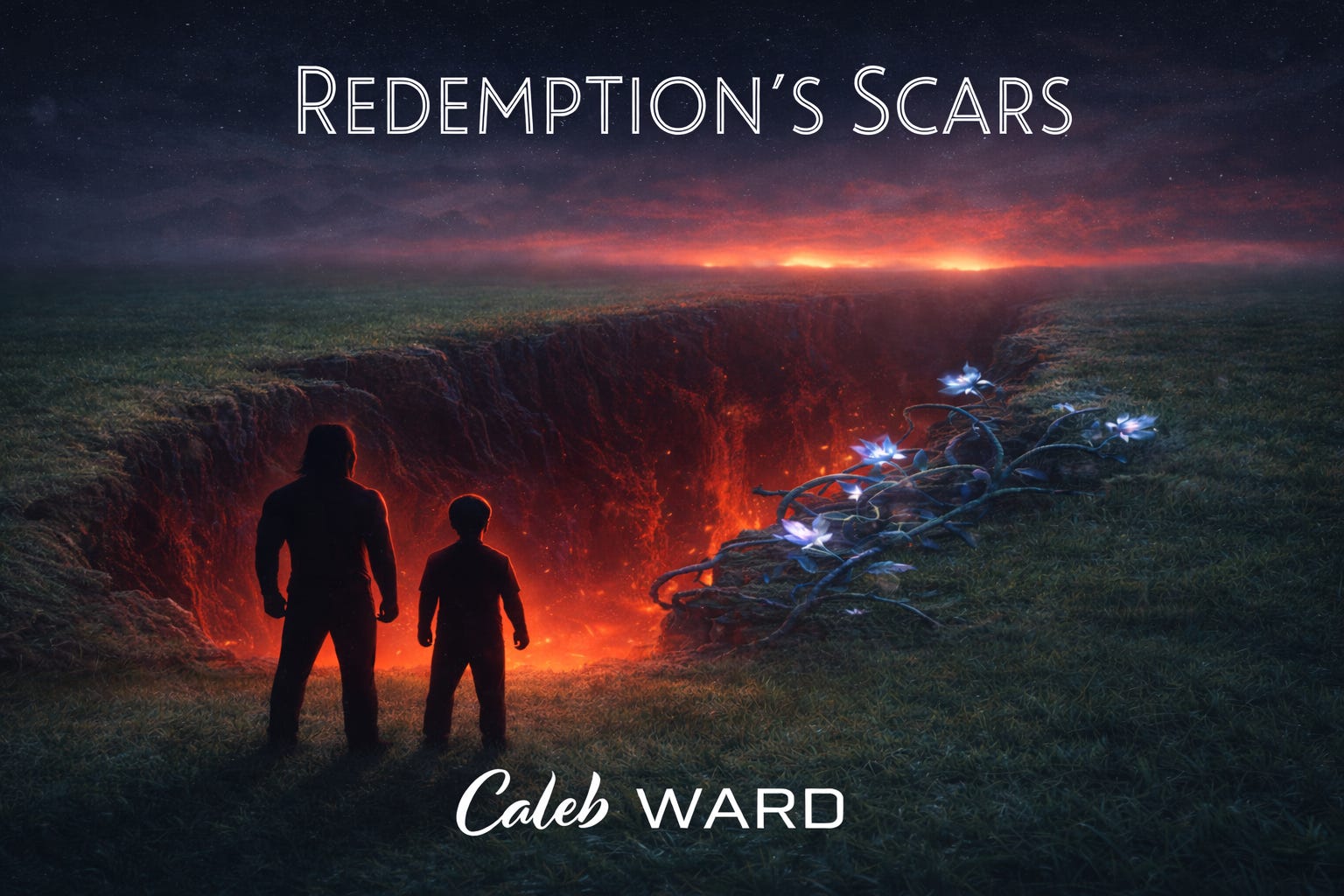
That’s why the chasm matters. It isn’t just a dangerous place or a fantasy set piece. It’s descent. It’s confrontation. Redemption in this story doesn’t come through rising above the past, but by walking back into it—naming it, facing it, and refusing both denial and annihilation. Dedecus doesn’t defeat the version of himself that haunts him. He refuses to keep fighting it. He chooses to live without shortcuts, even when that choice offers no immediate relief.
And that’s also why the story doesn’t end neatly. The whispers don’t vanish. The scars remain. There is no declaration that everything is fixed. What changes is quieter: Dedecus is no longer alone. He’s willing to speak. He’s willing to be seen. Redemption, here, looks less like victory and more like endurance—choosing presence over isolation, honesty over punishment.
I wrote this story because I think we often oversimplify God’s redemptive work. But God’s work, in Scripture and in life, is rarely instantaneous. It’s patient. It’s communal. And it often unfolds in ways that don’t feel satisfying at first.
If Redemption’s Scars left you unsettled, that was intentional. Some stories are meant to resolve things. Others are meant to name them.
If you’d like to share how these themes landed for you, you’re welcome to leave a comment on the story. I’m grateful for thoughtful reflection and conversation.
If this story stirred up heavy emotions or touched close to home, please know that help is available. In the U.S., you can call or text 988 to reach the Suicide & Crisis Lifeline. You don’t have to carry that weight alone.
You can return to the story here:
Thank you for taking the time to read and sit with it.
– Caleb
Comments
Nothing yet. Say the first thing.
Sign in to join the conversation.