
The ink is not yet dry on the formal announcement of Carney staking Canada’s 1st Sovereign Wealth Fund, the “Canada Strong Fund” (CSF) with C$25bln in federal government (deficit) funding over three years to seed it. The fund will increase in size over time, both from investment returns and other assets the government may allocate to it. Mandated, staffed and executed properly, with a capable and accountable Board of Directors, CSF could be a + game-changer for Canada.
Despite Pierre Poilievre’s ongoing protestation, Canadians have given their stamp of approval of Carney’s commercially-minded, no nonsense stance on Canadian governance at the federal level. Where glaring gaps exists, he has reached out the the private sector for much needed expertise. Not one to build a ship of the slab timber the electorate have provided, Carney clearly prefers carbon fibre and does not suffer fools gladly in his machete paced march of excellence. Shortcoming in the current cabinet will likely be resolved, post haste. My feeling is that this man, this leader, will not rest until the best foot can be laid forward at this critical time in Canada’s sovereign and commercial history.
Let’s review the possible with this quasi sovereign wealth fund, assume the glass is 1/2 full and compare this effort to other global “middle power” peers. This is good news, full stop, but the devil, as always, is in the details. Unlike the United States municipal bond market, Canada’s market is fully taxable. Details are yet to be provided on the features of the Canada Strong Fund, but interesting possible features could include;
-Federal tax exempt for Canadian citizens. Separate from existing TSFA limits.
-Contribution ”Top-up” for minors (e.g. $1,000 contribution nets a $2,000 investment in the fund, if held for > decade).
-Mandatory $5,000 contribution for those seeking Canadian Permanent Residency and/or Canadian Citizenship.
-Contributions to CSF accepted either directly to the Crown Corporation or via Canadian Credit Unions (credit union factor into the Bank of Canada’s stated goal of improving competition, boasting 11 million members and C$680bln in assets).
The wording of the announcement of the Canada Strong Fund at the Spring Economic Update in Parliament implies principal protection for Canadian investors, “As the Canada Strong Fund succeeds, investors will be able to share in the upside, while their initial invested capital will be protected.” As a full-fledged Crown Corporation, CSF shares the AAA/Aaa rating and carry the full faith and credit of the Government of Canada (His Majesty in Right of Canada).
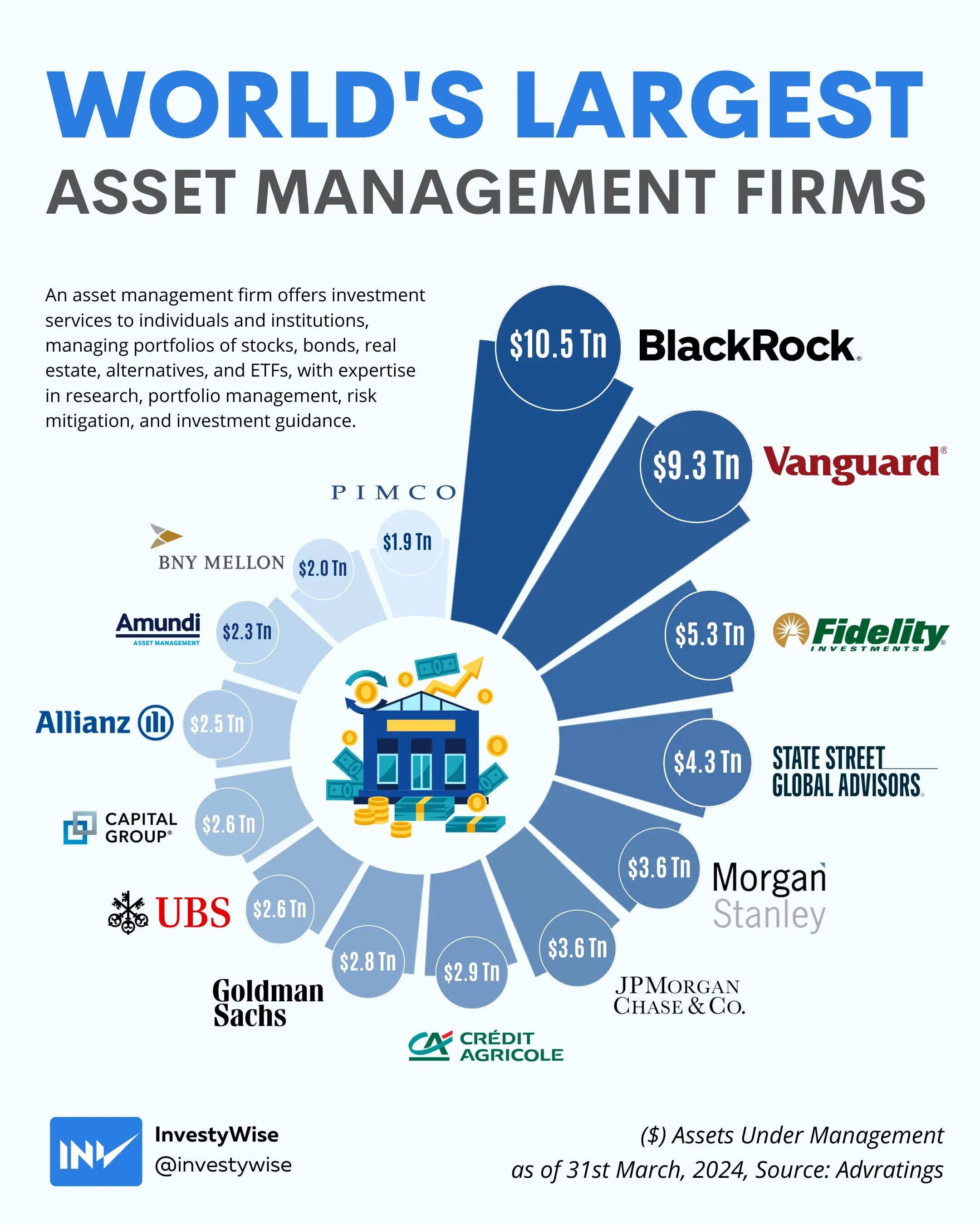
Program features will of course embrace and promote foreign direct investment as well, alongside CSF. The top 10 money managers/asset management firms (globally) manage US$60 trillion. The top 100 Sovereign Wealth Funds manage $17 trillion with the top 10 AUM = $11.7 trillion. Family offices manage > $10 tln globally. Global GDP currently stands at US$100 trillion with the global pool of capital estimated at US$150-200 trillion.
Canada represents 2.2% of global GDP (C$3tln of C$135tln). This % of global GDP has been static since 1990. Canada’s population over the 1990 to 2026 time frame has grown from 28 million to 41 million. Per capita GDP currently stands at $54,000. Canada has been described as a small country attached to a hegemon.
Carney says, “We’re building big things again.” As a general statement, taxes (municipal, provincial, federal) are typically the means by which infrastructure is built in developed nations, a category Canada is certainly “in” as a G-10 nation.
Legislation has been crafted and enacted to aid in this heady effort. The Building Canada Act was introduced as part of Bill C-5, the One Canadian Economy Act. Meant to fast track projects of national interest, this act enables the government to streamline federal approval (5 year/never to as quickly as 2 years). The Major Projects Office (MPO) has the broad aspiration to advance major projects in Canada and act as a single touch point for project proponents into the federal regulatory process, to both simplify and accelerate project approvals.
CSF will play in the equity space, alongside private capital in conventional and renewable energy (conventional oil & gas and clean energy), mining (critical minerals and traditional), agriculture, advanced manufacturing and Canadian infrastructure. A 100% Canada asset allocation. The newly established sovereign wealth fund will deliver market rate returns with a dual mandate to promote Canadian economic development.
A C$1.8-$2 trillion investment over the next decade could make Canada a G7 growth leader. After a $1tln outflow over the 2014-2025 period, the recapture of all the outflows + $1tln in new investment would be positive for all Canadians. A higher “Canada” domiciled allocation for the “Maple 8” alone (+10% from blended 17% currently) could net +$235 billion of incremental Canadian investment.
President Trump recently proposed a SWF for the United States, funded by the negotiated “deals/ trade settlements” of the USA’s fractured global trade partners, of which Canada is #1, sharing the largest common border and largest % cross-border trading relationship globally. “Elbows up” is likely the correct strategy near term, as early concessions would likely lead to finger, hand, arm, 1st born trades with still uncertain long term outcomes. The US deficit is set to pierce US$40 trillion to the upside, often hitting the “debt ceiling” which is invariably raised (can-kicked) to keep the punch bowl full to the brim. The USA has not run a budget surplus since 2000 (Republican nor Democrat). US social security, unlike Canada’s CPP is not a funded program. Social security is a “pay-as-you-go” system. While those living under the poverty line is similar in both the USA and Canada, the USA has 1/3 of the population scraping by just above it. For many Americans, social security is the only retirement income they have at the end of their working lives.
Funded pensions are another matter, California’s Calpers, the largest pension systems in California is funded at 79 cents (assets) per $1.00 in liabilities. CalPERS (California Public Employees' Retirement System) is the largest public pension fund in the U.S., managing over $550 billion in assets as of April 2026. It serves nearly 2.4 million members, providing retirement and health benefits to California state employees, school employees, and local public agency workers. With a 79% funded status, CalPERS unfunded liability is currently US$115.5 billion.
State of Illinois; As of early 2026, Illinois has the worst-funded public pension system in the nation, with a funded ratio of approximately 49%. Moody’s rating service recently upgraded Illinois to A2 (they were at risk of losing investment grade status in recent decades).
By definition a SWF is born of surplus (oil, mineral or otherwise) not funded by deficit, regardless of one’s “fiscal capacity”. One can forgive, perhaps, the “jazz hands” at play IF Carney can pull it off (e.g. +C$2 trillion of FDI over the next decade), his 60’s zenith, his legacy, the cherry on the top of an illustrious global career in high finance.
Fund / AUM / % Invested in Canada
CPP Investments C$780B ~13%
Caisse de dépôt et placement du Québec~C$500B+~20–30% (higher Québec tilt)
Ontario Teachers’ Pension PlanC$270B ~10–20%
*Ontario Municipal Employees Retirement System (OMERS) C$150B~15–20%
*OMERS CEO Blake Hutcheson attended #FNMPC26 Apr 29 - May 1, 2026 the first Canadian pension fund executive to attend. With a Canadian global GDP weighting of 2%, OMERS’ current 16% allocation is 8X “overweight”. Bruce Power (nuclear power station in Ontario) is their largest single investment. Plans are to add C$10bln to their Canadian investments over the next decade. OMERS track record with respect to returns is 7-8% per annum. Real return target (after inflation) 4-5%.
Public Sector Pension Investment Board C$300B ~10–15%
British Columbia Investment Management Corporation C$230B ~15–25%
Alberta Investment Management Corporation C$180B ~15–25%
Healthcare of Ontario Pension Plan C$110–120B~40–50% (notably domestic-heavy)
Combined Maple 8 AUM (assets under management): C$2.35 trillion
Among the most influential institutional investors globally
Many funds invest only ~13–20% in Canada
Example:
CPP: ~13% Canada / ~47% U.S.
OMERS 16% Canada / 55% U.S.
Drivers:
Removal of foreign investment limits (2005)
Pursuit of global returns
The Maple 8:
Invest globally
Run internal investment teams
Focus heavily on:
Infrastructure
Private equity
Real assets
Result: world-class returns, low relative MER (management expense ratios) but less domestic concentration than many assume.
The Maple 8 are massive global investors headquartered in Canada
But:
Most capital is invested outside Canada
Domestic allocation typically 10–25% (with exceptions)
“Canada Strong Fund”. De-risk large-scale nation-building projects
Accelerate:
Energy transition (incl. LNG, nuclear, grids)
Critical minerals
Transportation/logistics infrastructure
Indigenous partnership projects
Deal Packaging, Hedging (Foreign Exchange and Interest Rates) & Scale:
Pensions typically require:
$500M–$5B+ ticket sizes
Stable, long-duration cash flows
A federal investment vehicle like CSF could:
Bundle projects into institutional-grade portfolios
Standardize structures
Allow for long-dated hedging for foreign direct investment looking to hedge/quanto their going forward Canadian dollar returns to their respective home currencies (e.g. USD, EUR, JPY, AUD, NZD, CHF, SGD, HKD, RMB).
This could solve a major friction point.
Canadian pensions typically avoid:
Politically controversial sectors
Projects lacking long-term policy alignment
A “Canada Strong Fund” signals:
“These are nationally prioritized, durable investments”. This alone can materially increase domestic allocation.
Canada allocation: 20–25% of Maple 8 AUM
With effective fund structure:
Could rise to: 25–35% over time. An increase of 10% would net $235bln in Canadian domiciled investment from the “Maple 8”.
The bulk of the outlined Maple 8 manage defined benefits pension plans for their members. They have both a contractual and fiduciary obligation to pay benefits to their plan members. This would naturally put an upper threshold on their respective Canada asset allocation, but on the face of it +10% seems a plausible incremental Canada asset allocation target.
Grid expansion
Oil & Gas. New oil pipelines and LNG terminals, securing Canada’s energy superpower status.
Nuclear (SMRs)
LNG / transition fuels
Lithium, nickel, rare earths
Uranium
Processing infrastructure (rare earth metals are abundant globally, but the appetite for the sometimes caustic processing, less so)
Ports (West Coast, Arctic, Churchill, Atlantic)
Rail/logistics
Trade corridors
Data centres (data sovereignty)
AI compute infrastructure
Fibre networks
Canada plans to triple defense spending from a low base to 5% of GDP by 2035 (currently at our NATO committed 2% of GDP recently achieved), which could generate $100 billion for Canadian companies and make Canada a net contributor to allied military capabilities (think Arctic surveillance and space-based defence systems). CAF (Canadian Armed Forces) current force (ex 27k Reserve Force)) of 68,000 is roughly = CRA (Canada Revenue Agency) staff compliment of 59,000. We have some wood to chop to build a credible defense force in the coming years. With comp rates up and a recruitment effort 6,900 joined the CAF ranks in 2025 but with 5,000 retiring the net gain was 1,900.
There is a great deal of overlap with Canadian aspirations in the high-tech and advanced manufacturing spheres. Staffing will be a persistent bottleneck and may likely lead to mandatory military service in Canada with co-op placements in the aforementioned areas (knowledge industries). Defense supply chain will be an area of heavy investment, especially in Arctic and Atlantic regions.
Canada currently spends 75 cents of each dollar spent on military procurement from the USA suppliers. This can not be flipped overnight, but that is the eventual intent (3/4 domestic).
The Canada Strong Fund must act as a risk mitigator and deal structurer, not just a funding pool. Hedging on ultra-long duration assets is particularly important for offshore investors, real-money, pension, family office and sister sovereign wealth funds (SWF).
Japan’s GPIF (Government Pension Investment Fund) is managing well over US$1.5 trillion in assets. They report quarterly but have a duration target of 99 years. Despite its enormous size, demographics do not favour “The Big Noodle” and without current workers paying into the fund, it would be “pockets inside out” inside of 6 year.
Australia’s Superannuation fund (aka “Super”) from a standing start in 1992 now boasts A$4.3 trillion in AUM, 150% of Australia’s GDP. 12% contribution rate (employer) does wonders! AUD/USD 1.38 vs CAD/USD 1.35 hence comparable from an fx cross perspective.
Land Acknowledgement (Nova Scotia);
“We respectfully acknowledge that we operate on the traditional and ancestral territories of the Mi’kmaq and Wolastoqiyik People, who have lived in and care for these lands for thousands of years.
We recognize the enduring presence and deep cultural heritage of Indigenous communities across Atlantic Canada, and we honour their contributions, past, present, and future.
We are committed to fostering respectful relationships with Indigenous Peoples and advancing reconciliation through learning, unlearning, collaboration, and meaningful action. We encourage reflection on the history of this land and our shared responsibility to support Indigenous voices and leadership.”
Indigenous voices are being heard, like never before in Canada’s history.

Note: The 9th annual #FNMPC26 First Nations Major Projects Coalition conference was just held in Toronto, Ontario, Canada Apr 29 - May 1, 2026. The theme for this year’s conference was “The Next Seven Generations - Our Shared Future”. From the kernel of an ideal 9 year ago with 50 attendees in Timmons, BC to 2,000+ attendees (500 indigenous from across the country) in 2026 it was a truly spectacular event.
On April 27, 2025, Air Canada operated a historic all-Indigenous crew flight (AC34) from Vancouver (YVR) to Toronto (YYZ) to celebrate Indigenous excellence in aviation. The flight featured 9 Indigenous flight attendants and pilots, along with a traditional cedar brushing and Musqueam Paddle Song ceremony to honor local Indigenous culture.
I was honoured to attend this year’s event on behalf of Sydney Credit Union, Cape Breton, Nova Scotia, Canada. Note: Pre-loyalist family history; England, Virginia, Nova Scotia.
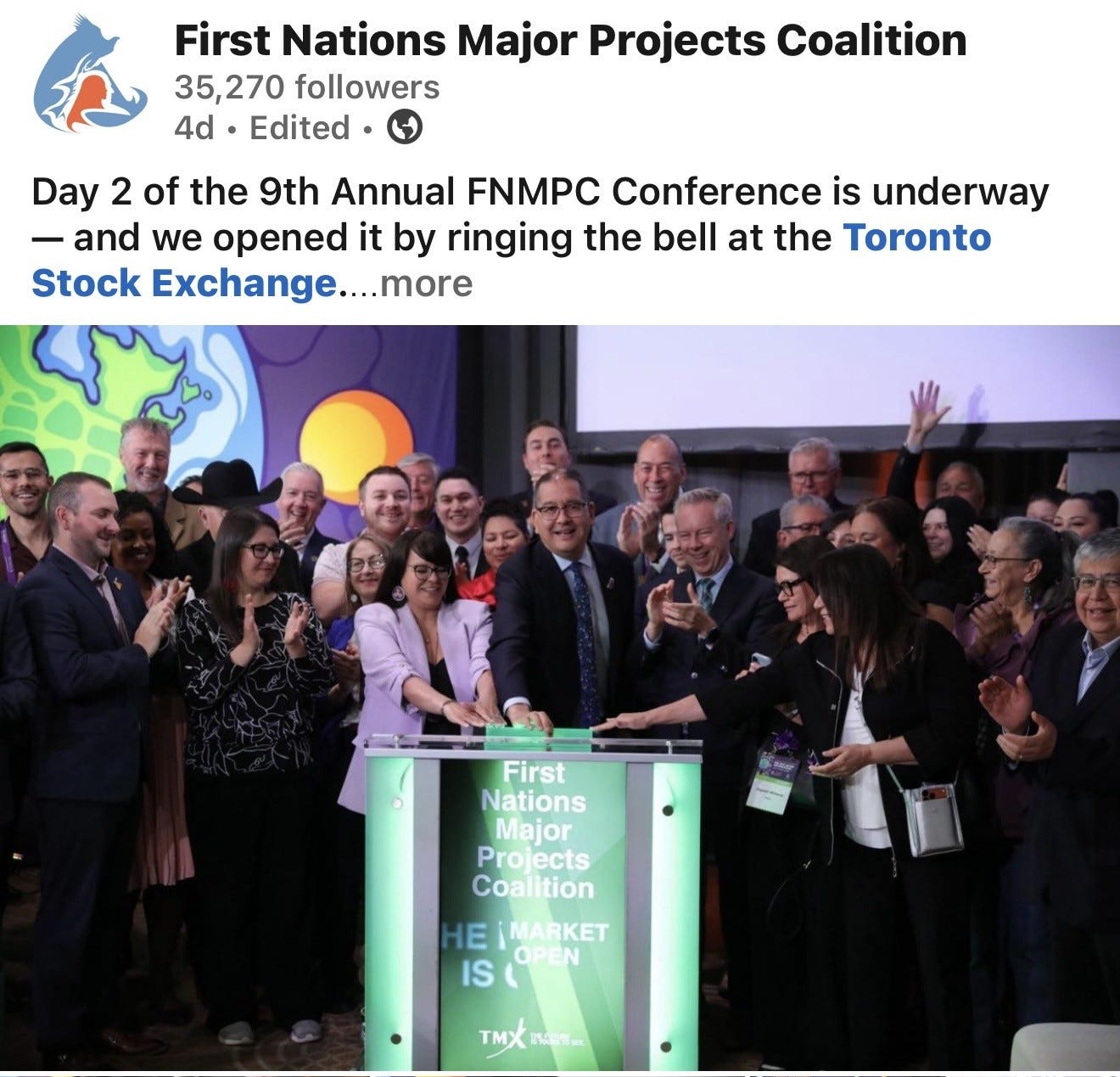
Note: Mark Podlasly, CEO First Nations Major Projects Coalition and John McKenzie, CEO TMX Group ring the opening bell of the TSX on May 1, 2026 at #FNMPC26. #IndigenousEconomicReconciliation. Author next to 5 gallon hat gentleman!
Mark Podlasly is the CEO First Nations Major Projects Coalition, a national 190+ member First Nations organization dedicated to ensuring Indigenous environmental and economic values are incorporated into major projects in traditional territories. Mark Podlasly, a member of the Nlaka'pamux Nation in British Columbia. He hold a Masters of Public Administration from Harvard University, holds the ICD.D designation and currently sits on the board of both CIBC and Ontario’s Hydro One.
Canadian Indigenous equity participation is becoming a default condition of project legitimacy in Canada, including for the recently formed Major Projects Office (MPO) which already has 17 projects with a budget of $126 billion slated for this vast nation. 70% of these project are on or adjacent to indigenous lands. This is a watershed change from prior mis-steps where indigenous involvement was seen as an afterthought, a hindrance, even a “risk factor”. Present day, indigenous involvement is seen as an enabler. Swift and thoughtful environmental approvals. Equity ownership options. World leading project time lines on LNG terminals, port development, grid modernization, and mining, to name a few.
MPO, Indigenous Advisory Council; The 11-member council brings together diverse expertise from across Canada, featuring prominent leaders and representatives from First Nations, Métis, and Inuit communities across Canada. Key members include Chief Terry Paul (Unama’ki, Cape Breton, Nova Scotia) of Membertou First Nation.
The capital recession in Canada indeed appears to be over. 2025 saw C$100bln in foreign direct investment (FDI). Each year, going forward, should eclipse this sum.
In recent times, the US equity market has garnered the majority of global capital flows vs the USA global GDP weighting of 26%. The MSCI World index has a USA weighting of 70-72%, the highest ever USA concentration level (note this is a developed markets (23) index). The MSCI ACWI (which includes emerging markets) has a USA weighting of 60-65%!
Turtle island does not have a black line on its’ back “approximating” the Canada/USA border. Canada’s investment opportunities are superior, on the face of it, hence we should make all efforts to mosquito the United States of America’s vast pool of investment capital, a full 20X Canada’s scale (US$3tln vs $60tln in “market cap”) to drive an outsized pace of investment in Canada, from coast to coast to coast (East, Arctic, West). A USA and/or dual listings requires the listing entity’s financials be prepared under US GAAP (as well as IFRS which is the accounting standard for 140+ countries globally). Perhaps a small price to pay for a potential firehose of U.S. dollar liquidity on a go forward basis.
Beyond the potential + force a Canadian SWF could have, convincing the $60 trillion + of global institutional money manager universe (top 10 only) and the $11 trillion SWF universe (top 100 over $17tln) to allocate more $$ to Canada should be job #1.
Emerging markets returns, without the emerging market risks. Canada is rated AAA/Aaa (S&P and Moody’s rating respectively). The First Nations Finance Authority (FNFA) is rated AA-/Aa3. The United States is rated AA+/Aaa, (for reference).
Prime Minister Carney has a Sept 2026 Toronto domiciled Investment Summit planned to entice global investment flow to Canada. The top 100 money managers have a “golden ticket” invite. Few will likely decline, given the immense potential opportunity cost.
JCG
No posts
Comments
Nothing yet. Say the first thing.
Sign in to join the conversation.