
Cake friends,
We hope you’re staying warm out there and finding small comforts during this very cold February (at least here on the East Coast). This week, we’re excited to share Mulberry Nights by Heather Radke, an essay from Forbidden Fruit that traces how places imperfectly hold memory and how sweetness, like mulberries, can be vivid, staining, and fleeting all at once. It’s a sticky summer read to warm up the coldest day.
Be sure to also get a copy of Heather’s book, Butts: A Backstory, and keep reading to see what we’re reading, eating, and attending this week.
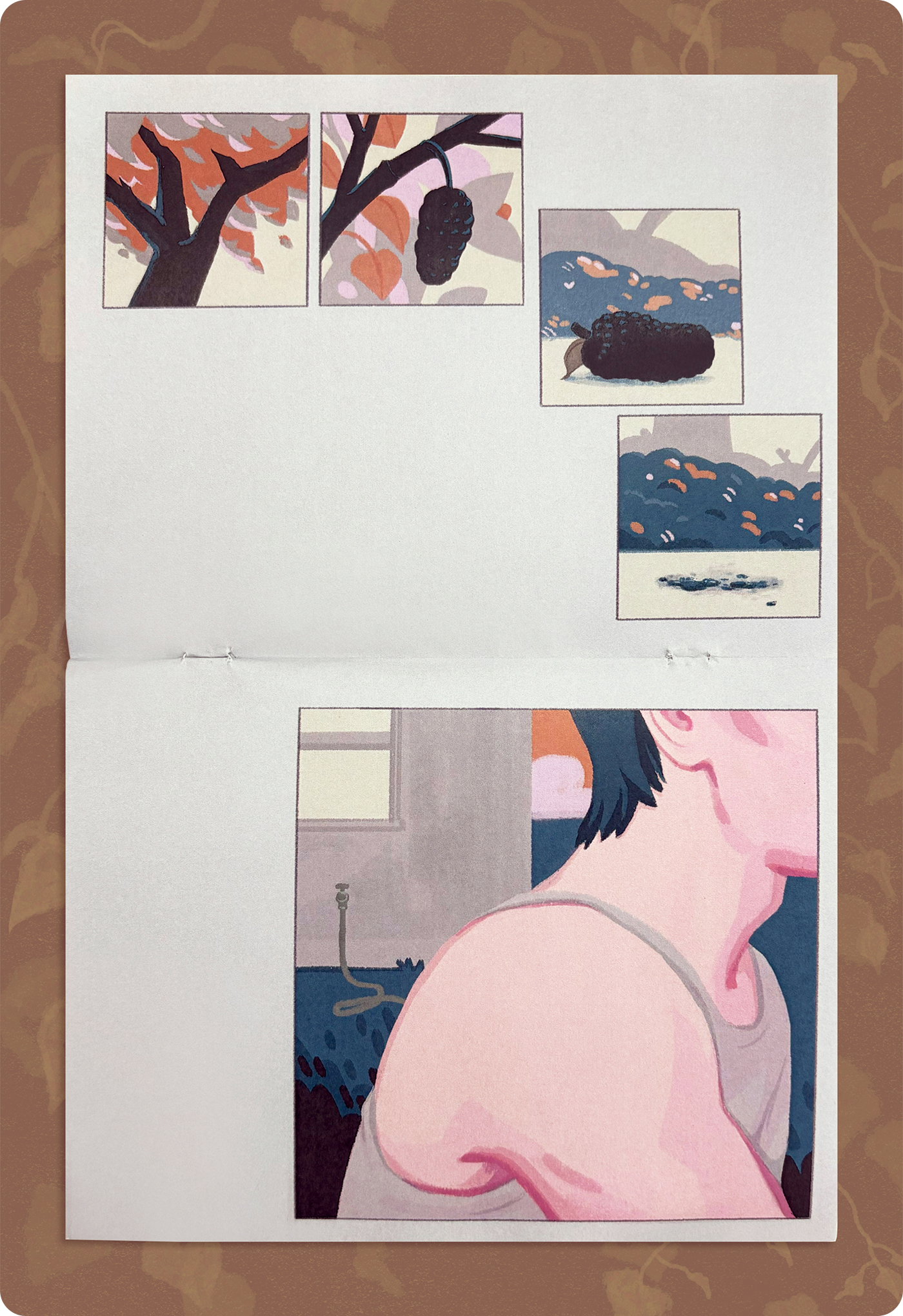
Fruits of the Labor
Essay by Heather Radke
During the first summer I stayed in Ann Arbor, the house I lived in was falling apart, although it didn’t seem that way to me at the time. The boards on the porch were loose; the oven had never been cleaned; exposed wires ran down the hallway, barely covered by a dingy green carpet some landlord had once installed. And the roots of the mulberry tree out front bulged up through the concrete sidewalk, tripping postmen and passersby.
I slept in a room painted hot pink—vaginal was the word I used to describe it, although I think I meant uterine. It was womb-like, enveloping me in the double bed a friend had abandoned for the summer when she left to study abroad. But I rarely slept. I remember as many dawns as I do sunsets, because I stayed up many nights all the way through. I didn’t want to miss anything, and I liked the drama of not sleeping. And, also, so much happened at night.
A long-haired musician—the front-man of a local funk band who wore his shirts unbuttoned nearly to his navel—courted women on his tandem bicycle. In the evenings, as the sun set through the leaves of the mulberry trees, I sat on the front porch of the house with my roommates waiting for him to ride by. Who will it be tonight? All the pretty girls in the neighborhood had a turn. The one with hipster bangs and the one with great eyebrows and the one whose brother I made out with on Halloween, just to feel a little closer to her.
I had known my roommates forever—at least two years, an eternity at twenty. We’d met in the cafeteria during freshman orientation, in remedial French class, late at night in a basement where someone had recently died of a heroin overdose. We drank forties or cheap champagne or vodka we kept in the freezer, and they brought me pastries from their bakery jobs and drew me little comics for my birthday and cleaned up my vomit when, as was often the case, I’d had too much to drink.
One night in early July, my coworker at the coffee shop where I worked came home with me, and we sat on the porch and talked about books and bands and then he pulled me toward him and kissed me. He smelled like Old Spice and coffee grounds and something soapy and sweet. It was three a.m., a time that felt safe and quiet. We were alone, I thought. But then, another boy I’d been making out with that summer emerged in the stillness of the night on a bicycle. He slowly rode past us and saw that his fate was sealed.
That same summer, a block away, a friend came back to her basement apartment late at night, laid down in her bed, and let her body relax, preparing for sleep. It was then that a man who had crept in through her window and hid under her bed grabbed her. He pulled at her clothes, tried to pin her down. Somehow, she fought him off, and he ran out the window he’d come in.
I made dozens of pies that summer. The boy from the coffee shop loved pie—peach in particular—but it wasn’t only him. In those years, pie was the pastry du jour. Like the tandem bicycle or the folk music we all listened to, the ethos of pie seems almost unbearable in retrospect, but at the time that type of wholesomeness expressed something about what was happening to us. It was a juxtaposition to the tumult in the world—September 11th, the Iraq War—and a devotion to earnestness in response to the ironic years that had preceded it.
But really the wholesomeness is only unbearable now because I know it should be. I loved to make pies, and I loved to ride that bicycle, and I loved the folk music that the boy from the coffee shop played in basements and backyards. I loved that baking pies was something that was somehow valued, even sexy. I knew how to cut butter into flour and pinch a crust into a pie plate, and I liked the feeling it gave me—a feeling of mastery and femininity, of doing something that people wanted me to do.
That summer, we—the roommates, the boy from the coffee shop, the girls on the tandem bicycle—sat on the porch in the Midwestern storms of June, and in the scorching heat of July, and in the unbearable weeks of August when the mulberries fell off the trees and began to rot on the sidewalk. It’s where I was sitting when I heard that the man who’d assaulted my friend had come back a week later, once again in the middle of the night. A neighbor had been outside having a cigarette, a man so addicted he’d set an alarm to wake himself up in the middle of the night to smoke. Thank God for him, we’d said to each other, pulling the thick summer air through our own cigarettes. The neighbor had seen the man crawl back into the basement window and called the police. My friend had been at a party, about to come home. When the man was arrested, the police looked in his bag and found a knife and a length of rope.
***
By the next summer, the boy from the coffee shop had broken up with me, and I’d been left bereft. Other things had happened too—a trial for the man with the knife, a heart surgery for me, the tragic and sudden death of another friend who’d had undiagnosed melanoma—but the truth was, for me, heartbreak took the top billing.
That summer, my room was on the top floor of a nineteenth-century mansion that someone had decided to let students live in. It was a block away from where I’d lived the summer before, but I felt like I’d moved up in the world, closer to the nice things that my wealthier roommates had and an adulthood that would give me everything I wanted. My room was small, with twenty-foot ceilings and red velvet curtains that my mom had sewed to help keep out the light when I wanted to sleep till noon. The house had a magnificent staircase, and a hand-painted mural wound through the foyer.
I made a new friend that summer. She lived in the house with the uterus room and was famous for her pies. While I sat at my old dining room table doing the crossword or gossiping, she filled that dirty kitchen with lattice crusts and crimped edges, chocolate chess and lemon curd. My simple technique—butter rubbed into flour with my hot, dirty fingers, crust smashed down with a fork and shoved in the oven—seemed crude in comparison.
There was a frisson of competition between us, a sense from the moment we met that the neighborhood only had room for one curly-haired brunette who liked to bake. Which is to say, I wondered often if she wasn’t a little bit in love with the boy from the coffee shop. They both adored deep cuts of old, eerie folk songs and played guitars on their porches like troubadours in a way that made me feel slightly ill. I sensed that they might have fallen for each other if she and I hadn’t been friends. But I liked the feeling of being in the way.
We also adored each other. We drove to the lake outside of town to skinny dip at night, our bodies reflecting the moonlight like beacons as we floated in the warm, green water. We read Housekeeping together and she let me sing in her satirical feminist folk band even though I couldn’t carry a tune. And we foraged the neighborhood for mulberries so she could make her pies, dragging a step stool from her kitchen at night to pick the berries. They weren’t ours to have, but they also didn’t seem to be anyone else’s. I held the ladder as she climbed up high and plunked the berries into a bowl.
The berries didn’t last long, and they weren’t very good. Bland and bitter is how I remember them, and quick to spoil. She left them in the refrigerator overnight and they were already flaccid and sad the next day. But their juice was vibrant, a purple-red that stained all the sidewalks in the neighborhood when the berries fell. My friend added sugar and spices and seemed to make something from nothing, creating a pie that we both felt proud of since we had found the fruit.
One night, after midnight but before dawn, I heard a tapping on my window. It was nearly August, and the nights were swampy. To ward off the heat, and because the room was so far away from the street, I slept naked in my bed with the window open and the velvet curtains mostly drawn. The tapping startled me awake. Nearly blind without my contacts, I pulled back the curtain and saw the blurry outline of a face. Terrified, I found my glasses and focused in on what was in front of me—the outline of a boy I’d gone on a few dates with earlier that summer. Using the only tool I could summon—niceness—I smiled and told him I was too tired for anything at the moment, but maybe we could talk another time. After he shimmied down whatever drainpipe he’d come up, I pulled on some clothes and went downstairs to my roommate’s bed, and she held me as I shook.
After we made the pies, the leftover mulberries sat in my friend’s refrigerator for a few days and turned to juicy pulp. It was the solstice, so we stayed up late—always so late—and drank dandelion wine to feel romantic, and then, when that ran out, cooking sherry to feel drunk. I told her for the hundredth time that summer about my heartbreak. How, when the fall had come, the boy had told me that he would need to prioritize his music, and his art, and he wasn’t sure what sort of time he’d have for kissing at three o’clock in the morning. And how, despite the obvious clarity of that statement, I’d stuck with him, sure that love was more powerful than art, a mistake I’d make with many more people before I realized not everyone makes you choose.
That night, my friend and I drank mulberry juice and smeared it on each other’s faces, a goofy kind of ritual to feel connected to some sort of pagan wildness. We were goddesses and witches, dancing in the moonlight on the porch, laughing at the men we didn’t need. When I walked the block home, stumbling and humming and high on the romance of my own little life, I ran into the boy from the coffee shop who broke my heart. He asked me what was on my face and I laughed. It’s blood, I said. It’s my blood.
***
My husband and I drive into town the back way, avoiding 23 and 96, instead meandering through Dexter and along Huron River Drive. The lake where I went swimming in college is off this road somewhere, I tell him as we follow the curve of the river past the gaudy McMansions and signs for golf clubs. I had remembered it as all old farm houses and soft serve stands, but that is what nostalgia does—sands off the rough parts.
We’re driving to Ann Arbor because we’re thinking about moving here. I’ve lived in New York for a decade, and now we have a child—a two-year-old daughter who we’ve left with her grandparents so we can have a little vacation and consider whether this is the town where we should raise her. My husband doesn’t have a relationship with the idea of a college town, and so he is a curious blank slate, while I’m dripping with expectation.
When we get into town, the August light isn’t glowy and warm, but harsh and depressing. I’ve been back before, but always in November or March, months in Michigan you can love for their bleakness. Any shard of joy you find in those gray weeks is hard-earned, and when I’d visited, the oppressive cloudiness made me feel academic and cozy. But summer here is supposed to be full of peonies and lilacs, lake plunges and tall boys—August shouldn’t be a hard time to love this part of the world. And yet, as we search for parking two streets over from the house with the uterus bedroom, I’m struck by how much I’ve forgotten about summer here.
The town feels dirty and run down. Being from New York, we are used to garbage, but this is something else—not the detritus of living, but the refuse of neglect. The student rentals aren’t places meant for actual people to live in. The wood is rotting off the porches and windowsills, plants are either growing wildly or have been weed-whacked cruelly. Some of the apartment buildings don’t even seem to have windows.
It’s almost September, and the mulberry trees have shed their berries all over the sidewalks, where they’ve rotted. They stink like old vomit. I recoil at the smell, finding myself almost angry for having encountered it. I’ve smelled this specific smell in every place I’ve lived since I left here. The mulberry trees that seemed so precious during my collegiate summers are actually some of the most common trees in the world.
As my husband and I walk down the street, the town feels like what it has always been: a place to pass through. It’s the time of year the students come back, and I see the transience of their arrival, the way their middle-class parents eye these homes and sigh, willing to see living like this as a brief rite of passage. Within moments of parking, I realize the mistake I’ve made. I imagined my time here was special, but it was only special to me. Thousands of others have lived similar summers.
Since I left this place, I’ve never been quite sure what to do with my memories of it. Each moment of each day mattered so much to me as it happened, but now I’m not even sure I remember those moments correctly. Was it that house with the pink room that had exposed wires? Did I ever ride on the tandem bicycle, or did I only ever see it endlessly driving down the street? Was the mulberry pie sweet, or did it taste like nothing at all? I still talk to some of the people who were there, but many of them—the boy from the coffee shop, the girl with the pies—have slipped away from me.
When I was young, I thought the reason old people felt nostalgic for their youth was because they wished they could still be young. I imagined that they longed for their perfect skin and sinewy bodies because they wanted to live long nineteen-year-old nights forever. I thought this even as my long nights were full of anxiety and terror and sleeplessness—nights I was always glad to leave behind as they ended. Now that I’m older, I realize that the hard part of growing up isn’t that youth leaves us, it’s that we leave it.
My husband and I spend two days and a night. We dutifully look at neighborhoods, talk about the schools. But we’ve both known since the first hour we arrived that we won’t move here. To him, it is a place full of annoying twenty-year-olds in school spirit sweatshirts drinking overpriced bubble tea. And for me, it’s an empty movie set. All the buildings are here, but none of the actors. The blood is all washed away.
Heather Radke is a writer, contributing editor at Radiolab, and author of Butts: A Backstory. She is often asked questions in interviews about the connection between peaches and female anatomy.
Want to support Cake Zine’s independent work? Subscribe to this newsletter and order a copy of our latest issue: Forbidden Fruit.
Party: Join a hands-on workshop with artist-programmer Lizz Post to craft a personal “folder party,” a spatial website built from files on your hard drive. Explore your digital ephemera, create an online gathering space and share it using a custom no-code tool—get all the details here.
Attend: Our co-founder Tanya Bush’s narrative cookbook, Will This Make You Happy, is releasing March 3 and she’s going on a book tour! Philadelphia friends can come to Downtime Bakery on March 12 for a reading, Q & A, and a pavlova bar inspired by her cookbook. There’s also events upcoming in New York, Los Angeles, Boston, London, and DC—information here.
Read: Tanya wrote about her week-long experiment quitting sugar, detailing the challenges of avoiding sweets as a baker, for The Paris Review. Did it have any benefits? See for yourself.
Comments
Nothing yet. Say the first thing.
Sign in to join the conversation.