
I grew up in Northern Virginia, just outside Washington, D.C. My parents were public school teachers, and like a lot of kids in the area, I saw Washington on field trips and visits to museums.
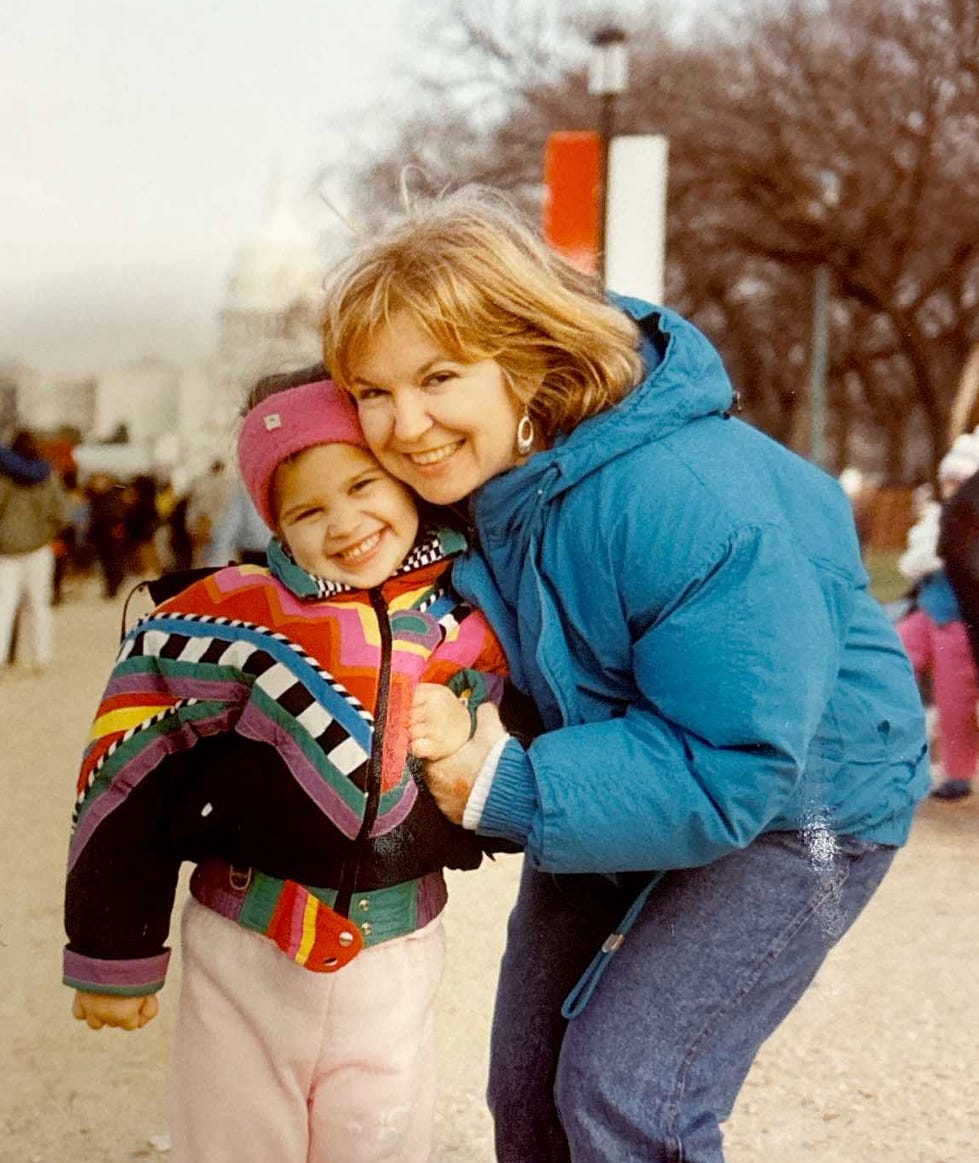
As a kid, I thought Washington represented the best of our country. I remember seeing the monuments, the Capitol, the museums filled with stories of what we’d built together as Americans. Washington felt like a place where big things happened.
Of course, I was a kid. I didn’t understand all the contradictions in our history. But I don’t think the feeling I had was naïve.
America at its best has always been bigger than the reality of America at any single moment in time. Our country has never perfectly lived up to its promises. But generation after generation, people have worked to close the gap between what we are and what we aspire to be as Americans.
That’s what those trips to Washington represented to me: possibility.
Somewhere along the way - aided by cable news, social media, and oodles of money in elections - politics became almost entirely about what we’re against. The other party. The other side. The latest outrage headline. The person or group to blame.
There’s plenty to be frustrated about, and I understand why so many Americans look at Washington and see dysfunction instead of leadership. But if we want to start building again, I believe we need to talk more about what we’re for.
Not just what party we belong to or which side we’re on, but what we fundamentally believe government and public service should be about.
What am I for?
I’m for an economy where hard work gives you a real chance to get ahead. Public schools that give every kid a good start. Growth that creates opportunity without leaving communities behind. Affordable health care and child care. Innovation with guardrails that protect people and land and give communities a meaningful say. And a government that actually works - transparent, accountable, and not puppeteered by special interests - led by people who remember that public service is about serving.
And even more fundamentally, I am for justice, fairness, decency, and a country where we stand with our neighbors. Not for a party or a doctrine or a certain leader.
Some may say that’s oversimplified. I’ve talked a lot about how we achieve these things from a policy standpoint - and I’ll keep doing that - but I don’t think cynicism is a substitute for a vision.
Anger can tell us that something needs to change. But eventually, we have to answer the much harder question: What are we going to build?
As I look down at the two faces that look to me for comfort and guidance - about the same age I was in that photograph - that’s the question that drives me.
I still believe in the possibility I felt as a kid coming into Washington because I believe deeply in America and what we can achieve. We’ve done it before.
We can build an economy that works for working people. Give every child a real shot. Protect what makes our communities worth living in while creating room for the future. Solve big problems without surrendering to the idea that nothing can change.
That takes work. It takes servant leaders, on both sides of the aisle, willing to listen and find common ground, disagree without dehumanizing each another, and put something much bigger than themselves ahead of their own ambition or fundraising.
But it also takes optimism and hope, because before we can build a better future, we have to believe one is possible. And look, leaders in Congress spend a lot of time telling us what’s broken. They haven’t given us much reason to believe in what we can build. That has consequences. It chips away at our optimism, our trust in one another, and our belief that we can actually solve hard problems together.
As a kid, I came into Washington and looked at the monuments and museums and thought about what our country can accomplish.
I still do. But I understand now that Americans don’t need more people telling us what’s broken. We need leaders willing to believe in what we can build and who are ready to roll up their sleeves and get to work building it.
It’s up to us.
No posts
Comments
Nothing yet. Say the first thing.
Sign in to join the conversation.