
I was delighted to write the following article for The Ember Journal— I hope you enjoy!
Given that St. Joseph was a carpenter, we might think about the gift he offers us through the image of a home.
Within the walls of our homes, we desire protection, love, and encouragement from the storms of the world. St. Joseph, patron of families and fathers, is a model of the self-giving love, work, and obedience to God that create the strong walls of a spiritual (and physical) home.
It is in our homes that we first learn to love each other and love the Lord. We grow in character and virtue through daily tasks and conversations. We learn practical skills that will help us succeed in life. The home is where the foundation is laid for when it is time to leave.
A man who helps us build our homes, St. Joseph also shows us we are not meant to remain in the walls of our homes forever. The home is where we grow in God’s gifts of faith, hope, and love so that we can share them with others.
Known also to be patron of immigrants, social justice, and travelers, St. Joseph prompts us to open the doors of our homes and leave with the light of faith burning in us, ready to give to others.
There is a story of the Sicilian people in the Middle Ages who were in the midst of a terrible drought. Their crops were dying and they were desperate. The farmers prayed to St. Joseph for help, and through his intercession, fava beans grew. It was a crop that could survive in such harsh conditions. The fava bean sustained them and the famine ended. In thanksgiving, the farmers prepared a feast, and invited the poor to dine with them.
In this story, we can again see the image of a home. From within, the Sicilian farmers experienced a need and prayed to St. Joseph for help. St. Joseph provided, and from that provision, the farmers and their families were nourished and went out to share that nourishment with those in need.
We receive the tradition of the “St. Joseph Table” from the story of St. Joseph’s intercession for the Sicilian farmers. And, what could be more central to a home than the table? The table is where we gather to eat, have conversation, and even do our homework.
Many Italian homes, churches, and communities celebrate the March 19 Solemnity of St. Joseph with a St. Joseph Table—a table filled with sweets such as zeppoles (Italian donuts), cuccidati (Italian fig cookies), cannoli, loaves of braided bread, fresh produce, pasta with breadcrumbs on top (to remind us of the sawdust from St. Joseph’s woodworking), and of course fava beans! It is a table for the family and for the community outside of the family.
This Solemnity of St. Joseph, step into this tradition and create a St. Joseph Table in your home. Simply choose a table and decorate it with an image or statue of St. Joseph and the Holy Family, candles, and lilies. Next, fill your table with good things to eat!
And, in the spirit of St. Joseph and the Sicilian farmers’ table long ago, invite others outside your home to participate in the feast, and bring unopened items to a neighbor or friend in need, your local homeless shelter, or your parish’s food pantry.
St. Joseph, most faithful, pray for us. Lover of the poor, pray for us. Model of workers, pray for us. Glory of family life, pray for us. Protector of the Church, pray for us!
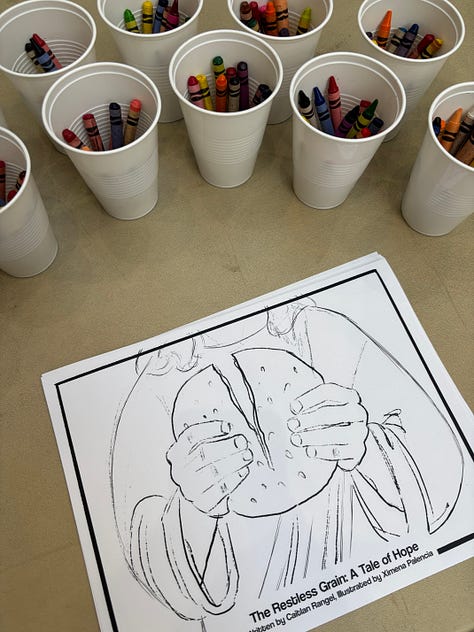
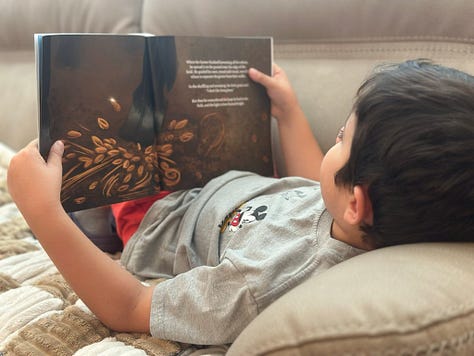
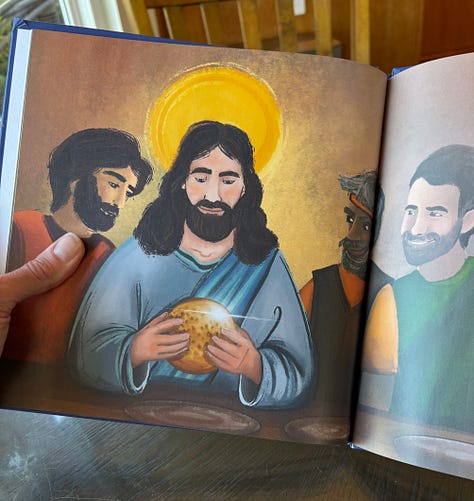
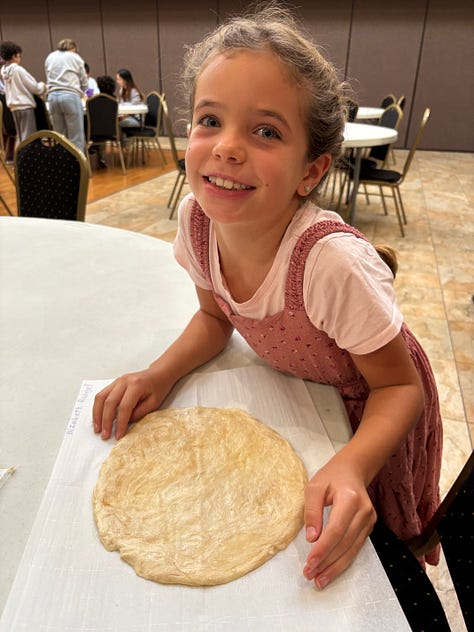
Consider picking up a copy of my book, The Restless Grain for your home or as a gift for your godchild, grandchild, or friend this Lent or First Holy Communion season.


No posts
Comments
Nothing yet. Say the first thing.
Sign in to join the conversation.