
My first e-reader was a pearl-white Kobo that I wasn’t sure I would even use. This was back in the 2010’s, the time when the industry shifted from physical books to e-readers. There were all kinds on the market: Kindle, Kobo, Nook, and more. For many, the convenience of the portable tablet outweighed the prospect of dragging around a physical book. Others staunchly stuck to their worn paperbacks and hard covers. The book industry changed—copies of books could be purchased on e-readers at significantly discounted rates compared to physical books. This also opened up the market to more independent publishing.
At the time, my Kobo didn’t have a backlight. In fact, being Canadian, I don’t even think I had the option to purchase a Kindle. It was, however, lightweight, portable, and I could store a library on the device. It was perfect for travel, and I later found out I could connect my library account through Overdrive. Eventually, I upgraded my Kobo to a newer model—it could be held in one hand, had a backlight, and had a long-lasting battery.
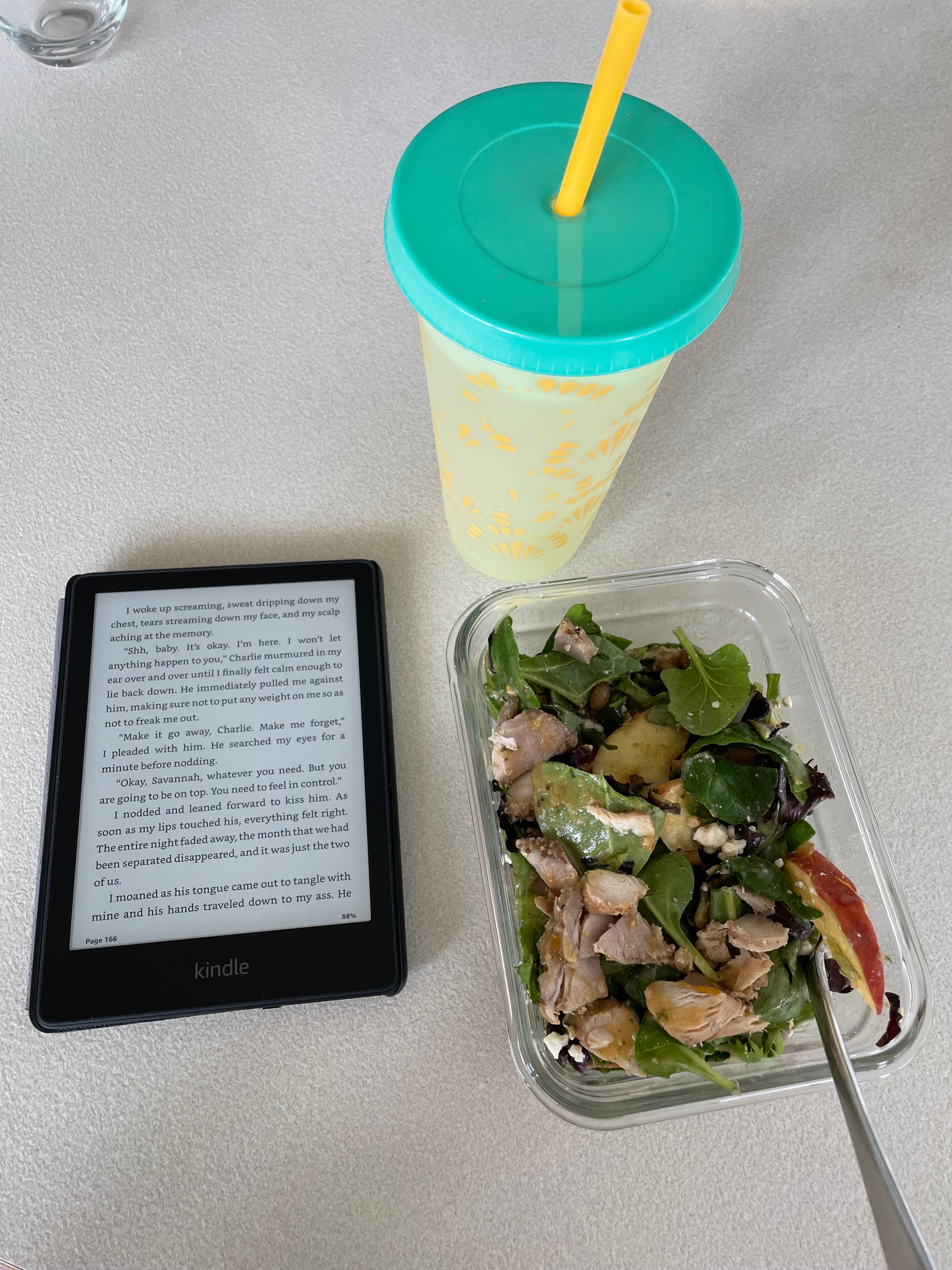
A few years later, in the midst of the pandemic, I found myself writing my first published novel and wondering about the indie book world. It seemed that one of the most accessible ways to read indie books was through Kindle Unlimited. There is an entire library of independent and traditionally published books available for a reasonable price per month. I invested in a Kindle Paperwhite. I loved it and still do. I subscribed to Kindle Unlimited and found myself reading more indie books than I ever had before. Again, I loved the portability of an e-reader, though the Kindle was admittedly larger than my Kobo. For years, I’ve diligently split my reading time between my Kindle and physical books.
That is, until recently. This year, one of my largest goals is to reduce my spending and budget my life well. I overhauled my subscriptions. I really considered whether I was reading as much as I thought I was on KU. I was also a little pissed at the giant that is Amazon. There are a host of reasons why, but a large one is the rampant uploading of AI books into their KDP system, effectively dishing out money to these fake authors from the Global Community Fund that all authors earn from. In my eyes, if you’re a prompter, you shouldn’t be able to take from the fund that pays real authors.
So, I figured I could cancel my subscription, therefore testing out if I used it all that much. If I found myself spending money on ebooks, I can always resubscribe.
Guess what? I’m going strong on continued cancellation six months later.
Now, this isn’t to say I don’t miss the huge library on KU. However, this financially based decision made me consider other ways to read. I remembered that I’d lent my old Kobo to my thirteen-year-old son a while back, but then he’d gotten his own color Kobo to enjoy. I saw the older device sitting on the floor of his room and thought, “I’ll just see what I can get from the library on this thing.” A lot is the answer.
Suddenly, I was accessing a wealth of books through my library’s catalogue again. Indie and trad, my library has a great selection. And I can’t help but love the lighter weight and smaller size of the Kobo. I can pop it in any purse for on-the-go reading. Bonus, because it’s an older model, I don’t really care if it gets scuffed up, so I don’t use a case. It’s slim, works great, and I love the $0 cost of using my local library.
It’s been such a fun journey to have so many ways to read at my fingertips. Tell me your preference for reading: Kindle, Kobo, phone, paperback, or hardback?
No posts
Comments
Nothing yet. Say the first thing.
Sign in to join the conversation.