
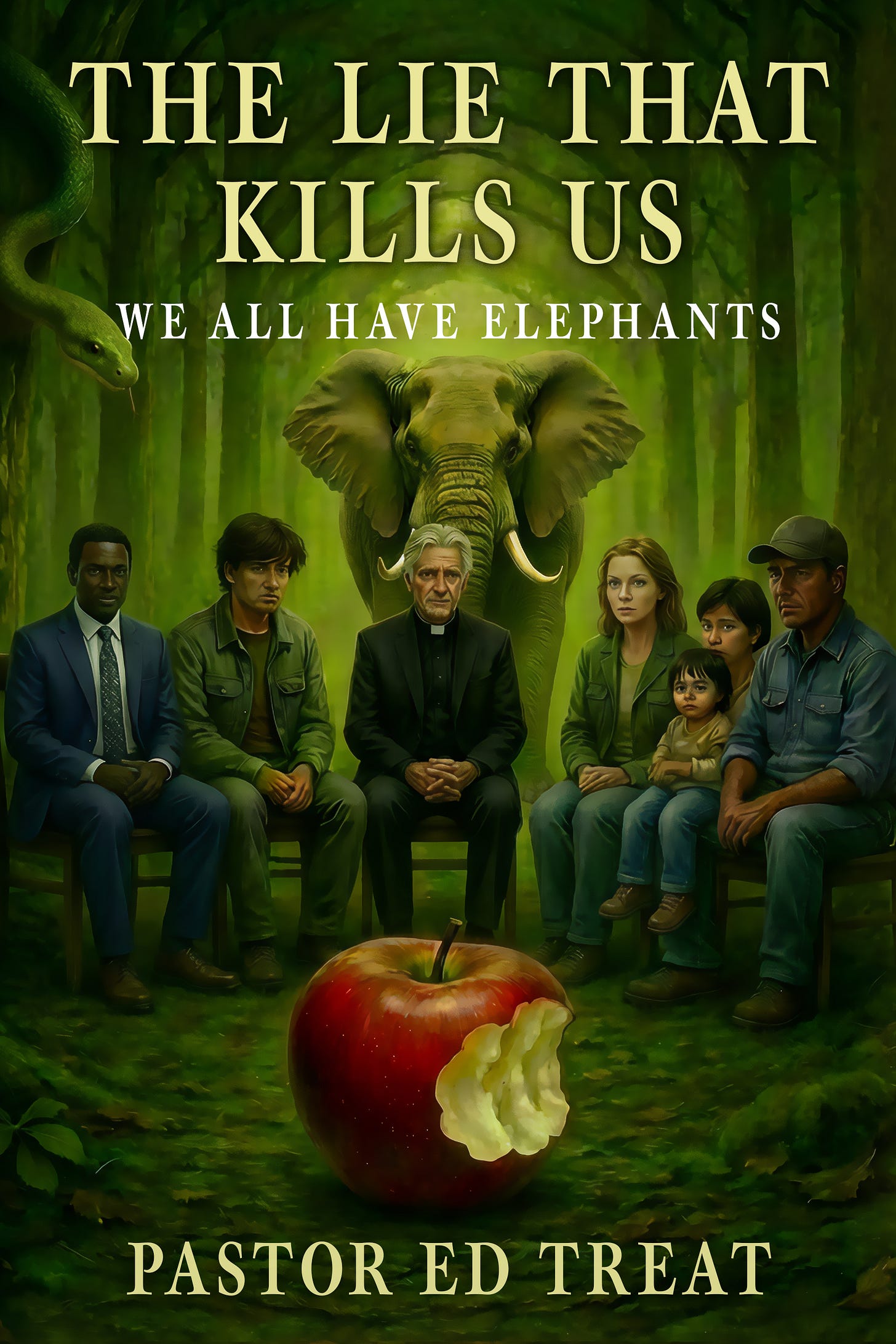
Today my new book, The Lie That Kills Us: We All Have Elephants, releases into the world.
That sentence feels both exciting and strangely vulnerable.
This book began as a book about addiction.
Or at least I thought it did.
But somewhere along the way, I realized I was writing about something much larger: denial, shame, longing, fear, trauma, family systems, faith, and the exhausting human effort required to keep painful truths hidden from ourselves and from each other.
The “elephant in the room” became more than a metaphor for addiction.
It became a way of understanding families, churches, institutions, relationships — even entire cultures.
We all learn how to look away.
We all develop ways of coping.
And many of us spend years believing the problem is our weakness, when in reality we are often carrying wounds, grief, loneliness, anxiety, or unmet longings we never learned how to name.

One of the things that surprised me most while writing this book was discovering how universal addiction language really is.
You do not need to be an alcoholic or drug addict to understand powerlessness.
You only need to be human.
This book is deeply personal at points. Some chapters were difficult to write. Others felt almost impossible. There were moments I wondered whether I should say these things out loud at all.
But silence does not served us well.
Not in families.
Not in churches.
Not in recovery.
Not in our culture.
And so I wrote the book I wish existed years ago — one that tries to speak honestly about addiction and recovery without reducing people to stereotypes, moral failures, or simplistic answers.
A short excerpt from the book:
“The greatest lie addiction tells is not ‘You are bad.’
The greatest lie is: ‘Do not tell the truth.’
Because once truth is spoken aloud, the entire system begins to tremble.”
My hope is that this book helps people feel less alone.
I hope it helps faith communities speak more honestly and compassionately about addiction and mental health.
I hope it gives language to people who have sensed for years that something painful was happening beneath the surface of their lives or relationships, but did not know how to describe it.
And honestly, I hope it starts conversations.
Real ones.
The book officially releases today in paperback and Kindle editions.
If this work resonates with you, I’d be grateful if you would share it with someone else who might need it—a friend, family member, pastor, counselor, recovery group, or congregation.
You can learn more here:
Thank you to everyone who encouraged me, challenged me, read drafts, listened patiently, and helped carry this project into the world.
It means more than I can say.
The book is available now: Amazon
No posts
Comments
Nothing yet. Say the first thing.
Sign in to join the conversation.