
From the upcoming July issue of Cadence Magazine
Philadelphia, PA- Photos and Text by Ken Weiss
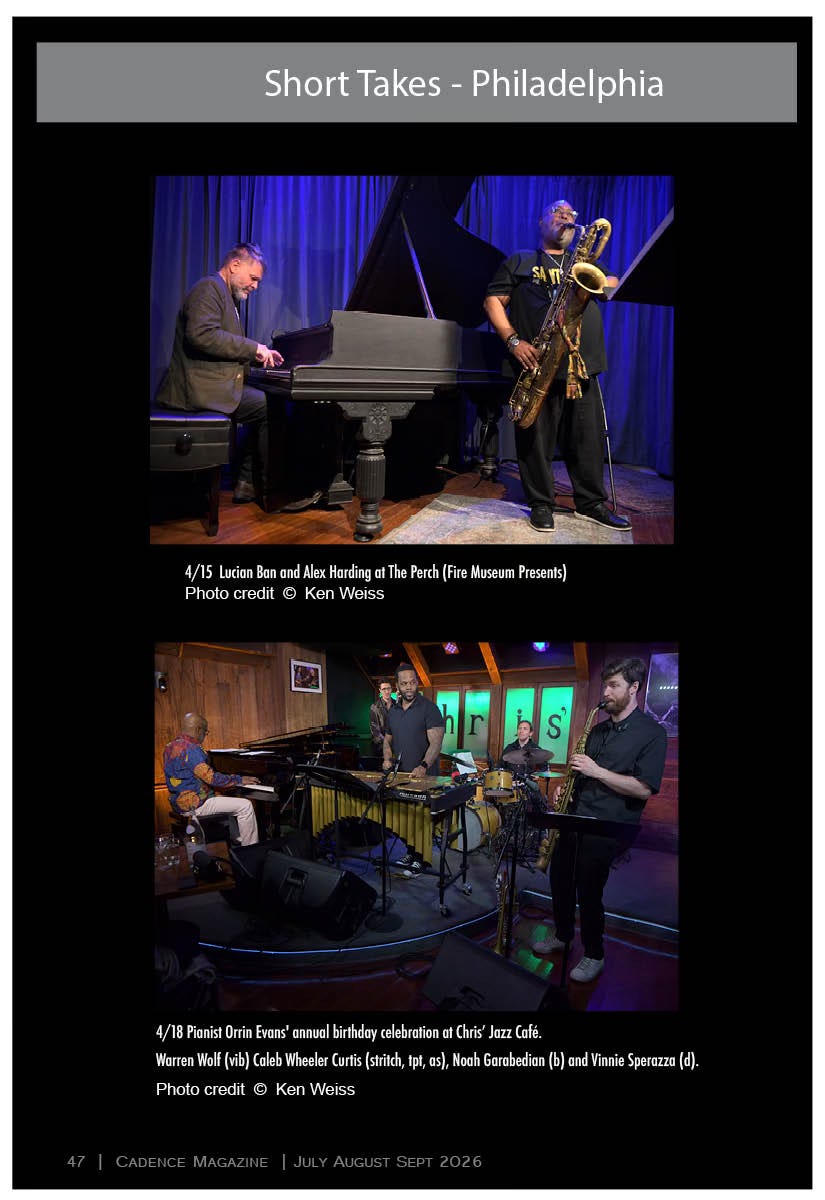
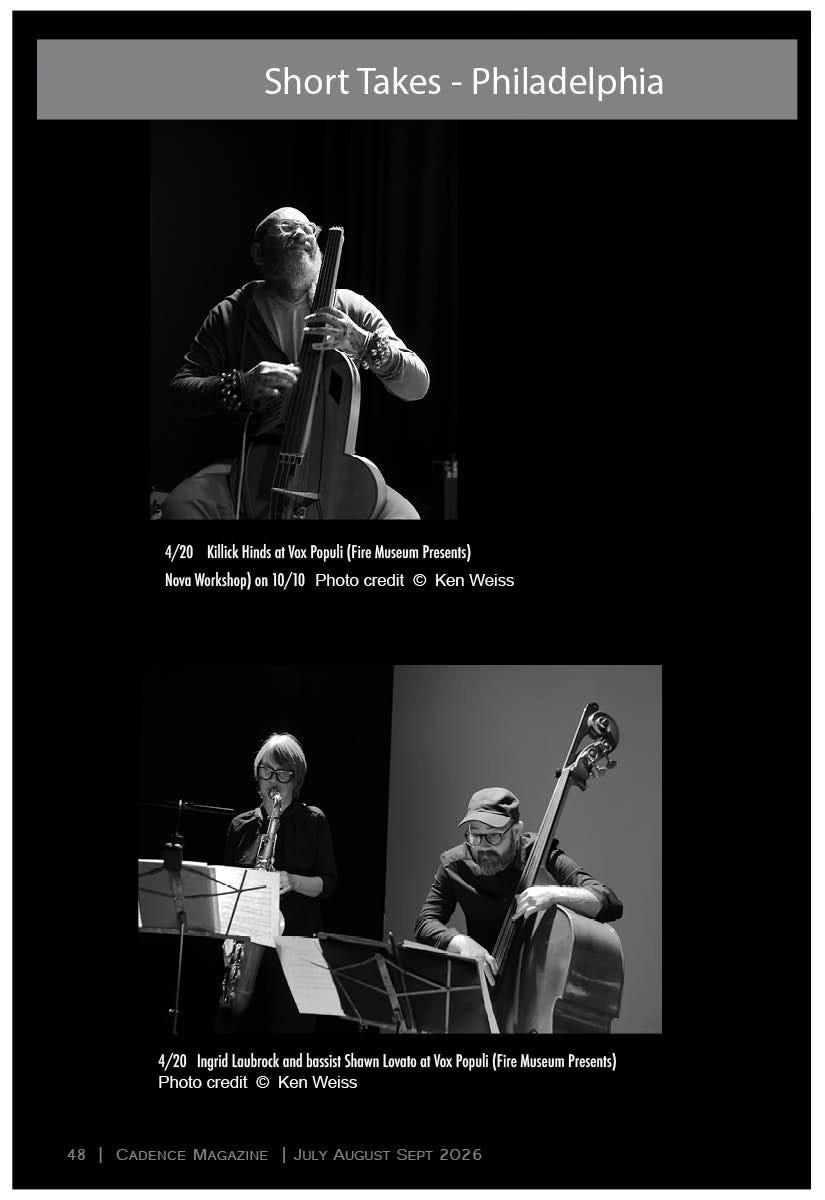
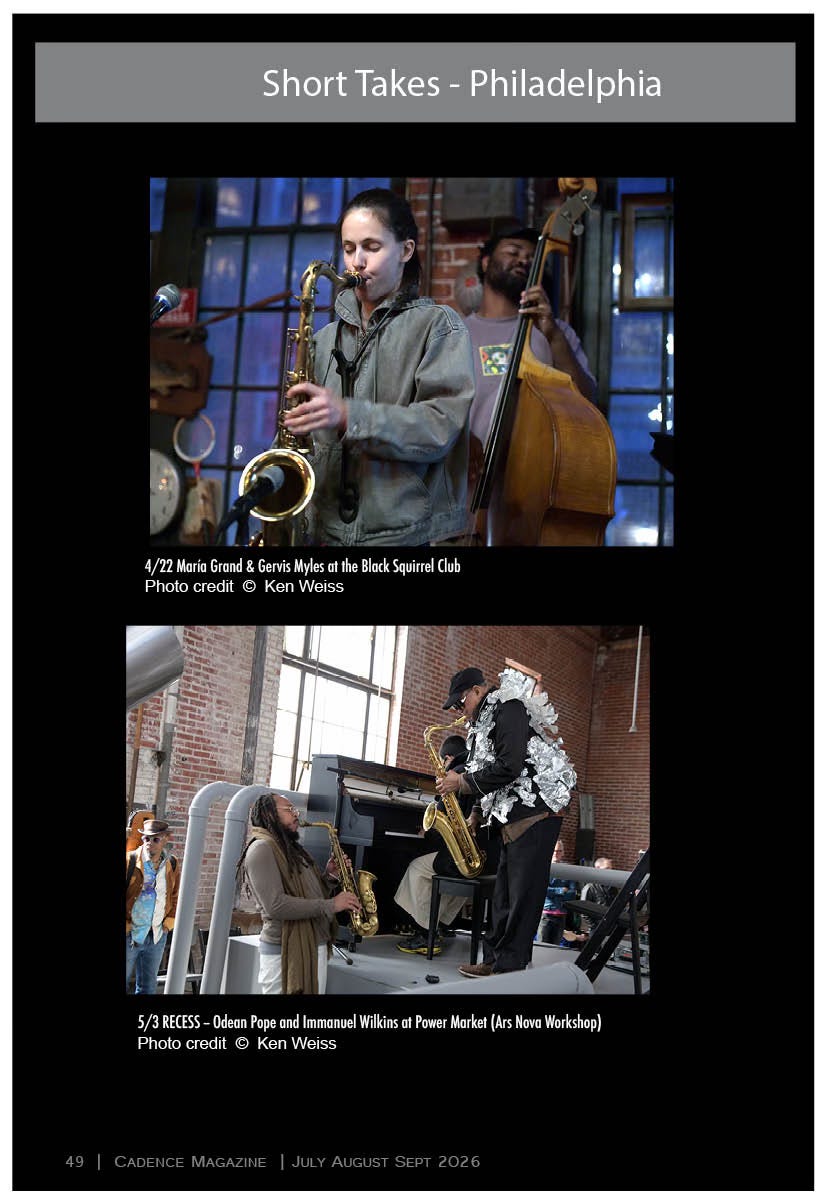
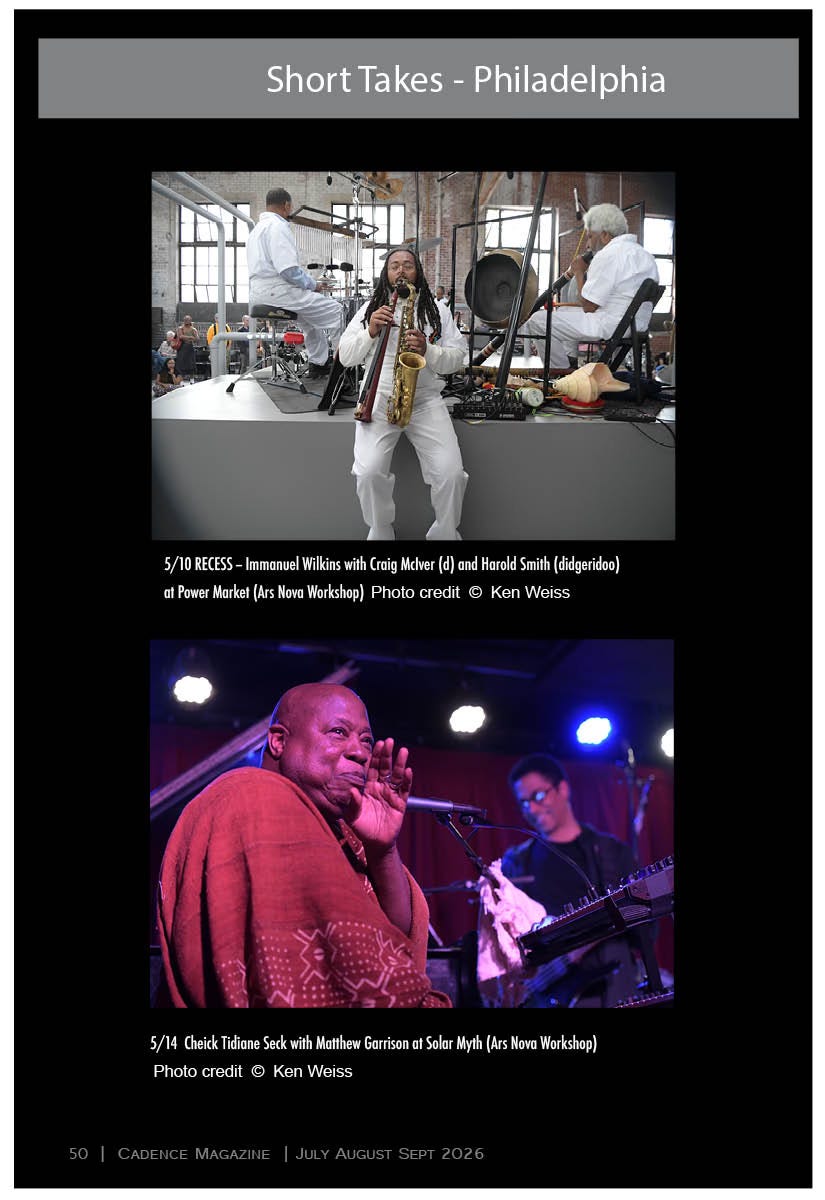
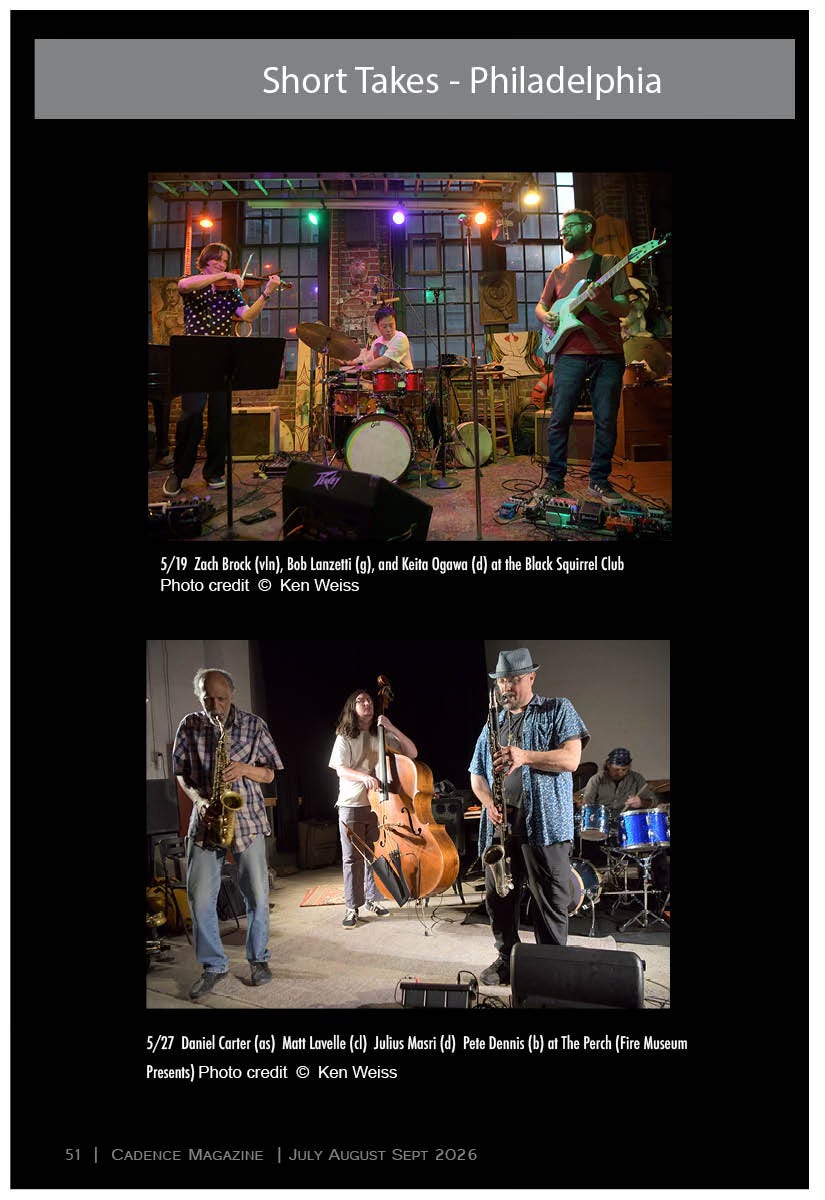
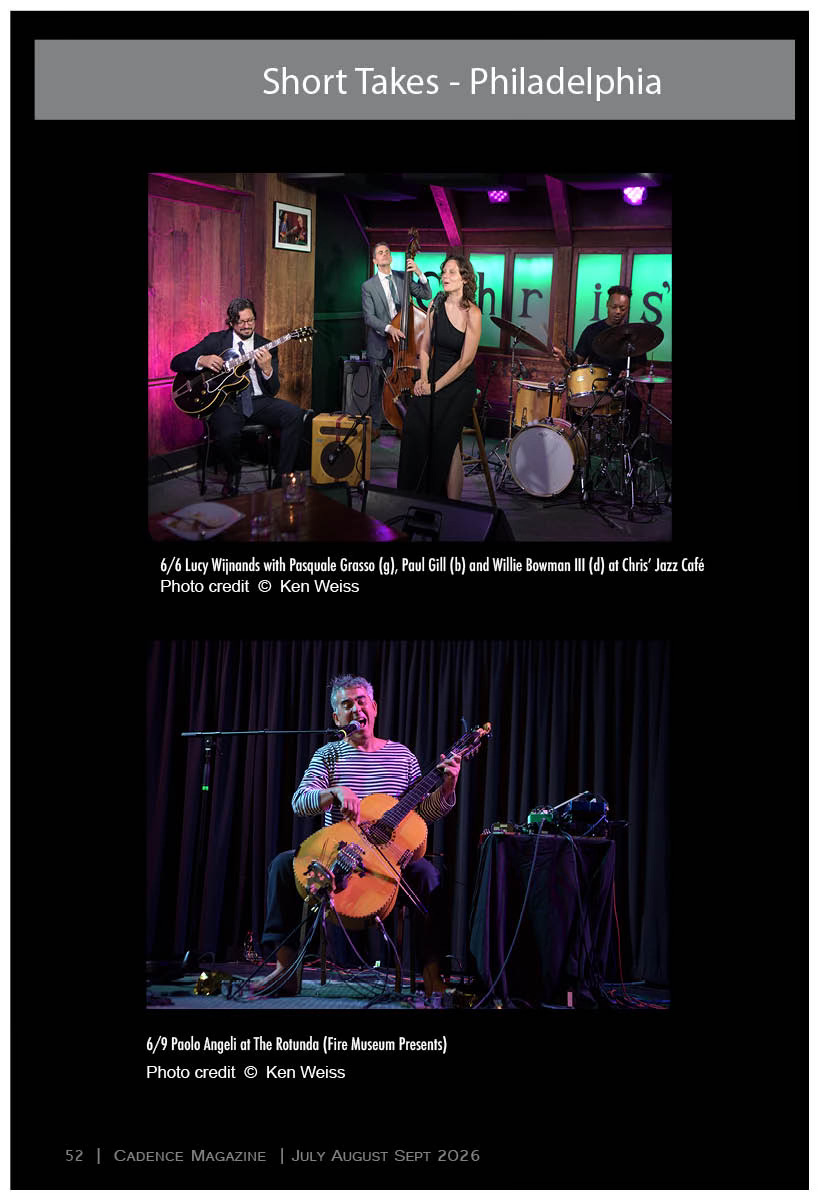
Pianist Lucian Ban returned to The Perch on 4/15 (Fire Museum Presents) for the fourth time in a duo setting. This time he had baritone saxophonist Alex Harding in tow in place of violist Matt Maneri. When asked about the uncommon pairing of bari sax and piano, Ban explained that he arrived in NYC from Romania to study at the New School in 1998 and soon heard Harding playing in the Sun Ra Arkestra. “It’s his sound that captured me. I later saw him again playing with his trio in 1999 and spoke with him and we’ve been playing together since that time. He’s responsible for introducing me into the NYC scene.” They’ve recorded together on several projects, and their 25-year connection is obvious in their playing. They opened with contemplative piano on “Dark Blue” but soon built to barnburner level with Ban attacking the keys and Harding making the unwieldy instrument succumb to his bluesy, church-steeped wishes. A ballad-esque tune followed and then “Rush” unleashed their most explorative longings – a wild ride with mercurially shifting beats leading to unexpected forays. “Something Holy” featured a short “Dindi” sax quote before getting into Harding’s tune written for his grandmother – “Spirit Take My Hand.” Harding gave the backstory on the piece – “I grew up in Detroit and Detroit has plenty of liquor stores and churches. My grandmother was a preacher, and we used to go watch her preach. I went because I knew a certain event was going to happen – the Holy Ghost. Without fail, someone in the congregation would jump up and start [screaming] -channeling the Holy Ghost. I was on the lookout for this. The ushers would have to take them to the back and settle them down. That made an impact on my life. I think it was like theater but as I became a man and a musician, I understood what was happening – it was Spirit. I understood it more once I started my Buddhist practice.” Covering the tune once again, Harding surely made his grandmother proud by dropping into his deep Soul/Gospel bag, especially on his powerful growling and grunting circular-breathing solo…Pianist Orrin Evans had his annual birthday celebration [he turned 51 on 3/28 at Chris’ Jazz Café. This year’s festivities went down on 4/17-18 with two different quintets centered around vibist Warren Wolf. The second night featured Evans and Wolf with Caleb Wheeler Curtis (stritch, tpt, as), Noah Garabedian (b) and Vinnie Sperazza (d). Evans chose original compositions drawn from the span of his career including “Big Jimmy” from his first recording. “Big Small” was inspired by a Patrice O’Neal routine that began with a resonating bass solo by Garabedian that ended with a tail that sounded like the “Pink Panther Theme.” The tune quickly evolved into a Bluesy shuffle that would have fit well into a burlesque house. Wolf took over with a muscular vibe solo. Evans continues to magnanimously give back to the local/global Jazz musician community. He founded a record label called Imani in 2001 as a vehicle for his recording projects but as his influence as a bandleader and producer has grown, he’s taken to represent a number of other artists on his label. It’s not uncommon for artists to produce other artists on their personal labels but Evans’ approach to artist representation seems rather unique. He not only offers freedom of expression during recording sessions, but he views his label as more of a collective — “We all work together to help each other.” He also excels at promoting each artist on his label by providing gigs for them. On this night of self-love and birthday celebration he also put the spotlight on one of the groups on Imani Records– Ember – the trio of Curtis, Garabedian and Sperazza who got the opportunity to perform one of their compositions. Another of Evans’ recent moves to enrich the local scene is the establishment of a practice/potential recording space in the Kensington section of town. This was the site of his after party that went late into the next day and was open to musicians to perform and fans and other musicians to hang out with free chips and drinks along with a plastic cup for donations. Some of the performers included [business partner] Luke Carlos O’Reilly (p), Elijah Cole (g), Madison Rast (b), Victor North (as), Kwame Hall (ts), and Elliot Bild (tpt). Congratulations to Evans for being named Artistic Director of the Seattle Repertory Jazz Orchestra beginning this November… Chris’ Jazz Café’s chef/owner Mark DeNinno reported that the club, founded in 1989, the longest continuously operating Jazz club in the history of Philadelphia, is doing quite well. Investments in sound and videography equipment have led to a bonanza in on-line streaming of many of their performances. DeNinno testified to over 30,000 YouTube subscribers to viewers in 73 different countries with over 40 million impressions to that date. One clip by Philly-native guitarist Kurt Rosenwinkel has been viewed more than 250,000 times…Brooklyn-based, German saxophonist Ingrid Laubrock has been collecting awards of late, including the prestigious 2025 German Jazz Prize. She appeared at Vox Populi as a member of bassist Shawn Lovato’s Biotic group, along with drummer Henry Mermer as part of a Fire Museum Presents night of 3 trios on 4/20. Lovato, who is also a member of one of Laubrock’s groups, booked a 4-gig tour to promote the band’s new release and this was the final installment. He said he chose the band’s name because biotic refers to, “An organism that is alive. I wanted the idea of having something living and breathing but not set in its ways. I wanted it to feel organic and human but be angular.” The trio often read off lengthy charts making it difficult to tell how much improvisation was used but each of the tunes had a different flavor. Quiet drumming opened “Scraps” before bass and tenor sax expertly matched notes. “Frequent Flyer” featured Lovato’s insistent, fibrous pizzicato work, along with Laubrock at her lyrical best. Lovato’s solo arco agitation on “Curious Stars Trio” bled into a group drone of evolving sound. As their set progressed, they maintained high energy playing and each piece offered a moving target of sound. Another of the trios this night included Killick Hinds with drummer Mark Ettingoff and Jeanne Lyons on electronics. The Georgia-based Hinds has played with an impressive list of people including Susan Alcorn, Lisle Ellis, Vinny Golia, Frank Gratkowski, Mary Halvorson, Henry Kaiser, Habib Koité, Peter Kowald and, Larry Ochs and makes quite the first impression with his heavily, apparently head-to-toe, tattooed body. He’s also quite the player of unusual instruments. On this night, he was playing a rare custom-made instrument called the H’arpeggione which is described on his Wikipedia page as “an instrument built by Fred Carlson for Killick Hinds.[1] It is an electric upright quartertone-fretted, six-string instrument tuned from a contrabass A♭ up to E♭ (half-step below the high E on the guitar). The H’arpeggione also has 12 resonating sympathetic strings which run through the neck and emerge over the body and run to a separate buzzing bridge. The body is larger than an acoustic guitar, with an arched fingerboard and a bridge for bowing or plucking, a spike for upright playing position, and a top made of (recycled) redwood.” The third trio of the night offered noted sound sculptor Bhob Rainey on sax with bassist John Moran and drummer Joey Sullivan exploring subconscious crevices… Swiss-born, New York-based tenor saxophonist María Grand last performed in town over 6 years ago with a solo gig. Her 4/22 performance at the Black Squirrel Club featured her quartet with bassist Gervis Myles, drummer Miguel Marcel Russell and percussionist Shakoor Sanders playing on a darkened stage as she requested in support of the release of her fourth album. At times, Grand was in the center of a percussive shower of sound from her hard-hitting bandmates but her brawny tone held up well at all times. She kept her eyes closed for most of the short set that began with “Jump Love Jump,” “T2” and then “Rocío y Río,” a tune written for her young child that she sang in Spanish. “I wrote it for my son,” she said. “I wrote it when I was away in October playing a lot. It means the dew and the river, and the words are ‘I miss you like the dew misses the river.’” Grand told me, “With this band I hope to achieve as much freedom of expression as possible. Our technique and our ears should be at the service of the spontaneous truth we are all, together and individually, trying to express.” In regard to her new album, the press notes quoted her to say, “I wanted to record something that showed where I’m at musically… I’ve long been interested in healing divides, whether political or personal. I’m especially fascinated with the line we constantly walk between individual autonomy and belonging to a group. So I tried to speak to both sides: the one that wants to be me, and the one that wants to be us. These sides are universal; every human being walks the line between fusion and individuation.” Grand also reported that she had recently finished studying Relationship Therapy at a school in Quebec and has started a practice of healing therapy by offering a Music and Self Knowledge course. “This is for serious, curious-minded students, who want to change nothing about themselves. Yes, I’m serious. You’re not here to change anything. You’re here to cultivate you like a garden, accept you as you are, and act from a place of curiosity.” Grand plans to start one-on-one music and consulting sessions soon. Asked about her training in relationship therapy and how it relates to her work as a musician, she commented that her vision is that her understanding of healing comes out in her music…Ars Nova Workshop presented two wildly immersive Sunday afternoon performances of radical playfulness entitled RECESS created by composers-performers Odean Pope and Immanuel Wilkins at Power Market – a North Philadelphia warehouse that was formerly a Pennsylvania electric and gas power station transformed into a sculptural play area for sound. The project was an experiment in form, sound, and gathering through the sculptural environment created by Immanuel and Rachael Elliott of Studio Senjeh with a mission statement of reminding “Us of something essential: the joy, curiosity, and possibility that emerge when we experience music together—not simply as listeners, but as participants. It reinforced our commitment to creating more opportunities for shared discovery: inviting new voices to the stage, welcoming broader audiences into the conversation, and finding deeper ways to engage with the artists whose work shapes our lives.” The inspiration for the industrial “playground” formation came from Wilkins playing his sax into a spectrogram, a device for depicting the frequencies of an audio signal to form a graph that led to the basis of the installation. It served as both the environment and graphic score for Wilkins’ improvised composition. He noted that he was aiming to remove the barrier between performers and the audience and to have more of a “playground” atmosphere. The stage was a cross between a jungle gym and a boxing arena with percussion sections outside the stage. The 5/3 event featured Pope and Wilkins along with Micah Thomas (p), Ryoma Takenaga (b), Kweku Sumbry (d) and Elliott Levin (ts) having a ball, interacting with each other or not. There was Wilkins wrapping a cord around Thomas who theatrically screamed at the affront. Wilkins later came up behind Thomas at the piano bench and screamed from behind. Pope donned a homemade jacket fashioned with tinfoil given to him by a dancer at the start of the performance and he spent much of the afternoon in its glittery grandeur. Each artist let their inner child out and Wilkins was especially active as a blur on and off stage – moving from station to station – playing saxophone, piano, drums, and the percussion stations. At one point, he did numerous laps around the outside of the stage, getting in some cardio while dodging audience members who stood around the outskirts. The cross-generational jazz collaboration between the 28-year-old Wilkins and the 87-year-old Pope was not their first time sharing a stage, but it was another emblematic magical passing of the torch from the reigning locally-based/reared saxophone titan to the next generation. The 5/10 second rendition featured Pope and Wilkins with a new cast of playmates – Diane Monroe (vin), Harold Smith (didgeridoo, d) Victor North (ss) Nimrod Speaks (el b) and Craig McIver (d) for an hour set that was less chaotic and rambunctious. There was a tower of complimentary cake available at both events. Major support for RECESS was provided by The Pew Center for Arts and Heritage and the National Endowment for the Arts and YoungArts…The US debut of Will Calhoun’s Mali Project at Solar Myth (Ars Nova Workshop) on 5/14, a genre-blending ensemble that fuses West African rhythms with Jazz and Rock, featured Grammy Award-winning artist, producer, and percussionist from Living Colour, Calhoun, with Malian star keyboardist, vocalist Cheick Tidiane Seck with fellow Malians - Dabadi Kouyaté (g, ngoni, talking drum) and Adama Bilorou (djembe, congas, balafon), along with American electric bassist Matthew Garrison, the son of Jimmy Garrison. The project is a byproduct of Calhoun’s deep immersion in Mali’s musical traditions. He’s lived part-time in Mali for over a decade and has spent years traveling, researching, and submerging himself in West African music. Calhoun made the right choice to show off Mali’s best with the addition of Seck, one of the founding members of the legendary Super Rail Band de Bamako and a musician Calhoun has been collaborating with for 15 years. Seck, surrounded by a piano and electronic keyboards, was instantaneously likeable with his huge, gap-toothed, perpetual smile, puffed cheeks and joy emission. Regally attired in a burnt orange embroidered tribal top, he offered captivating Malian vocals against a backdrop of infectious rhythms and invigorating beats. One of Seck’s especially aggressive electronic organ efforts drew shouts of confirmation from the audience. Calhoun was content to stay in the back corner, pounding his drum set, replicating exotic West African percussion with a Rock edge. Bilorou was a revelation on congas and a small balafon built by his cousin, noted balafon player Aly Keita. Some talk about the need to elevate spirituality and peace on our planet, along with the magnificent, uplifting music sent listeners home on a high level…Zach Brock (vln), Bob Lanzetti (g), and Keita Ogawa (d) of Snarky Puppy fame returned to the Black Squirrel Club on 5/19 for the second time since they formed their trio during the throes of the Covid-19 pandemic. After dining on some delightful Georgian dishes at a nearby restaurant – (I happened to eat next to them) – they delved into their eclectic mix of styles that includes elements of Jazz, Folk, Ambient, Groove, and World music. Each artist contributes original compositions, so the music varies quite a bit and their amiable looseness on stage is comforting – they routinely play to huge crowds with Snarky Puppy, so it’s got to be a fun ‘let your hair down’ evening when doing small venues like the Squirrel. Lanzetti’s piece “Orlok’s Arrival” from a film score he did for Nosferatu, the 1922 silent German Expressionist vampire film, got things off on an ominous note, soon followed by the first of Brock’s three sprightful tunes with “Happy” in the title – “Happy Song” which Lanzetti announced was to be done as, “Our Joy Division version.” Brock also added his somewhat dramatic, Spanish-esque “Los Caballeros “composition inspired by the comedic 1986 3 Amigos movie. The second set featured Ogawa’s “Moro Morocco,” a slithery-beat piece written after time spent with Snarky Puppy in Morocco…Fire Museum Presents was up to its old tricks in scheduling an incredible double feature on 5/27 at The Perch with a trio of Jason Stein/Damon Smith/Adam Shead and the quartet of Daniel Carter/Matt Lavelle/Julius Masri/Pete Dennis. The Chicago-rooted improvising trio of Jason Stein (b cl), Damon Smith (b) and Adam Shead (d) have been kicking up a storm since forming in late 2021. They were on a 14-gig tour that started in the Midwest and were admittedly a bit road weary – Smith was traveling with a stool to sit at times while he played his bass, something he doesn’t typically do. The trio stood on stage for pregnant moments before Smith asked, “Should we just play?” and then the blistering assault began. Stein channeled his inner Peter Brotzmann to good effect throughout their all too short 30-minute set. Smith commanded his booming bass, utilizing a bow along with a rope and bulky chain, while Shead churned on drums with his face hidden by branches of his hair tumbling down. Their set reached high plateaus for three soloists matching wits. Post set, Smith talked about his role in the band. “I’m able to play more rhythmically with this group. I’m concentrating more on and choosing to play the bass and rhythm section role more than the equal improvisor role that I normally take because Jason is so great.” Next came New York City “legend” Daniel Carter [“I don’t know why I’m being called a legend recently, I don’t like it. All the legends I know are dead.”] That’s typical talk from the talented and humble multi-instrumentalist. He’s never been one to have the attention drawn to him. This year’s Vision Festival is dedicating the last day of the event to Carter, and he said he couldn’t wait for the tribute to be over with! Prior to the start of their set, Matt Lavelle asked all to acknowledge the death of Sonny Rollins two days before at the age of 95. “We have to raise a glass to Sonny Rollins. The fact that Sonny left the planet is so huge. You can see him transitioning from Space.” The quartet’s set began with an extended space-filled duet between Carter on flute and Lavelle on clarinet before moving through their impressive cache of horns and reeds. Once Pete Dennis (b) and Julius Masri (d) joined in, the music continued in the highly textural, mid-tempo arena for the entire set. Lavelle, who left NYC for Philadelphia a few years ago, has a long history with Carter. I asked if his group’s conversational, textural approach was tendered in response to the “caveman” submissions of the first band and Lavelle said, “Contrast was important but the goal was to reach the dynamic DC and I have built in our 26-year ongoing friendship horn player brotherhood. We started talking and playing in 2000 and found we are both truth seekers who like dynamics…burning the house down when needed but also able to practice quiet dynamics and deep listening and space, aspects not associated with the stereotype of Free Jazz. Our only common horn is trumpet [Carter plays -flt, tpt, cl, as, ts/Lavelle plays-pic cl, a cl, b cl, tpt], and we play it very differently, so it’s literally over 20 possible combinations every time we play. We definitely have a multi-instrument connection. He had it with Sabir Mateen for decades. When we play, it’s an exchange that’s been going a long time that is unlike anything in Jazz, and I don’t play like I do with DC with anyone else. We’re both part of the singing horns group. Plus, we both love Miles and Ornette.” Carter and Lavelle rotated through their personal instrument arsenals, often facing each other and responding accordingly. Masri often plays experimental solo sets and in duos, so it was a treat to find him in a larger setting which he excelled at. His segment using brushes with arms and hands waving about, looking like a magician or a hyperkinetic matador while delivering buffered, propulsive churning, was a standout …The Lucy Wijnands quartet at Chris’ Jazz Café on 6/6 featured the vocalist, winner of the prestigious Ella Fitzgerald competition in 2021, with special guest Italian guitarist Pasquale Grasso, bassist Paul Gill and drummer Willie Bowman III. Wijnands, a native of Kansas City, Mo., and daughter of stride pianist Bram Wijnands, learned from attending gigs with her dad around town as a toddler and soon began appearing with him in performance. A lover of the American songbook and Jazz standards, she effortlessly rendered chestnuts such as “Witchcraft,” “I Can’t Escape From You,” “A Foggy Day in London Town,” “You Stepped Out of a Dream,” done as a duet with Grasso, and “Just One of Those Things.” Wijnands’ voice, smooth and pretty sans throatiness, added a sense of weightlessness to the music. She concluded the second set with an original tune she wrote with her father called “Always and Forever” that was a highlight. The tune had a “Killer Joe” feel to it and memories of her father stirred her emotive side…Bassist Max Johnson had been commuting from Brooklyn to the University Of Penn for his recently completed doctorate degree. He employed quite the cast of stars to fulfill his PhD dissertation – a new concert length work called “Without Fear” - with Anna Webber (ts, flt), Yuma Uesaka (ss, cl), Nate Wooley (tpt), Lester St. Louis (cel), and Jeff Davis (d, vib). Johnson presented that sextet at the MAAS Building on 6/7 (Fire Museum Presents). He said for his dissertation he wasn’t required to perform the whole composition, only portions recorded from the band’s rehearsal session a few months prior was needed. The group recorded the work the day before, so things were tight this night for the difficult piece - a sprawling, style-blurring composition that weaved together elements of Trad and Avant-Garde Jazz, Chamber music, Folk music, Free improvisation, and Prog Rock. Conceived as a musical ecosystem where diverse influences coexist and interact, it started, fittingly, with a bass intro, soon joined by subtle flute and trumpet, and then the six were off and running from section to section. One door after another was opened to reveal new realms of sound. At one point, it seemed as if raindrops were falling in the room. A waltz appeared as well as circus music and delicate Classical work. Some stellar moments included pizzicato bass and cello collaborating on a segment that sounded like bees buzzing, a portion where clarinet and tenor sax strikingly melded, and a late playful slice with soprano sax and Webber’s tenor sax circular breathing. Although the piece was composed, Johnson left plenty of room for each artist to express themselves. I loved the times when St. Louis, who sat next to Wooley, couldn’t hold back the smiles and approving giggles during Wooley’s extended technique solos. The night opened with a solo cello performance by Thomas Kraines performing another Johnson composition “The Green Door,” which spawned out of Johnson’s love of comic books and was based on The Hulk…Sardinia’s finest export, guitarist Paolo Angeli, also known as the Sardinian Sorcerer, returned to The Rotunda on 6/9 (Fire Museum Presents) with his magical, highly customized and extended, electrified, Sardinian folk guitar. Conceived by Angeli between 1993 and 1996 and perfected over 30 years through three prototypes, it’s a hybrid between a baritone guitar, a cello, and a drum set, currently features 25 strings, piano-like hammers, propellers for creating drone sounds, movable bridges, and various attachments—evoking the sounds of a harp, electric kalimbas, kora, and sitar. It is played using plucking, a bow, and percussive techniques. It’s really wild to look at. Pat Metheny liked it so much he got a version of it from Angeli years ago. Angeli told me he buys an extra airplane seat for his instrument so as to avoid damage to it. The day of his Philadelphia show he was able to spend a couple of hours walking around the city for the first time and came away impressed – “I think that will inspire me tonight when I play.” His 90-minute set found him in constant motion – matching supreme technique with his musical zoo of an instrument, allowing for quick changes in musical motifs while remaining highly musical. He played with wide-splayed legs and bare feet that crinkled foil material to create accompaniment sounds and maneuver cables. Early on it sounded like something from Mike Oldfield’s Tubular Bells. He mixed pizzicato and arco bass, he sang passionately in Northern and Southern Sardinian dialect and used large bows in both hands to violently agitate his strings. Fiddling with electronics, he sounded like Swiss harpist Andreas Vollenweider at times. A late beautiful melody popped up that was Bjork’s “Unravel” composition, harkening back to his 2007 release of compositions by Bjork and Fred Frith, his first experimental influencer. After a standing ovation, he announced, “I’m sorry, I like to play long sets. For some people, it might be too much…It makes me happy to play.”
Ken Weiss
No posts
Comments
Nothing yet. Say the first thing.
Sign in to join the conversation.