

Hidden Promises in Joint Terrains, Apex Emerging: Part 1/ Part 2/ Part 3
Dill, g, Oud; Ash Mattia,vln; Ben Wright, bass; Thor Rodriguez, d. Jan 3, 2026 Santa Fe, NM
Guitarist and Oudist Mustafa Stefan Dill takes us on an extraordinary journey with his quartet. He presents “Love Unfold The Moon”, a piece in three parts with guitar, oud, violin, upright bass & drums. For those of you unfamiliar with the Oud, it’s a stringed instrument that looks similar to a mandolin, it’s fretless and consists of a single lower string followed by five higher strings that are doubled. Possible tuning from low to high might be F,A,D,G,C,F. The fact that it’s fretless allows for the use of microtones, for example: notes that are in between the traditional chromatic scale notes. This helps create the unique sound used in much of middle eastern music.
Dill and bassist Ben Wright are two players that have been around and done it all. They’re teamed with two younger musicians on violin and drums creating an interesting dynamic between bandmates.
We open with solo guitar. Dill’s playing is rich with a careful selection of dissonance that works well introducing what’s to come. The music thrives on each member listening to and then reacting to one another. Themes and unison lines are dispersed throughout. Dynamics, color and texture play a key role in the performance. The players are free to explore as they share the space so beautifully allowing for the conversational aspect that’s so much apart of this music to blossom. The musicianship of all the players is exceptional, the spontaneity and uncertainty of what comes next is captivating. If your new to music that’s contemporary, free, out or if this is what like “Love Unfold The Moon” offers a deep dive into a multicultural, ear opening experience that just may change the way you listen.
Frank Kohl
Please support Cadence Weekly Newsletter by taking out a premium subscription (just $30 per year)
Access all the newsletters, plus extensive resources from Cadence Magazine including over 75 back issues, Audio Interviews, and Video Features, plus a handy Musician Index.
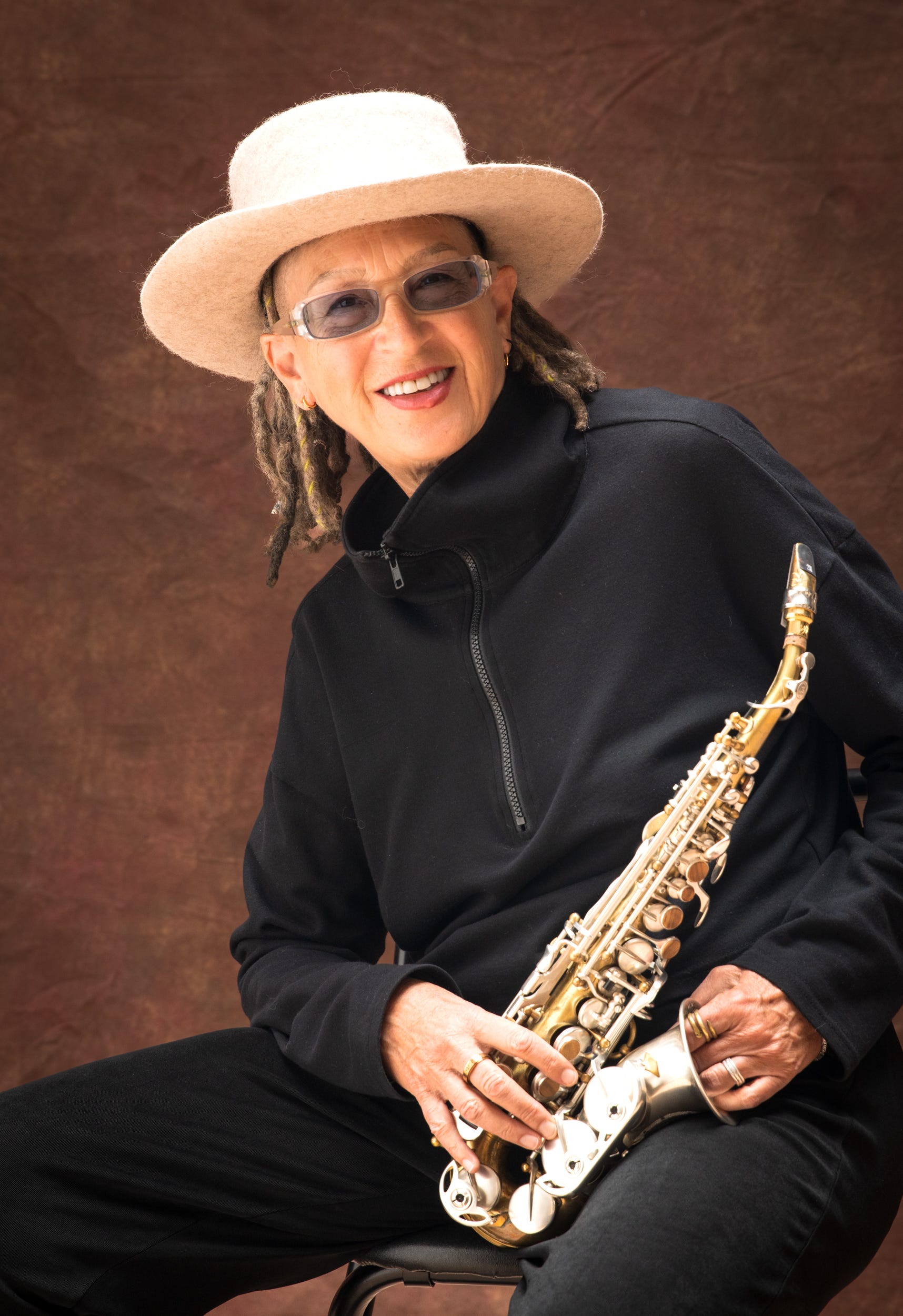
Photo Credit: Mark Thomas
When David from Cadence asked me to contribute a story about a turning point in my life as a musician, three different types of turning point came to mind, and they happen to all of us regardless of our profession.
The first occurs naturally (disaster, death, sudden inheritance, social changes, etc.) This type of turning point happened in 2012, when the end of the Mayan Long Count Calendar was approaching and lots of people said it would be the end of the world. That didn’t happen...but things did change...especially for me! More on this in a bit.
The second type is thrust upon us artificially (the economy, arbitrary rules created by bureaucrats, politics, racism/sexism, etc.)
The third type of turning point is what results from our executive decisions. This type is unique in that we are deliberately plunging ourselves into the unknown. Whatever happens, there’s no one and nothing else to blame. As Louis Jordan said, “ain’t nobody here but us chickens.”
I found myself in that third type of turning in 2012, when I decided to stop playing the alto saxophone. Little did I realize that I may have been influenced by the first type as well!
In 2012 the end of the 5,126-year-long cycle of the ancient Mayan calendar was upon us. Scholars rejected the idea that this event signified the end of the world. They said, rather, that it merely indicated the end of one cycle and the beginning of another, and that it could, in fact, engender a new and positive era of humanity!
For myself personally, there had already been recent significant changes in my life. But I thought that they were the result of my own thinking. Looking back on it, perhaps I was just falling in line with humanity’s destiny. As my husband is fond of saying: “Everything is under control. We just don’t know by who.”
I had stopped playing C flute a year or two prior to 2012. Keep in mind that my arsenal since arriving in New York in 1982 had been flute, clarinet, alto and soprano. For over 30 years I’d made a good living as a musician in the Big Apple. Living the dream, I was playing with many great jazz artists, the famous and the infamous, old masters and young lions, innovators and stylists, players and singers, big bands and small groups, big venues and school assemblies, record dates and club dates, the circus, Broadway and off-Broadway shows, American music and non-American music.
One steady source of income was backing up singers. From jazz stars like Irene Reid, Joe Lee Wilson, Teri Thornton, Marion Cowings & Kim Kalesti–even Tony Danza–to lesser-known-but-great talents on the cabaret and Broadway scenes.
The musical directors for the singers would present me with a lead sheet in concert key (key of C). I would make up my own parts on flute, clarinet and alto saxophone. (Of these, only flute is in concert key. Clarinet is in the key of Bb. Alto is in the key of Eb. That means that a clarinet’s C sounds like a Bb on the piano, and an alto sax’s C sounds like an Eb on the piano.)
After some years of this, my brain didn’t want to transpose music to different keys all the time. I thought, let me just play instruments in Bb now.
Giving up the alto was a radical step. Alto saxophone was the instrument on which I’d made my reputation. Toured worldwide. Recorded with leaders like Charli Persip, Clifford Jordan, Jaki Byard, Peggy Stern, Hilton Ruiz, was lead altoist for DIVA, and performed worldwide with countless other legends. Had my own groups too.
I was an alto player. Everyone knew me as that. I knew myself as that. To stop playing alto was, basically, sacrilege. But my heart was calling me away from E flat, and towards B flat. I had no choice but to follow the call, even though I LOST ALL MY SINGER CLIENTS AND MOST OF MY OTHER GIGS because they wanted me on alto, not soprano.
Was this the end of my career? Was I starting to feel my mortality? Thomas Chapin, my old friend, had died at 40 years old in 1998. That shook me. In 2006 Lew Soloff called to tell me that Hilton Ruiz had died in New Orleans, where he was promoting the album we had just made with him. Total shock. Nine years later, Lew died. Many others. My friends were dying, and they weren’t old.
My mentor Jackie McLean had been a father figure to me. But he had died the same year as Hilton.
I knew I was going to stop playing alto, but I needed to bounce that decision off of a trusted advisor. So I turned to my surrogate father figure: Phil Woods.
When I began spending more time in the Poconos starting in 2001, Phil had become a mentor and friend. Once I was giving a masterclass at the Deer Head, and it was pouring rain out, a real deluge. I thought no one would come. But guess who was the first player to walk in the door?
“Phil, you’re coming to my masterclass?” I said, incredulous.
“I never miss a chance to learn something,” he replied.
So in 2012, listening to a group at the Deer Head, contemplating my turning point and not thinking AT ALL about the end of the Mayan calendar, I saw Phil sitting at the bar. I went over and sat next to him.
It was time for confession.
“Phil, I have made a decision that I’d like to share with you,” I began.
He was attentive. I told him I was going to stop playing alto saxophone, in order to focus on soprano and clarinet. I don’t know what I thought he would say, but I probably expected a similar reaction to the rest of my friends and colleagues, which they didn’t say to my face, but I knew what they were thinking: I was an idiot, foolish, possibly insane.
Phil was blunt. He always was. “Do what you feel, baby,” he said.
That was it. No chastisement, no interrogation, no bewilderment. It was like getting a blessing...from the Pope.
Phil passed away just three years later.
Turning points arrive not only with individuals, but also with societies, and even with species–whether animal, vegetable, or mineral. It seems that wherever we turn now, there’s a turning point happening. From the stars and planets to the earth and its climates, from the existential threat of nuclear war to the policies of your local school board.
Further complications include: is AI going to rule us? Are we living in a Simulation? Are humans evolving from homo sapiens into homo synthetica, or homo cyberneticus?
And where does all that leave music, and musicians? We’re already in the middle of a drastically changing marketplace paradigm. Lots of people are proposing lots of new ideas, but which ones should we follow? Who can we trust–certainly not the industry rulers who treat musicians like indentured servants!
Contemplation of death is a timeless practice of the sages. From one’s personal viewpoint, one’s own death is the biggest turning point of all. And death of humanity, or the planet, is almost unfathomable. Yet the sages tell us time and time again that death is not an ending, it’s a turning point. They tell us there is something beyond.
I’m recalling the tenor saxophonist Harold Vick, who was a close friend of mine. He told me that when he died on the operating table after his first heart attack, a road appeared to him, which he walked down until it came to a fork. He heard music coming from one direction. “I always followed the music my whole life Su,” he said, “so that’s the way I went.” Harold then woke up on the operating table, and lived to play many more years.
We have to follow the music, and that means we have to follow our heart. The heart has an electromagnetic field far greater than that of the brain. It knows things we can never know intellectually. Just like in the song by Benny Carter and Sammy Cahn, “Only Trust Your Heart.”
Music is a path with heart. When we follow that path, whether as a player, a singer, a composer or a listener, I believe we end up where we need to be. So if I were to offer any encouraging words to my fellow homo sapiens during the present turning point of humanity, I would say:
Follow the music.
And only trust your heart.
–Su Terry
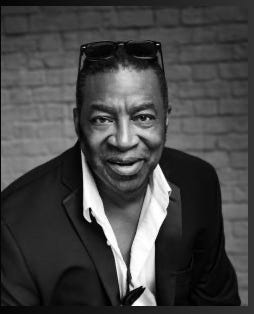
By Zim Tarro
Q: To start, please introduce yourself, your name, where you’re fromand what you do.
Jones: Okay. Well, my name is Victor Jones, my good friends call me Ya-Ya, those who have known me for a long time. I’m a drummer and I also play trumpet, write music and produce records and I’m a recording artist. I’ve done a number of projects as a teenager.
I started out on what I guess would be called the chitlin’ circuit with Lou Donaldson when I was a teenager, 17 or something – Jimmy McGriff and all those kind of guys, Jack McDuff and Dr. Lonnie Smith and that whole scene and a stint with George Benson. But this is just my drumming.
I came from “the Oranges” in New Jersey. I played in the high school wind ensemble and the marching band and the brass ensemble as a trumpet player. I studied that all through school; I never played drums at school. Then I got a scholarship to Berklee College as a trumpet player. And I was playing classical music on trumpet.
Anyway, fast-forward to Lou Donaldson as far as my drumming is concerned and the jazz thing is concerned. Before Lou Donaldson I was playing with a lot of R&B and rock bands around New Jersey Essex County area. And I was born in Norton, New Jersey but I was raised in the Oranges. But I played in that whole thing; we played in all the music of Ohio Players and Earth, Wind & Fire, of course, the music of the day and tons of James Brown. So these influences have entered my life and also rock influences, no doubt. I’m interested in contemporary music today and what’s going on in the popular world. So what else can I say about that?
Q: One of the questions I had was about your transition to drums. Have you played drums while you were playing trumpet?
Jones: My transition from trumpet to drums. I mean I played the trumpet about four times a week. I did sessions on trumpet. But anyway, how I got into playing drums is I purchased a snare drums when I was I don’t know how old. I started playing trumpet when I was 11 and I played a snare drum when I was 12. I used to just play it to accompany my cousin, my beautiful cousin Tracy, who would play flute and I would play the trumpet or the drums. She was in the 4th grade and I was in the 5th grade. So I was just using the drums as an accompanying instrument. And then when I entered high school we had one of the best drum lines in all of the state of New Jersey. The East Orange High School drummer line was so sharp and so good that I started learning all those cadences just by watching them and hanging out with them. And the head of the drum line, his name was Carl Guthrie. Carl Guthrie started teaching me rudiments and I learned all the drum parts and all the cadences that the drummers were playing. I wanted to switch to drums and my high school teaching would not let me do it. He said, “No, we don’t need drummers, we need trumpet players. So I just played drums at home basically.
Q: Yes.
Jones: I eventually got a drum set when I was probably 15 years old, which is probably late for must drummers. And I got my first drum set when I was 15. That was 1970 so that tells you how old I am. I started playing the drums with all these rock bands and it was like the drums took over and I could, you know, freely and open, and I knew ever song that came on the radio. And my family was a jazz family; they listened to jazz all around the house. It’s not like I discovered jazz one day, it’s the sound I was raised with.
Q: What did your dad do for a living?
Jones: My dad is kind of an artist himself. He worked at Clark Design. When you fly over an airport and it says “Norris Airport” and it’s written in flowers – a landscape artist. He worked with flowers and, you know, he was – he had a green thumb. But that’s what he did. He worked in the shop and he worked in the various parks, designing flowers. But he loved to listen to Dinah Washington and the music he listened to, you know, that was the age of the bebop cats. He was into all of that, from Benny Goodman to the Dorseys. So that was an influence for me without even me trying. It was just the sound that was around the house. My mother was also – she took care of the house and she loved Billie Holiday and Dinah and Ella and Louie and all that stuff, so it’s something that’s been in my family since I was born.
Q: That’s like growing up with classical music, you know? It’s not classical but it’s “classical.” It will be classical.
Jones: Yes, it’s like folk music to my family, just a certain music that we were listening to. You know, Black people were playing this type of music and they were favorites and they were stars. I’m talking about the `30s or `40s. I mean jazz music was like what, you know like Snoop Dog – I’m talking about popularity – back in the ‘30s it was Duke Ellington and Count Basie and Louie Armstrong, that was popular music.
Q: I wondered if you could, for the sake of our audience, just sort of explain what the Chitlin’ Circuit is and what it was and what your experience was working – it’s a broad question.
Jones: I got flunked out of Berklee College of Music. Well, I went for a short period and then Lou Donaldson called and he said, “We’re going on the road.” And we started going to Texas and just – basically the Chitlin’ Circuit was all of the Black clubs in the United States of America. That’s how the Motown people used to travel. They played all the Black clubs in the United States and wherever else they could be. So they were basically small clubs in Kansas and St. Louis and even in California.
We traveled by car with Lou Donaldson and Mark Elf was the guitar player. I’ll never forget, I was probably 17. I remember getting my driver’s license and Lou would never let me drive the car. He’d let me drive the car but he’d never fall asleep, like, “Okay, you’ve got it. You can drive the car now.”
Q: His eyes would be open.
Jones: His eyes wouldn’t be open but he would never go to sleep. But anyway, there was a lot of driving involved. I’m very honored and proud of being on that scene. And people like Jimmy McGriff were involved in that and guys like George Benson was on it. We were always running George Benson on the road in those days. And then he got that really big hit, This Masquerade and he got out of the Chitlin’ Circuit.
Q: I remember that hit.
Jones: He had that major hit and after that I didn’t see him on the road any more. It’s sort of like a springboard to go to the big works. And then I started playing with Stan Getz. That was a bigger world; there were major jazz festivals around the world, so…
Q: Flying everywhere.
Jones: Flying and then we’re, you know, we played in Europe, we played in Africa, we played the world. We didn’t play Asia too much but we played around the world. So that was a whole different scene. But everything that I’ve learned, I played the Chitlin’ Circuit and learned about jazz drumming is from that period. No matter how hip I got, the basics come from that.
Q: I guess there’s no replacing that, there’s no way you could synthesize that, put that in a book or relate it into…
Jones: No way! Pat Martino is perfect example of somebody who came out through the Chitlin’ Circuit. There’s a lot of great artists, like the ones I mentioned – Pat Martino, even Coltrane, even Miles Davis played on the Chitlin’ Circuit, come to think of it. He was playing in East St. Louis and the Midwest and down South and Detroit had a great music scene.
Q: I have a practical question here about the Chitlin’ Circuit. I know that – I remember Julian Priester telling me when he was with, I think it was Dinah Washington, that there were some times they didn’t have any place to stay in a town even though they played there. You know, it was like…
Jones: There were those days also but I’m probably a bit younger than that. I know there were times, like even the most down guys, even all those jazz guys, Cannonball Adderly, where they would play in certain places and they couldn’t stay in certain hotels. They’d had to stay in people’s houses and all that. But it wasn’t because of some racial thing, it was just because, you know. Or we stayed in these $6 a night motels on the side of the road. I’ll never forget, we were staying in motels and the motels were $6 a night. I’m probably one or two generations younger than those guys where they say, “No Blacks” and segregation was kind of – I’ve never been through that. I’m kind of in another world.
Q: We were talking about the Chitlin’ Circuit and I’m sure it provided a lot of real benefits as well as just the venue itself.
Jones: I think what I benefitted most was from the music itself, learning how the traditions as far as keeping time and, you know, if you’re not happening then you’re not playing. If it doesn’t feel good, if people aren’t partying and, you know, we used to play for dancers with Lou Donaldson, even with McGriff, we used to play in ballrooms. People would dance to jazz and blues and I loved it. And if your stuff wasn’t happening and nobody was dancing, you’re not going to be playing there much longer.
Q: Your body knows, if you have to dance to something, it can tell quicker than your mind can.
Jones: Absolutely. That’s why I like playing for dancers. I like playing for people – I like playing for an audience that loves to dance. If they can really feel it they will get up and dance to help you through it.
Q: I never though of that before but in the sense of – there’s an idea that we have an instinctual form of intelligence and it’s about eight times quicker than our rational, empirical form of intelligence. It’s the instinct. I never thought that that’s the best judge of music.
Jones: To me that’s the best. I go to a lot of clubs in New York and I hang out and I go to various nightclubs. I mean back in the day I used to go to Studio 54, speaking of dance places. I used to go to every dance place and certain references, certain songs would come on and the whole crowd would get up all at once and dence to that. And I would be so curious and think, “Why can’t I do that?” or “How do I do that?” But it all comes from – the whole place says “Yes!” I love that.
Q: It’s spiritual.
Jones: It’s a spiritual experience and it’s a great complement.
Q: Yes, that music can be that powerful, that it can get everybody up and on their feet whether they want to or not. It’s just inspired.
Jones: And I think – there are various kinds of jazz, there’s soul jazz and there’s smooth jazz and there’s electronic jazz and there’s acid jazz and Black. Whatever moves you, whatever makes people move, that’s what I’m interested in. I think that jazz could still have that. It became intellectualized and you sit down and you be quiet and don’t take any pictures and don’t eat and don’t swallow and check us out. That’s okay too, that’s like a classical approach to appreciating music. But I prefer, you play in front of a crowd and see exactly how they react to it and make them react the way they would naturally react. Like when you play for children they just start dancing or they start screaming. Children, to me, are a great audience. I know about children because I have five of them.
Q: You’re right. They haven’t put on all the filters yet to slow down their reaction.
Jones: That’s exactly right. I started recording with all sorts of jazz artists and R&B artists and, you know, I play with Michel Petrucciani, another genius virtuoso pianist. I played with him for years and played with Chaka Kahn. And people often asked, “Well, how do you play with Michel and then you play with Chaka Kahn?” And the answer is that Michel has the same beauty in his playing as Chaka has in her voice. Although they are different sounds, as a drummer I am drawn toward great rhythm and rhythms that make you move, whether it’s playing with the top cymbal or whether you’re playing a serious backbeat.
Q: Yes, I was going to say anything that moves, in the really good sense of the word “moves,” that really moves you. I keep getting reminded that as musicians we don’t really think of everything in terms of categorizing of “Oh, I’m going to hear that guy because he does that style.” You’re responding to people in their attempts to make music.
Jones: Because the spirit of great music, every music has a soul and has a spirit. I don’t care who would see James Brown, he would blow anybody’s mind, I don’t care who would go hear Lester Young, he would blow anybody’s mind. You know, he’s a great musician; I feel what he’s doing. That’s all that matter to me, do you feel what I’m dong? Can you feel what I’m doing?
Q: And you really have to witness that, don’t you? You can’t – you can hear it on a record but you sure can’t – it’s not the same. What are you up to now?
Jones: I’m starting a trio now. I’ve played with trios a lot and I love playing with piano trios. But I’m starting a new trio that’s going to sound like nobody else.
Q: What does this trio consist of?
Jones: Well actually it was technical a quartet but I’m calling it a trio because it’s me and I’ve been playing with Theo Hill, a great young pianist in his late 20s – Theo Hill and the bass player who played in the Blues Brothers band. His name is Eric Jukell. So between Eric and Curtis Lundy, either one of them I would use, but Eric seems to be more accessible. Eric is an electric bass player, he plays 5-string, he plays fretless bass and he plays upright bass. But he’s really an electric bass player and he was with the Blues Brothers. He’s the one that on all of those Blues Brother records. He basically plays changes, he plays odd meters, plays everything in perfect intonation, great solos and a heck of a nice guy. So I’m trying to – maybe I shouldn’t talk so much about it because somebody else may take my idea.
Q: I don’t know. It doesn’t really work that way.
Jones: It’s really cool. You know, I loved playing back in the old days in a trio with Joanne Brackeen then playing with Michael Petrucciani and trio is such a great way to express yourself.
Q: What is it about the trio that…
Jones: Well, it hardly ever gets cluttered. It’s just three individuals bouncing off – maybe it’s the triangle shape that makes it work, because piano is a percussion instrument and if I find a piano player – playing with Michele, Michele and I had the same sense of rhythm. You know, if you find somebody with your same sense of rhythm – there are some piano players who are just playing free, so you can go there too but every now and then you’ve got to latch onto something and play a groove. It’s just less clutter and it’s just beautiful, you know, if you have a piano player who is really capable, who knows modern music and playing and modern chord structures from Monk on to Chic on up to Herbie and then the free stuff like Andrew Hill. Theo is a capable piano player. He came with me through Seoul, Korea. We had a gig there for three months in a club.
Q: It seems like with a duo there’s a lot of dialogue, right? Like you’re responding – it’s very clear what you’re doing. And in a trio you have these options of responding to each other, parallel – you know, it’s just sort of…
Jones: Parallel and bouncing back and forth; it’s a triangular shape and if you stay within that – remember Circles? I used to love that band Circles with Chick Corea and Barry Altschul and Dave Holland and Anthony Jackson.
Q: That one escapes me.
Jones: Anthony Braxton. When that group played trio, oh my gosh, it was just so futuristic and there.
Q: Let’s go back to the Afro jazz a little bit and just talk about your experience with…
Jones: Okay, so what do you want to talk about?
Q: Incorporating of the classic experience that you’ve gathered with these tremendous artists and then starting to work with younger people and not just work with them but to look for direction.
Jones: Absolutely. The acid jazz theme, which was a great theme in New York and it was probably one of the only genres that got its origin in the UK, the only genre of jazz that had its origin in the UK. What acid jazz was, was DJs – with jazz musicians playing with DJs. DJs would spin and they’d find the grooves and saxophone players and trumpet players would improvise of the top of these grooves that the DJs were doing.
So how I got involved with it – with acid jazz – people call me one of the people at the beginning of acid jazz. I don’t know if that’s true or not but I was there at the start of it. You know, there weren’t any drummers drumming with the DJs so that’s what I started doing; I started playing drums with the DJs before it was saxophone players or guitar or trumpet players blowing on top of somebody’s spin.
Q: Yes, the spinning was by the drums, sort of, initially.
Jones: Yes, they were spinning and they were scratching. You know, that had two turntables and microphone so they were rocking with the two turntables and the microphone and the scratching. So I just started impersonating the scratching and doing the drum beats on the drum sets in events around New York City called Giant Steps which I was involved in and the Fugees [?] were involved in way back, you know, whenever the Fugees – Wycliffe and all that. They had Giant Steps, they had the Cool Earth [?]. There was this place called The Bank where these events took place. And I was thinking that this was like the next wave of where jazz could be because there were thousands of kids following this music. You go into a record shop – well, they don’t have record shops anymore but back in the old days in record shops kids were the only ones that bought records. Old people would just buy – you know, they’d buy old music. They’d buy classical music, they’d buy old jazz. They didn’t buy music by Groove Collective. There were kids buying all this music and I thought it was a breath of fresh air.
And so, I always hire and I always look to kids when I want to know about street culture, what’s going on in the street, because that’s where this music came from. I don’t care whether it’s Jazz music, R&B, Hip-hop, it all comes from street and it flickered up and made it sophisticated. He’d incorporate that into his symphonies.
Q:Yes! Herbie Nichols would draw people into a discussion and/or argument than then step back and play those Nichols notes for dialogues for his music.
Jones: Oh yes! Life we’re talking about, just life. Somebody curses at you on the subway, “What the fuck was that?” And you think about, “Boy, that guy was angry.” And you come home and you sit down at the piano and you think about that guy who just screamed at you in the subway and, “Oh, I can write a tune off of that!”
Q: It’s much more accurate communication of history, right? Like it’s not being filtered or gussied up or made to look nice. Do you want to know what happened? Well this is what happened. If we look at music as…
Jones: For some reason, someone – I mean I love bop music and any kind of music that’s creative and moving but it’s becoming so filtered and cleaned up. That’s why I like African music and Brazilian music. They still have that the purpose of playing music is we’re just presenting life to you. What happened today? I can go out in front of my store, my father’s store, and sing and play my guitar and sing and tell these walking by, “This is what happened today.” Not trying to gain any money, it’s just honest, true life I’m presenting to you.
Q: I had mentioned that I interviewed Gunter Haupel in Germany and he was saying that he was living part-time in New York for years and he’s got stories of going on his bicycle in the middle of the night to go to the river – I don’t know which river – I don’t know how many choices you have there of rivers, but...
Jones: There’s the East river and the Hudson river.
Q: He was talking about early Rap and he was saying that you couldn’t hear this innovate music in clubs, but you had to go to these little gatherings of people. He’d go to get fresh air on his bike because it was the only time he could get fresh air. And he noticed these groups of people and…
Jones: Oh yes, absolutely! Rap music was like – what do you call those guys? They were storytellers, they were great storytellers. And what I liked about it in the early days – I’m talking about the Rap music 30 years ago, it was healthier, it wasn’t gangster, it was like, “Okay, this is what happened and your mama did this and I saw your mama…” You know, it was fun, it was life. Nowadays it seems like the Rap they’re putting out, they’re just trying to jump on the bandwagon of Hip-hop and trying to make as much money as they can. I guess it’s a reflection of the times, let’s go and make some money and go to Dubai or whatever.
Q: Rap came from some lighter sort of expressions of just enjoying yourself, happy to be alive.
Jones: Enjoying yourself. And the break dancers were competing on the street and the rappers were competing with each other. I thought it was quite a healthy experience that they were presenting. They weren’t gangsters, they were just poor kids coming up in really harsh neighborhoods. And instead of being gangsters, instead of going around looking for trouble, that’s the kind of trouble they got in. It wasn’t trouble, it was just healthy competition.
Q: Yes, they were able to articulate the trouble.
Jones: I remember being on a train – this reminds me – on the TGV in France and this little French kid started dancing like, you know, a really cool little dance. He was probably four or five years old. And then his mother just grabbed him and said “this is no good” and hit him. This kid was doing something really cool. I wasn’t making noise or anything, he was just dancing. So I don’t know, some cultures, they like to suppress the feelings. He could become a dancer or might have become a dancer or whatever and his mother was slapping him. So, you know, I have kids and the way I was raised by my grandmother and my mother and father would put on some music and say, “Let me see you dance!” It was part of our culture. And of course hambone and all that stuff is just using your body as an instrument because maybe, perhaps these people couldn’t afford real drums or real instruments. And that’s how scratching a turntable happened, kids didn’t have any instruments and kids said, “We’re going to use your turntable, Mom!”
Q: Yes, we’re going to scratch it.
Jones: And your records too. That style has been around for about 30 years now and people don’t realize that the hip-hop style has been around for 30 years and it’s not going anywhere. Anyway, getting back to segregation, New Orleans is a Southern place and down South, although they came up with some great music but you go down there and try to buy some real estate and you’ll see how segregated it is.
Q: Yes, I couldn’t believe it. It was such a shock. Well that about wraps it up. what are up to now?
Jones: So I’m here in my house. I live in Maplewood, New Jersey with my wife and my five children. I have a son that’s 16 years old and a son that’s 14 and a son that’s 7 and 5-year-old twin girls, and a dog, my Danish wife and we still have a beautiful apartment in Manhattan. I’ve been playing with Michael Wolfe lately, with Melvin Davis and sessions around New York with Jake Hertzog – this is a kid and a name you should remember. His name is Jake Hartzog. Well that’s about it for now.
No posts
Comments
Nothing yet. Say the first thing.
Sign in to join the conversation.