
Published by Abe Goldstien on June 30, 2026 and the upcoming October issue of Cadence Magazine
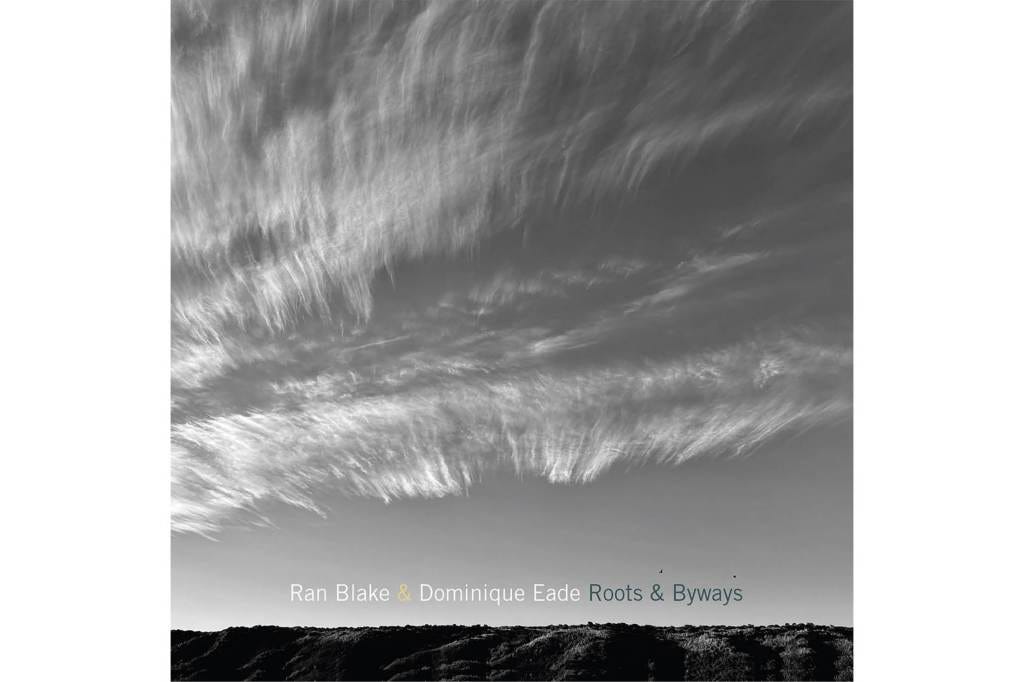
SUNNYSIDE RECORDS (RELEASED JULY 3, 2026)
You’ve never heard “On Top of Old Smokey” performed like this. For that matter, you’ve never heard Max Roach’s “Mendacity,” Whitney Houston’s “Save Your Love For Me” or Charles Mingus’ “Portrait” performed this way either. What else would you expect from iconoclast pianist Ran Blake and the nimble vocalist Dominique Eade? Roots & Bywayscontinues a tradition they began in 2011 with Whirlpool and expanded on with their 2017 release Town and Country. Both recordings featured reinterpreted standards, pop tunes, film music and folk tunes delivered in a surprising (what jazz should be) manner. This unique approach to familiar material had its infancy in 1962 when Ran Blake and vocalist Jeanne Lee’s released their classic The Newest Sound Around session on RCA Records. Rather than simply replicating the tunes on that earlier and what some refer to as a cult recording, the duo approach the selection of 16 tunes on Roots & Byways, ranging in styles and genre, in much the same fashion. Blake and Eade, who first met in Boston in 1978, are equal contributors in the process of transforming tunes into minimal treasures. Blake’s modernist stride solo is perfect for George Gershwin’s “Who Cares.” Eade’s floating and ethereal vocalese fits Thelonious Monk’s “Pannonica” to a T. They deliver Henry Mancini’s “Dreamsville” in an appropriately dreamy manner. Mary Lou William’s “What’s Your Story Morning Glory” is given a bluesy yet abstract feel. Roots & Bywaysalso features two iconic solos from Blake — Edith Piaf’s classic “Les Grognards” and J. Fred Coots “You Go to My Head.” Some may describe the music of Blake and Eade as sparse, intuitive, cubist, whimsical, eccentric and intellectual. I have a much better word, and it’s the. same word I would use to describe the 1962 Newest Sound Around recording — fresh! The amazing thing is that recording which is now 64 years old is timeless, much like Roots & Byways is and will be. Simply stated, it is STILL the newest sound around!
BOTTOM LINE: Sixty-four years after its release on RCA Records, Ran Blake and Jeanne Lee’s classic Newest Sound Around sets the tone for Blake’s third collaboration with vocalist Dominique Eade. The duo reinterprets a selection of 16 tunes covering a range of styles and genres in a manner that is still “the newest sound around.”
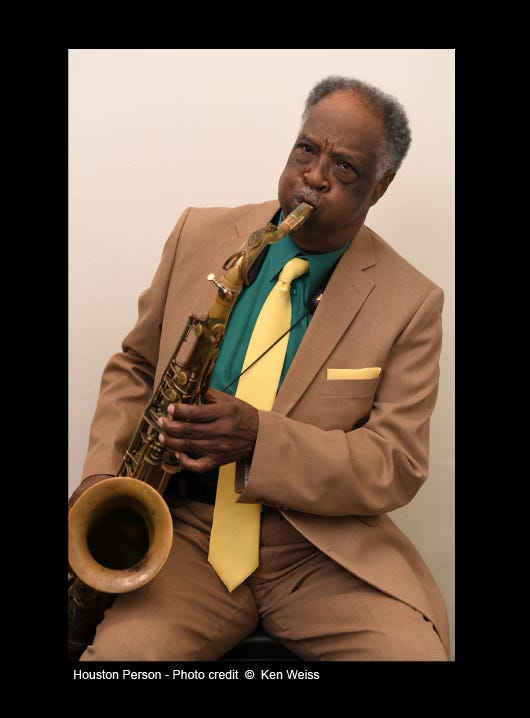
By Ken Weiss
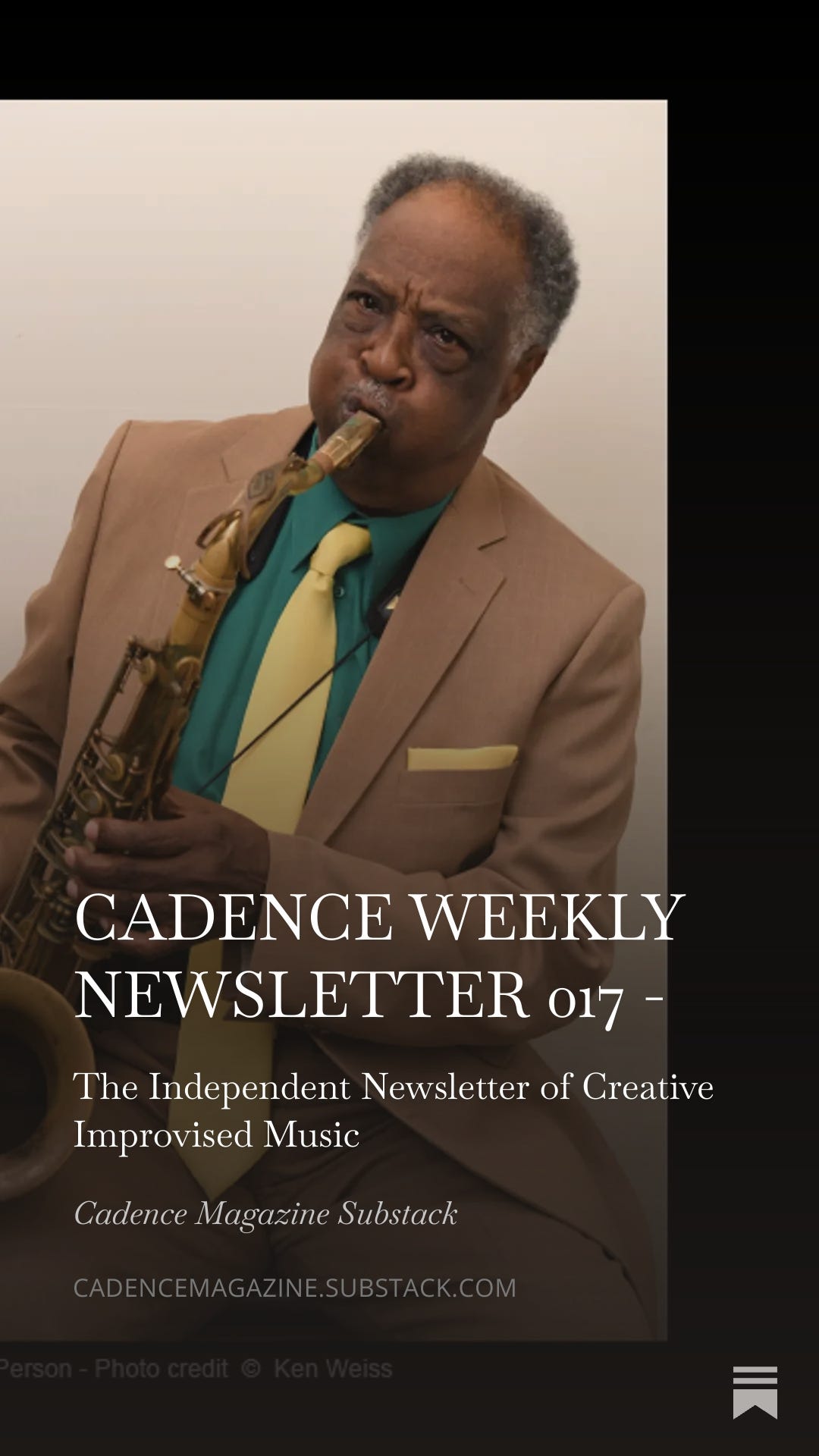
Houston Person [b. November 10, 1934, Florence, South Carolina] is well recognized for his soulful, thick-toned tenor saxophone playing but he wants it known that he is more than a Soul Jazz player, he’s spent his career digging into many areas of music as a leader and with others such as Gene Ammons, Ron Carter, Cedar Walton, Charles Earland, Lena Horne, Lou Rawls, Horace Silver, Dakota Staton, Grant Green, Richard “Groove” Holmes, Charles Brown, Tiny Grimes, Johnny Lytle, Shirley Scott and Joey DeFrancesco. Dizzy Gillespie once said of Person, “He’s one of the best… He’s got bull chops!” Person learned from some of the best early on. While stationed in Germany with the Air Force, he got schooled at jam sessions by fellow American servicemen that included Cedar Walton, Eddie Harris, Don Ellis and Don Menza. After time with organist Johnny Hammond, where he first met vocalist Etta Jones, with whom he would go on to play with for the rest of her life, he branched out as a young bandleader in 1966 to record with Prestige Records, making a number of popular albums. His career never slowed down from that start. He remains a well-recorded leader and an in-demand sideman, especially for vocalists, with whom the estimated number has reached 100. This phone interview took place on November 14, 2020, just as the COVID-19 deadly winter surge was on the horizon.
Cadence: We’re doing this interview less than two weeks after the passing of your wife. On behalf of the readers and myself, our heartfelt condolences for your loss.
Houston Person: Thank you.
Cadence: Prior to the COVID-19 pandemic, you were performing up to 7 – 8 months a year on the road and a few more months locally. You turned 86 four days ago, how difficult has it been physically to keep up that pace as an octogenarian?
Person: I’ve done pretty well with it, I’m feeling great. You know, taking care of yourself on the road is mainly it. Getting your proper rest, proper food, and playing the music that you enjoy playing. I enjoy the people. That’s what sustains me, the music and the people of different cultures.
Cadence: Why have you kept up that pace? Do you have to for financial reasons or perhaps you can’t imagine life without performing?
Person: I enjoy music. I’m lucky that I’m able to do something that I love and do it the way that I want to do it. Over the years, I’ve been lucky to play with the greatest musicians and I’m just having a wonderful time. That’s why I keep doing it.
Cadence: When we initially talked about setting up this interview, you told me, “My records keep me going.” Would you talk about that?
Person: I have so many things that I haven’t done yet that I want to do and accept those challenges and the joy of just doing music. It really centers around music, doing music that I enjoy doing. That’s what keeps me going, there’s always the next one.
Cadence: What kind of projects would you like to do that you haven’t already done?
Person: There are still some musicians that I would love to play with, and I haven’t done too many big, orchestral things. I’d like to do some of that in the future. I’ve just about done every format that I would like to do. I would like to try something with spoken word.
Cadence: Which musicians do you desire to play with?
Person: No, [Laughs] because I’m gonna leave somebody out and then there’s gonna be a … I’d rather not. Most of the musicians, I enjoy, so whoever comes along I would enjoy playing with. There’s some guys out there that I would still like to play with, and I hope they want to play with me! [Laughs] There’s so many different guys with different approaches to music and I would like to get involved with all that stuff. I would like to do a great R&B album, which is something I haven’t done in a longtime.
Cadence: You were born in South Carolina, why were you named Houston?
Person: My father and mother would have to answer that. I really don’t have the slightest idea, but I got that name, and I haven’t changed it. [Laughs] I thought it was kind of strange too. I’m actually Houston, Jr. My dad’s name is Houston, but I don’t know where he got it.
Cadence: How did you develop your deep, big sound? What’s the key to creating a big tone on the saxophone?
Person: I guess that’s what I heard. I practiced in the bathroom and the tile would bounce the sound back at me. I worked a lot on sound. And hearing Illinois Jacquet, Arnett Cobb, Gene Ammons, and all those R&B saxophonists like Tom Archia. I wanted a big, pretty sound and I developed it.
Cadence: Do you think anyone can develop a big sound on saxophone?
Person: I think they can get the sound that they hear if they work on it. We all hear different things; we all walk to our own beat. I got it by practicing whole tones – holding the tones and listening to it in the bathroom. Back in South Carolina, where I’m from, we had a farm and my brother, I’d put him as far away as I could and see if he could hear me. I’d blow into the horn and try to get it as loud and big as I could. He’d be on the other end and I’d ask him if he could hear me. That’s how I worked on my sound, and the marching band helped me.
Cadence: Your speaking voice is also so deep and rich. What’s the extent of your singing experience?
Person: I sang in the church choir, I sang in the glee club, and I sang in the high school choir. I was singing before I was playing, but I did have the experience of singing. People have asked me if I sing and I’ve told them that I don’t sing. [Laughs] When I started out in the music business, I always wanted a band as a traditional band that they used to have in the old Swing days with the big bands, where the band had a vocalist, dancers, and a comedian. It was more of a show. That’s what I wanted, so I had a singer – Etta Jones. I had what I wanted – a vocal/instrumental group – and it worked well for me. I like the approach of giving the audience a full spectrum of what I do.
Cadence: How has your playing evolved over the course of your career?
Person: I’m doing what I want to do so it’s developed quite a bit if you look at it from that angle. Comparing me to other guys? I went another way. I have certain feelings about music and presentation that I wanted to develop.
Cadence: What, if anything, are you still working on today regarding your presentation of music?
Person: Just researching songs and keeping up with the musicians who are out there. I’m in contact with a lot of different guys and I’ve developed a lot of different friendships. I have an appreciation for all musicians and what they’re trying to do. I hear a lot from the other guys, and I get a lot from them. I take what I need. I’ve had the opportunity to play with a lot of different guys, of which I’m proud of. I’m proud to be associated with them.
Cadence: What have you learned not to do?
Person: I learned not to be late. [Laughs] I’ve learned not to ignore my audience and not to blame the audience for not responding to what I’m doing. That’s one of the biggest things. I feel that anything that happens on the bandstand is my responsibility. You’ve got to learn how to find your audience. The other thing is not to ignore my other musicians on the bandstand. Everybody should be appreciated and be allowed to showcase what they do best. Also, you’ve got to be ready for the performance and to be dressed for the occasion. Approach everything professionally but have fun.
Cadence: Articles about you have typically described you as the standard-bearer of Soul Jazz – the last of a dying breed. Is that a fair description of you?
Person: If they think so. [Laughs] I don’t think so. [Laughs] Titles are alright, but I think my output of albums would tell you something different. I’m just a guy in the crowd. It’s out there, what I do, so if some people feel that way then it’s alright with me. I generally don’t like pigeonholing people. I know you’ve seen my output and it explains it all. I play everything. [Person asks for a pause here to speak with Russell Malone who is on the other phone line]. Like Russell and I do albums together, so what do you call that? I have an album out right now with Dena DeRose and an album with La Lucha. What do you call that? I just love music – R&B, Pop? Whatever it is. If it’s a great melody, it’s alright with me. People get hung up on labels and they miss a lot of music that way. I don’t label anything. I grew up on Country & Western, and R&B and Gospel, so all those things have to be a part of what I do, if I’m gonna be honest. I put it out there and you make your decision. It’s funny how people have got to label everything before they can appreciate it or not appreciate it. You know, some people say I’m just a chitin circuit guy. What does that mean? That could be derogatory but to me, that’s praise. [Laughs] More of us need to come up through that. It used to be you got your experience that way.
Cadence: Do you feel the term “Soul Jazz” is derogatory?
Person: In some ways that people use it. That term is used laudatory and derogatory. I know what they are trying to say when they use that term and it’s just a glorified chitlin circuit, really. And a lot of people don’t consider it real Jazz, they just stick that soul on there. For some people, it’s a racial term, but I don’t want to get into that. And music has always had that – “race records” and R&B. It’s funny when they say Gospel music means that it’s Black and inspirational music means it’s white. [Laughs] It’s crazy. They use these terms, and over the years, it’s been ingrained in us.
Cadence: As you earlier pointed out, you’ve done a lot during your long career. I know you’re very humble but another NEA Jazz Masters class was just announced and at this point, you’re 86 and you’ve not been named a NEA Jazz Master. Any thoughts on that?
Person: No. Hey, that’s their domain, and I appreciate the artists that they have named. I think it’s a nice program and every musician that they have named has been deserving of it. It’s funny, a lot of people do ask me that. I’m enjoying playing music and, in my mind, I’ve been successful with what I’m doing. I’m enjoying it, and I’ll let that stand. I know people have written letters on my behalf, which I didn’t know until afterwards, and I enjoyed what they said. People know I’m there and I’ll accept that. I’m good with it.
Cadence: You’ve made a career out of playing Soul Jazz, or whatever it is to be called, which was popular in the ‘60s. Why did that genre fall out of popularity, and why aren’t more people playing it today?
Person: Maybe it is because of its name and people being [turned off] by the derogatory elements. Here’s the thing, somewhere along the way, and this isn’t Soul Jazz’s fault, musicians started forgetting the people. We forgot the basic elements of Jazz. All of a sudden, we forgot about people loving to dance to Jazz. Jazz is dance music, that’s what it is. And we cut that element out of the music. We took the Blues out of it. We just stripped it of the qualities that people liked, and that’s what you got. And people went to something else. People still want to dance, and they still want to hear the Bluesy music, they still want to hear the music swing. And most of all, we took the fun out of it. Everything now has to be so concertized. You can’t have fun the way you used to. Those elements, they count. You take other music, you can dance to it, it’s fun. We got away from all of that, the basic elements that made Jazz happy. From the Louis Armstrongs and the Dizzy Gillespies, the entertainment phase was taken out of it. That’s the real culprit, and guys have got to get back on track. That’s what I’m saying about being responsible. It’s not the people that went away from Jazz, we ran them away.
Cadence: The Blues and Jazz had always been intertwined. When you came up, everyone was playing the blues, but now that’s changed. What’s happened to the Blues in today’s music?
Person: We forgot our culture. We have a distinct culture and we got away from it, and you get away from it, and the people are gonna leave you. Somebody told me, “Black people don’t listen to Jazz anymore,” and I said, ‘Yes, they do,’ but it’s got to have those elements. I’m saying it’s your responsibility [as an artist] to find a way to that audience.
Cadence: You pointed out that jazz was dance music and your goal is to create that feeling of making people want to get up and dance. The irony is that you don’t dance, you never learned. Why is that?
Person: No, I don’t dance but I love to see people dance. Watching dancers will give you a feeling of how to approach tempo, how long to play a song, and other things. And the younger guys didn’t have the opportunity to play in big bands or play for dancers, play behind a vocalist, how to accompany. That’s not an indictment, it’s just we need to pay more attention to that and it’s the responsibility of the artist to do that. If you go back and look at Dizzy, Louis Armstrong, Illinois Jacquet, Lester Young, they all had an entertainment side too. Everything wasn’t so heavy all the time. I didn’t dance but I learned how to dance on the horn. I learned how to edit my solos. I learned a lot from dancers, dancers told me where the tempo was. Sometimes, if I started a tune off too fast, the dancers would sway a certain way and they’d give me the tempo if I didn’t have it right. They’d also let you know when to stop playing, which is very important. [Laughs] You’ve got to learn to edit your solos. Sometimes the listener can lose interest, especially if you’re not saying that much.
Cadence: You favor covering Jazz’s great standards. How much interest do you have in making something new out of those popular tunes?
Person: I love those songs, they’re a connection. For the listener, they’re a connection to their past memories. I love doing those songs, that’s the Great American Songbook. Now how can somebody call that Soul Jazz? It’s okay to change them as long as you don’t lose the meaning of the song. One thing I’ve tried to do is play the songs the way the composer meant for them to be played and then try to improvise a little, but you don’t want to do so much that you overwhelm the song and lose all the meaning of it. That’s where I’m at, and I know certain critics say Jazz isn’t supposed to be sentimental. They try to set us too far apart from the rest of the music industry but there is room for sentimentality in Jazz also. You don’t just want to strip it down so that it’s a bunch of notes, and that’s what we’ve managed to do a lot.
Cadence: I’m Just a Lucky So and So [HighNote, 2019], your most current recording, is full of golden chestnuts that haven’t been overperformed by others. Was that your intention?
Person: Yes, always you want to bring something new, something you’ve forgotten about. I approach that title song, which everybody remembers as a Duke song. It was a dancehall favorite. The words are nice to that song also. I try to bring a little of the old and a little of the new and try to put it all in one little package. I don’t mind being sentimental.
Cadence: As you said, I’m Just a Lucky So and So’s title comes from the Duke Ellington composition. Does that title also apply to how you think of yourself?
Person: Yep, that’s the reason I named it that. I’m just lucky to still be playing this music and happy.
Cadence: You’ve thoroughly researched the Great American Songbook. Who are some of your favorite neglected composers and ignored songs that you’ve identified?
Person: I have music anthologies, and I have found some good things. One tune I discovered from Raintree Country is “Never Till Now,” Mario Lanza sang it. That’s a beautiful song. That’s one, I gave you one, but there’s a whole lot of stuff out there that hasn’t been explored yet. I keep going back to Jule Styne and Johnny Green. I admire so many great composers including Cole Porter, Duke Ellington, Benny Golson, Benny Carter, Burton Lane and Rodgers and Hart.
Cadence: How many times would you consider recording the same standard tune?
Person: I can do it twice. When I was coming along, you had to learn to play the songs fast and also interpret them as ballads. If you look, a lot of songs we play are not the tempos the composers wanted them played in, so I’ve tried to approach tunes that way. One tune I did that way was “Too Late Now,” a tune by Burton Lane. I recorded it as a bounce - a little faster - and then on another album I recorded it as a ballad.
Cadence: From the outside looking in, it appears things came easily for you. You came to New York, found quick employment, developed a lasting relationship with a talented singer, you rarely went a year without releasing one or more records, and you’ve continued to frequently perform well into your eighties. What struggles have you had during your career?
Person: People have been good to me, [Laughs] I haven’t struggled. I’ve tried to do music that people can relate to. I haven’t been afraid to play the Blues or to be sentimental. I’ve tried to stick to the factors involved in producing good music.
Cadence: You’ve often said that it’s important to you to be uplifting, to bring joy to the listeners, but we’re all human, we all have our days of deep despair. How do you give a joyful, inspirational performance on those nights when you’re going through personal turmoil?
Person: I try not to give it to my audience, however, if I should hit a sad note that affects someone that way, and you always are, sometimes that brings joy. I know that people [in despair] have wanted to hear my music and I’m glad that I had something that made them feel better. I’m just happy that I can do that. I’ve found that it’s not hard for me to play my music [when times are difficult for me] as long as I stay away from that repertoire. I have a vast repertoire so I can draw from a lot of things and get myself through it.
Cadence: You’ve drawn inspiration from a number of the music’s greats and Illinois Jacquet remains your main influence. What about Jacquet so inspired you?
Person: He was a great instrumentalist, a great musician, and he was a great entertainer. I think put all that together and you got what I would consider my guy, and there were a bunch of them. He wasn’t the only one. All those tenor players from that era because each of them was an individual.
Cadence: Did you have a relationship with Illinois Jacquet?
Person: No, I had no relationship with him. We met later on in life and we played some double bills in Chicago. He was just a guy I liked. I was in the South so I didn’t get to see much, I just got to see Jazz at the Philharmonic, which was extremely popular, and from there I got all his albums because he was recording on RCA which was a huge label and I could get his records in the South. From him I went to other guys, but he was the guy to start with.
Cadence: Do you see yourself as an entertainer?
Person: I don’t see myself in the role of an entertainer. I wasn’t out there like Jacquet was, I’m more subdued than those guys back then. [Laughs] Like that walking the bar era, playing the horn.
Cadence: You never walked the bar?
Person: I did it one time in Atlantic City, New Jersey. [Laughs] I had a good time; I just never had another opportunity to do it often. But there are other forms of entertainment – talking with the audience, announcing the tunes - that’s more my thing. That and doing a little historic thing on them.
Cadence: You perform with the audience in mind but there are other musicians who take the stance that they are creating “art” and should not be influenced by the likes and wants of the public. Where does that sit with you?
Person: Well, ask them how it sits with them, they don’t work. [Laughs] Everybody has their own approach. Now you can do an approach and it becomes entertainment. Miles would turn his back to the audience, or he walked off the stage. When he did it, it was entertainment, it became entertainment. Everybody has a different thing; it’s just how your audience appreciates it. Thelonious Monk, he danced while the other guys played. Any little factor… I saw Monk at the Village Gate once, but I wasn’t quite getting into the music, and then he got up and danced to the music and he brought me into the music. Through his appreciation of it, through his enjoyment of it, he allowed me in. I thought, ‘Wait a minute, if he’s enjoying it, I got to listen a little harder, I’m listening to the wrong thing.’ You know, showmanship doesn’t have to be jumping up and down. It’s just your way on the bandstand.
Cadence: You were active in New York City during the heyday of the ‘60s to ‘70s Free-Jazz and Loft era music. What’s been your relationship with and feelings on Jazz’s Avant-Garde music?
Person: As long as it swings it was alright with me. I knew Ed Blackwell, Ornette Coleman, I knew all those guys, and to me, they were swingin’. That’s all that matters. I’d listen to that music – Mingus and the Slug’s crowd. I listen to everybody.
Cadence: Did you ever play in a Free music setting?
Person: No, I never did. Ran Blake and I did an album together, and I did some things with Ethan Iverson. I’ve done a variety of stuff. I keep myself involved in all of it.
Cadence: What’s your relationship with the other great living tenor saxophonists of your generation such as Benny Golson, George Coleman and Wayne Shorter?
Person: Love ‘em all. I just heard from Benny and George. We’re all just working musicians, and if we get a few minutes, we call each other, checking with each other to make sure we’re still kickin’. They are great guys, just wonderful. I have a nice relationship with Benny and George.
Cadence: A fascinating thing I found when researching you is that you compose pieces but prefer to cover other people’s music and let others play your compositions. Is that true?
Person: That’s true. I don’t write that much, and I like other people’s music. I get great tunes from guys and that’s fun for me. I generally just do research and stay out there looking for material, and I come up with some good stuff.
Cadence: But why don’t you want to play your own compositions?
Person: I don’t think they’re adequate, to be honest. They’re sitting on the stand over there and I need to work on them a little more. And I’m starting to do that now because there’s nothing else to do. Before I was working so much, I didn’t have that much time to put in it. I haven’t pushed my own music that much.
Cadence: You are well-known for backing up numerous vocalists. What attracts you to performing in that setting?
Person: I just like it. I’ve recorded with a ridiculous number of vocalists and they like me, and I like them. I like that [setting] because when I went to the movies, that’s what I saw – musicians and a vocalist. I became attracted to that, and then I really got into it by learning the lyric and realizing that the vocalist and I were both supporting the lyric. We were partners. That’s how I approach it and each vocalist requires something different. I have fun with that.
Cadence: Etta Jones and you had a special musical relationship from the time you met in Johnny Hammond’s band in the early ‘60s, until her 2001 death. What made Etta Jones such a special artist?
Person: She was a great singer. When I met her, she didn’t have a band and I didn’t have a vocalist, so I said, ‘Let’s go for it.’ She went for it and then I took that band all over the world.
Cadence: What would we be most surprised to hear about Etta Jones?
Person: She was unusual because she was totally accessible. No attitude, no nothin’. She’d give time to everybody. Me, I was just the opposite. [Laughs] I called her “The Ambassador.” I didn’t spend that much time with people, I was busy running a business. I did all the booking, I did it all myself with no agent. We had a nice thing.
Cadence: Let’s talk about your early days. It’s well documented that you grew up in a household that valued a wide range of music. What was your musical experience in the church?
Person: I sang in the choir, sang hymns and gospel music. I got the experience of singing both.
Cadence: You came to the saxophone late. You didn’t switch from piano to tenor until your parents gave you one for Christmas at age 17. Why did you change instruments?
Person: Oh, I never was a piano player, I was ducking it every time. They just wanted us to have some musical training, so I did [piano] but there was really no interest until I got the saxophone.
Cadence: When did you know that you wanted to seriously play the saxophone?
Person: When I got it and I started playing in the high school band. It was when I went to my Junior-Senior Prom and I saw a college band, the South Carolina State College Collegians. I saw that band and that’s when I decided I wanted to be a musician.
Cadence: How did it feel to hold your own saxophone for the first time?
Person: Awkward. [Laughs]
Cadence: After high school, you joined the Air Force and were stationed in Heidelberg, Germany, where you participated in weekly jam sessions at a club with musicians from the 7th Army Jazz Band including Don Ellis, Eddie Harris, Cedar Walton, Leo Wright and Don Menza. What were those jam sessions like?
Person: Those guys were so great; they were ready for prime time when they came. I had just started. I was, oh man, every night I was gettin’ beat up. [Laughs] It was fun, really fun, and a very important part of my development was playing with those guys, and Eddie Harris making me practice. I never felt discouraged and they never gave me reason to feel that way.
Cadence: Eddie Harris was especially important to you, you often practiced together. How did he help you?
Person: Just practicing and knowing that he would do it by getting up early in the morning and started playing.
Cadence: After college in 1962, you had the opportunity to sit in with Coleman Hawkins at a New Haven club. Talk about that night, playing duets with Hawkins.
Person: It was fun and an experience for me, a great experience. In fact, someone told me he had mentioned that session in his book. We had two or three sessions in New Haven. He was a great guy and gave me all the encouragement in the world.
Cadence: You must have been nervous to play with him.
Person: Surprisingly, I wasn’t. Those guys, they make you feel welcome. I remember I went to Birdland one night and I said, ‘I’m gonna play tonight.’ It was Johnny Griffin and Mingus on the bandstand, playing a jam session. And they saw my horn and Johnny Griffin said, “Come on up. You wanna’ play one?” I went up and played with them. I shouldn’t have, [Laughs] but it was fun.
Cadence: What did Hawkins have to say about your playing?
Person: Naturally, he wasn’t gonna put me down, he wasn’t that kind of guy. He offered some encouraging things, and we played a few nights together. He said, “You’re on the right path. Just keep doing what you’re doing.” That was great.
Cadence: Working with organist Johnny Hammond [’63-‘66] was your big break. How did he come to hire you?
Person: we both lived in the same town, Hartford, Connecticut. I was going to Hartt College of Music at the time and I’d go to his jam sessions. Back then, there were jam sessions everywhere. Bands were playing and music was everywhere, it was great. Eventually, we hooked up and he formed a group with me and Virgil Jones.
Cadence: You left Hammond and went out on your own as a leader at age 21. Was it unusual at that time for such a young artist to get a record deal without having done a more extensive apprenticeship in other known bands?
Person: Yep, but I did it. I just did it, I just started. I had a little organ trio, playing around Boston, and it developed what it developed into. You know, it’s funny, I did two albums with Johnny, one on Riverside, one on Prestige, and then one day I was sittin’ around not doing anything wondering what I was gonna’ do and I just called Prestige. I heard them talking in the background saying, “Are you ready for him?” And they said, “yes.” I couldn’t believe it! All I did was call. That’s why I say I had no rough times.
Cadence: Did you have to negotiate how much they were to pay you?
Person: No, I knew not to be crazy now. I got in the door and now I had to work to prove to them that I belonged there. I tried to use sound business principles, not music principles. I gave up a lot. I owe Bob Weinstock [founder of Prestige Records] a lot for sticking with me. He really got me started in my career, so I thank him very much for that.
Cadence: Your relationship with Prestige Records [’66 - ‘73] led to a steady stream of releases under your name. What type of restrictions were placed on you? How much say did you have in the choice of musicians and song choices?
Person: I have had no restrictions my whole career, never. I’m a lucky so and so.
Cadence: Which Prestige release are you most proud of?
Person: Every album I’ve made, I stand by. I stand by everything I’ve done, and if you want to hit me, I’ll take the hit for it. None of us are one hundred percent, and I did so many different things, so there might be certain periods that you might not accept what I was doing. I was with a label called Westbound doing mostly disco stuff, but I enjoyed that. Hey, it’s music and I stand by that. I did three albums with Cedar Walton, all of them are great. It was with Cedar, Curtis Fuller, Vernel Fournier. Now, that’s some good stuff, if that’s what you like. There are some other things I did which were more popish and big bandish. Hey, it’s all out there. [Laughs] If you’re asking me to pick one Prestige recording out for myself, I’d say on certain days the Cedar Walton stuff, on other days… My biggest selling album was Goodness! and that was with organist Sonny Phillips.
Cadence: Do you listen to your old recordings?
Person: Yeah, I listened to some last night.
Cadence: Are you able to listen to them and not be overly critical?
Person: Yeah. I listen to a lot of stuff. I listen to music from an entertainment standpoint. I don’t pick it apart; try to see what they’re doing. If it makes me feel good, you’re alright with me.
Cadence: What current music do you listen to?
Person: Everything. Last night I was listening to Eileen Farrell with Robert Farnon.
Cadence: Some of your early music found a new home in the acid jazz genre that popped up in the ‘80s. Fantasy even released two of your Prestige sessions as part of its Legends of Acid Jazz series. Talk about your music getting appropriated into that scene.
Person: Hey, it’s alright. Acid Jazz, Soul Jazz, whatever. [Laughs] Seriously, I’m glad about being included in all the stuff. I don’t want to give you the false feeling that I’m a snob. No, I appreciate it. I feel good that people can appreciate it and still remember it. It keeps it out there so I’m alright with it and I’m happy.
Cadence: You’ve made six duet recordings with Ron Carter. Would you say something about that pairing?
Person: We just having fun and playing great music. We get a chance to express ourselves and play the way we feel. And Ron is great. I don’t have to tell you about Ron, he’s the band.
Cadence: Would you share a few stories that you have from past experiences?
Person: I have no stories. I’m telling you the truth. I have no stories and maybe that’s why I’m here so long. [Laughs] No memories, just music, and then I come home and relax. I just go up and down the road, having a lot of fun. I’m uninteresting. [Laughs]
Cadence: Readers may not realize that you’re not only a successful musician, but you’ve been a very successful producer of, not only your own records, but of many other artists including Etta Jones, Ernie Andrews, Joey DeFrancesco, Charles Earland, Red Holloway, David Fathead Newman, Lorez Alexandria, Dakota Staton, Barbara Morrison and Freddy Cole. How did you learn that craft?
Person: By producing my own records, that was it. When I went to Westbound, I started producing my own records and I have produced every one of my albums since then.
Cadence: Why would you do that?
Person: To amplify my presentation, my thoughts, on how I should be presented. Not because the other guys didn’t do well, everybody did well by me – Bob Porter, Cal Lampley, Ozzie Cadena- they all did well by me and did their best for me. But I noticed that when record companies want to fire somebody, they always fire the artist, not the producer, so I said, ‘I better be the producer too and produce my own stuff.’ And then other artists started coming to me, asking me to do theirs. I also became a [talent] scout for artists too. I’ve had a good run.
Cadence: Did labels pay you to produce since they didn’t have to hire someone else to do it?
Person: That could have been some of it too, which was great for me. I got more and I really got inside the inner workings of the record companies.
Cadence: How about your experience working with Rudy Van Gelder?
Person: The best. I always called him my producer regardless. [Laughs] He helped me a lot. I can’t even measure how much he helped me, and a wonderful guy. Rudy was not difficult, just don’t touch his equipment, it’s not your equipment. When you’re in his house, behave like you’d like someone to behave in your house. That’s all I’ll say on that, and when the album comes out sounding great, that’s why it sounds great, because the equipment was right and you didn’t touch it. We always got along, and I think we were together for forty years. I let everybody do their job, and if everybody does their job, you’re gonna be successful. He did some great albums for me. Every one of them, because he knew what to do to get the sound. I wouldn’t put too much stock in what the guys said about him, except what I’m telling you. [Laughs]
Cadence: Another extraordinary thing about you is that you work your own gigs, you don’t have outside help. You book your own tours, find new clubs to play, maintain relationships with concert promoters worldwide, and schedule your own recording sessions. How and why do you do all that?
Person: Because I know it’s done. It takes a lot of time so that’s why I go home afterwards, get my rest.
Cadence: Do you also provide all those services for other artists?
Person: Yes. I work putting their budgets together and all of that, whatever. The music is their job, putting it together administratively, is my job. I like doing that.
Cadence: What are your interests outside of music including guilty pleasures?
Person: I don’t know if you’re surprised or not, I don’t care, but I play Scrabble. That’s it. Just relaxin’, looking at TV and Scrabble. I’m getting back into Canasta now. I watch light stuff on TV and the news. I watch comedy, quiz shows, anything that doesn’t require a lot of thinking. I save that for the news channels.
Cadence: What does the post-pandemic future hold for Houston Person?
Person: I’m just gonna keep making music and that’s it. I’ve had things lined up, but I’ve had to cancel them and now we’re headed into another dark period.
Cadence: The final questions have been given to me by other artists to ask you:
Ron Carter (bass) asked: “Why are verses of songs so important to you?”
Person: Which Ron Carter?
Cadence: The Ron Carter.
Person: Okay. I interpret the song with the lyrics. Some of the verses are beautiful if you explore the lyrics. I can only express the lyrics through oral means without you hearing the words. So, I’m trying to set up the main song, which usually people are familiar with, but they haven’t heard the tune set up in its full capacity. I like to give the listener a little surprise. I like to set the tune up in a different way than the usual 4 bar or 8 bar piano introduction and sometimes I don’t even play it. I like the verses to set up the tune and bring a little element of surprise. The other important thing that we don’t do enough of is to look in the left-hand corner and see the way the composer intended the song to be performed. I try to do that with every song. And then the composer and I, we compromise on tempo, but I make sure that the tempo is more in keeping leaning towards his feeling of the song, and then I get more out of it. I’ve found out too that a lot of songs we are playing, that we’ve upped the tempo on, were ballads, and I’ve tried to compromise on tempo, but not to destroy the meaning of the lyrics. If you read the lyrics and really get the meaning of them, it’s kind of hard to play that song a different way. Once it’s in your unconscious mind, you know that it’s a sad ballad and if you play it at a breakneck tempo, it’s not gonna make sense. That’s where you lose the interpretation of songs and we’ve got to pay attention to that more. Just talking about me in general, I like to investigate the lyrics, the left-hand corner, get what the composer meant for it to be, and then I take it over and try to keep within the composer’s and my feelings.
Cadence: Knowing the words to a song helps you to emotionally interpret it. How do you approach an instrumental piece that doesn’t have words? Does that present a hurdle for you?
Person: No, it’s happy times then, but tempo is really important.
Ron Carter also asked: “Do you have a favorite key?”
Person: I’d say, for range – F, E-flat, A-flat and C. When I choose a key, I want to put it right in the meaty part of the horn for range. It’s like a vocalist choosing a key that’s maybe one key too high or one key too low. With my current repertoire, those are the keys I use. Of course, all tenor players play things in B-flat. In the early days, usually the composers were writing the tunes in keys that were easy for the piano players because it was just piano music then.
Melissa Aldana (tenor sax) asked: “I am always curious about the process and how our mind changes as we get older and more mature. How has your relationship with music improvisation changed as you’ve gotten older?”
Person: Editing the solos. That’s it. I mean, playing the notes that are important and really respecting the melody and the lyrics. As you get older, you learn that.
Melissa Aldana also asked: “How has your relationship with practicing the horn changed throughout the years?”
Person: I’ve moved from one thing to the other but the thing that has stayed steady for me is scales. Really just always re-practicing scales and different scales from different cultures. I don’t practice as much as I used to, but my attitude is to keep working. If you’re practicing, you’re working, you’re playing your instrument. That’s the main thing you want to do, you want to keep playing the instrument.
Cadence: What is the history behind the horn you favor?
Person: It’s a 1964 Selmer. I bought it from a great tenor player here in New York. I don’t want to mention his name because when I bought it, I was sworn to secrecy.
Grant Stewart (tenor sax) asked “Of all the greats you’ve played with or heard - Gene Ammons, Hawk, etc. - whose sound was the most impressive when you heard them live, and what especially about it struck you?”
Person: I didn’t get a chance to hear any of these guys much except on record. Man, both of those guys. I’d say Gene Ammons, Illinois Jacquet, Percy France and a taste of Lester Young, everybody had a taste of Lester Young. All those guys came from uniqueness. They all were unique; they all had their own thing, so I wouldn’t venture to say that they weren’t successful in the sound that they wanted. I’d say that Hawk was comfortable with his sound and Jug was comfortable with his sound, and then you get to a guy like Lockjaw Davis and you say, ‘Wait a minute!’ [Laughs] Arnett Cobb, all those guys. I saw Gene Ammons once. I didn’t get a chance to see those guys because I was living in New Haven and after that, I was on the road myself. But on recordings, they all had great sounds and a unique way of playing.
Grant Stewart also asked: “What was your most memorable/life changing gig? What was the worst or scariest gig you ever played?”
Person: Oooh, oh man, there’s a lot of things that were memorable. It could be a record date I had with Horace Silver, or a record date I had with Lena Horne, or a record date I had with the guy I wanted to play with all my life – Ray Brown. There were a lot of milestones along the way but those were three of them. As far as the scariest gig? I’d like to relabel the question as what was my most nervous gig and say that they all were nervous gigs at the beginning of my career. I’ve been pretty lucky but I do have to say that I’ve always prepared for what I was doing.
Cadence: How was it to finally play with Ray Brown?
Person: That was it, yeah. It was a great feeling, everything was there. And he was so fun to play with. He was always happy on the bandstand.
No posts
Comments
Nothing yet. Say the first thing.
Sign in to join the conversation.