
こんにちは dear reader,
Greetings from a speeding bullet train en route to Kyoto.
Our little team just touched down a few days ago in the great megalopolis of Tokyo for an installation and lecture as part of our recently released collaboration with Japanese brand Goldwin.
We’ll be back in a few days to follow up last month’s wonderful HORT/CULTURE event with our second installment featuring Andrew Farnsworth and claire rousay. Tickets are available now, but going fast!
More on all this below…
HORT/CULTURE RETURNS TO NYC
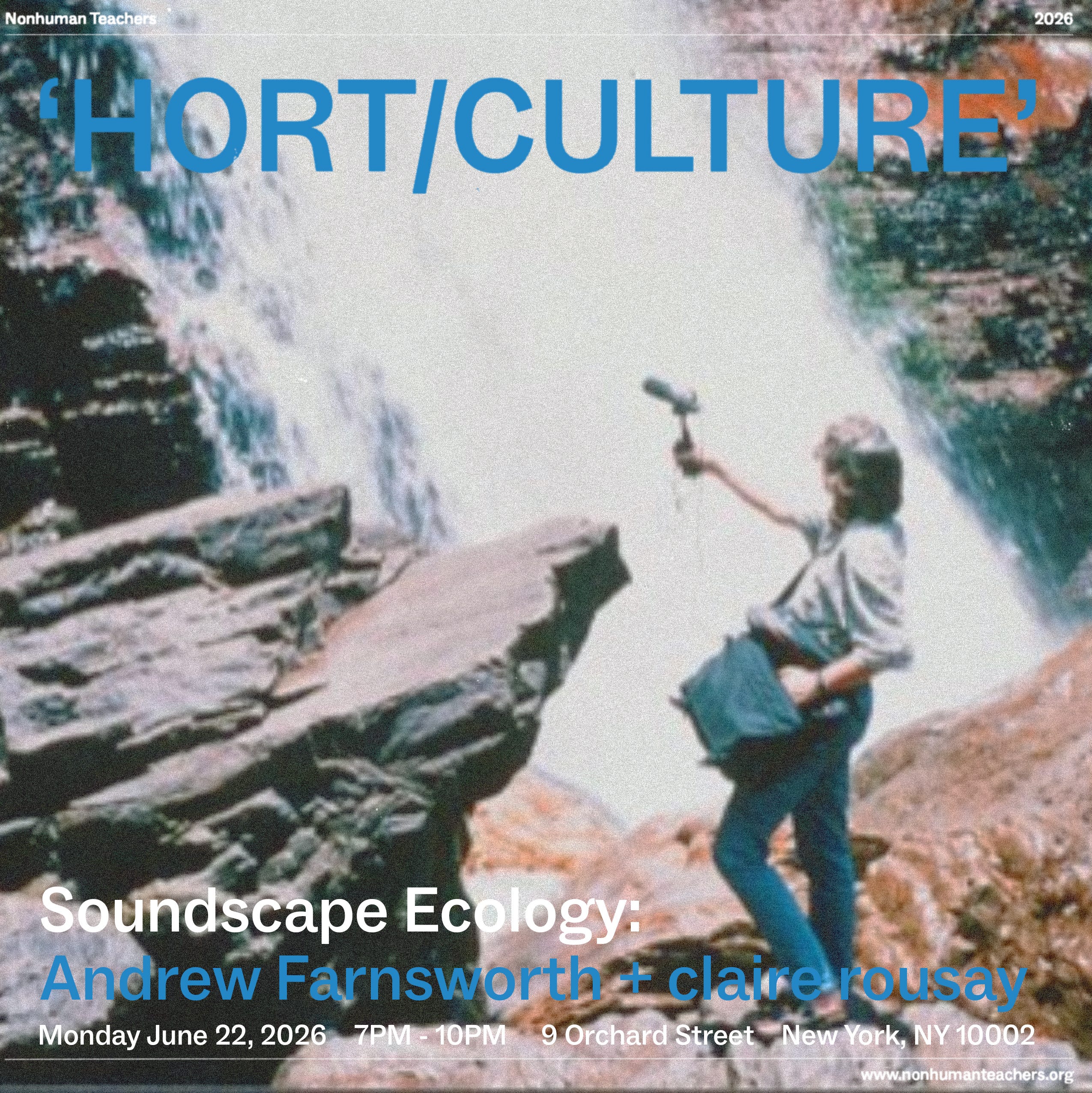
We’ll be back stateside next week for the next HORT/CULTURE event of the season on Monday, June 22nd at Nine Orchard. Join us for an evening of deep listening with Andrew Farnsworth of the Cornell Ornithology Lab and artist/composer claire rousay as we explore the NYC soundscape.
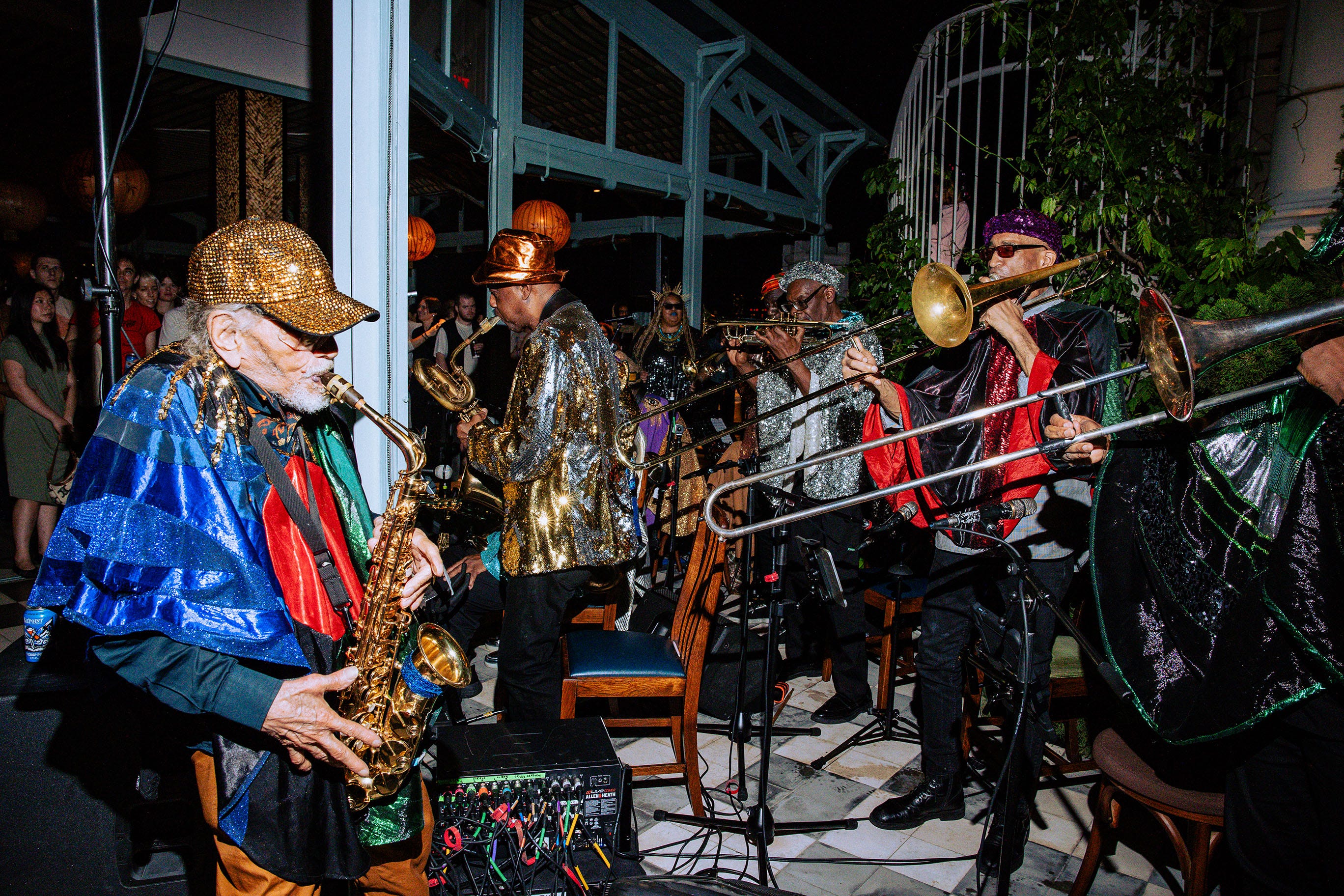
Tickets for last month’s incredible rooftop spectacle with Olivia Shao and the Sun Ra Arkestra sold out and these will, too, so get yours today while you still can! A huge thanks to everyone who came out and helped celebrate the great Marshall Allen’s 102nd birthday. This was truly one for the ages; a perfect evening.
GOLDWIN x CACTUS STORE
Last year we went to South Africa and Namibia as part of an on-going documentary project we’re working on here at the studio. Over the course of 10 days, we got up close and personal with some of the most otherworldly plants hiding in the rocky crevices of this vast, arid region known as the Namaqualand.
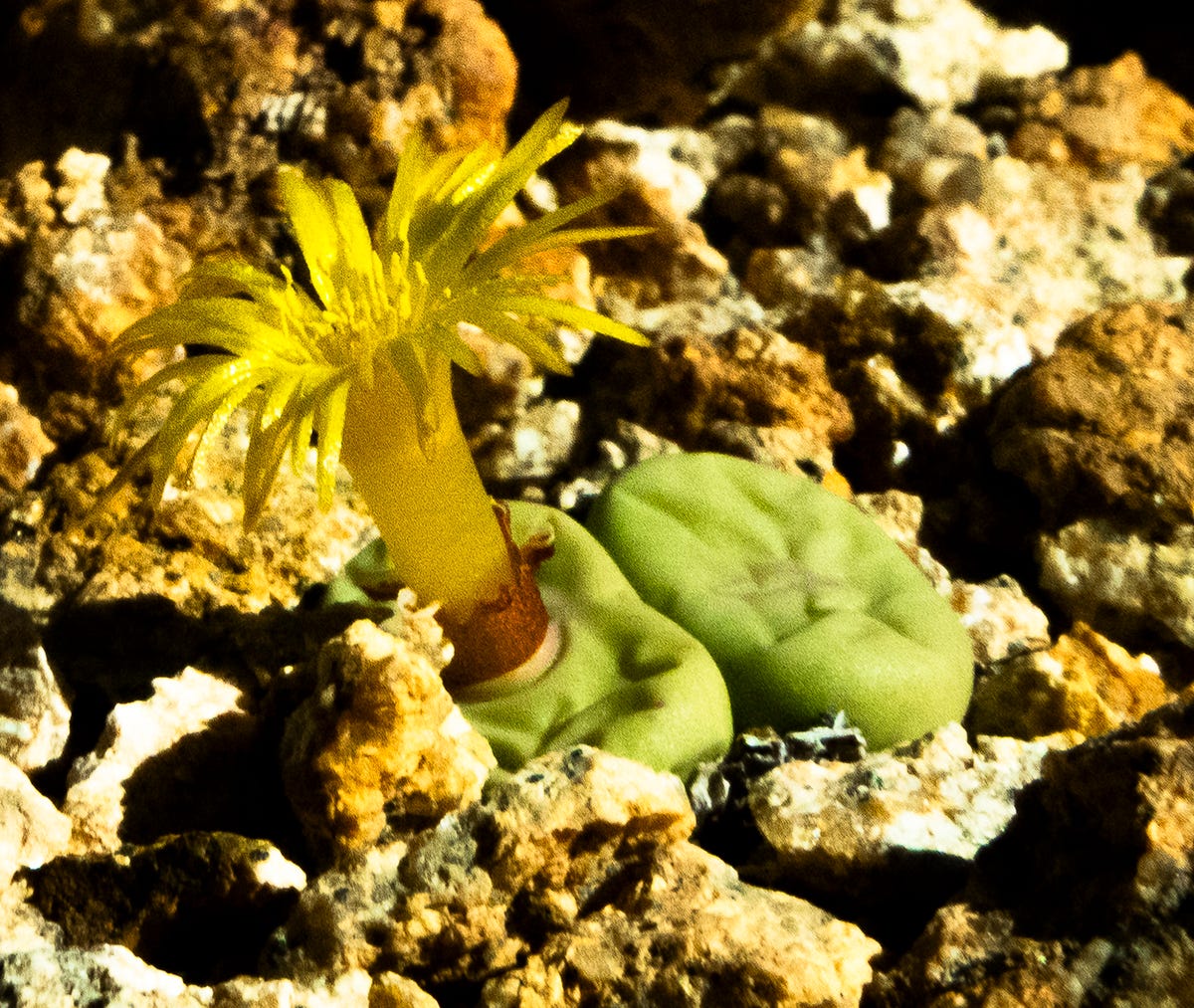
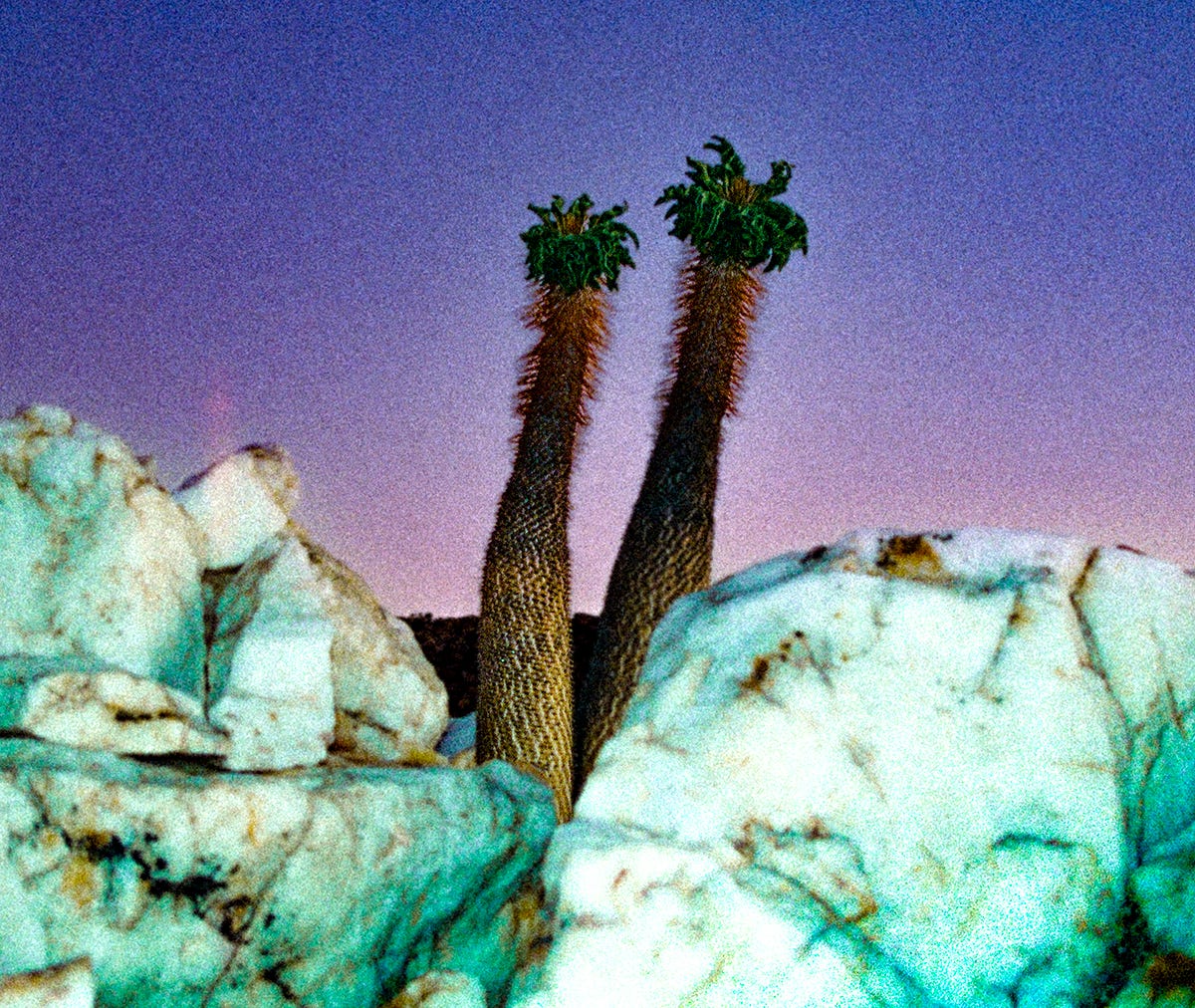
These little dumplings — along with the other monstrous species that dot the landscape – would inspire what would become the designs for our collaboration with our lovely friends over at Goldwin.
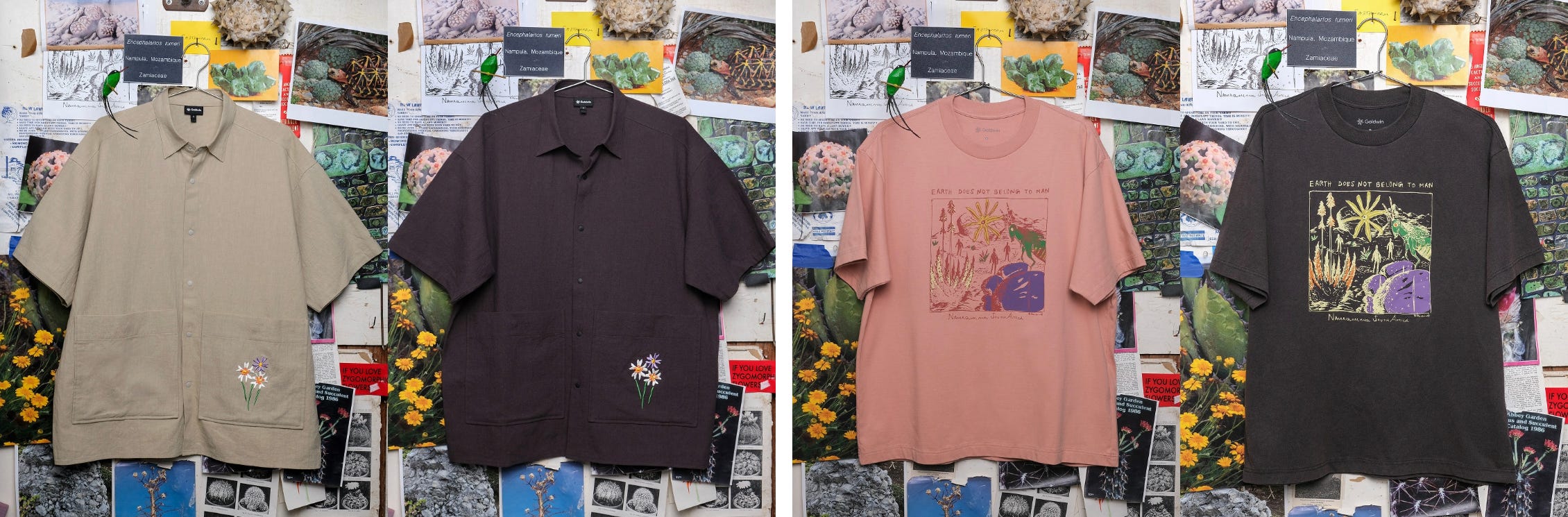
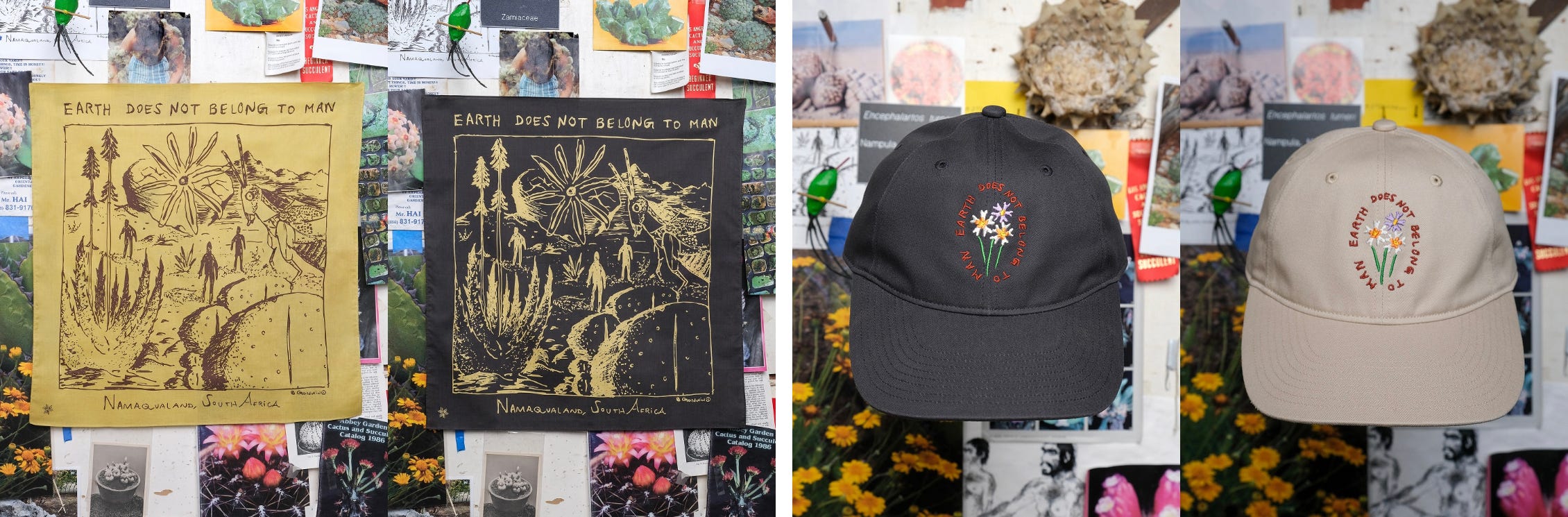
As part of this project, we put together a presentation and installation for their storefront locations in New York, Kyoto, and Tokyo that will be up in all these locations through the end of the month. If you, like us, happen to be in Tokyo this week, please join us at nonlecture books/arts this Thursday, June 18th at 6PM for the final presentation.
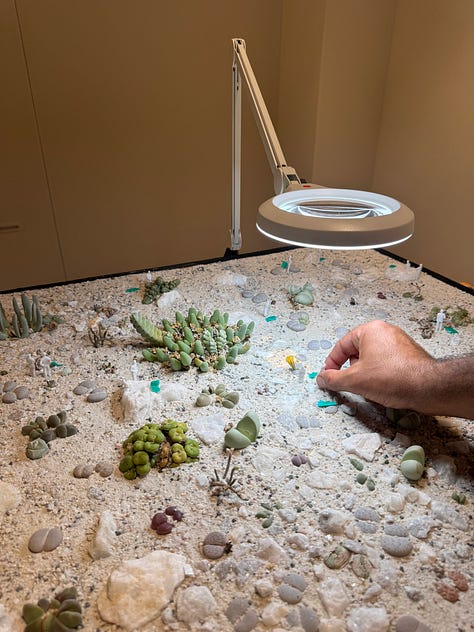
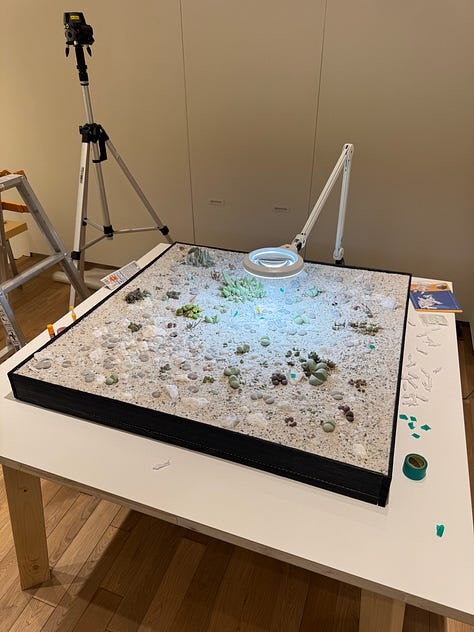
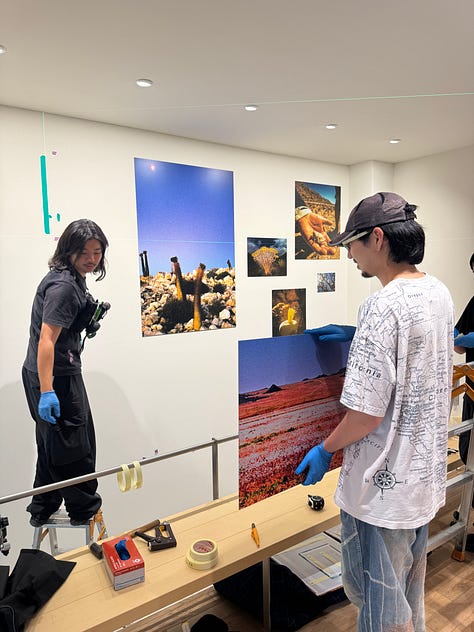
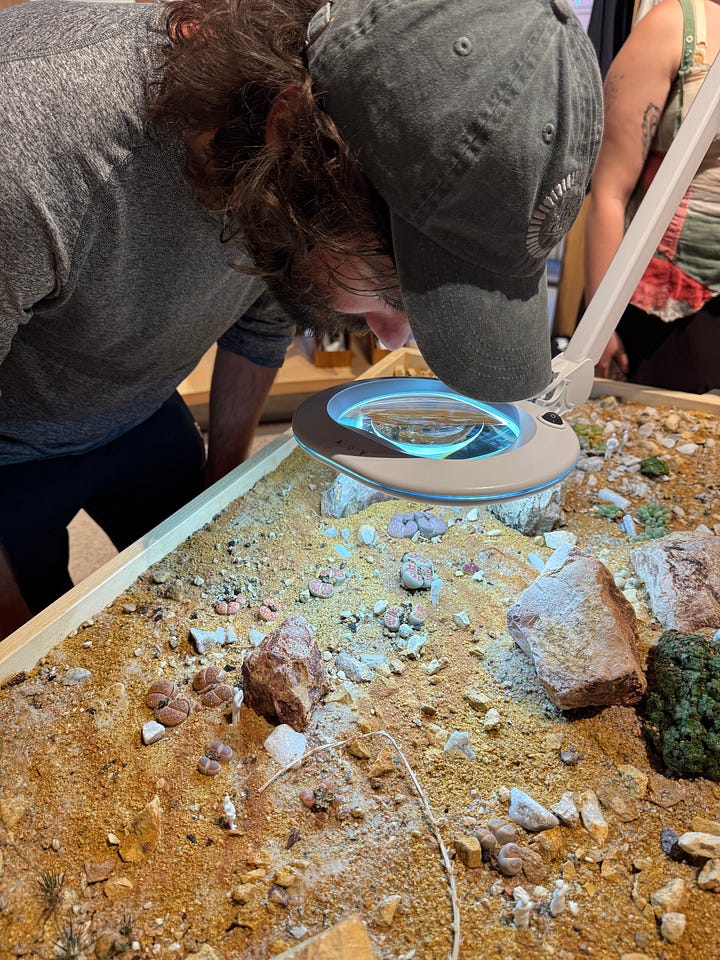
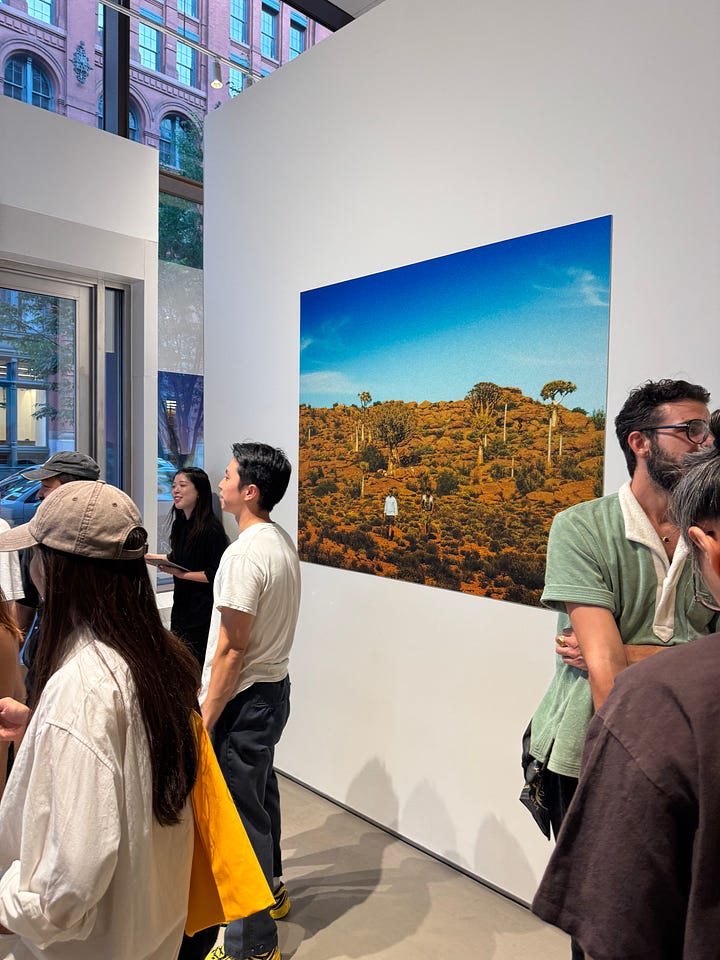
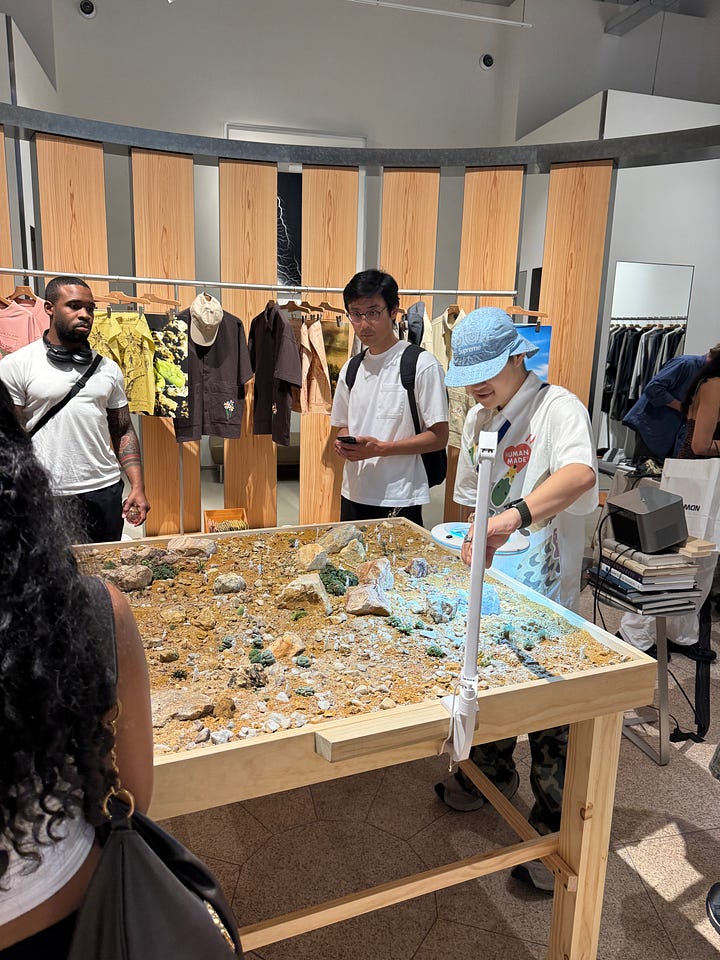
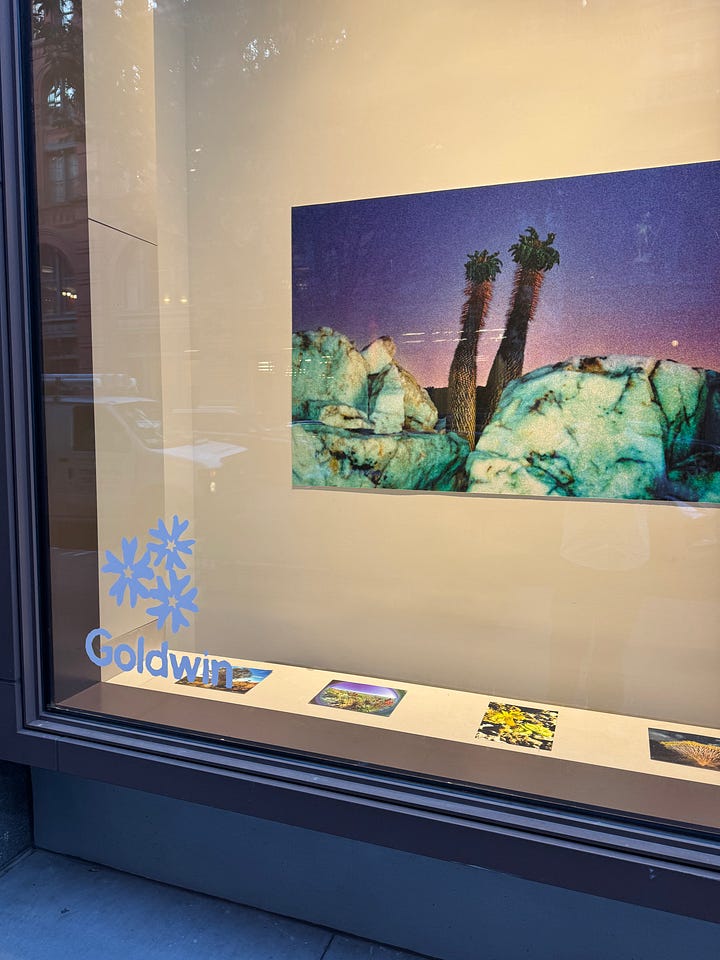
For the majority of you in this dear readership that probably cannot make it to the presentation, we’ve included the text and some select visuals below as a tasty treat while the full meal itself includes habitat recreations (with help from our friends at the Manhattan Botanical Garden and The Succulentist), films and photographic prints by Andy KD, and live audio/visual accompaniment courtesy of our sister project Nonhuman Teachers.
Keep in mind that this non-lecture relies heavily on visual puns, so if/when things stop making sense, you kinda had to be there…
EARTH DOES NOT BELONG TO MAN
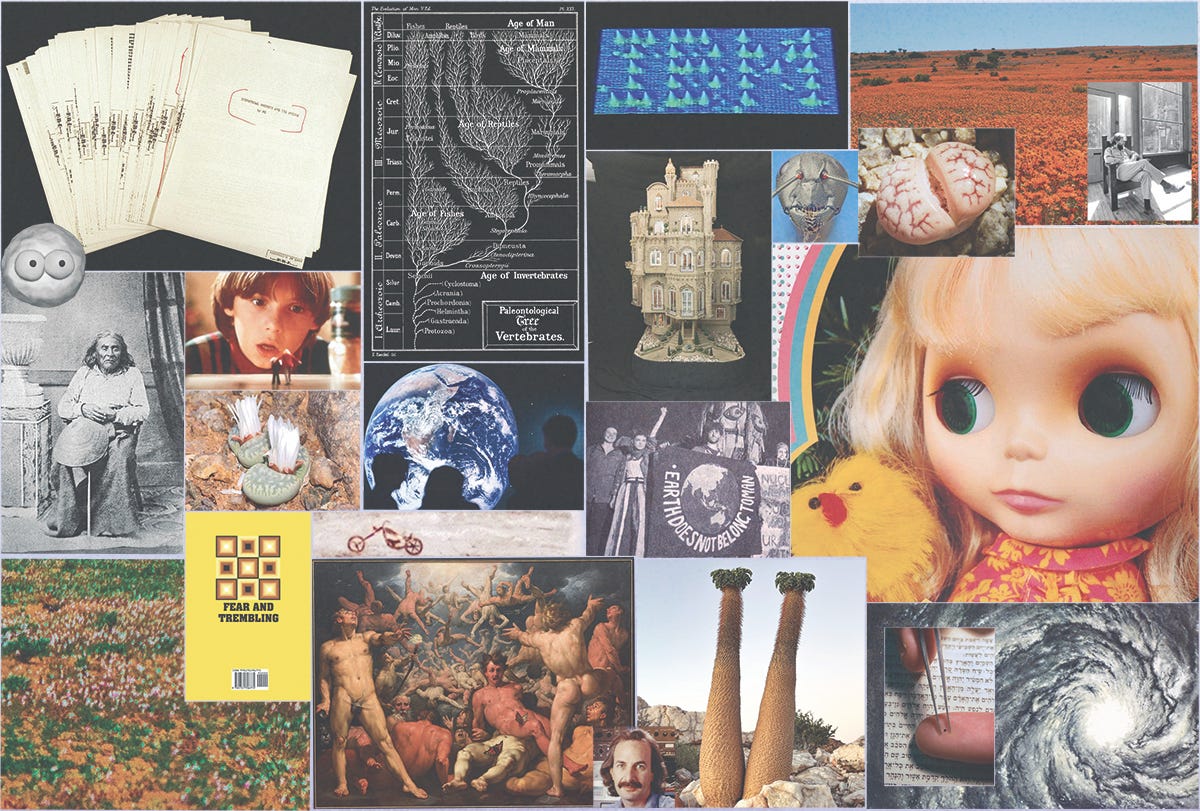
Dots
As far as we know, really as far as we even can know at this point in our understanding of physics, the Universe is around 13.82 billion years old, give or take about 50 million years. While we still have no clear idea as to its actual form – be it one of infinite expansion, heat death, or an oscillating Big Bang/Big Crunch loop – by our best estimates the Universe contains around 2 trillion galaxies – themselves filled with something like 10 septillion stars. For the non-brainiacs in the audience, that’s a 10 with 25 trailing zeros.
Earth is itself 4.5 billion years old. Formed out of the gravitationally compressed debris of our very own personal star we lovingly call the Sun, itself but a dot in the spiral arms of the Milky Way.
Because this story is fairly long and we are still firmly in the domain of numbers that are beyond the computing power of our limited wetware, let’s hit the fast forward button real quick and jump ahead to our main character moment.

To broadly set the scene here, we are on the grasslands of eastern Africa – it’s about 300,000 years ago and we are carefully scanning the horizon for any large threats i.e. the lions, tigers, and bears of nursery rhyme fame. These anatomically modern humans – the ones with all the same bits and bobs as us, minus the plastic parts – they didn’t enter the scene until the Earth had been doing its thing for 4.2 billion years. Some of the things it had been doing during this time include: five major extinction events, five ice ages, and a complete transformation of atmospheric and oceanic chemistry, creating the environment that we now know and love.
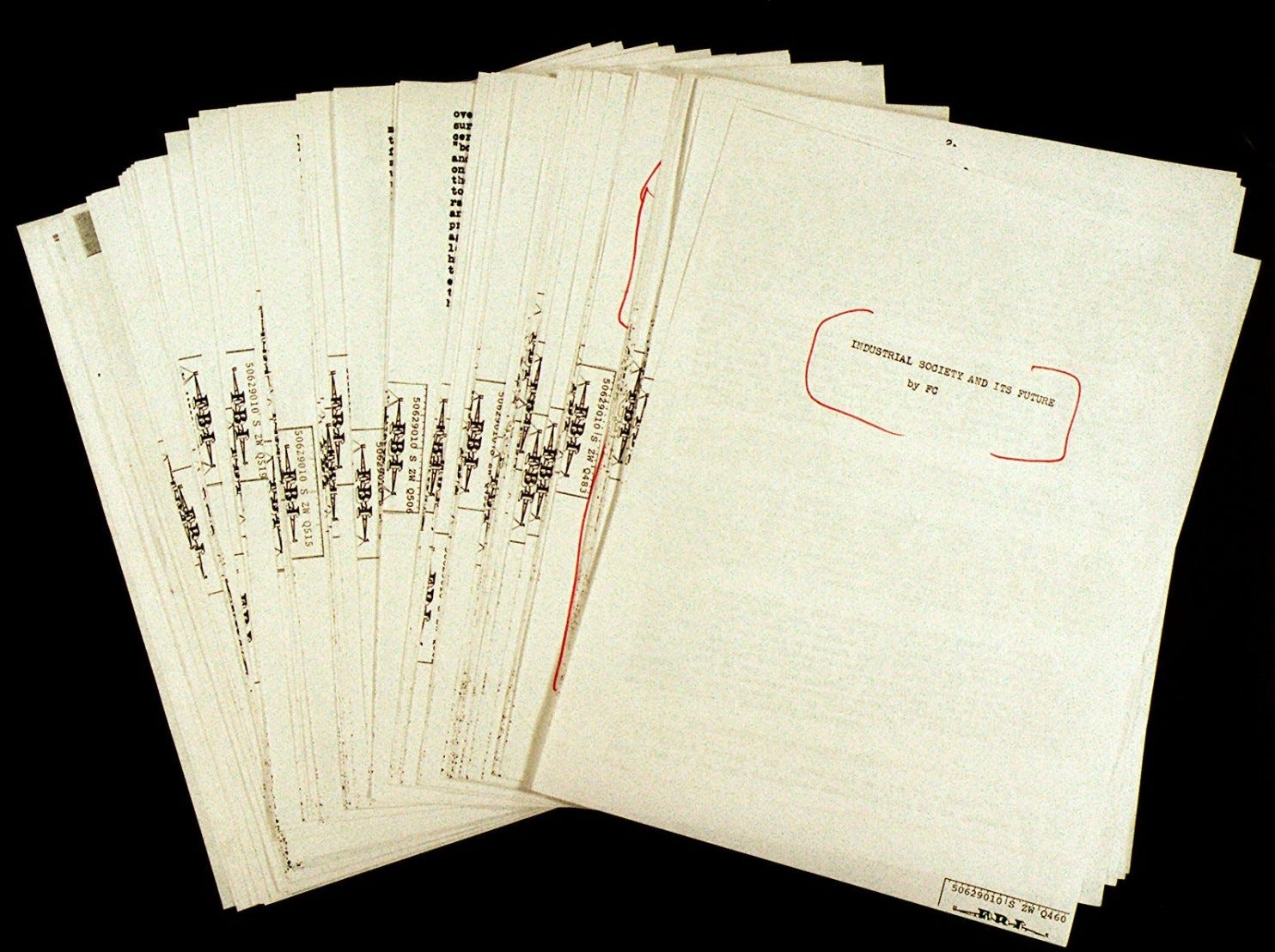
Behavioral modernity – the suite of cognitive and cultural capacities that distinguish us from our more ape-like antecedents – is itself only 70,000 years old; agriculture – a mere 10,000; and industrial society, whose consequences have been a disaster for the human race, according to some notable thinkers, is but a piddling 200 years young.
If we hit the pause button here, we’ve already skipped over 99% of the movie known as History, a truly Eames-ian traversal of scale. Within this framework, it is an obvious farce to even momentarily consider the idea that we humans, the blip of life that we are, could claim dominion over the Earth. Poor Chief Seattle, whose words inspired the name of this presentation, is probably spinning in his grave as we speak.
Despite this, we seem to be suffering from a planetary bout of Main Character Syndrome, an illness whose symptoms include a number of suicidal tendencies: deforestation, ozone depletion, megafaunal genocide, and other quirked up behaviors. Now, I’m no cinephile, but as far as I know, most films don’t introduce their protagonist in the final frame.
Starring role or not, the horror flick of Life is genuinely scary when you stop and really consider the implications of these facts: humanity is not even a subplot in the narrative arc of history; we wouldn’t be on the iMDB page let alone listed in the credits themselves.

When you tug at this thread long enough, inevitably you arrive at the uncomfortable navel gazing vista of the great existential questions of philosophy, the big who, what, where’s, and why’s of existence itself. This is not the most fun destination for an intellectual hike, so it comes as no surprise that we often don’t keep these facts front of mind.
Even now, as we’re gathered here amid the towering symbols of man’s dominion over physical reality, it’s hard to believe that this land was not always the concrete hellscape we currently inhabit, but rather a sprawling verdant lowlands set atop millions of years of sedimentary layers, the alluvial deposits, volcanic ash, and marine sediment forming a layer cake of time.
And it is especially hard to remember these facts as you’re passively exercising near total dominance over space and time, reclining semi-comfortably in seat 29C, your body propelled by quadruple jet engines through the air at speeds unattainable by any natural force. This all while you quietly thumb the screen of a device that instantaneously connects you with any other human on the planet, even now, as you’re miles above all 8 billion of their heads, just a few hours away from your final destination, the Namaqualand.
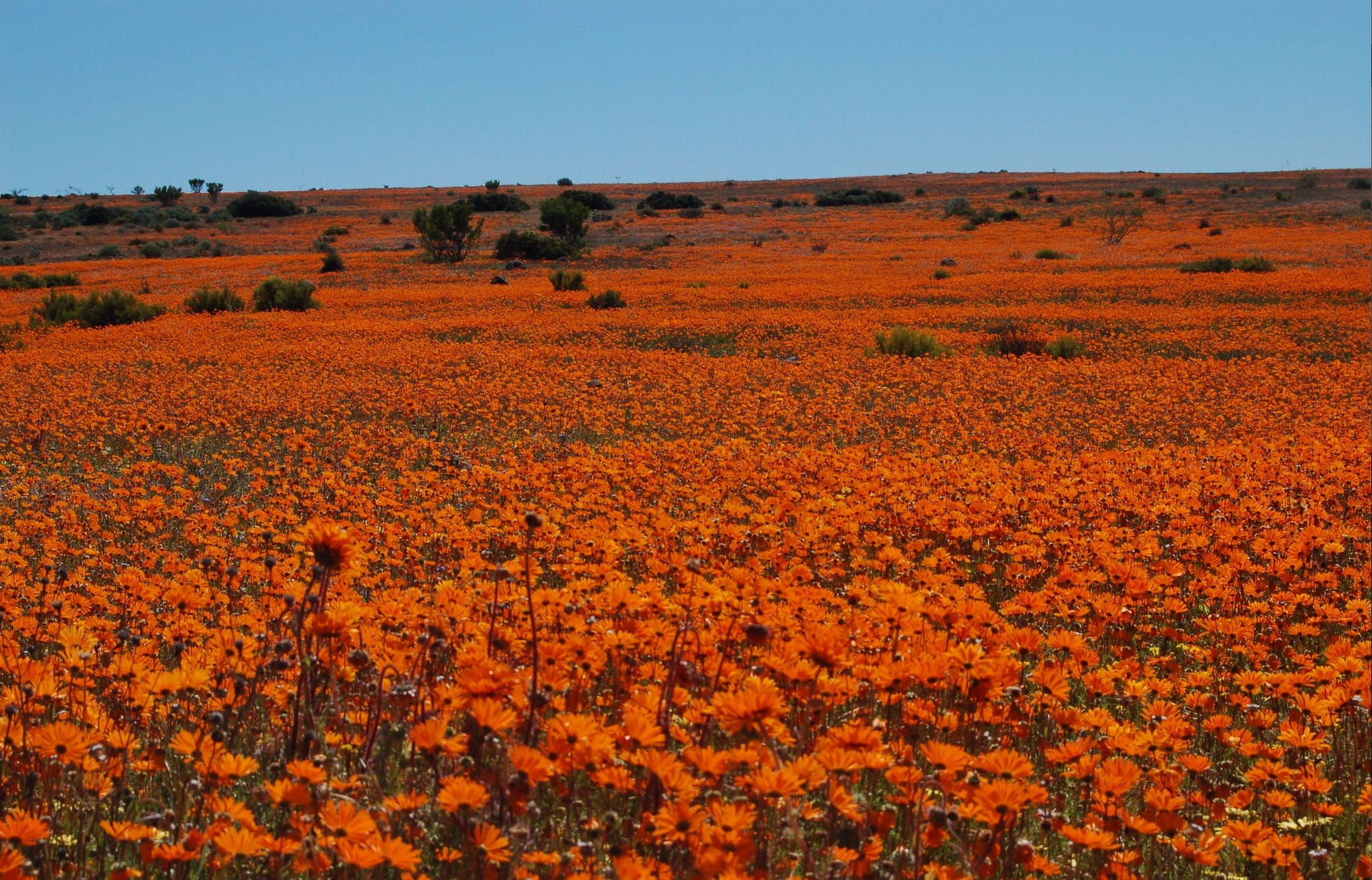
Namaqualand
The name itself, in the indigenous Khoikhoi language, means the land of the Nama Khoi people, who have raised cattle and sheep here for the better part of two millenia.
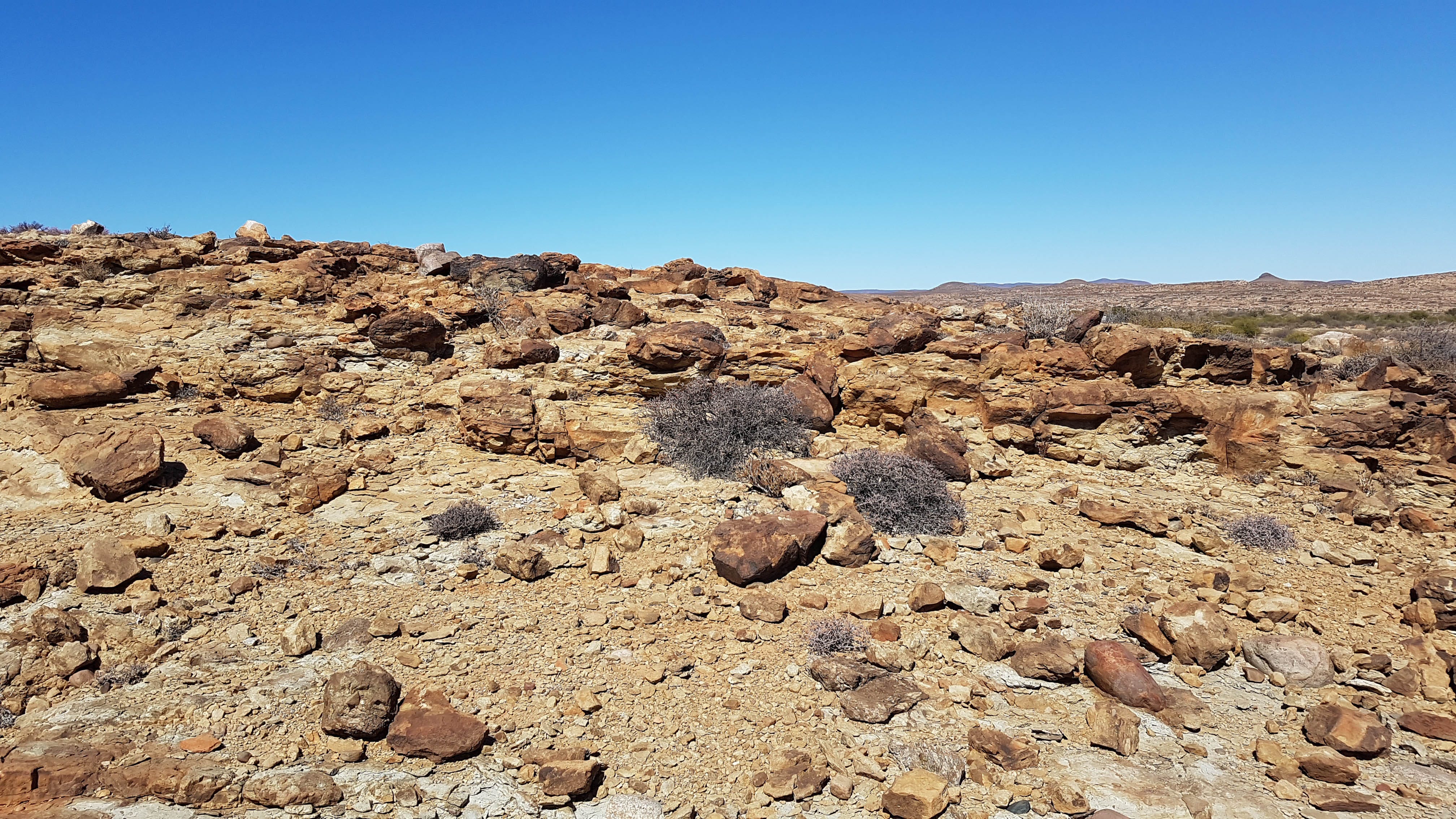
For most of the year, the arid terrain is a bleak gesture of the Earth’s callous indifference to any and all living things. The region runs along a narrow strip of the southwestern coast of Africa, spanning from southern Namibia down into South Africa. It is composed largely of exposed rock. The gneiss, granite and schist that erupts from the land was once part of the supercontinent Gondwana and has slowly been worn smooth by billions of years of weathering.
These broad, unimaginably vast expanses are infrequently punctuated by dry riverbeds, sparse scrub and the occasional rocky dome, called inselbergs, themselves among the most ancient landforms on Earth’s surface.
But following the winter rains of August and September – remember, this is the southern hemisphere we’re talking about – the ground explodes in one of the most extravagantly abundant blooming events on the planet. Sheets of white, orange, and yellow flowers extend to the horizon; the vastness of this display visible from space.
These blooms, and more specifically the plants that produce them, are why we’re here nearly 11,000 miles from home. Much like Gulliver in his shipwrecked days on the island of Lilliput, we find ourselves at the mercy of these minuscule lifeforms known collectively as the Mesembs, a family of freakish dwarf succulent plants.
Some of the most unique and sought after genera of the Mesembs grow here and only here on the remote rocky outcroppings of Namaqualand. Despite their diminutive size and an impressive camouflaging ability, they possess a strange siren call that lures xerophiles from all corners of the Earth.
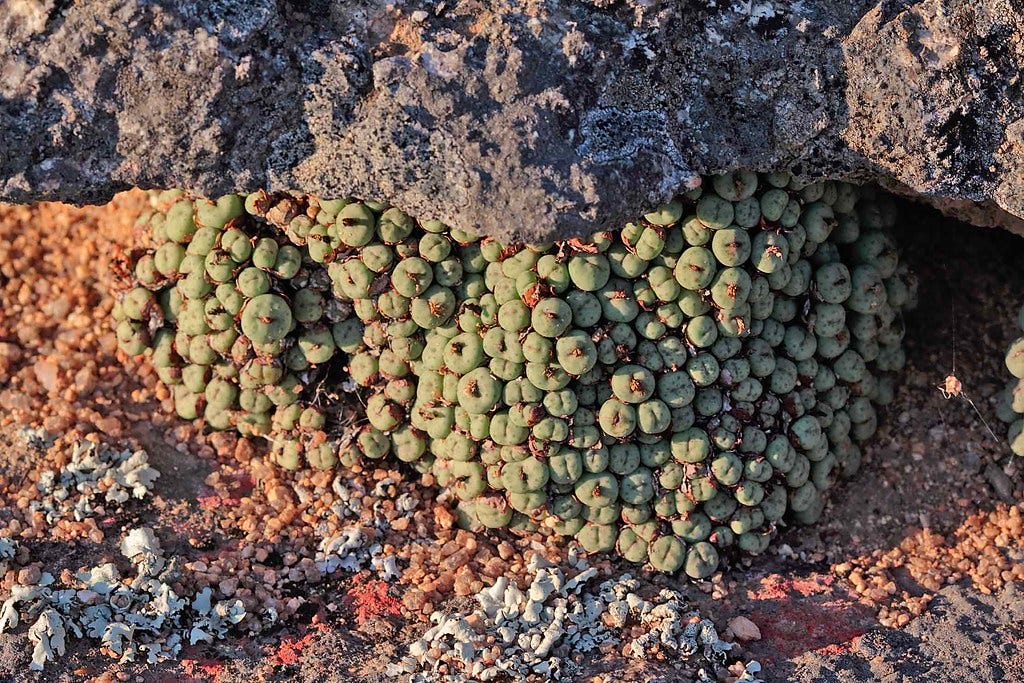
Starting in the late 1600’s, botanists would make the journey to the Namaqualand in search of mesembs and the many other unique plants of the region – odd bulbs, swizzle sticks, and various caudiciforms – describing them and sending specimens back to various institutions around the world, the otherworldly forms blowing Victorian minds. And while there is no shortage of hallucination-inducing specimens in this region, it is the pint-sized Mesembs that truly capture the hearts of botanists the world over.
Perhaps it is their very non-plantness that piques our interest. Or perhaps it is the implied gender-role reversal – their cleft leaves the definitive inversion of the phallic form of so many other species of succulent plants. Or maybe it’s more simple and they’re just undeniably cute.
Whatever it is, these plants are true anomalies of the plant kingdom.
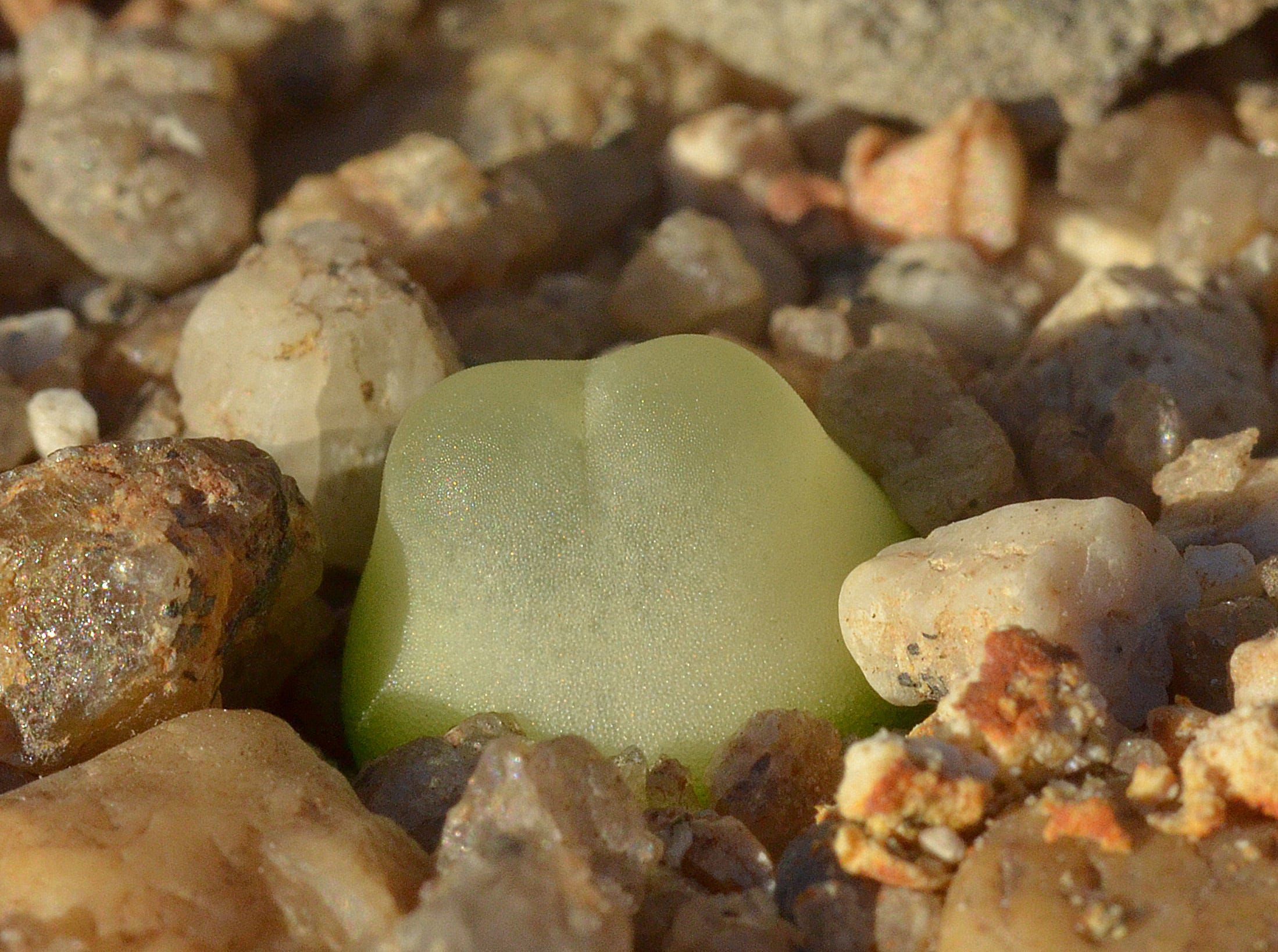
Dumpling and His Wife
Dwarf mesembs are among the most morphologically reduced plants on Earth. Millions of years of hard-fought adaptation to the extreme environment of the Namaqualand – months to years without any appreciable rainfall and extreme heat – have compressed the entire architecture of the flowering plant. Root, stem, leaf, and reproductive structures are reduced to a simplified body that, in many species, consists of nothing more than a single pair of fused succulent leaves that barely peek out from the ground, fleshy stars in a galaxy of soil and stone.
This reduction of form should not be mistaken for a simplification of function: it is extreme specialization driven by the unrelenting evolutionary forces that operate at the boundaries of survival. We see this in extremophiles in the most inhospitable habitats imaginable – bacteria growing in the cooling systems of nuclear reactors (which look remarkably like lithops); worms attached to hydrothermal vents in the remotest reaches of the ocean; and of course the beloved Tardigrade. Affectionately known as the “water bear”, it is an ancient creature that has survived all five major extinction events and even the vacuum of outer space.

In the case of Lithops, this specialization has resulted in the development of unique forms such as the aforementioned fused leaves. In addition, these leaves are adorned with windowed tips, which allow for light to pass into the plant body itself to perform photosynthesis, which normally occurs on the surface of the plant. This in turn allows for their largely subterranean existence – protecting the plants from desiccation, predators, and voracious human collectors.
Even more astounding is the incredible variation in leaf patterning, a form of cryptic mimicry that allows populations to camouflage themselves among different rock types, creating distinct species in disconnected localities.This camouflage is so localized that adjacent populations on different rock types may be visually unique.
Their flowers, just one among the many responsible for the region’s superbloom, are disproportionately large relative to the plant body and powerfully scented to attract moth pollinators at night while their UV-tuned colors attract bees during the day and draw the minimal attention from predators.
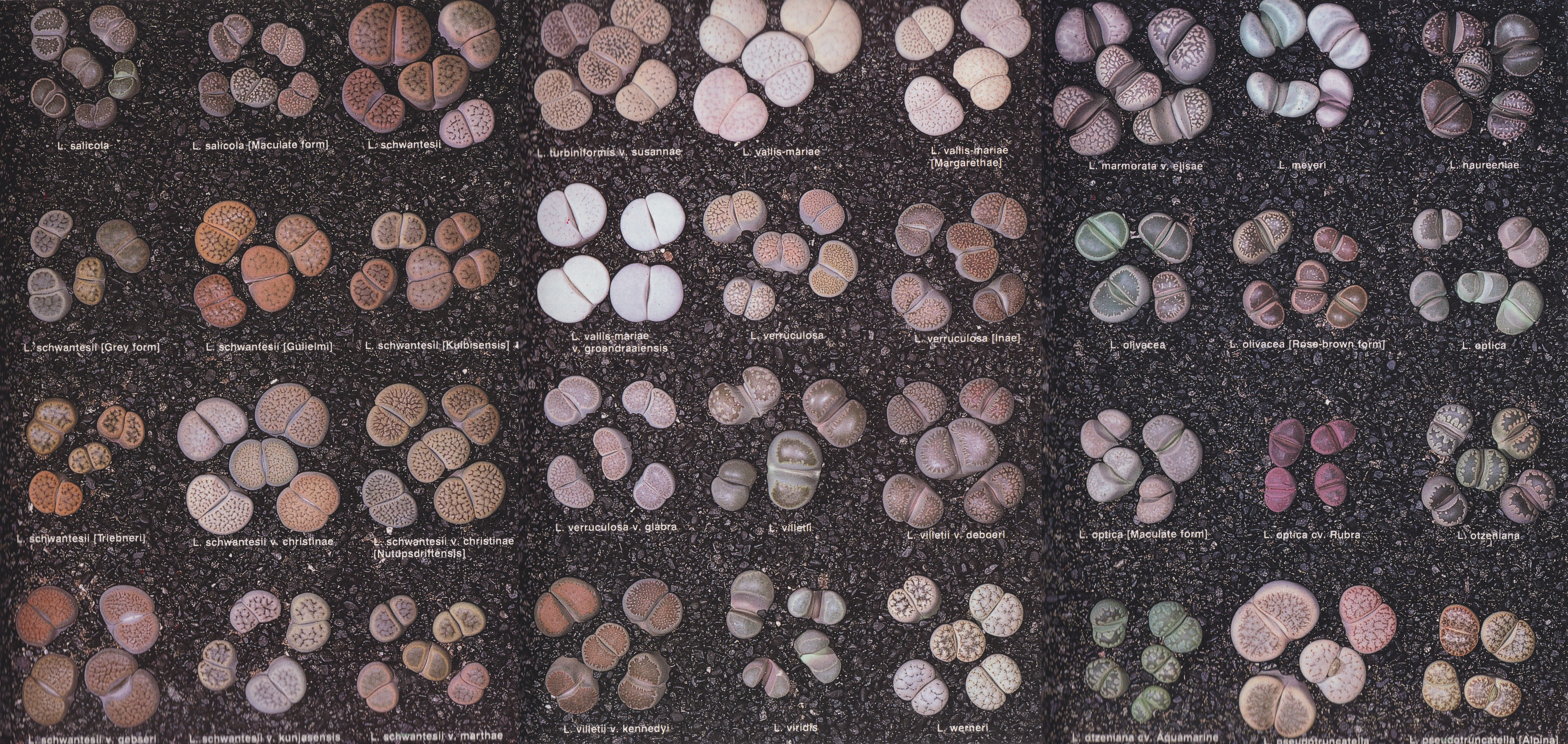
The whole organism is a study in radical minimalism: millions of years of biological compression into a tiny, dumpling-cute form. It is a living vessel of raw survival.
Perhaps it is this diminution – the reduction of life’s most essential forces into a windowsill companion, that so enamors us. After all, we have always been weirdly drawn to small things. Maybe this response is a biological relative to our innate love for our infant children, a Kindchenschema transference to the nonhuman and the inanimate. From the mini worlds of the dollhouse in the Victorian era to the contemporary micro-sculpture of William Wigan, there is something oddly compelling about the world in miniature.
Not only are little things cute, they are controllable, manageable, the chaos of the world brought to rest in the palm of our hand. The associated flood of oxytocin and an ebbing of norepinephrine is a most soothing chemical cocktail for our delicate nervous system.
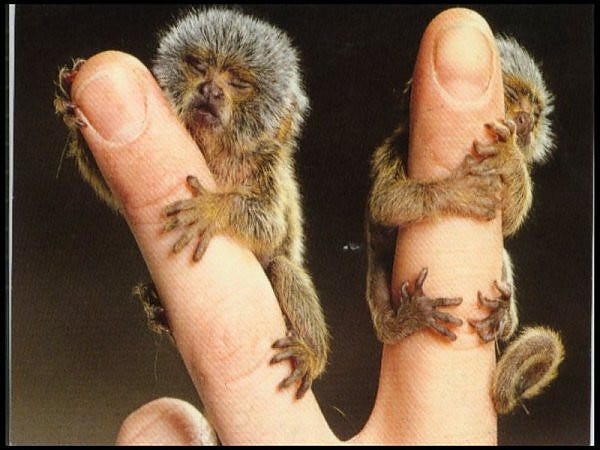
Indeed the private collections of growers the world over -– the greenhouse itself a bubble of managed atmosphere – speak to a desire to wrest control from the forces of nature and transpose them to a scale the human hand can manage.
This is but one example of a twisted relationship to scale that has been with us from our early days on the savannah. It is an example of evolutionary mismatch; a feature of our biological software that is long overdue for an update; a blindness to the small world around us that often eludes our attention unless brought to the fore with the help of the psychedelic transformations of size common to science fiction, psychotropic drugs, and, occasionally, blockbuster family films.
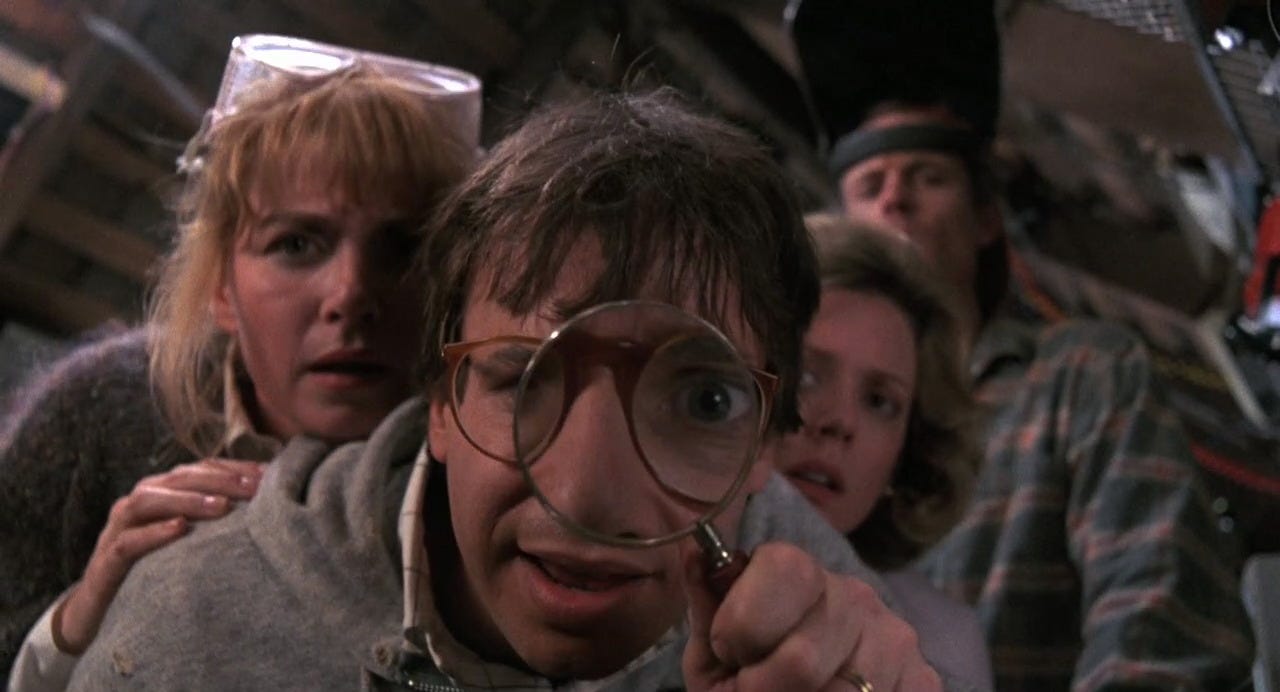
Honey, We Shrunk Ourselves
In Honey, I Shrunk the Kids, zany inventor Wayne Szalinski accidentally shrinks his titular children with an experimental electromagnetic shrink ray he built in his attic. Along with some other annoying neighborhood kids, they end up lost in the family lawn. At ¼” tall the space is suddenly transformed from one of domestic bliss into a nightmare-ish forest: the grass is as tall as trees, ants become monsters and water droplets deadly projectiles.
Imagine if we all were forced to go through this kind of extreme size inversion therapy as children – would it give us a new reverence for the minuscule? Would it make us respect and even fear the majestic clover, the humble pebble, or the pesky mosquito?
Speaking of mosquitoes: while it’s always a good idea to carry a whistle when hiking in case of lions and tigers and bears, you really should be more concerned with getting full coverage protection with your bug spray of choice.
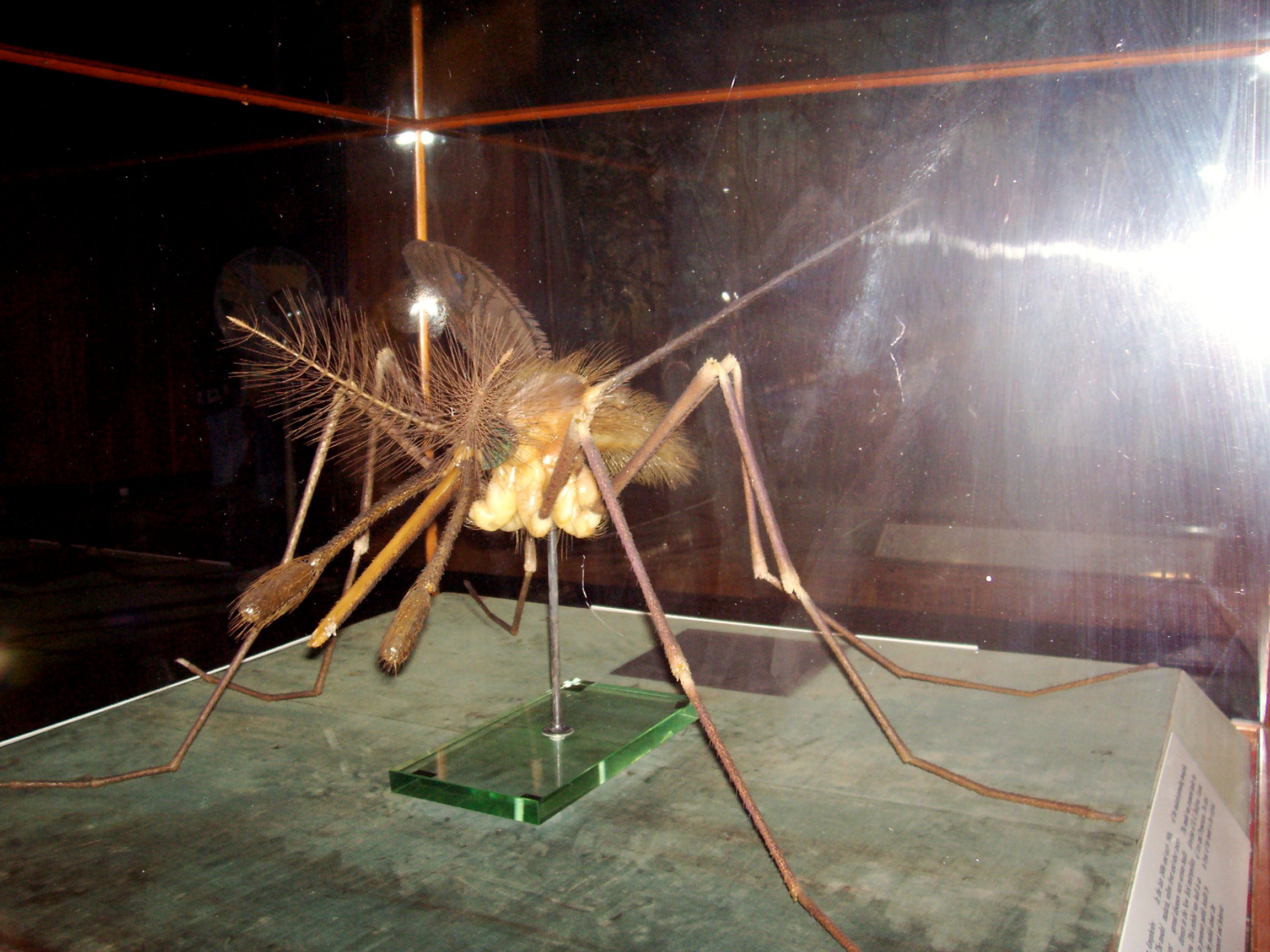
The fact that the obnoxious buzz of these bloodsuckers registers as little more than an annoyance to us – even though they are the deadliest creature on Earth – is exemplary of an incongruent threat response. Apparently you need to enlarge the threat to savannah-like proportions, or shrink yourself Szalinksi-style, for our outdated brains to take notice of certain things.
More than just threat detection, this scalar blindness affects our basic perception, skewing our ability to see the world as anything but one designed at human scale. During those first few hikes in Namaqualand, it was much easier to be in awe of the larger-than-life plants that dot the landscape, monstrous Aloe trees and Pachypodium namaquanum that could never be replicated in the controlled-climate of a greenhouse.
But it isn’t until your eyes fully adjust to this new world that you begin noticing the treasures underfoot. It’s not just that they are so good at hiding themselves after millions of years of practice, but their sheer size in contrast to the enormity of the landscape is baffling. And in a continued zoom-in/zoom-out vertiginous play on scale that would make even Hitchcock queasy, the dwarf mesembs in habitat are themselves larger-than-life show stoppers, often dwarfing those in cultivation.
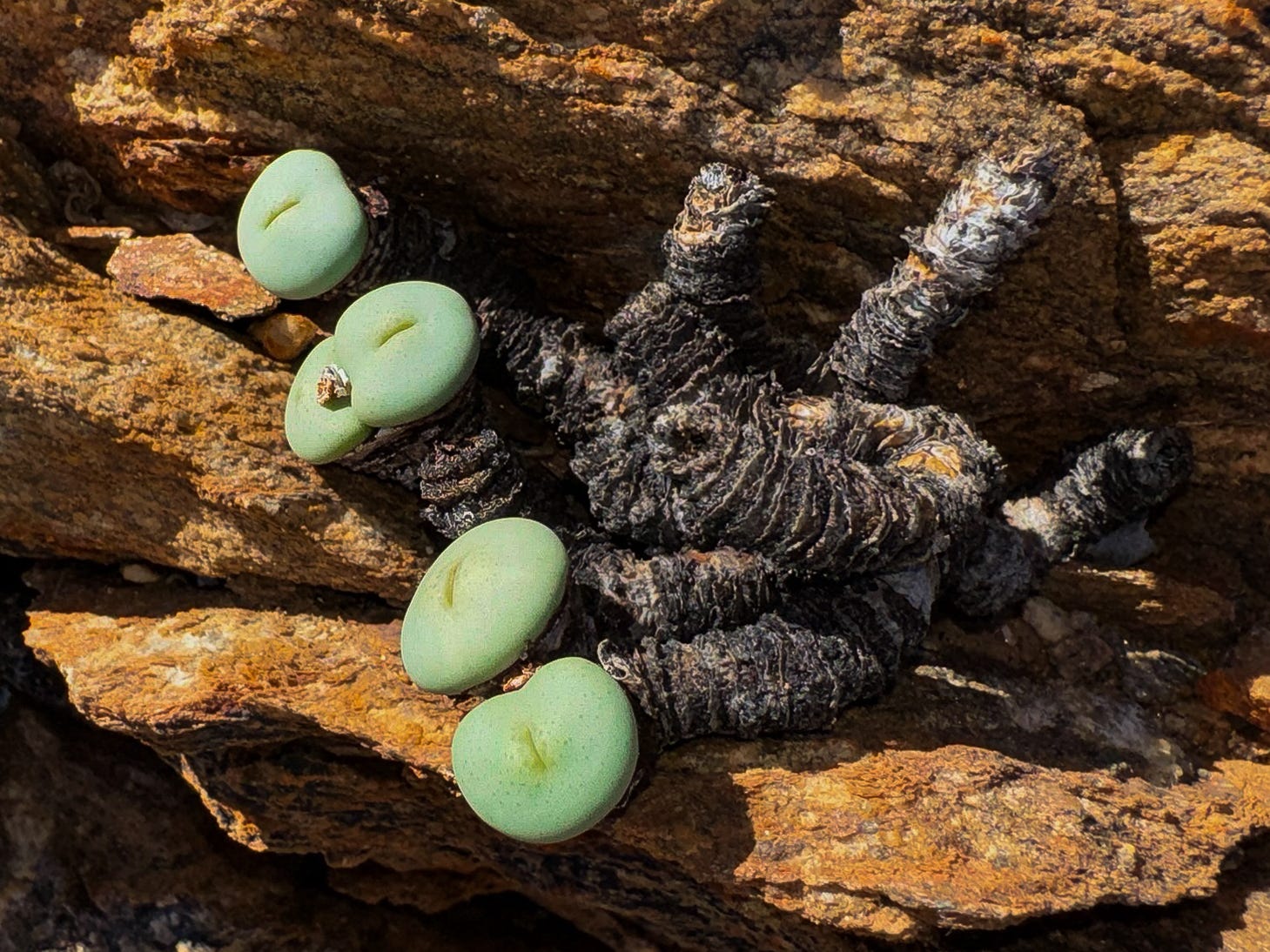
Even for inept xerophiles like ourselves, it really was worth spending hours baring our asses to the burning Namibian sun to finally find a clump of Conophytum hidden in the rocks. In some cases these plants are decades or even centuries old, patiently awaiting their annual sip of water since the dawn of the Industrial Age.
All this is to say that the next time you see a Lithops or a clump of Conos or a Muiria (which is my personal favorite of the mesembs) let it be a reminder that one doesn’t need to resort to the transmogrifying extremes of a Walt to be able to stop and truly revel in the power of the non-human little things that surround us.
Although it probably wouldn’t hurt…
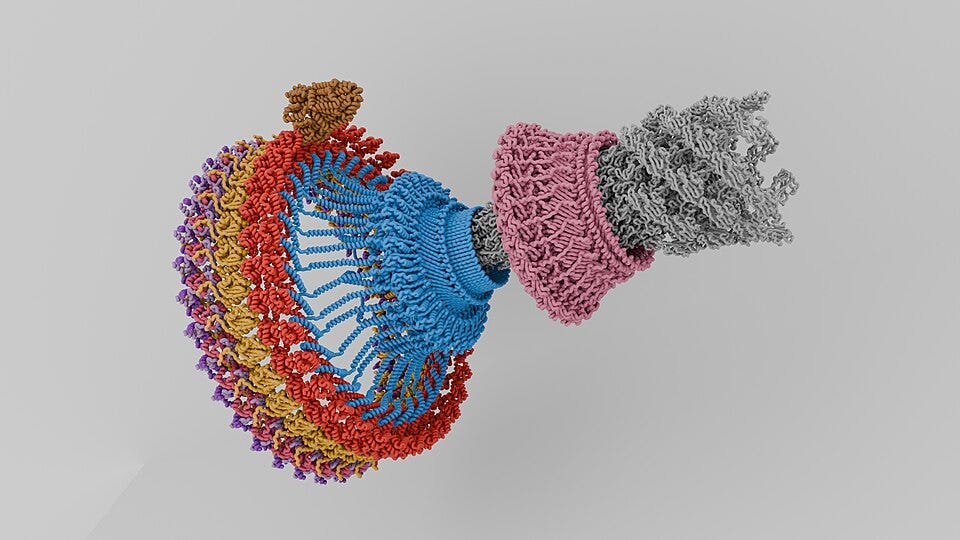
The Grey Goo Problem
A quick detour here as a colorful lesson in the dangers of human hubris.
It is a velvety-rich poetic justice that our fetish-like miniaturization complex would itself birth an entirely new arena of incomprehensible anxiety-producing technologies.
In September of 1989, Donald Eigler, then an IBM physicist in California, excitedly scrawled the words “DID IT!” in all caps in his notebook, the “it” here referring to the physical manipulation of a single atom.
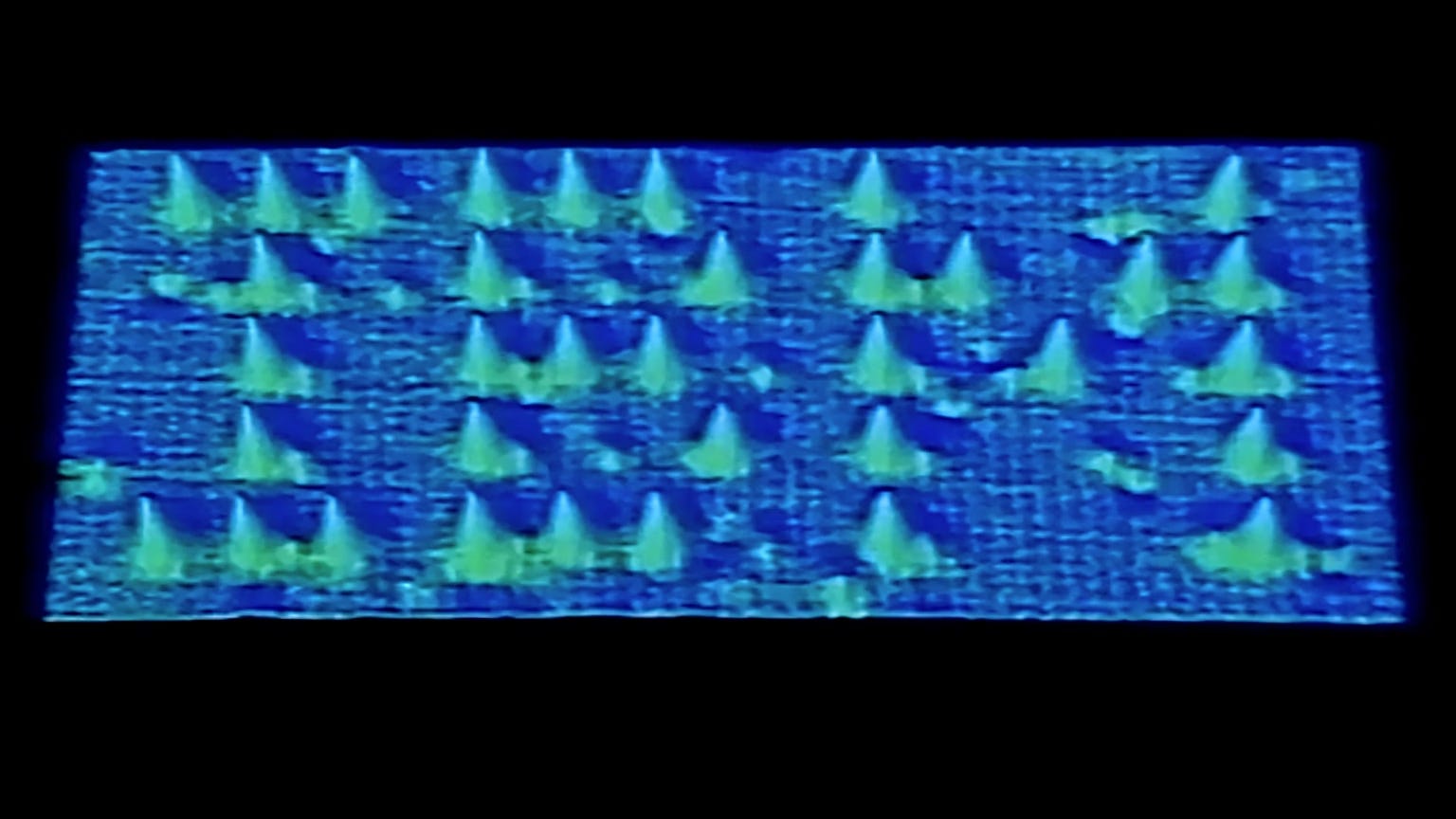
Using a scanning tunneling microscope, itself the product of cutting-edge research at IBM Zürich, Eigler found that he could move individual atoms by bringing the tip of the microscope very close to, but not quite touching, atoms of the element xenon. Over the course of 22 hours, he and his colleague painstakingly applied this technique to move these atoms into a man-made arrangement, thus creating the first atomic graffiti.
Forget about William Wigan, this feat of God-like manipulation is orders of magnitude more impressive than any artwork and certainly the last stop on the physical control train, expanding human dominion to the very building blocks of matter itself. It would give rise to an entirely new field science, nanotechnology, and with this, inspired new and fantastical visions of human creation and destruction via the so-called “Godfather of nanotech”, K. Eric Drexler.
Recognizing the potential of atomic manipulation, Drexler dreamed of creating molecular assemblers – machines the size of individual molecules that could do our bidding, constructing virtually any physical object one atom at a time, vis-à-vis Eiger. Think of this nanotech as essentially a 3D printer, but instead of making silly little plastic bits, you’re able to print reality itself. Any physical object — inanimate or living – could technically be created in this manner, giving us, in Drexler’s words “effectively complete control over the structure of matter”.
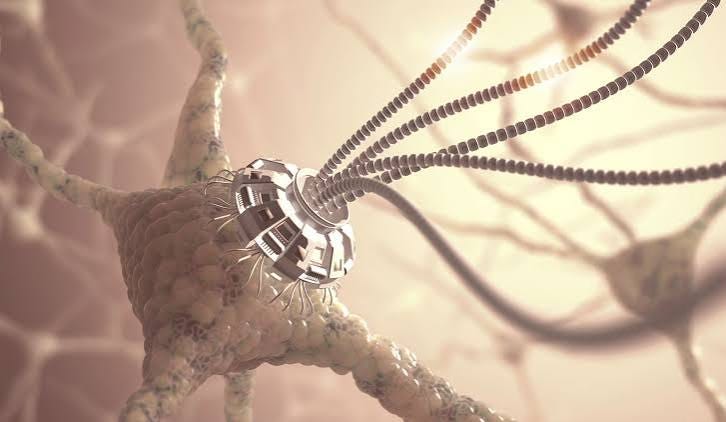
On the flipside of this, we have the so-called grey goo problem, the most well-known and frightening implication of Drexler’s ideas. It goes like this: if assemblers could build anything, they could of course build copies of themselves, which could build copies of themselves, which could build copies of themselves, inevitably consuming all biomass on Earth. Apparently Drexler thought this would resemble a grey goo of sorts.
That was 1986, but here we are 40 years later alive, goo-less, and arguably well.
Nanotech is perhaps a case of theory walking the dog of technology, a condition which has given rise to some of the best and most prescient works of science fiction, but by no means is it a reason to believe some version of this doomsday scenario is not valid. Nor is it the only scenario in which a blindness to the small, to the scales beyond our tactile reach, could spell disaster.
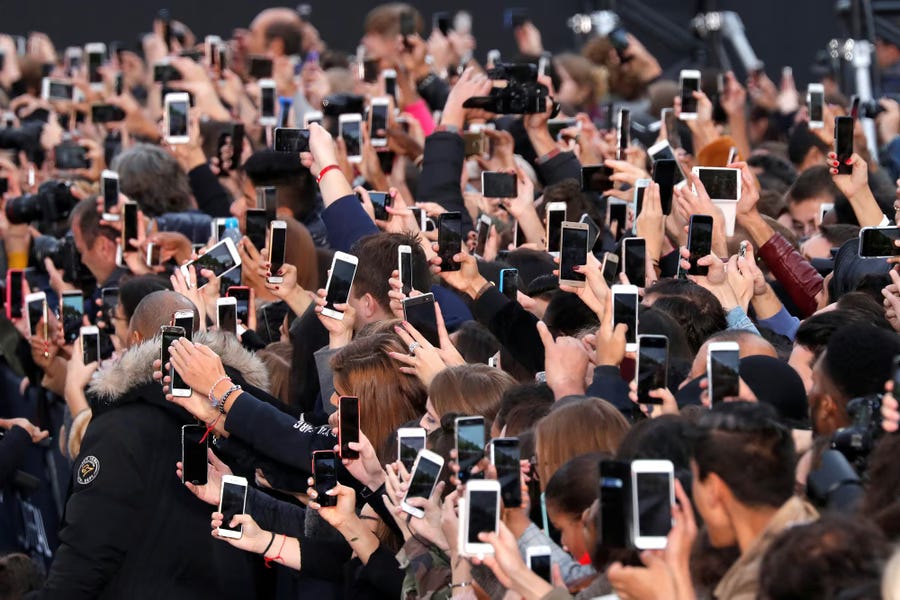
The Power of the Collective
At this point, I think we can all agree that Earth does not belong to man. But it might belong to ants.
Pound for pound, we might have the upper hand, but man for man, ant for ant, it’s not looking good for us. Of the approximately 20,000 species currently described, there are an estimated 20 quadrillion ants on the planet. That’s not quite as many as the number of stars in the sky, but it’s nothing to shake a stick at either. We’re talking 2.5 million ants per person on Earth, again confronted with orders of magnitude that are simply incomprehensible to our brains.
And I get it, you can stomp ants like nobody’s business – but two-and-half million is a lot. Some species roll through the grasslands of central Africa 20 million deep with a single-minded directive and an appetite for destruction.
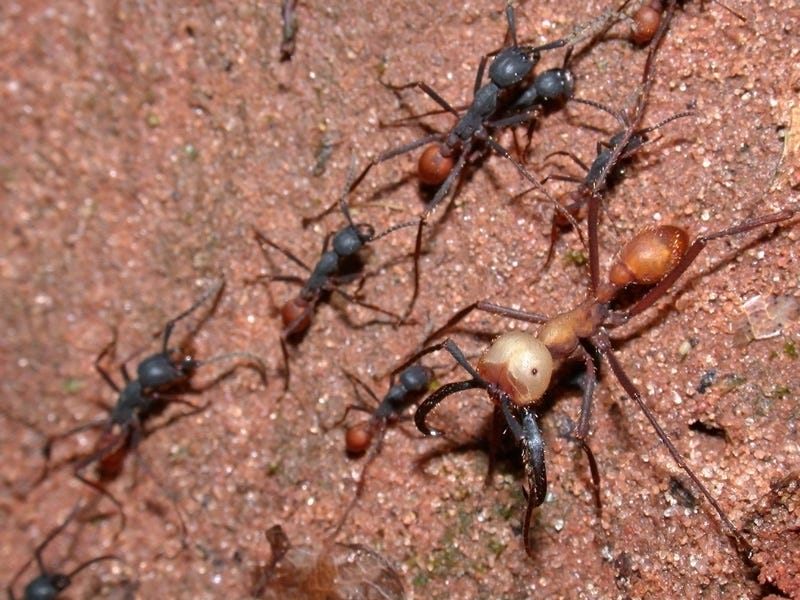
Like ants, some of the most successful – and that’s successful in an evolutionary sense – some of the most successful organisms on Earth are themselves not actually individuals but groups of networked individuals, working and in some cases presenting as a single entity.
Pando is somewhere between 16,000 and 80,000 years old – it is the oldest living organism on Earth. Sprouted from a single seed, it is now an entire forest of quaking aspens that share resources across a single root system spread over 160 acres of the Fishlake National Forest in central Utah in the United States.
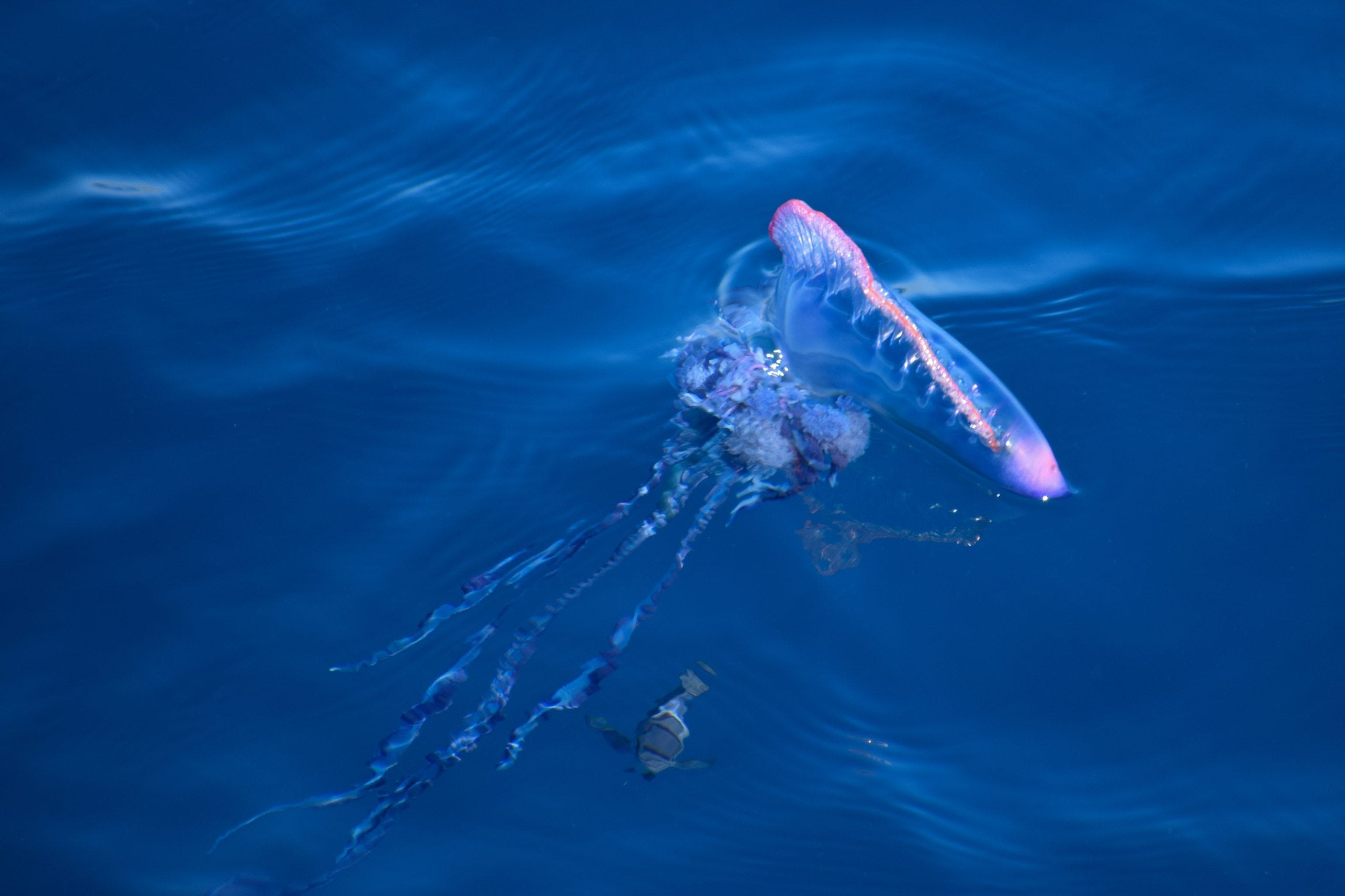
The Portuguese man o’ war becomes even more confounding to behold when you learn that while visually presenting as a semi-coherent blown-up-glove of a jellyfish, it is in fact composed of millions of zooids, each one a highly specialized organism. In fact each zooid is so specialized for its specific function that individual zooids cannot survive outside the colony. Each one of these special little guys, while morphologically different, are somehow genetically identical, an unprecedented instance of twinning with a powerful sting, to boot.
This is the power of the collective. This is how a plant the size of a single grape can become visible from space; how a nanoscale virus can suspend the march of a rapacious global order; and how a single atom, manipulated just right, can threaten an entire planet’s worth of life. It is a force that harnesses the transformative power of scale. You must simultaneously zoom in and zoom out to truly understand it, which, like rubbing your stomach and patting your head at the same time, can be frustratingly hard.

Perhaps now is an opportunity to resume the position and bare our asses once again to the blazing sun, to look down beyond our normal scale for guidance on how to work and live together on a planetary scale. Not as a collection of individuals but an individual collective. Lucky for us, the connective tissue is built and although the original Utopian vision for this technology did not come to pass, but rather birthed totally new forms of horror and alienation, there are still reasons to hold out hope that we can recognize our place in the Gaian order and come together to work as a whole.
And with that, we once again find ourselves admiring our mesemb collection from the comfy repose of the Philosopher’s most agreeable armchair, cueing up a much needed rewatch of the The Incredible Shrinking Man.
End
If you’ve made it this far dear reader, we thank and applaud you.
We’ll be back at the studio in a few days, but until then, take care of yourselves.
さようなら,
Cactus Store and Nonhuman Teachers
Comments
Nothing yet. Say the first thing.
Sign in to join the conversation.