
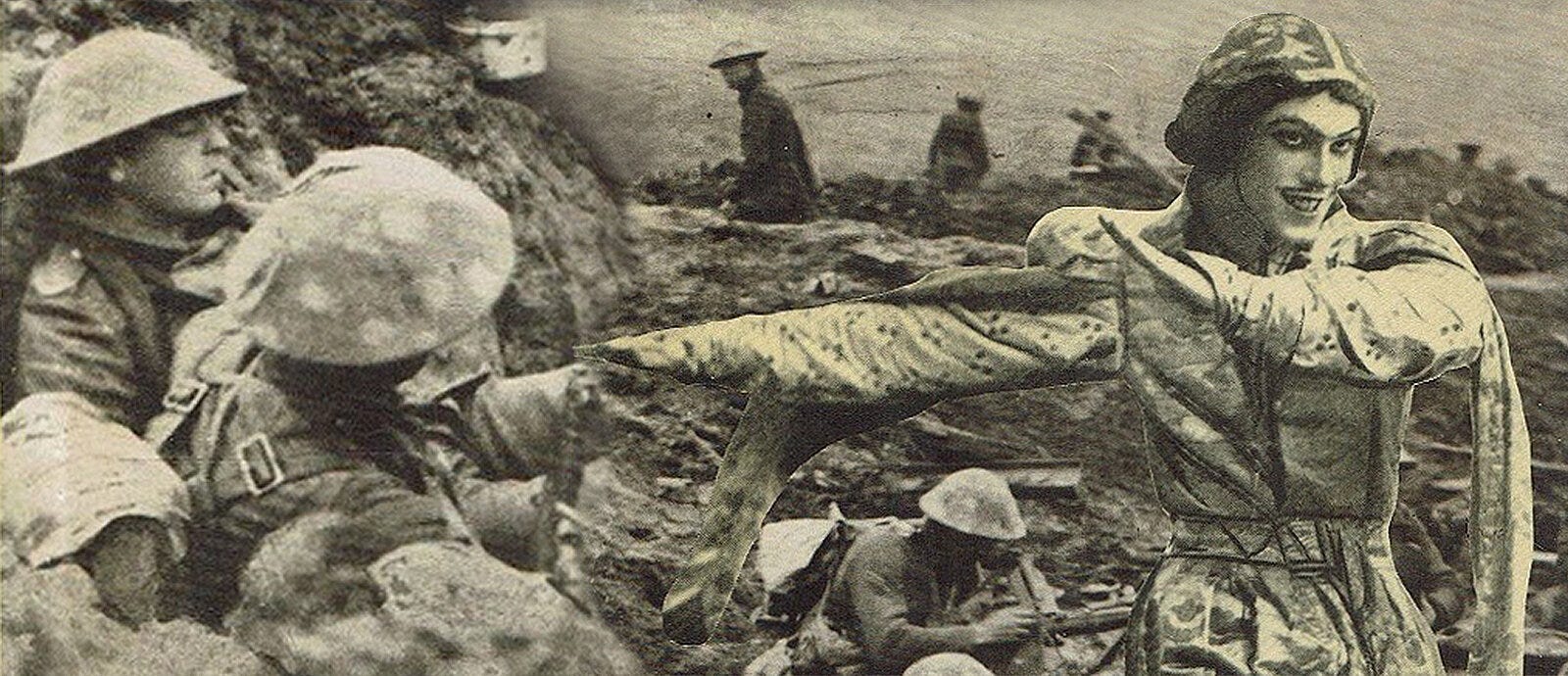
Modris Eksteins in “Rites of Spring” has produced a masterful composition which addresses the importance of the first World War for society, culture, art and war itself, in Germany and the world. It is intellectual history with overtures of cultural analysis, and provides many interesting insights that the scholar of history and casual reader can appreciate. The review I will provide is not going to focus on judging the work itself, but will instead summarize and analyze the key themes in the book.
Art as a concept and an alternative for social and political life in the 20th century at large, finds its roots in the late 19th and early 20th century avant-garde movements. Eksteins masterfully demonstrates this in his first chapter through Diaghilev’s contribution to the revolutionization of the ballet. This example clearly shows the importance of art for fin-de-siecle and early 20th century society. Art then turned above reason, and as a political symbol it came to represent reform and revolution. Reform and revoution were both beginning to grow in those days, and a dangerous dance between the new and the old worlds and their values was on stage. Art then could be and was used to introduce new value systems; an assault against bourgeois life and standards. An accute sense of self-absorbtion was also observed in art’s new proposed forms, as art abandoned its didacticism in favor of assaulting aesthetic norms, which represented a set of obsolete values and traditions. The avant-garde had of course no basis and certainly no empirical foundation for any of these claims, so the ideas that surrounded the art world even on the highest echelons of the avant-garde held no real threat, but certainly existed in a complex and highly intricate system of norms that were ready to replace the 19th century European reality.
But with the coming of the war, which Eksteins sees as an implicit instrument of the avant-garde, art much like the foundations of the status quo prima World War I, was shaken. Itself, art was found as inadequate and insufficient to explore the human mind, the world of the trenches and the Great War. The groundwork for that inadequacy was laid in theory by the pre-war avant-garde which was already absorbed in ideas of irrationalism, primitivism and brutalism. Morality was questioned and overthrown, self-absorbtion and through it nihilism were instead embraced. Absolutes were tossed aside and aestheticism instead became the primary justification for existence both in art and society. Life had to now imitate art, not vice versa.
Social and moral absolutes were thrown overboard, and art, or the aesthetic sense, became the issue of supreme importance because it would lead to freedom. (31)
Therein didacticism was abandoned; art would now be an instrument not to teach but to provoke, to excite. Early stages of hedonism were then observed, spectacle was glorified in its enshrining of pleasure, joy and novelty in gratification of the senses. Passion became important, “lust is sacred,” as Eastman shouted. Therein a fascination with the outcast, the lowlife and the alien was observed among the avant-garde.
Despite a fascination among the avant-garde with the lower classes, with social outcasts, prostitutes, criminals, and the insane, the interest usually did not stem from a practical concern with social welfare or with a restructuring of society, but from a desire to simply eliminate restrictions on the human personality. (42)
Freedom, or liberation and art stemmed now from obsession with unchaining the human person and the individualism. This aggressive individualism turned itself naturally outward and unto history, which was looked at as the supreme symbol of what repressed the true individual, with all its forms. The past was an enemy. Thus futurism was embraced outright and modernism was defined through art. Eksteins beautifully expresses this through the exploration of Diaghilev’s reform of ballet.
The ballet contains and illustrates many of the essential features of the modern revolt: the overt hostility to inherited form; the fascination with primitivism and indeed with an anything that contradicts the notion of civilization; the emphasis on vitalism as opposed to rationalism; the perception of existence as continuous flux and a series of relations, not as constants and absolutes; the psychological introspection accompanying the rebellion against social convention. (52)
This phenomenon, a cancer observed in the art of the Old World was ultimately a primitive expression of cultural pessimism, finding its roots in nihilism and a cult of personality. It would grow and ultimately find victory in the ruins of Europe after 1918.
There was no better soil than that of Germany on which the seeds of the avant-garde and its ideas could grow. Paris might have been the capital of tramps and beggars, and Britain may have been the great industrial center of Europe, but it was in Germany where the most dangerous synthesis of modern and old would be found; where the mix was most unstable and where the modern strove above all else to emerge. The modern became in Germany more part of a national identity and sense of existing than in any other of the great European powers. Protestantism played a role in this, but the lack of a clear sense of destiny and identity along with material developments brought forward the quest for true freedom at the forefront of the German mind. The idea of Germany lacked objective definition, therefore myth became important, fantasy overruled history, which was seen as a force to be used and molded, not a vessel of tradition and a source of pride and identity as was seen in Britain and France. However, the beginning of this great revolution against history had found its original expression in something quite unexpected.
The cult of Technik, the emphasis on scientism, efficiency, and management, reached a peak in Germany in the late nineteenth century. Reinforced by the material developments and concerns of an industrializing age, it was nevertheless founded on long-standing and well-entrenched cultural and political traditions: on an awareness of weakness and diffusion and a recognition that survival was dependent on an effective management of resources both natural and human. (70)
Germany had become by the early 19th century the center of progress in terms of education and society. Her universities the most open and democratic, her language the key to the finest works of thought, Germany led the academic world. German conservatism moved in circles of opportunism and economic protectionism. It was preoccupied with “Rye and Iron” and its politic was heavily reformist. The Flucht nach vorne enshrined a progressivist utilitarianism that dominated German society in the early 20th century, and that even the gentry and the most naturally conservative parts of its society could not hold back. Berlin was an immgrant center, and a constructed one at that, as it lacked historical momentum like the capitals of Europe, such Vienna or London. It consciously promoted its own novelty and cosmopolitanism.
Futurism came to dominate German society, expansion its economy, growth its population, might its military. It seemed that Germany was constantly being born. But the spiritual world was deeply lacking in the German reality which brought forth the need for a metaphysical core.
Necessity may have fathered invention, but invention then brought forth intention. The technical became spiritual. Efficiency became an end, not a means. […] Germans in the imperial era seemed particularly susceptible to secular idealist notions that ultimate reality was spiritual, and that the material world not only could be ought to be transcended by ideals. (76)
In this spirit, German Kultur was formed as a genuine item, linked with authenticity, truth and totality. Aestheticism conquered politics, history and idealisation emerged. These were conscripted in strict contrast to the Anglo-French world. “This was a world of form, devoid of spiritual values: it was a culture not of honesty and true freedom, but of manners, superficiality, and dissimulation. Notions of liberalism and equality were in the Anglo-French ethos merely hypocritical slogans [….] They masked the dictatorship of form, which was obvious in a Gallic preoccupation with bon gout and a British absorption in commerce.” (77) In contrast, German idealism with its extreme secularism, aestheticism and a cult of art gave way to a direct revolution against the Pax Britanica of the spiritual world. Mysticism and occultism naturally flowed from this obsession with art and its mix with politics, which ultimately translated itself in movements of mystical nationalism and racism. Interestingly, British liberty was a doctrine not of rights but of moral duties. The German concept as described in this context was one purely concerned with the future, not with any moral decisions.
Life should follow art. Life should be both vision and spectacle, a panoramic art work, a quest for titanism, not a concern with codes of behavior and with morality. That was the sterility of bourgeois liberalism, said Langbehn, into which the Germans seemed to be slipping by the end of the century. (78)
A powerful drive to remake the world was evident in the German spirit of the time, and in its Idealism. Glorification of violence, birth through death as the duty of the German people and any healthy culture as well as sexual liberation and primitivism all relfected this.
If self-criticism and self-hatred were evident in German idealism, there was still an underlying optimism embedded in a metaphysical or romantic faith that Germany represented the essential dynamic of the age, that she was in the vanguard of movement and change in the world of the early twentieth century, and that she was the foremost representative of a Hegelian World Spirit [….] Denn an deutschen Wesen soll die Welt genesen. (80)
This desire to remake the world was evident in Germany’s being more than anywhere else. The Germanic mission was then to a destruction of all that was British and French cultural rule; all that was bourgeois. Leibeskultur, nudism, celebration of the prostitute as well the movement of expressionism, futurism and the glorification of brutality, the destruction of libraries and museums, all these remarked a spiritual excitement which itself expressed an unstoppable energy that would destroy all that was held as traditional. Vitality was at the heart of this movement which was rejuvenating, natural and real.
To be “elemental” was to rebel against suffocating and stultifying norms, against meaningless conventions, against insincerity. All this was at the heart of the German interpretation of Kultur. If individual Germans were not always clear in their attitude toward change, the culture promoted change with a vengeance. (86)
Interestingly, the major difference between the two opposing worldviews therefore, as well the ultimate solution in their bifurcation, was to be found in war.
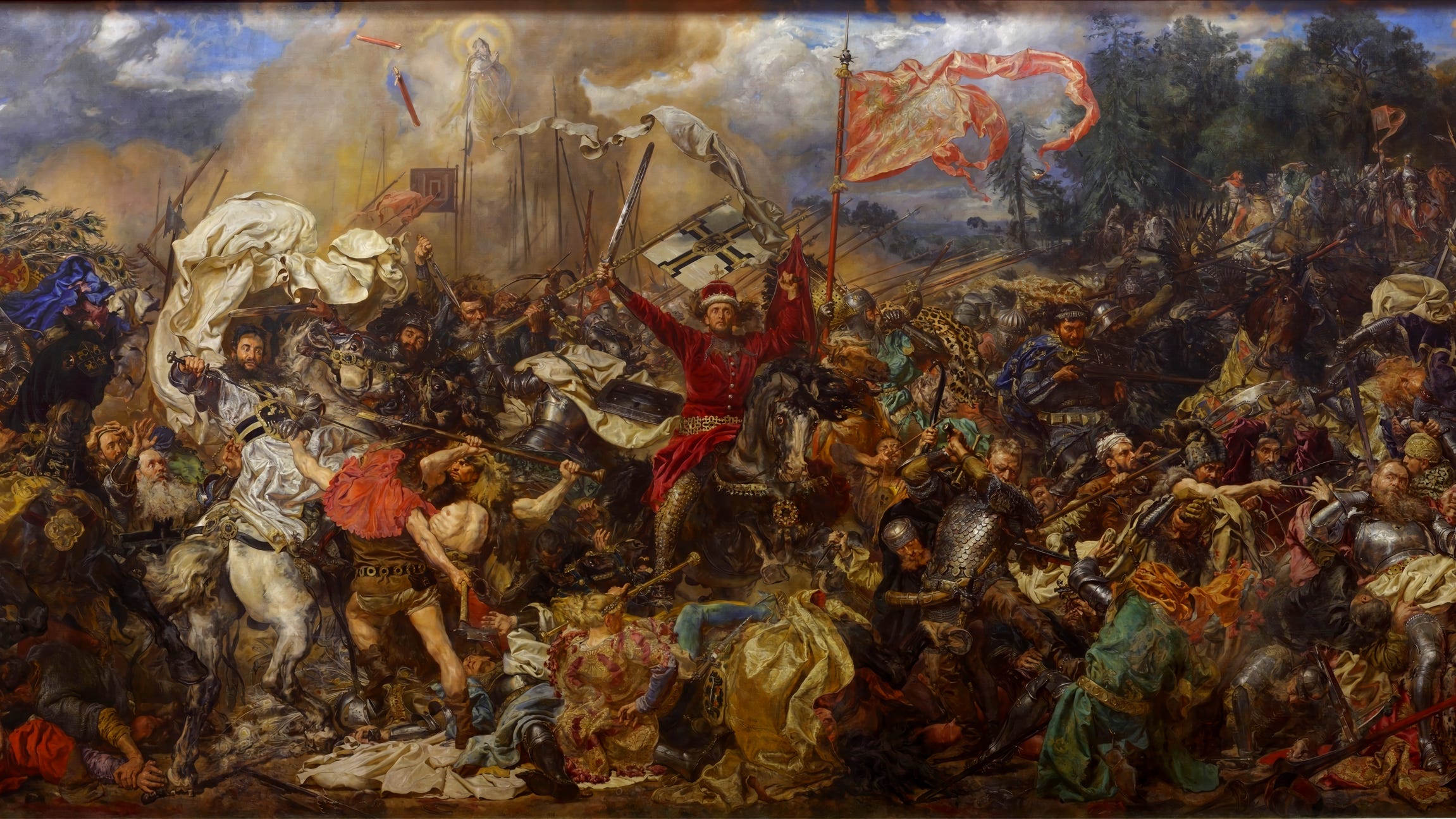
War for the Germans became a cultural achievement, a spiritual experience. It was the price a culture had to pay in order to exist and therefore it was a spiritual necessity. But it also had aesthetic pleasure, glory and meaning. However, war had changed, both in its purpose and in the way it was conducted, war was dramatically different than it had been. The first World War in particulary -which is after all the item of discussion- not only revealed that in its own context but in a social and spiritual context too. It was very much a war that in most its forms, and particularly as waged by the Germans, reeked of the avant-garde, and its outbreak was perhaps the greatest victory the latter could have asked for.
The Great War in its mass mobilization, unbelievable loss of life and shattering of norms, illusions, ideas and ideals, was the greatest carrier of reform and revolution, both spirituality and physically. Russia experienced it firsthand in 1921, but the rest of the Western European powers too saw the effects by 1939.
Eksteins focus on three main points, the effects on war in terms of its spiritual dimension, in terms of its social dimension and in terms of its political dimension and effects. Spiritually, the war brought into question the sense of chivalry that distinguished warfare in the European world for a very long time. Honor in battle, heroism and the quest for greatness through combat all but vanished.
Here chivalry disapeared for always. Like all noble and personal feelings it had to give way to the new tempo of battle and to the rule of the machine. Here the new Europe revealed itself for the first time in combat. (quoting Jünger, 144)
Values in the waging of war that was reflected in the attitudes of the British staff towards the German tactics were now slowly obliterated due to the mere lack of use they had against the German onslaught.
“I don’t know what’s to be done,” said Kitchener; “this isn’t war.” (165)
Unmanliness and surprise in the mechanical ways of modern warfare was recognized as not only evil but unethical by the conservative Allied staff and command. On the other hand, fittingly, the Germans were prepared and ready to delve deeply into futuristic warfare, wherein all was allowed.
Socially, the war too brought about a “socialism of the soldier,” an experience that trench life carried into society with the men that returned. These soldiers lived together and experienced a sense of Gemeinschaft which for most was the only sense of belonging they had felt. It is no wonder that the veterans of the War which came to be involved in politics wanted to return to that sense of belonging and share it with the general public. The concept of total war envisions precisely this in its practicallity, and along with its mass propaganda and campaigns of disinformation it ultimately challenges any sense of subjectivity a society has, in favor of aestheticism, artistry as well as myth, which are one and all elements of German idealism. Naturally therefore, war is seen as culture for the German who wages it happily against those who seek to repress his experience with form of rationalism and false empricism.
War becomes art, because war acts now for its own sake, and because art is culture. This is the meaning of Kultur, which brings about the bankrupcy of ideas, traditions and pre-War conceptions of history and being, simply because they are inadequate to function in this absurdity. Modernism and its impulses in combination with the great and terrible impact of the war brought about the ideological children of the pre-war avant-garde, fascism and national socialism.
National Socialism was the apotheosis of a secular idealism that, propelled by a dire sense of existential crisis, lost all trace of humility and modesty - indeed, of reality. (303)
Fascism was an aestheticization of life, eternal, strong, beautiful, blonde and blue-eyed, much like Aryan myth it sought to impose. “Nazism was an attempt to lie beautifully to the German nation and to the world,” Eksteins writes justly, as he explains the inner workings of nazism. For him, it was spectacle, theater brought into the forefront of the political world. It was an attempt to duplicate the community of the trenches, to make history out of myth. For it, art was supreme because art was living and it was provocative, therefore pure and authentic. History was without integrity, myth was dominant because it was ever present. National Socialism was perpetual revolution, it was romantic and it was virile.
The vitalism, the heroism, the eroticism of first Bolshevism and then Fascism produced a very strong brew indeed for artists and intellectuals. Nietzsche had asserted that the only way to justify the world was as an aesthetic phenomemon, and Benn thought in 1933 that Germany was about to realize that statement. (326)
Ultimately, Eksteins work perhaps best displays what the world and Germany experienced the results of. This is naturally something that cannot be named but only described. Modernity is a close description, and its corrosive powers over the late 19th century world certainly attest to it, but Eksteins reveals two things that are important in my opinion. Firstly, he describes how modernity birthed much of what the right finds reactionary and conservative. Ultimately this brings the reader to the interesting crossroads of doubt, where one cannot describe or speak political forces as liberally and starkly as one would, knowing the delicate balance between these and the context that surrounds them. The political, social and spiritual world that we have to come grow in and live through is inherrited from a series of conflicts and collapses of systems and sets of values. Without recognizing this one cannot be absolute in one’s assertions on modern political life and debate.
No posts
Comments
Nothing yet. Say the first thing.
Sign in to join the conversation.