
By Beata Borja-Westin, a graduating high school senior at Herron High School.
Indianapolis has many nicknames, each reflecting Indianapolis, its history, and its people. In the 1920s, Black blues and jazz musicians centered on Indiana Avenue called the city Naptown. In the 1980s city officials officially adopted the name “the Crossroads of America” in reference to its historical role as a railroad hub and its proximity to several major highways. And in the 2020s, another nickname emerged: Chindianapolis, referring to its large population of ethnic Chin people from Myanmar, also known as Burma. Around 35,000 Burmese people make their home in Indianapolis, particularly on the city’s south side.
It was an aspect of Indiana that I didn’t know anything about until 2019. That year, when I was ten, my dad accepted a new job in Indiana, and my family flew out to visit the place we would soon call home. Between tours of potential new apartments, we decided to stop for lunch at a restaurant recommended to us. When we pulled into the parking lot, I looked up at the sign and saw that it was a Burmese restaurant. Of all the things I expected to find in Indiana, a Burmese community had never crossed my mind.
I was born and raised in New York City, and I admit that my knowledge of Indiana was limited. The only Hoosiers I knew were Mike Pence and Pete Buttigieg. The only stories I knew about Indiana were the movie A Christmas Story and the Broadway musical The Prom. The only image of Indiana I had in my mind was of cornfields, small towns, and white suburban families–a stereotype reflected in television shows such as the farming PBS series America’s Heartland, which features Indiana prominently. I had absorbed these images and assumed that Indiana would lack racial diversity, with Asian American communities being rare.
My expectations about Indiana are not unique. Many people underestimate the state’s diversity because they rely on simplified and outdated impressions of different regions of the country. They tend to associate diversity with large coastal cities and imagine that smaller and more rural areas are homogeneous and white.
The media we consume reinforces these ideas: the Midwest is often used as a setting for stories like The Prom, where a teenage girl breaks the mold of her provincial, white community. Political rhetoric contributes to this image as well: when politicians speak about the “heartland” or “real America,” they often invoke a vision of white, Christian, middle-class families. These portrayals are so common that they become difficult to question.
Even people who live in Indiana underestimate its diversity. Different racial and socioeconomic groups are often geographically segregated. Since people generally live, work, go to school, and socialize with people like themselves, they don’t often encounter racial, ethnic, and religious differences.
… the Midwest is often used as a setting for stories like The Prom, where a teenage girl breaks the mold of her provincial, white community. Political rhetoric contributes to this image as well: when politicians speak about the “heartland” or “real America,” they often invoke a vision of white, Christian, middle-class families. These portrayals are so common that they become difficult to question.
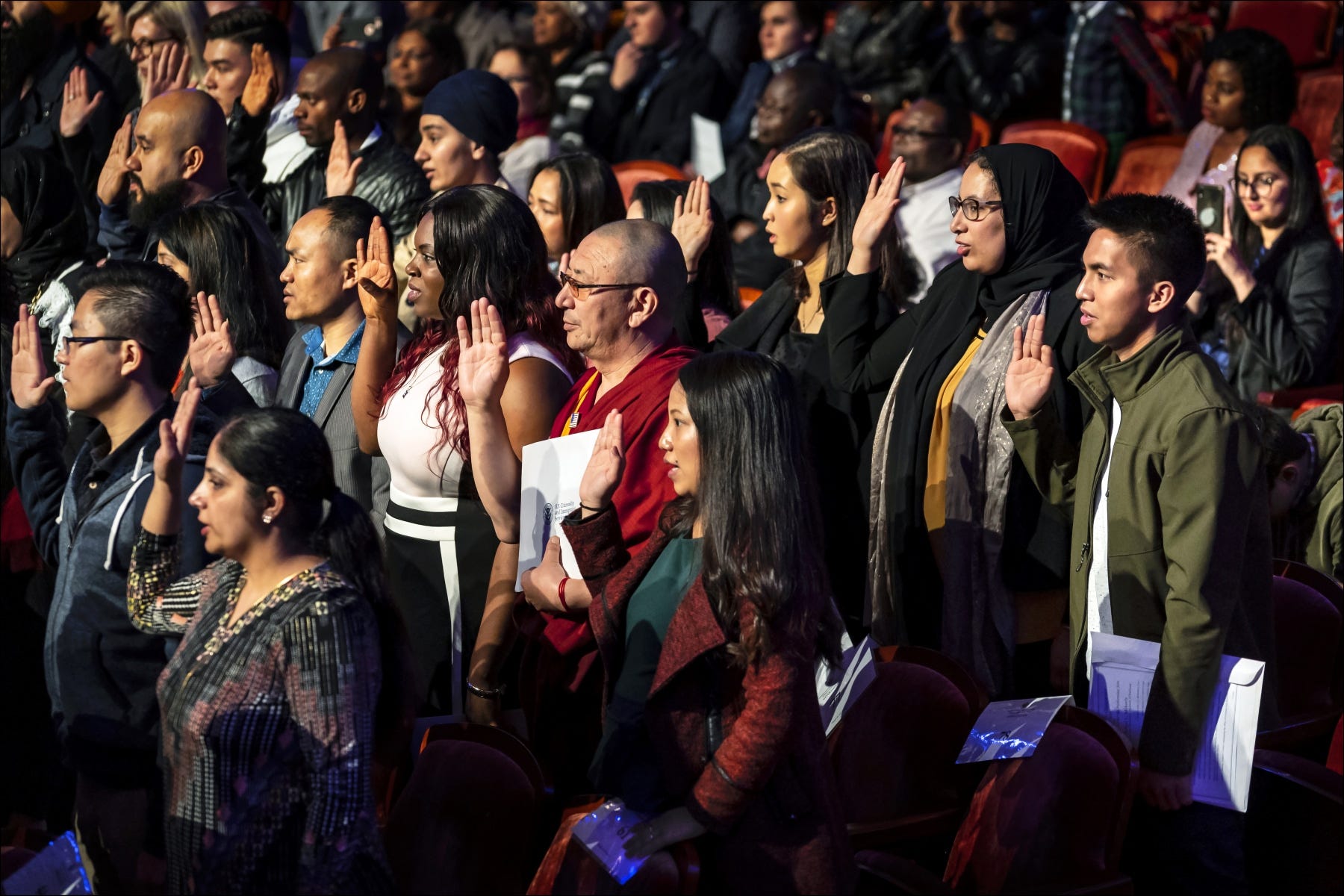
But the truth is that refugees and immigrants are a part of the fabric of life in Indianapolis and in Indiana as a whole. 6.3% of Indiana residents and 12.6% of Marion County (Indianapolis) residents are foreign-born. About 35,000 Burmese people live in Indiana, with about 24,000 of them living in Indianapolis.
As I settled into my new city, I experienced this diversity firsthand. All around the city, I saw Burmese churches, Sikh gurdwaras, and other religious institutions that reflect Indianapolis’ different faiths and immigrant populations. I discovered stores like Saraga International Grocery, where I heard shoppers speaking Haitian Creole, Hindi, and Tagalog. At the International Food Festival, I saw food trucks with fusions of Mexican and Indian cuisines. I attended Lunar New Year festivals and Diwali parties, where I watched performances, sampled new dishes, and met people whose families had come from countries I had never expected to be represented in Indiana. Seeing so many varieties of culture made me realize that these experiences were connected–what I saw was not random examples of diversity but evidence of a much larger story about how the Midwest is home to multifaceted communities with immigrants and refugees from around the world.
Over time, I also learned how Burmese people in particular are important to Indiana. In Indianapolis, Burmese Americans work in essential industries. They care for the sick in local hospitals, educate our children in schools, and labor in warehouses that supply the city with countless essential goods. In other parts of Indiana, Burmese Americans run farms where they grow produce tailored to Asian American communities and provide tours and tastings as cultural education for the non-immigrant population. Others run grocery stores that stock specialty ingredients from Asian countries, providing valuable resources for all Hoosiers, not just Burmese ones. They have built places of worship, established community centers, and created spaces where both newcomers and longtime Hoosiers can connect. These businesses and workplaces illustrate that the Burmese community is not an enclave; it is deeply woven into Indiana’s cultural, economic, and social fabric. The story of Indiana cannot be told without acknowledging the Burmese and other refugees and immigrants who call this state home. The heartland is not a place untouched by immigration; it is a place that has been continually shaped by it.
… the Burmese community is not an enclave; it is deeply woven into Indiana’s cultural, economic, and social fabric.
Finding a thriving Burmese community in Indianapolis forced me to rethink my assumptions about Indiana and what it means to be American. Getting to know “Chindianapolis” revealed to me some important truths. Contrary to the typical portrayal of the Midwest, refugees are very much in the heart of our country. Even more, in a country that claims to welcome the poor and downtrodden, refugees are the heart of our country.

Beata Borja-Westin is a graduating high school senior. Trained to be a chaplain providing pastoral care to peers, she is an active member of her youth group at the Unitarian Universalist Church of Indianapolis and helps plan youth conferences. In her free time, she loves thinking about ethics, exploring the outdoors, studying languages, and making art.
Thanks for reading Imagine Otherwise! This post is public so feel free to share it.
Comments
Nothing yet. Say the first thing.
Sign in to join the conversation.