

Welcome friends! As we consider whether we should follow every future fundraise by publicly warning everyone of an early-stage venture bubble, we wanted to follow up on last month’s teaser, plus some new, welcome commentary on the current state of venture affairs from some fellow skeptics.
As we alluded to last month, the post-bubble VC liquidity conundrum and the brewing AI bubble (just like the last bubble, but several times bigger and more concentrated) continue to rapidly evolve, so we’ll unpack some of the latest on both.
While we would certainly excuse you all for asking why we don’t just paste a GIF of Mugatu…

Or Winston Churchill (via Gary Oldman)…
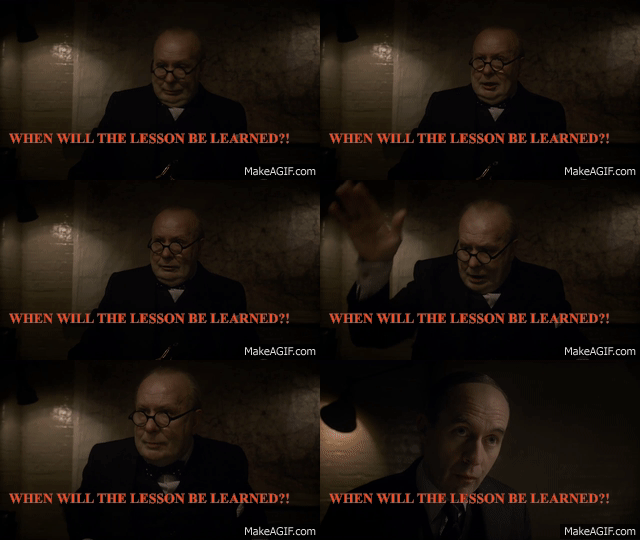
…and call it a day, both the bubble 1.0 fallout and 2.0 inflation continue to be the dominant and most consequential themes in venture these days (by quite a wide margin), and we would feel remiss in not continuing to unpack the latest on both.
Plus, we finally seem to have some compatriots joining us in shouting into the wind, and even the big macro data aggregators are starting to question the validity of the various excuses for the relative lack of venture liquidity, all of which we think deserve some airtime.
Starting with the latest in the ongoing liquidity saga, Pitchbook released a report on the 2025 venture-backed IPO market. The primary takeaways here are:
1) The public and private markets are willing to pay handsomely for mature tech companies. Of the 18 VC-backed IPOs so far this year, 10 were north of $1 billion (averaging $7.3 billion), and there have been a further seventeen $1 billion-plus M&A exits (averaging $4.25 billion)
2) While early-stage VCs are making a killing on these IPOs, VCs investing in the last one to three funding rounds have lost money in all but 2 of them, and even those who invested a round or two earlier are making less than 3x on most of these listings.
3) As staggering as it is to see VCs lose money at all on multibillion-dollar IPOs, the magnitude of some of these losses is even more so. For example, Chime’s June IPO, at $9.8 billion (pre-money), a wildly successful exit by any objective measure, still saw investors in its last private round in 2021 take a 60% loss (that round having priced at $25 billion).
Highlighted by the spate of late-stage VC, multibillion-dollar down-round IPOs (ever think you’d hear that phrase?), this contrast between this obviously strong public demand for mature tech companies and the still very small number of new listings (along with the “bad market” excuse) seems to finally be making its way into the macro commentary.
Per Pitchbook’s 2025 IPO report:
These contrasting narratives are emerging in a market that should be open to high-growth VC-backed IPOs. Aside from a few weeks in April, the market has been relatively stable, while indexes continue reaching new highs. Public market multiples have also increased throughout the year.
That said, they also continue to hedge and/or perpetuate the “bad market conditions” narrative (particularly with respect to the outlook for the rest of 2025 and the dearth of companies in the current IPO queue), with comments like:
Rate cuts would provide a boost by pushing investors into relatively riskier investments
The logic behind this is questionable at best. Yes, lower rates generally drive higher valuation multiples (and, all else being equal, higher overall market values), but we just hit new all-time highs in US indexes a couple days ago, and the S&Ps price-to-earnings ratio (currently around 30x) is at levels only seen at the tail end of the 1999/2000 dotcom bubble and on the way out of recessions (when stock markets recover ahead of earnings). How much better does it need to get?
Actually, that’s not even the right question to ask. In terms of the outlook for the rest of 2025 and beyond, a better question is how much better can it get? And an even better question than that is, how likely is it to get worse? Broad market valuation multiples at these kinds of extremes don’t generally bode well for near-term market returns.
Furthermore, we continue to hear people talk about today’s market relative to 2021 as if 2025 is the outlier. It is not. We are currently at the healthy end of a normal market, and comments like the following just sound divorced from reality. With respect to the significantly higher revenue and profit ratio levels of 2025’s IPO class vs those of the 2021 cohort, Pitchbook says:
This shift indicates increased caution among investors toward risky tech startups and much higher standards for going public.
Comparing any market to one massive outlier year is a fundamentally unsound and, frankly, dangerous way to view things. It’s not that today’s market is exceptionally cautious; rather, it’s that 2021 saw all caution thrown to the wind. Those revenue multiples and public market tolerance for poor profit ratios are not coming back, and the sooner we come to grips with that, the better off we’ll all be.
There is a saying in Wall Street circles that “the first loss is always the best loss”, and it is one that we think the underwater late-stage managers would be wise to heed. As painful as it may be to take a loss today on those ill-considered investments from the 2020/21/22 vintage, it will be considerably more painful if we see a 20%+ market correction. As one VC put it (from an article on the aforementioned Chime IPO):
“You just can’t hold on to those marks forever if that’s not where your business is going,” said Ryan Zauk, a fintech-focused investor at OMERS Ventures, which did not invest in Chime. “If every 2021 private market valuation stayed and nobody went to IPO until they cleared that hurdle, I think we’d be waiting a really long time.”
The fine folks at Euclid Ventures recently published a great look into the rapidly inflating AI bubble, and how groupthink is driving late-stage venture into waters that are somehow more dangerous than those they’ve been stuck in for the past four years.
It’s almost as if, having tried an incredibly high-stakes spray-and-pray strategy four years ago (when Tiger, Andreessen, Insight, and Softbank collectively led or participated in a truly staggering 1,000+ deals in a single year, at an average valuation of $1 billion), they’ve now gone all the way to the other end of the spectrum, with a massive concentration of funding going to a handful of AI companies. Neither strategy is particularly sound when it comes to late-stage tech investing, but at least the former has some basis in why venture has historically been a great asset class.
As Euclid notes, this current, extreme concentration version is a complete departure from anything resembling what has worked so well in the past (and still works for those of us who have stuck to the early-stage, low-priced model):
A competitive round with the best firms bidding is, of course, an incredible indicator of potential—unless the bidding is rigged, because firms only bid as a result of other current or past bids. Many have already embraced the monoculture. If a hot YC batch emerges, if a pedigreed repeat founder raises, if a mega-fund plants its flag, everyone rushes in behind them. Demand dictates perceived quality; perceived quality dictates prices.
Put another way, this is essentially an incredibly high-stakes game of musical chairs, only the participants seem to think that anyone who believes the number of chairs or the music are relevant to the outcome, just don’t get it.
Yet the question remains, what’s the end game here? Are we assuming some fanciful world in which there is suddenly public market demand for $3 trillion IPOs of companies burning billions of dollars a year with no end in sight? Has the endgame even been considered?
Normally, a pyramid scheme is built on deceiving others; this one is built entirely on self-deception. Worse still, this flawed logic that Euclid describes – that getting into the “right” companies is all that matters, including (as several high-profile participants have explicitly said) valuation – is literally the entire reason for the mess we discussed above. Usually, bubbles are separated by decades; somehow, this one is inflating while we’re still squarely in the middle of dealing with the fallout from the last one.
As Euclid notes:
“This time it will be different” is the last bastion of both poor logic and bold showmanship.
We’ve already gone way too long here, and there’s a lot more to discuss on this topic, so we’ll have to save the rest for next month, but we’ll leave you with a parting thought from another VC’s essay, quoted by Euclid (as an example of the self-deceit running rampant in mega-fund circles):
So, if you are a scaled player in a market where the power law is the consensus view, there is really only one rational strategy. And that’s to be a price-insensitive index of any company that has the potential to be a super-outlier and then concentrate capital from there.
“Only one rational strategy”... until next time…

Chris has just returned from the Seed to Growth conference in Sun Valley, Idaho. It’s his first time in that state, and he’s already thinking about future retirement plans.
Capital Eleven and StageDotO know how to put on an event! A great mix of founders, investors, and operators, all in one of the most stunning places you can imagine.
Big thanks to Brian Jorgenson, Mike Self, Travis B. Hawkes, and David K. Gardner for pulling it together. Solid job and top sneaker game! Brian’s emcee skills are on point, and he has a future in standup.
Chris really enjoyed his panel on AI led by Melanie Rubocki and fellow investors and panelists, Jackie DiMonte and Ashok Santhanam.


Big milestone for UptimeHealth this month. They ranked #110 on the 2025 Inc. 5000 list of America’s fastest-growing private companies and came in at #6 in software.
What makes this recognition even sweeter is looking back at where it started: their first-ever dental conference, scrappy booths, and learning the difference between “medical” vs. “dental” equipment. Fast forward less than a decade, and they’re building one of the fastest-scaling platforms in healthcare.
The lesson here for founders? Document the journey. When the big milestones hit, you’ll want to look back and see just how far you’ve come.
Another win for UptimeHealth. They’ve been ranked #31 on F6S’s Top SaaS Companies list for August 2025.
Out of more than 2 million companies on the platform, this recognition highlights their continued focus on bringing innovative, efficient solutions to healthcare practices.

It’s been a busy month for Steelhead Technologies.
At the SUR/FIN 2025 tradeshow, CEO Jeff Halonen joined Products Finishing’s On the Line podcast to share how Steelhead’s ERP + MES platform is transforming coating job shops by:
Taking shops fully paperless
Automating workflows to tackle labor shortages and lead times
Connecting shop floor activity with business systems
Delivering real-time visibility to stay competitive
🎧 Listen to the full episode here
And later this month, the team is gearing up for a major product reveal at Revenue Riptide in Detroit, Sept. 24 at Ford Field. This exclusive launch promises something big for manufacturers looking to stay ahead.

Big month for SendTurtle.
First, they launched SendTurtle Perks, a built-in marketplace that gives founders, consultants, and sales teams exclusive SaaS discounts and a complimentary Perks Pairing service to match companies with the right tools. The marketplace is live inside the app, with select deals available at sendturtle.com/perks.
On top of that, SendTurtle earned an impressive 4.9/5 in recent user ratings, scoring highest for ease of use and secure file sharing enhanced with AI-powered analytics. Users love the quick setup, enterprise-grade compliance, and insights like DeepIQ heatmaps and intent scoring that turn static files into growth-focused intelligence.
As CEO Ian Garrett put it: “We built SendTurtle to take the pain out of sharing sensitive files while giving teams AI-powered intelligence to grow smarter and faster.”
👉 Explore SendTurtle: sendturtle.com
The biggest way you can help us today is by:
Signing up for a free account
Sending one file (so you can see how simple it is)
If you like it, leave a quick review here:
These reviews are incredibly powerful for building credibility and helping us reach new users. Every review counts, and yours would mean a lot.
Thank you for being in our corner - we couldn’t do this without you!

UptimeHealth is teaming up with Gusto, the all-in-one HR and payroll platform, to make life easier for healthcare practices.
The partnership connects two critical parts of running a practice:
UptimeHealth keeps equipment maintained, compliant, and reliable.
Gusto streamlines payroll, HR, and benefits in one modern platform.
For practice managers, this means less time wrestling with spreadsheets, checklists, and vendors — and more time focused on patients and staff. Together, UptimeHealth and Gusto give practices a single solution to keep both their operations and their people running smoothly.
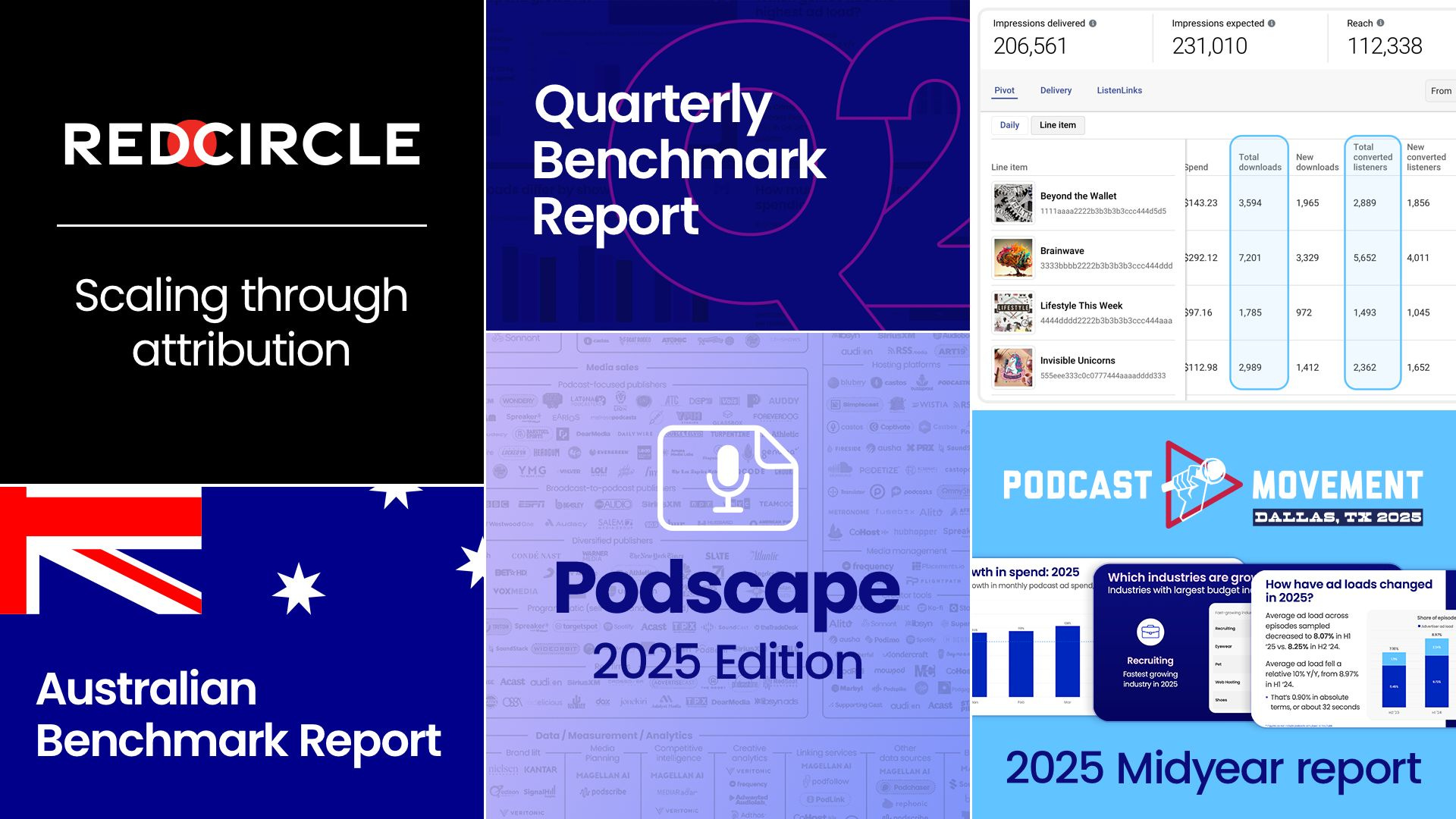
August was a packed month for Magellan AI, with major announcements and insights shaping the podcast advertising landscape:
RedCircle Case Study – How attribution unlocks efficiency + growth
2025 Midyear Review – Highlights presented at Podcast Movement 2025
Podscape 2025 – Updated industry map in collaboration with Sounds Profitable
Quarterly Benchmark Report (Q2 2025) – Key trends in podcast advertising
Australia Benchmark Report (Q2 2025) – First-ever look at Aussie podcast ad trends
Expanded pod-to-pod reporting – Deeper insights into promo influence on new vs. loyal listeners
No posts
Comments
Nothing yet. Say the first thing.
Sign in to join the conversation.