

Welcome friends!
At the risk of going full VC stereotype (i.e., “look how super awesome our companies are!”), we do have a particularly exceptional batch of portfolio news items this month, including Medmo’s merger with AI medical imaging diagnostics company, Covera Health, and a couple of big commercial deals, so it’s worth an additional scroll after the usual VC/startup musings.
While we eagerly await the most anticipated tech-o-sphere announcement of the post-ChatGPT era – Softbank and a16z’s co-led, $250mm-at-$5bn pre-seed round for WeAI…
Just kidding. As much joy as that would bring us (honestly, is there VC/startup headline you’d click faster?), the real event we’re excitedly awaiting is the declassification of SpaceX’s S-1 filing. Safe to say, we haven’t been this curious about a pre-IPO filing in… well, ever (and that was before the Cursor acquisition news).
Given all the moving parts and disparate businesses involved — including not only our first publicly listed space-economy business, but one that is orders of magnitude cooler than anything in an IPO in our lifetimes — this sets up to be a fascinating read. Stay tuned for an unpack here whenever we have access.
But enough preamble, let’s get into what is, in our admittedly biased opinion, venture capital’s latest attempt at self-sabotage — the ongoing war on seed strategies and emerging managers.
The genesis of our deeper dive into this topic was a recent industry event in New York at which the conversations among early-stage VCs was dominated by how far the post-2021 trend of LPs abandoning early-stage and emerging manager funds (while doubling down on late-stage/mega-funds) had gone.
What made this particularly noteworthy for us was that most of this was coming from 15-plus-year, 4-plus-fund managers with excellent track records. They were throwing around some truly extraordinary numbers, including one who suggested that in just the past 2-3 years there were on the order of 2,000 early/emerging managers who had either closed entirely or had at least opted not to continue raising new funds/making new investments.
While we certainly see similar dynamics, we figured that 2,000 closures number was probably a bit hyperbolic, but looking under the hood a bit further, it might even be a bit light.
We’ve covered the high-level data on this in prior macro data unpacks (most recently in our February 2026 newsletter), but to quickly recap, here are the changes in average share of LP dollars from the 2014 – 2021 period to the 2022 – 2025 period:
Emerging managers: 39% to 25% (hitting an all-time low of 20% in 2024)
Sub-$100mm funds: 15% to 11% (10% in 2024)
$1 billion-plus funds: 25% - 41% (49% in 2024)
We’re not looking to be overly alarmist here. This could just be a temporary swoon, and we suppose in the short-run it benefits those of us who aren’t going anywhere (better valuations and whatnot). But the declines have accelerated notably in the past two years, any temporary benefits are more akin to rounding errors than anything meaningful (for us, anyway), and this trend simply isn’t good for anyone (newer startups and VCs at any stage).
As we noted above, the declining share of new early/emerging capital is one thing, but combining that with a notable uptick in already-active VCs throwing in the towel is what could pose a real threat to the whole ecosystem if it continues (particularly at this new, accelerated pace).
A few months ago, a Pitchbook research note cited 574 funds they consider to be “zombie funds”, meaning funds raised in 2018 - 2023 whose managers hadn’t made a new investment from that or a subsequent fund in at least the past two years (so really, “zombie managers”). For context, that 574 number is roughly equivalent to an entire year’s worth of new sub-$100 million funds raised during that 6-year period.
Of course, managers will aways come and go in this space and underperformers will (and should) be replaced by new entrants along the say, but that’s not what’s happening here. In fact, new and “zombie” managers are going in opposite directions.
This same “zombie” number is up 50% from 2021, while first-time fundraises (i.e., new manager entrants) were down 80% over that same time. In fact, the drop in 2025 just from the prior year (which had been the 10-year low) was 57%.
Further to this shrinking pool of early/emerging managers, Pitchbook’s “unique investor” stat (VCs who made at least one investment in a given year) dropped 19% last year, also finding a new decade-plus low.
Even excluding the non-VC tourist types who tend to flood market in booms and then disappear (think Tiger’s 1,000+ funding round cameo in 2020-22), unique investors are in a freefall from 2021’s peak (declining at least 10% every year and 56% overall).
Further to that 2,000 departures number being thrown around, this unique investor number (VC-only segment) dopped by around 2,500 from 2023 to 2025. To be sure, this doesn’t necessarily mean 2,500 managers have completely quit the industry, but it is highly unusual for any VC to go an entire year without making a single investment, so it’s probably at least in the ballpark.
Meanwhile, the late-/mega-fund segment has not only grown substantially in LP funding share, but has become extraordinarily concentrated as well.
In 2024, 50% of new LP money raised went to just nine firms (including 10% to a16z alone), while the top 30 fundraisers took 75% of new LP money. In the first quarter of this year, that same three-quarter share of new venture fund commitments went to just five firms (five!).
This, of course, is happening at the same time as startup funding has concentrated to degree so extreme that there really aren’t superlatives that are superlative enough to describe it. Similarly, this started in 2024 with a then-unthinkable 20% of all startup funding deployed in just 0.05% of rounds, only to see that same 0.05% of rounds absorb 50% of all startup funding in 2025 (roughly $170 billion dollars deployed over eight funding rounds; let that one soak in for a minute)
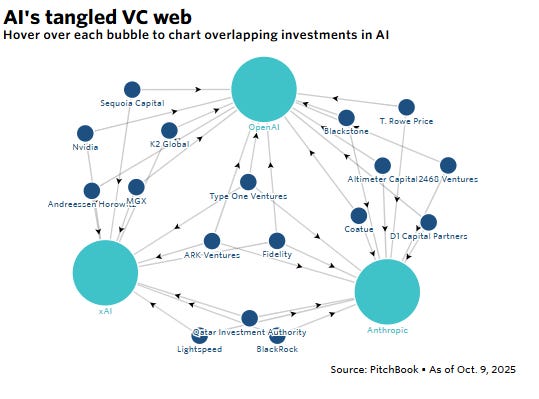
Serious question – at what point do big institutional LPs realize that A) while they think they’re diversifying their late-stage venture risk by splitting that allocation among several different managers, in fact those managers are deploying nearly all of thir capital to the same 8 – 10 companies, and B) LPs are paying 2 and 20 for a straight passtrough to this handful of companies (who, in this particular case, they could probably just go to directly)?
To be clear, VCs having unique access to the best deals is most definitely a real thing, even — in a normal market, anyway — at the absolute latest stages. But in this case? Well, given the extraordinary capital consumption rates of these foundation-layer AI companies, are any of OpenAI, Databricks, Perplexity, even a post-IPO xAI (who’s almost certainly going to raise a PIPE or two… or eight) going to say no to anyone willing to write a check?
The two primary concerns we have with these trends are:
1. The potential threat to venture capital as an institutional asset class.
2. The adverse impact on new startups’ ability to get off the ground, overall quality of the industry’s output, and basic functioning of the (very wide, absolutely crucial) stages in between.
We won’t rehash the performance disaster brewing in late-stage vintages from 2020 onward (throw a couple darts at our Newsletter archive and one of them is bound to hit a discussion of this), but it is worth remembering that the legitimization of venture capital as an institutional asset class is entirely due to the superior returns and unparalleled upside demonstrated back when “venture capital” literally meant Pre-Seed/Seed/Series A strategies.
(Lest you think we’re talking our own book, have a look at this)
So, those who are managing the bulk of the industry’s capital – almost all of whom made their entire reputations doing just that: writing pre-seed/seed checks from sub-$100 million funds – falling on their faces after kicking that model to the curb would definitely not be a good look for any of us. And there are a lot of quotes being thrown around like this one (from a Carta Data Desk report, quoting a long-time, well-respected VC):
“The market has been marked by uncertainty over the past four to five years, with contracting DPI and growing concerns about whether venture capital remains a viable investment strategy.”
That said, we hesistate to take this too seriously for now, as those with these “growing concerns”, A) haven’t stopped investing in venture, and B) have reacted to these concerns by slashing early/emerging manager allocations and doubling down on the same managers who caused the concerns in the first place (a strategy that Matt’s delightfully crass, 1920s-Brooklyn-era grandfather would call “crapping your pants, then changing your shirt”). So, it’s really only upside for us at this point (early/emerging managers and justice).
We wouldn’t put it past anyone in SF to come out tomorrow with a declaration that AI will make VC irrelevant in all ways other than whatever their thing is (and everyone else in SF to be super jealous that they didn’t come up with it first). They probably already have (tweeting it with one hand while using the other to call Series A/B/C friends looking for deals).
In reality, it’s the other way around. Making a case for the existence of Series E/H/K/R/whatever funds takes some serious mental gymnastics and a healthy dose of self-delusional arrogance (the real San Francisco treat; sorry Rice-A-Roni), but absolutely none of this exists without angels, accelerators, or pre-seed/seed funds.
(And you thought we’d get out of here without an 80s pop-culture reference)
We used the qualifier “traditional” for pre-seed/seed funds/rounds above because what has kept the very real decline in funding for eary startups from reflecting in the headline numbers is the growing number of $10 million-plus rounds being slapped with this label (seriously, in what world is a $25/50/100 million raise a pre-seed/seed round?).
In 2015, 0.6% of pre-seed/seed rounds were greater than $10 million, accounting for 7.2% of total pre-seed/seed dollars; last year, they were 10% of the count and 51% of total dollars. Similarly, “pre-seed/seed” rounds greater than $5 million went from 25% of 2015 dollars to 77% last year, all of which has been artificially propping up the headline numbers in recent years.
For example, Pitchbook’s quarterly Venture Monitor shows a pre-seed/seed share of total funding roughly the same today as in 2015; however, if you look just at each year’s rounds of $5 million or smaller, 2025’s pre-seed/seed share of total funding is half that of 2015 (and the lowest of the decade by a mile).
Not quite. There are still huge numbers of new, innovative companies finding the early-stage capital they need to get off the ground and start to scale, so we’re not suggesting the sky is falling. But the change in the past two years from slow decline to steep drop is not something to dismiss either.
If this turns out to be a statistical blip and there’s a mean reversion right around the corner, great, forget we said anything. But if it isn’t, and we stay on this far more accelerated trajectory, things are going to get ugly a lot quicker than we think people appreciate.

Chris shares his thoughts on why founders should not treat direct sales as the only path to growth. While direct sales is the default for most startups, it is often slow and expensive to scale. For the right company, channel partnerships can help accelerate revenue by expanding distribution, lowering CAC, adding credibility, and opening doors to larger or international markets. The takeaway: channel is not easier, but in a tougher efficiency environment, a mix of direct and partner-led sales may be the smarter approach.

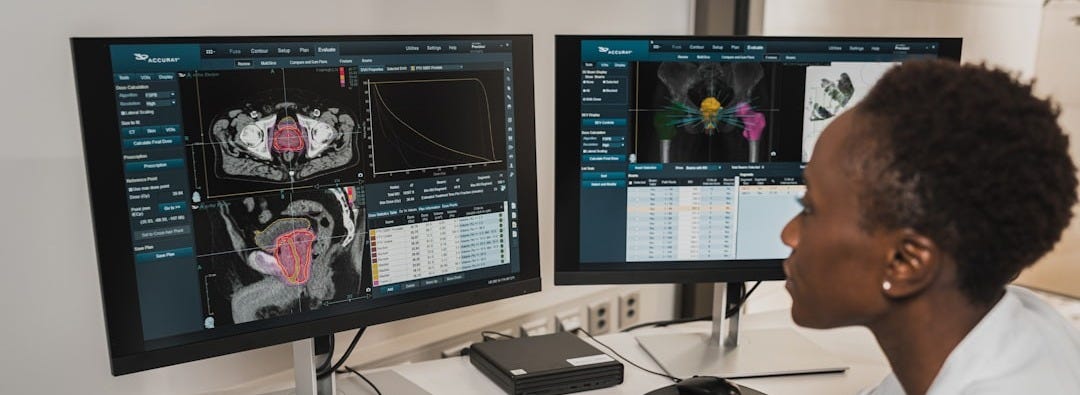
Covera Health and Medmo have joined forces to create what they describe as the first platform to manage the full radiology journey—from imaging order and scheduling through study completion, diagnostic accuracy, and follow-up care. The combined company now reaches nearly 6 million Americans and brings together Covera’s radiology quality and diagnostic accuracy infrastructure with Medmo’s imaging coordination and patient navigation platform. The goal is to close a long-standing gap in healthcare by improving both where patients get imaging and how those results connect back to the care teams making treatment decisions.

Magellan AI closed out March with a strong run of product launches, partnerships, and industry visibility. Highlights included new broadcast radio attribution capabilities, a Nielsen DMA integration for standardized market-level measurement, and a partnership with YMH Studios to offer full campaign attribution across audio, streaming, and YouTube. The team also stayed active on the conference circuit, with Cameron Hendrix speaking at SXSW and Advertising Week Europe on how measurement is shaping buying decisions and defining success in audio.
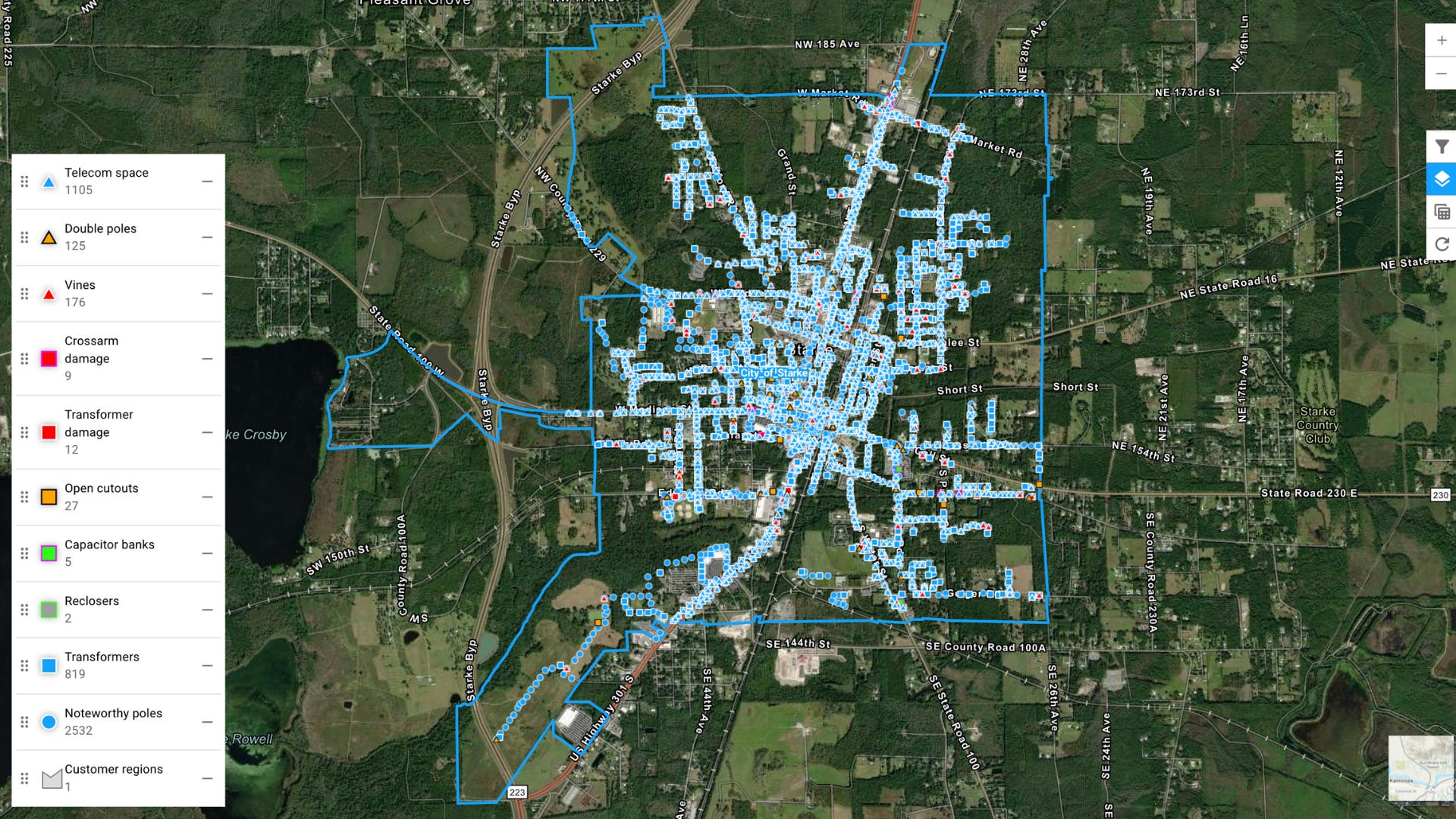
The City of Starke, Florida, proved that even a small municipal utility can make major operational gains with the right technology. By implementing ArcGIS Online and partnering with Noteworthy AI, the city moved from paper maps and institutional knowledge to a fully digital view of its grid. In just two days, the project captured data on more than 2,300 utility poles, delivered actionable insights on assets and defects, and cost 80 percent less than traditional inspection methods—giving the utility better tools for planning, maintenance, storm response, and revenue recovery.

Noteworthy AI has partnered with American Municipal Power to make its AI-powered grid inspection platform available to more than 130 municipal utilities through a streamlined subscription program. The offering gives AMP members flexible ways to access vehicle-mounted camera systems, data collection services, and analytics tools for asset inspections, GIS updates, vegetation management, lighting audits, storm response, and pole attachment revenue recovery. The partnership is aimed at helping smaller public power utilities adopt advanced inspection technology that has often been out of reach.\

Rigorous Technology founders Diane Abruzzini and Colin Riggs have been named Vermont’s Small Business Persons of the Year by the SBA, recognizing the company’s growth and economic impact in the state. Since launching Rigorous in 2020 as a home-based industrial robotics business, they have expanded to a 12-person team operating across 10,000 square feet in Williston. The pair will be honored during National Small Business Week and are also in the running for the National Small Business Person of the Year award.
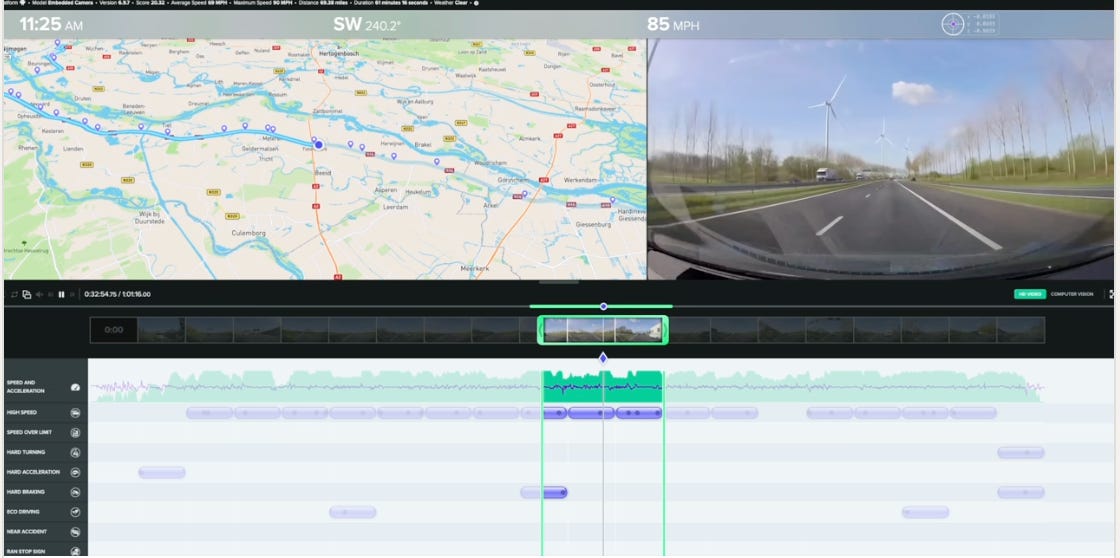
Driver has launched its app with live camera access inside vehicles through AAOS, enabling embedded dashcam functionality without any additional hardware. By tapping directly into a vehicle’s native camera system, the company is showing how OEMs can offer a lower-friction safety feature that also creates a new revenue opportunity. The announcement positions this as a scalable software layer for AAOS-enabled automakers looking to add value through security, safety, and peace of mind.

Tarform has completed the first pre-production prototype of Vera, marking an important step toward bringing its next electric motorcycle to market. While Tarform’s first bike, Luna, was designed as a handcrafted, art-forward machine, Vera reflects a shift toward a lighter, simpler, and more practical motorcycle for everyday use—without losing the design soul that defines the brand. With the first 20 now in production, Tarform is moving from vision to real-world delivery.

Tom Yeshurun discusses how data center construction is changing the industry's thinking about project value, with time increasingly outweighing upfront cost as the most important variable. Because data centers can generate meaningful revenue as soon as they go live, delays carry far greater financial consequences than in many other sectors. The piece makes the case that better cross-functional communication, deeper developer involvement, and faster adoption of robotics and automation can help reduce bottlenecks and protect project timelines. More broadly, it suggests the rest of construction may soon need to follow the same logic: treat time as a core economic driver, not a neutral factor.

Digital Iron has launched a new website highlighting its AI-powered platform for heavy machinery dealers and OEMs. The platform is designed to help teams troubleshoot faster, find the right parts, quote jobs more accurately, and turn fragmented service and machine data into actionable aftersales intelligence. Worth a visit for anyone following how AI is being applied in industrial service workflows.

Paladin founder Kristen Sonday shared a heartfelt reflection after the premiere of How to Change the World, a new docuseries spotlighting social entrepreneurs. The episode follows Paladin’s journey from its early beginnings to a real pro bono case taken on by Dentons and Cabrini Green Legal Aid, bringing the company’s mission to life on screen in front of nearly 200 supporters. With more than 55,000 pro bono connections made to date, Paladin continues to expand access to justice by helping legal teams connect with meaningful pro bono opportunities. We’re proud to support Kristen and the Paladin team as they keep doing the hard, important work of turning good intentions into real-world impact.

Civ Robotics is actively hiring as it continues building automation technology for the construction industry. Current openings span engineering, sales, operations, marketing, and field roles, including positions like Robotics Software Developer, Staff Robotics Engineer, Account Executive, Sales Engineer, Marketing Manager, and Construction Technology Field Specialist. It is a good time to check out the careers page if you are interested in joining a construction robotics company addressing labor and productivity challenges in the field.
E-den is hiring a Customer Success Manager, Implementation & Growth.
No posts
Comments
Nothing yet. Say the first thing.
Sign in to join the conversation.