
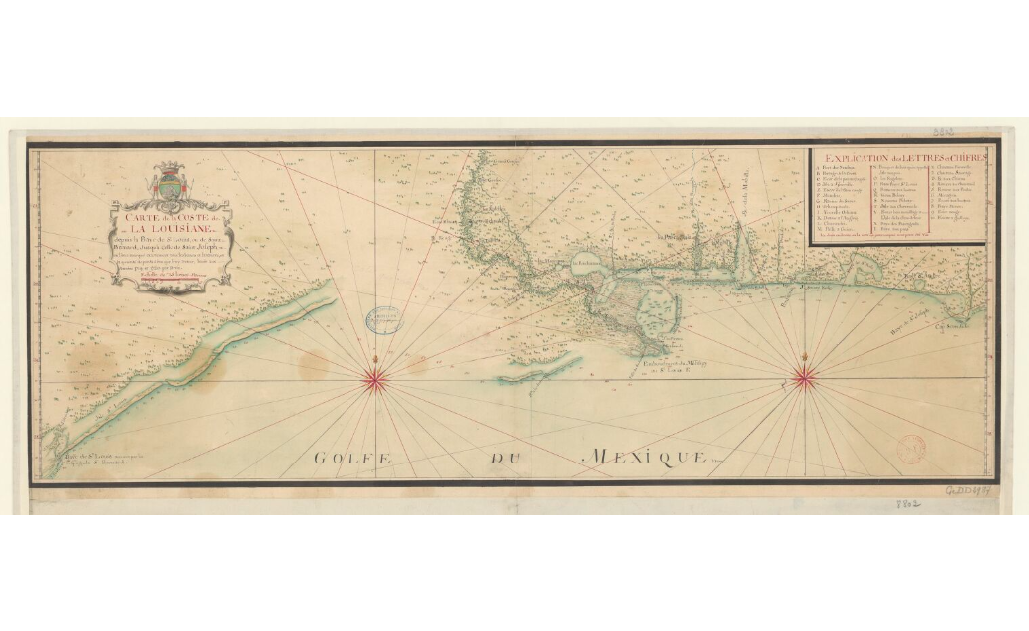
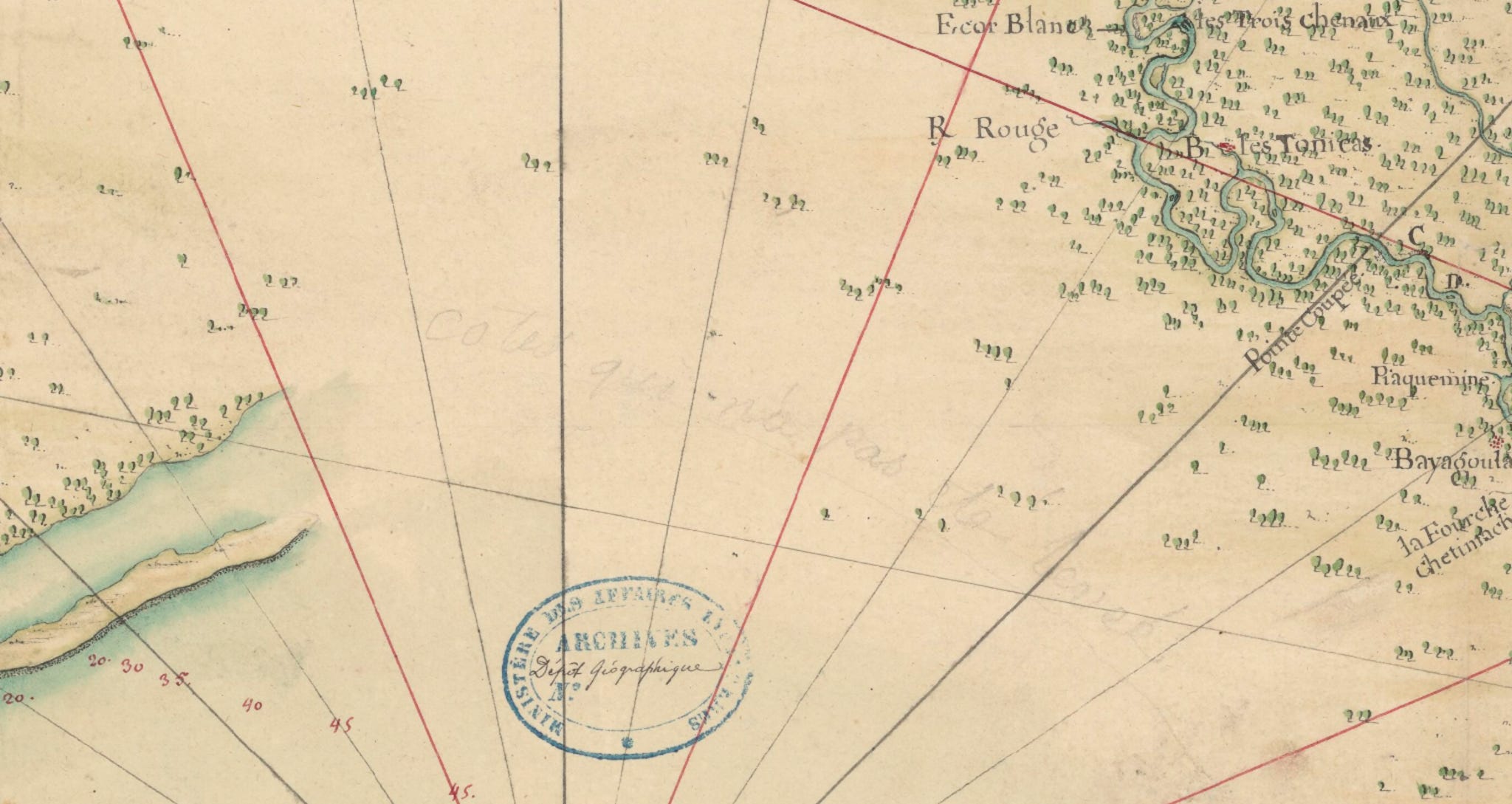
In some of the eighteenth-century French maps Adrian Anagnost has been studying, the land simply gives up.
The ink trails off. A coastline dissolves into blank paper. Marshland is rendered as a wash of watercolor, then nothing at all. In the margins, the cartographer sometimes confesses uncertainty: we haven’t really measured this yet.
Thanks for reading ByWater’s Substack! Subscribe for free to receive new posts and support my work.
For an art historian trained to read architecture, urban plans, and spatial form as carefully as one would read the brush strokes of a painter, those moments of breakdown are illuminating. Maps, like buildings, are attempts to fix space, to stabilize terrain, to define boundaries, to make the fluid legible. But along the Gulf Coast, the conventions often fail.
“The map drawings would kind of stop and fuzz off,” Anagnost says.
The fuzziness of those maps, the uncertain boundary where land ends and water begins, mirrors the intellectual space her career and ByWater Institute Fellowship project inhabits: between art history and ecology, between architecture and terrain, between the built environment and the bodies that move through it.
Between River and Ocean
Long before she arrived in New Orleans, Anagnost grew up in a place shaped by water.
“I grew up in coastal North Carolina,” she recalls. “The town I grew up in is kind of on a peninsula between the river and the ocean. There’s a lot of marshlands. As you go through the city you’re always crossing some creeks.”
Like Louisiana, it was a region defined by hurricanes, low-lying terrain, and the quiet awareness that the grid of streets rests atop something older and less stable.
“There’s the grid, the culdesac of the city,” she says, “and then there’s this topography underlying all of it.”
The consciousness of infrastructure layered over marsh and of movement interrupted by water stayed with her. It would later shape the questions she asked as an art historian.
Anagnost did not begin in art history. As an undergraduate at Oberlin College, she studied chemistry alongside art history, initially imagining a path in conservation. But the laboratory never quite fit. Art history did.
“When I first started taking classes I was more interested in performance, bodies and space,” she says.
What drew her in was curiosity about the way bodies move through built environments.
“We all have bodies. As we move through spaces you perceive how you are perceived and how the shape of the space around you makes you feel,” she explains.
The interest in how architecture and terrain shape embodied experience became the through-line of her scholarship. Art history, then, became a tool for accessing the politics embedded in space.
Brazil, Modernism, and Political Space
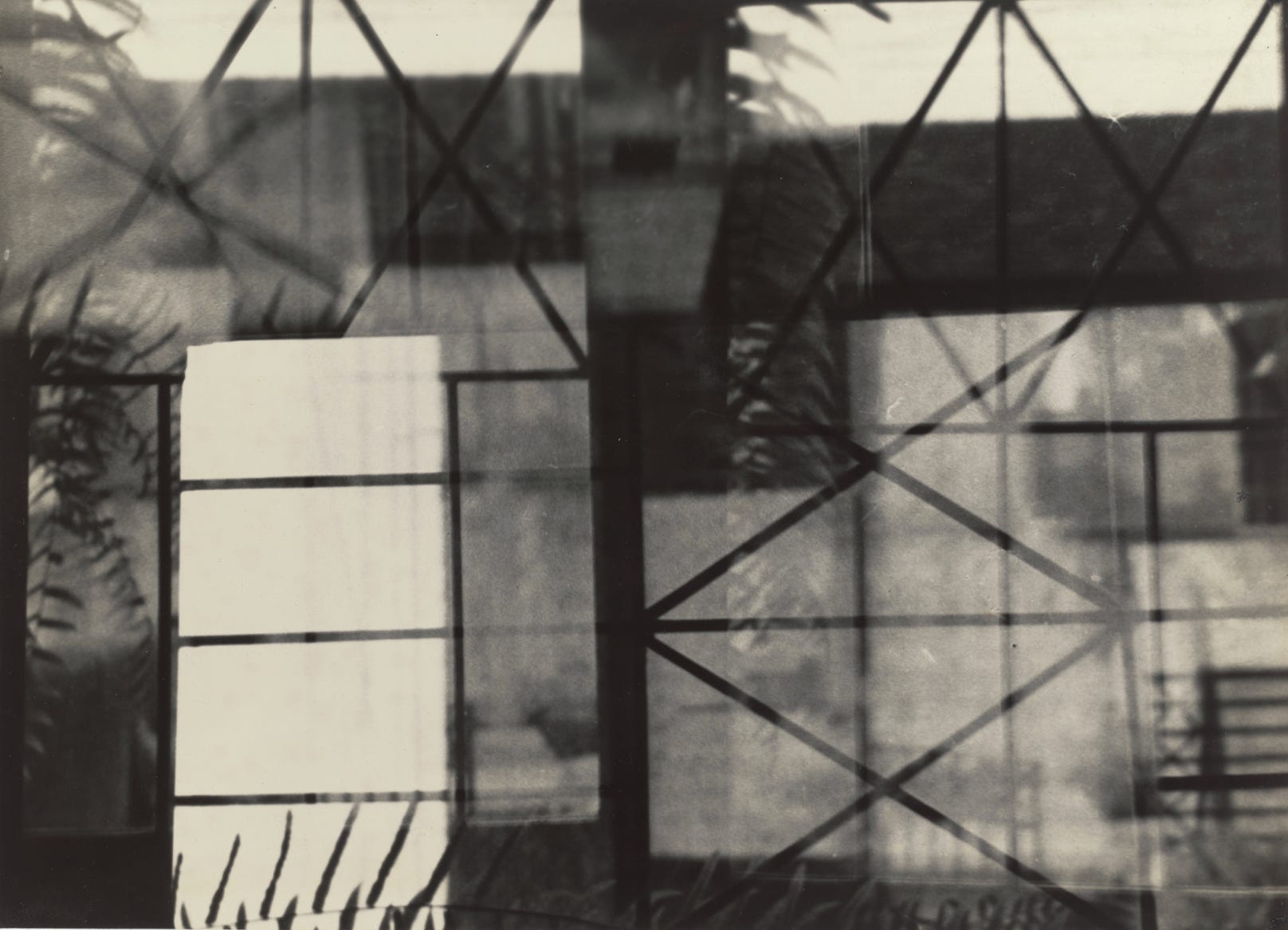
Anagnost’s doctoral work at the University of Chicago took her to Brazil. She began with photography, drawn to abstraction’s seemingly placeless quality.
“Abstract photography is kind of placeless-seeming,” she notes, “although, at the same time, not.”
Studying the Brazilian photographer Geraldo de Barros led her into archives that opened a window into the cities and the urban fabric of twentieth-century Brazil. That work eventually became her first book, Spatial Orders, Social Forms: Art and the City in Modern Brazil, published by Yale University Press in 2022.
Rather than writing a straightforward political history of art under authoritarian regimes, Anagnost asked subtler questions. How did artists and architects shape and respond to the experience of public and private space? How did bodies move through plazas, galleries, and streets? Where were people permitted to go?
West Africa and the Atlantic
A grant proposal shifted her trajectory. After receiving funding to study “global” organic architecture, a reviewer pointed out that her global frame still felt narrow, still Western.
“To say that I’m studying Brazil without taking into account African diasporic practices seemed remiss,” she reflects.
She began researching architecture in West Africa, tracing the material and spatial legacies of enslaved people forced to Brazil. That work expanded her focus from modernist buildings to vernacular architectures, structures built with local materials, through inherited techniques, often outside formal state patronage or heroic male auters.
In studying these traditions, she became increasingly attentive to architecture as adaptation rather than imposition. Raised houses designed for ventilation and flood resilience, building practices shaped by climate and inherited knowledge, forms that migrated across the Atlantic through diaspora, all suggested a different relationship to terrain. Climate, in these traditions, was not an obstacle to conquer but a condition to live within.
The triangulation between Brazil, West Africa, and eventually Louisiana developed her scholarship further. It also drew her toward the Gulf South, where the histories of empire, enslavement, and displacement are inscribed not only in archives but in terrain.
At Tulane, where she serves as Associate Professor in the Newcomb Art Department and is affiliated with the Stone Center for Latin American Studies,
Anagnost’s current book project examines what she calls the “spatialization of race” in Louisiana’s coastal and riparian landscapes. The phrase, abstract in sound, is concrete in practice.
“It has to do both with forcing people to stay in one place,” she explains, referencing enslavement and the policing of mobility on plantations. “But it also has to do with displacement.”
Who was allowed to occupy high ground safe from flooding? Who was relegated to vulnerable terrain? How did levees, forts, and hydraulic infrastructure shape racialized patterns of settlement?
The history of redlining in the twentieth century is one example. But Anagnost traces the logic further back, into colonial land regimes and imperial mapping practices. There’s nothing new about spatial inequality, in fact, she argues, it is foundational.
ByWater Fellowship and Touching Dirt
In 2025, Anagnost and colleague Leslie Geddes were awarded a National Endowment for the Humanities Landmarks grant to host visiting faculty and graduate students in Louisiana for intensive place-based study of climate-imperiled cultural sites.
The program would have brought participants to African American graveyards threatened by petrochemical expansion, to Indigenous mound sites, to Vietnamese American fishing communities, connecting climate change to cultural heritage.
The grant was cancelled amid federal funding cuts.
“The grant was really about outward-facing — bringing people to the region and saying, look at all the exciting stuff that’s going on here,” Anagnost says. Now, the work continues in a different form.
Supported by the ByWater Institute, she is developing a cross-listed course, Art, Ecology, and Cultural Heritage in Coastal Louisiana, alongside public events and research in European colonial archives. The course builds on years of place-based teaching, including her TIDES seminar, where first-year students learn to read the city through its plants, its waterways, and its contested sites. Anagnost has been teaching several versions of the seminar since 2020. For the fall 2026, she is collaborating with Heather Veneziano in Preservation as part of a Center on Climate Change and Urbanism (CCU)-supported project
Embedded into the course, is Anagnost’s pedagogical philosophy - the classroom does not end at the door. She insists on contact with soil, with water, with uneven ground. She reflects on the time when her students visited Chalmette Battlefield and she watched their understanding shift.
“They kept bringing it up in class the rest of the semester,” she says.
Seeing the river’s scale, smelling it, noticing the absent slave cabins, these sensory encounters made history tangible, leading to a deeper understanding.
Living in the Fuzziness
In the coming years, she hopes to complete her book manuscript and develop a digital mapping initiative that reinterprets historic and contemporary coastal landmarks through the lens of environmental studies and art history. When asked what success would look like to her, Anagnost gives a predictable, but no less inspiring answer.
“I’m not super outcomes-driven,” she admits. “I’m more process-driven.”
Success, for her, means learning alongside students and colleagues. It means becoming, as she puts it, “a respectful inhabitant of this region… a good steward and good citizen and good neighbor.”
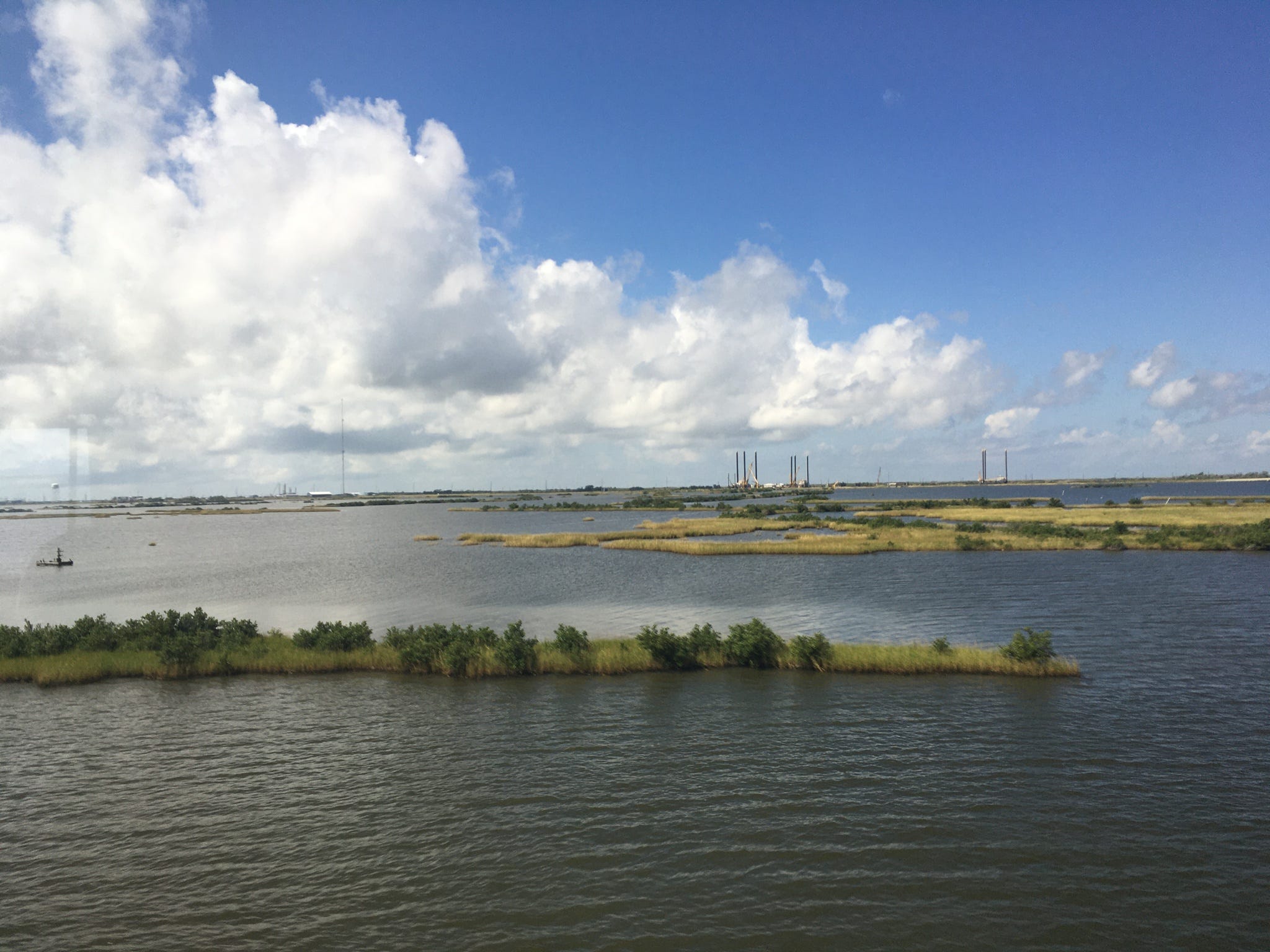
Like the colonial maps she studies, Louisiana resists clean lines. Marsh shifts. Levees fail. Histories overlap. In the fuzziness where ink thins and water seeps through, Anagnost discovers both her subject and her method: to look closely, to move carefully, and to remain attentive to the spaces where certainty dissolves.
Thanks for reading ByWater’s Substack! Subscribe for free to receive new posts and support my work.
Comments
Nothing yet. Say the first thing.
Sign in to join the conversation.