
A recent Tulane-led perspective article in Nature Sustainability has sparked major headlines about the future of South Louisiana. In this response, ByWater researcher Joshua Lewis argues for taking the risks seriously without treating the region’s future as already decided.
A recent perspective article in Nature Sustainability led by two of my colleagues at Tulane University has generated extensive local and national media coverage and sparked debate about the future of coastal Louisiana in the face of rising seas. The piece draws on scientific data and presents important new observations, but it differs from what most people think of as a comprehensive scientific study. According to the journal, perspective articles are intended to provide a forum for authors to discuss ideas from a personal viewpoint. They may be opinionated, speculative, or even provocative while remaining grounded in research and evidence. This distinction is not meant to diminish the validity of the scientific observations of the paper. There is useful information in it and I appreciate my colleagues efforts in developing it. It is simply important to recognize that the article is, by design, a science-informed set of assessments and arguments meant to seed discussion, engagement, and debate. The authors have surely succeeded in that regard.
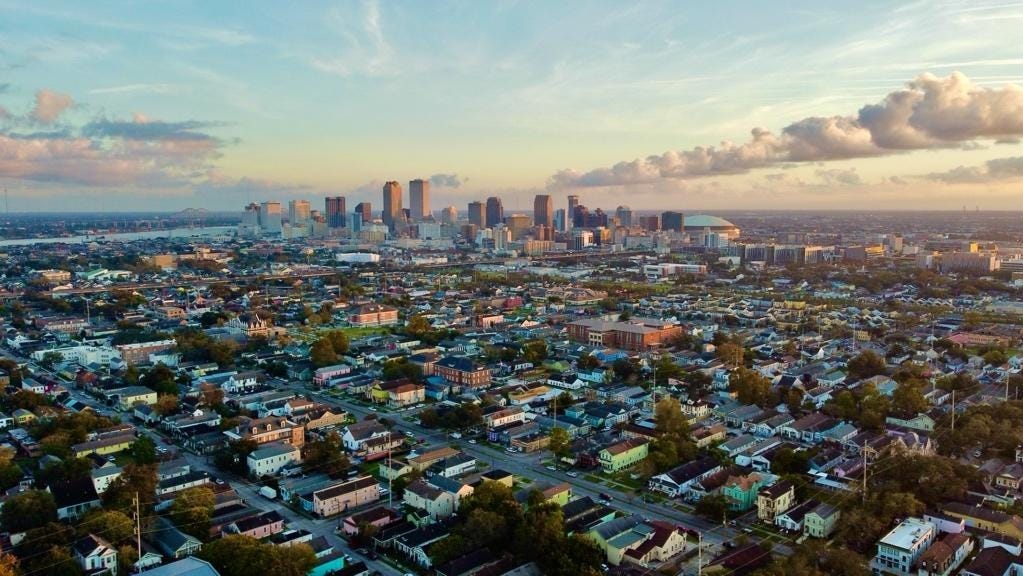
The article’s basic observation—that South Louisiana has been underwater in the past and will likely be again at some point in the future—is difficult to dispute. This would be true even without human-caused climate change. The more provocative argument is that climate change and sea level rise now pose such an immediate threat that residents, governments, and institutions should begin planning for the “managed relocation” of several million people and trillions of dollars of infrastructure out of coastal Louisiana.
That argument has appeared even more forcefully in subsequent media coverage, with some outlets suggesting the authors believe relocation should begin immediately and that the region has decades—not centuries—to implement such a transition. Some of these stories clearly mischaracterize both the article’s arguments and the authors’ public remarks. Even so, one author compared coastal Louisiana to a “terminal patient” requiring only palliative care in comments to The Guardian.
So where does that leave us? It is possible to concede that eventually much of coastal Louisiana will become open water, while recognizing the broad uncertainty around the timing of that process, and the possibility that adaptation measures may meaningfully affect that timeline. The paper itself does not provide a timeframe for when sea level rise would make remaining in the region untenable. The maps used in the paper illustrate scenarios involving 3 meters (9.8 ft) and 7 meters (22.9 ft) of sea level rise. I agree that if either scenario developed rapidly over the next few decades, it would constitute an existential emergency not only for Louisiana but for billions of people worldwide. However, based on the scenarios in the Intergovernmental Panel on Climate Change (IPCC) Sixth Assessment Report (2023) that currently best track actual observations, sea level rise of 3m could be reached sometime between roughly 2160 and 2275. Projections beyond 2150 are low confidence and remain highly uncertain largely due to poorly understood ice-loss processes in Greenland and Antarctica. Using the median expectations for the same scenarios mentioned above, by 2150 we could see between 1.5 and 2.7 meters of sea level rise. These projections may increase in upcoming analyses given present warming trends, and as the authors point out, the deltaic plain is gradually sinking, so our rate of relative sea level rise will indeed exceed global averages.
The arguments the paper puts forward about sea level rise, subsidence, and coastal loss should therefore not be ignored. Even a few feet of sea level rise combined with subsidence and storm impacts over the next century would dramatically reshape coastal Louisiana and force some communities to consider alternatives to remaining in place. Near-term changes will also place growing pressure even on communities with robust levee systems like New Orleans. But the authors take a leap in their analysis that to me carries a lot of unstated assumptions and seems to suggest (or at least it has led many readers to conclude) that the region only has one option: abandon ship, and soon. But wholesale “managed relocation” is only one possible response among many that deserve consideration for the time being. In the New Orleans metro area, we cannot dismiss the possibility of future large-scale relocation, but neither should we treat it as the sole – or even primary – focus of our efforts today.
We do need to devise and deliver large-scale engineering projects – whether it be new levees, sediment placement and land reclamation through dredging, or nature-based approaches such as sediment diversions. A critical task for us today is to demonstrate the effectiveness of existing interventions, work through the political disputes constraining implementation, and make big projects cheaper to pursue. We should also support exploratory research into new technologies and ideas that may create opportunities we have not yet imagined. It is in those areas where I see the region becoming a leader and exporter of expertise – indeed it already is. What we truly cannot afford is inaction. If we intend to remain here for generations to come, that requires decisively reconfiguring our relationship with water and building ambitious projects that improve our odds of long-term survival. This is complex, high stakes work that will involve difficult trade-offs and occasional failures.
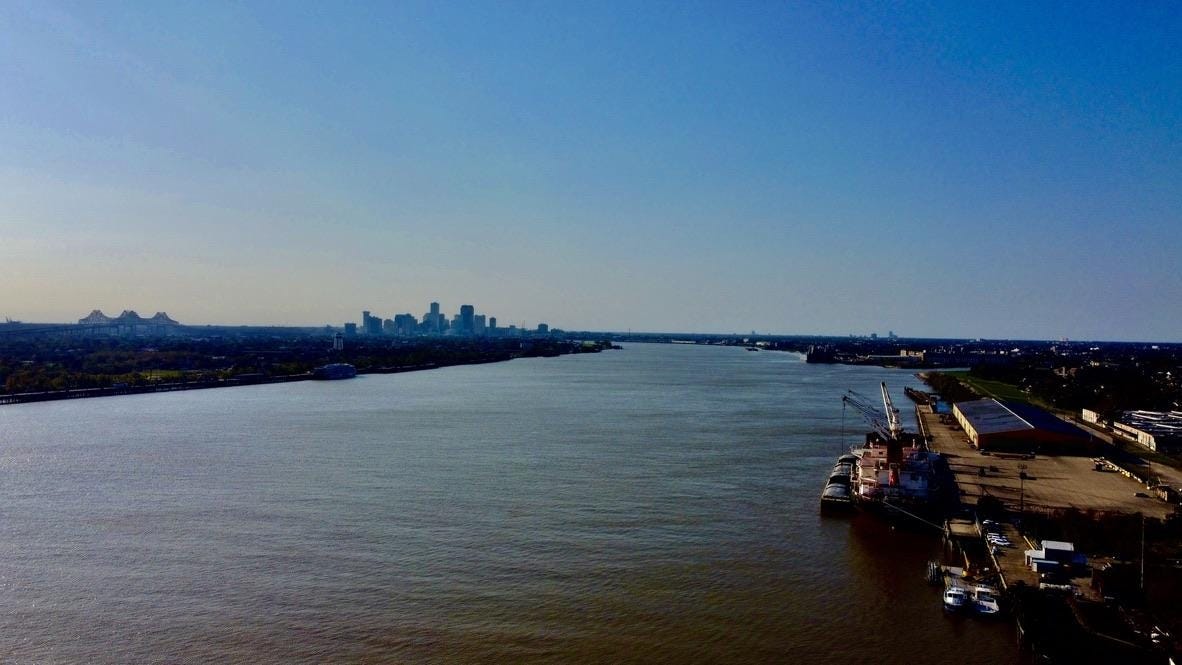
Existing engineering methods and the current political climate would seem to limit our prospects for bold adaptation measures. But our politics and technical capabilities, like our climate, aren’t static. Nor do they exist in isolation. Hundreds of millions of people live in river deltas worldwide and face similar dilemmas. The article’s authors point to the cancellation of the Mid-Barataria and Mid-Breton sediment diversions as evidence of the region’s worsening predicament. I am not convinced that river diversions are gone forever, nor that projects of that scale would have bought the region dramatically more time on their own. Political winds shift. Events can generate unexpected political consensus around new ideas — or reanimate old ideas that once seemed dead. Breakthroughs can still happen. Our political system and engineering practices will undoubtedly undergo significant changes over the coming century, just as they did over the last one. The future is written in mud rather than stone.
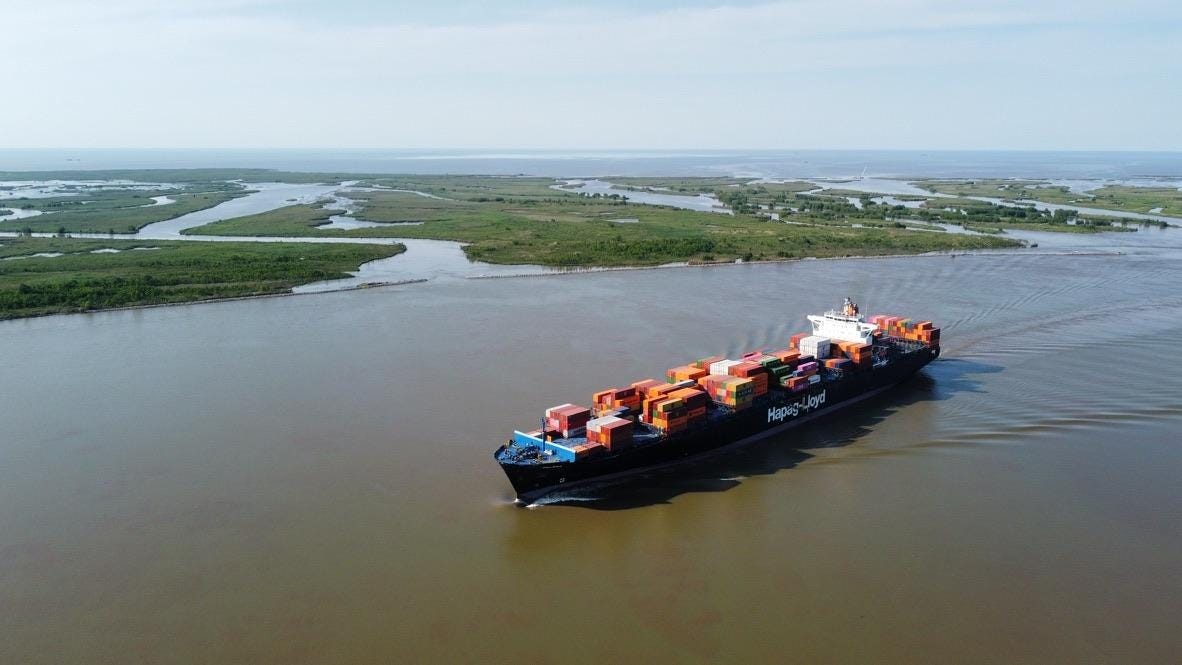
One final point: we should not underestimate the economic importance of the ports, waterways, and industries concentrated in our region. Global energy and food systems depend heavily on these sectors continuing to function. In my view, relocating this vast network of infrastructure elsewhere is unlikely to become practical anytime soon. When the federal government committed unprecedented resources to rebuild the region’s flood defenses after Hurricane Katrina, it did so not simply out of charity, but because of the immense economic assets embedded here. It was money well spent. We should better leverage our economic connectivity to support an ambitious adaptation agenda.
There are benefits to speaking more openly about the risks we face and the choices before us. The recent perspective article contributes meaningfully to that conversation and I thank my colleagues for offering their perspective. But it is only one provocative viewpoint on a very complicated set of issues. We can listen carefully, but we are not obligated to accept overly deterministic or black-and-white portrayals of the future, particularly those amplified or distorted through media coverage. We can choose to see coastal Louisiana as a “terminal patient,” or we can instead focus on unlocking transformative pathways forward. In my work, I see people doing exactly that every day. New Orleans and coastal Louisiana may not be here forever, but we still have room to maneuver if we rise to the occasion.
Josh Lewis is Schwartz Professor of River & Coastal Studies at the Tulane Bywater Institute for Climate Adaptation, and Professor of Practice in Urban Ecology at the Tulane School of Architecture and Built Environment. He has worked on infrastructure planning and environmental management issues in coastal Louisiana for 20 years.
Comments
Nothing yet. Say the first thing.
Sign in to join the conversation.