
“At the Table” is a series of interviews and spotlight conversations with people I admire from within and outside of the wedding industry. These conversations focus on topics related to building an intentional, relationship-first business alongside a present, connected, values-driven personal life.
This Substack is reader-supported. If you enjoy my work (or want to support future work), consider becoming a free or paid subscriber.
Introduction:
I met Garrett shortly after I moved to South Carolina from DC and he moved to Tennessee from California. We were on separate roadtrips across the South, acquainting ourselves with our new market regions, and found a way for our paths to intersect at a coffee shop. We discovered so much shared joy in our work, overlapping value systems, and alignment in the ways we serve our clients! We have since attended several of the same Engage Summits, and every time I see him I’m struck by the joyful humility he embodies in everything he does. I’m so excited to share his words with you today!
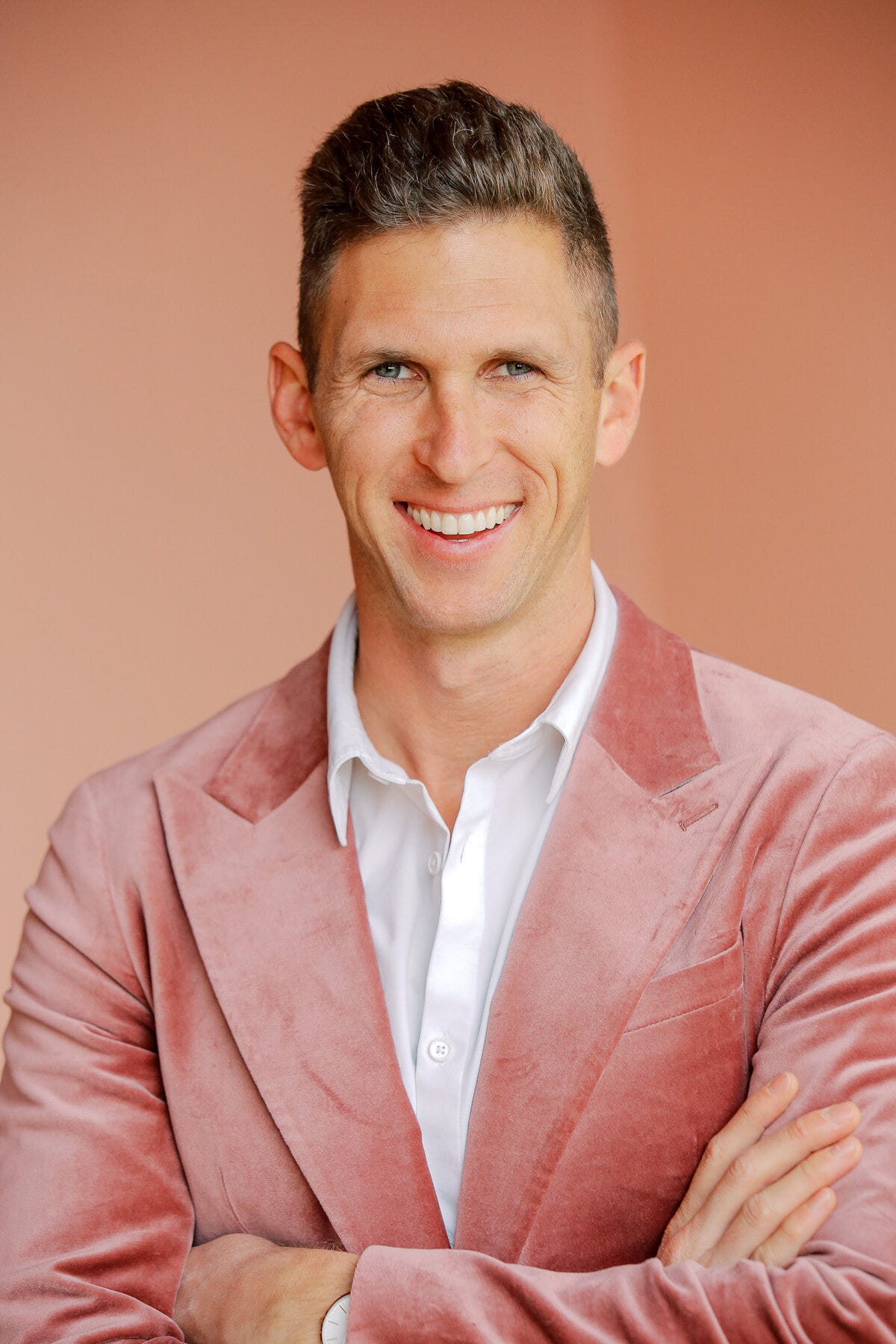
Follow Garrett via his website and IG.
THE INTERVIEW
→ First of all, tell me in your own words what you do for work, and why you do it?
I’m a destination wedding photographer based in Nashville, Tennessee, originally from California. I do this work because I love helping people remember who they are, understand their story, and preserve it in a way they can pass down for generations.
What draws me in is the access we’re given to some of the most intimate and meaningful moments in people’s lives, moments no one else will ever witness in the same way. That access is not just because of a camera. It is because of who we are and what we bring into the space. It is such a gift, and honestly, I think it is often overlooked in the wedding industry, where the focus can become about getting the best photos or curating a perfect portfolio. For me, it is something deeper.
When I step into a wedding day, I see it as sacred. There is a weight and a beauty to it that goes far beyond the surface. It is about recognizing the purpose in that day and truly seeing people for who they are, who God made them to be, and calling that out in them. I want to remind them, in real time, how meaningful this moment is.
Because later, when life gets hard (and it does), they will have something to look back on. Maybe it is a tough season in their marriage, young kids, a messy house, or something unexpected. They can look at those photos and say, “This is who we are.” The joy they felt that day is not just for that day. It is something they can return to, something that helps them reconnect and remember why they chose each other in the first place.
That is why I do what I do. I honestly see my role as more pastoral than artistic. Of course I am creating, but more than that, I am shepherding people and helping them remember who they are and why they are there.
→ What does a typical day look like for you?
It really looks different every day, but my days almost always start the same way. I get my kids fed, help them get ready, and then my wife and I head to the gym together with them. It’s something we do as a family, which I really value.
After that, we come home and shift into our routine. During the school year my kids are in a homeschool program two days a week, and those are the days when I focus on deep work. That might look like editing, recording podcasts, or having conversations like this. It’s the kind of work that requires my full attention and creative energy.
On the other days, my wife homeschools them, and my role looks a little different. I’m more available and present, but I use that time to handle tasks that don’t require as much mental bandwidth. It’s a nice balance that lets me stay connected to both my work and my family.
Weekends are usually one of two things. I’m either traveling to photograph weddings in beautiful places, or I’m at the ball field with my kids. My son and I especially bond over baseball. He’s six, which feels like the perfect age for it, and we spend a lot of time talking about the game or just being out there together. It’s been really special.
→ In her book Dare to Lead, Brené Brown says that every person has just two core values that shape everything else that they do or believe. Do you agree with that idea? If you could boil your values down to just two, what would they be? How do those influence how you do your work & live your life?
When I first started my business in 2015, I built my brand around a mission statement. From the very beginning, it was to inspire hope and joy so that marriages could thrive.
Over time, I tried to simplify that, and I ended up emphasizing joy as more of the banner over my brand. But even then, hope never really went away. To me, hope and joy are very similar, they are the two things I want to fully insert into everything I do.
That shows up in the personality I bring to a wedding day and in the images themselves. Our personalities reflect our work. I am very joyful, I am upbeat, outgoing, and I smile a lot. And I think that naturally comes through in my photos. A lot of couples are drawn to the candid moments, the connection, and the genuine happiness they see. That is a big reason people come to me, and I love that my work reflects that.
Then there is the hope side of it. I think marriage and family are some of the most hopeful things we have in this world. We can find purpose in jobs or in money or in success, but the things that last are relationships. You hear people say all the time that at the end of their lives, they wish they had spent more time with their family.
When celebrating something like a wedding or the birth of a child, it feels like an explosion of joy and hope all at once. What we get to do is capture that, not just the joy of the moment, but the hope for the future that comes with it. There is hope in the idea of building a life together, hope in starting a family someday, and hope in simply saying, “I cannot wait for what is next.” That is really what a wedding day is. It is standing in that feeling of anticipation.
If I can step into that space and help people feel it, remember it, and hold onto it, then I am doing my job. There are days in life when hope feels far away. Bills pile up, kids get sick, and things feel overwhelming. My goal is to stay in those two lanes of joy and hope, and to give people something they can return to in those moments.
→ The British author Alain de Botton has this famous quote: “There is no such thing as work-life balance. Everything worth fighting for unbalances your life.” I tend to agree with this idea, that work-life balance is an unhelpful goal, and we should instead think about aligned values and healthy rhythms in all spheres of life. What do you think about the phrase “work-life balance?” How do keep healthy rhythms & momentum going in both work and personal spheres?
When I think about work life balance as this constant balancing act, it never feels even. Either my wife feels like I am not present, or my clients feel like they cannot get a hold of me. Someone always loses in that equation. So I do not really think of it as balance. I think of it more as integration.
It is more of a flow. You are bringing things in, taking things out, and focusing on what is in front of you. I always think about it like a meal. You are not meant to eat everything all at once. You focus on one bite at a time and actually enjoy it. Life gets messy when you try to do everything at the same time, and people are not meant to be treated that way either. The person in front of you deserves your full attention.
You can feel it when someone is not present. It is like when you are talking to someone and they are looking over your shoulder the whole time. And you feel like “What is the point of this conversation?” I never want people to feel that way with me.
So for me, it is about knowing what needs my attention and when. Yes, there are urgent things, but I try not to live in that space all the time. There is that idea of the four quadrants, where you have urgent and important, not urgent and not important, important but not urgent, and urgent but not important. Most burnout happens when we live in that urgent and important category and we are just constantly reacting. The goal is to spend more time in the important but not urgent space, where you can actually plan and be intentional.
For me personally, a big part of this has been learning to separate my worth from my work. I think we put so much pressure on our jobs to tell us who we are. Having kids has helped me step back from that and find purpose in other places too, like my family, my friendships, or just being present.
Otherwise, it is really easy to keep going back to your phone or your computer looking for that next hit of validation, that feeling that you are enough or that you are doing a good job. But sometimes what you actually need is to step away. Go for a run. Spend one-on-one time with your kids. Do something that grounds you outside of work.
At the end of the day, most things are not as urgent as they feel. Your clients are going to be just as happy getting their photos tomorrow as they would be today. Learning that has helped me keep a healthier rhythm in both my work and my life.
→ Some people argue that a focus on people and a focus on profit are competing priorities, but I love talking about the ways that running a relationship-first business aids in building more profitable, sustainable businesses. What do you think about this idea? Are they competing ideas? Why or why not?
I think it is a fallacy to believe that if you run a people-first business, profit somehow goes down. That idea doesn’t really make sense to me. Being people-first is not about giving more or charging less. It is about how you approach people. The shift for me has been moving from thinking about what I can get from someone to asking how I can serve them. When you start there, it changes everything.
I see this as a long-term relational game. You are building relationships over time, and every small interaction matters. It is not just about that one client, it is about their circle too. This industry is small. Planners talk, venues talk, and people remember their experiences. That is why consistency is so important. If you show up one way for one person and completely different for someone else, it creates confusion. Someone might say, “that was not my experience with him at all,” and suddenly trust starts to break down. For me, it is about showing up the same way every time, being authentic, and not making people wonder who they are going to get that day.
At the end of the day, this is a service industry. We are in hospitality. That shows up on the wedding day, but also in the way we communicate leading up to it and how we deliver everything afterward. It all matters.
→ What are some ways that running a people-first business has benefited you? How has it benefited others?
I have a lot more joy in my work when I approach it like this. I feel more open-handed about everything. If someone does not book me, it is okay. It probably just wasn’t the right fit, and maybe that date is meant for someone else. That mindset has taken a lot of pressure off. It’s not about ignoring the business side of things. It’s about creating an experience where people feel taken care of, and when that is the foundation, everything else tends to fall into place.
→ Our culture and our industry is fast—trends come and go in the blink of an eye, and there’s just so much noise, especially on social media. It can be tempting to believe that the only way to stand out is to add to the noise, to follow trends, to make a bigger flash than our competitors. But what if you’re a quiet brand? I have written about the difference between Fireworks and Fireplace brands here. Would you say that your business is more of a fireworks display or a fireplace? How does that influence how you market?
Fireworks! When most people think of fireworks, it’s about being loud and attention-getting. But to me it is not about how loud I can be, it is about how unique and different I can be.
My wife’s favorite fireworks are the classic, sparkly ones you would see in a Great Gatsby movie. Not the loudest or the biggest or the most colorful, but they make her feel something. I lean into the fireworks mentality in that sense. I want people to have access to who I am. If I am too quiet or too hidden, I am not letting people see who I am. Even in my marketing, I want people to stop and feel something.
Fireworks are necessary because they leave you in awe. You are not on your phone, you are not checking the news or sports, you are just standing there, soaking it in. It is something so unique that it brings together people of all ages. I want people to say, “That resonates with me. I feel something right now, I want more of that.”
At the same time, it is not just about marketing like fireworks, because fireworks come and go. They shoot up and then they fizzle out. If all we ever do is make loud noise without follow through or depth, that is an unbalanced marketing plan. For me, it is about how I can shoot up the most uniquely “me” firework in the sky that resonates with the right person. Then, the next part is the follow-through.
It is like shop storefront. The window display is meant to catch your attention and bring you in. That is the fireworks. But once you walk inside, there is an experience. You are welcomed, offered something, greeted with a smile, and every step is intentional and tailored. That is the fireplace effect. Everyone should feel seen, known, and heard.
A customer should walk out feeling like everything was consistent from the firework to the fireplace. Not only consistent, but deeper. Like they were seen for who they are and the relationship continued to grow. The firework brings them in the door, but the fireplace is where it actually happens. And you cannot stop at just the fireworks.
→ How do you stay authentic when it often feels that “fake it ‘til you make it” energy is rewarded?
I think it is a recipe for disaster, honestly, when you are constantly trying to keep up with someone not you. People are going to start to feel that. They are going to realize something does not match. And over time, you just burn out.
I have been shooting weddings since 2011, and the most peace I have found in my work comes from being consistently who I am, no matter the situation. Of course, I adjust to the energy in the room. If it is high energy, I will meet it there. If it is more calm, I will meet that too. That is part of the job. But underneath that, I want people to know they are getting me, and they are getting me as my most authentic self every single time.
I don’t believe in the idea of “fake it till you make it.” There are definitely moments where you step into something and think, “Okay, I am in deep here. I have never done this at this scale before.” I shot a really large wedding recently, and I remember feeling the most peace I have ever felt. I think it is because after enough repetition, you realize the elements are all the same. There is just more scale, more money, more moving parts, but it is still the same thing.
I had to remind myself that I know what I’m doing. I know how to work with people, so just treat them like people. Don’t treat them like billionaires or put them on a pedestal where you lose yourself. We get tripped up when we start thinking we have to become something different in those rooms. But the truth is, they hired you for you. If they wanted someone else, they would have hired someone else.
So when I walk into a room, I try to just be myself and be proud of that. That is why I am there.
→ What is bringing you joy in your work right now?
Right now, what is bringing me a lot of joy is simply getting to work with couples. Every time I shoot a wedding, I find myself thinking “I could do this again tomorrow.” I genuinely love my work.
Lately, I have also been working with a lot of Christian couples, and that has been a really meaningful experience for me. There is just a deeper connection from the start. We understand each other in a different way, and there is no need to dance around things. I can show up fully as myself, and I feel like they are fully themselves too.
→ If we were to meet here a year from now, what do you hope we would be celebrating?
I hope we will be celebrating more people getting married and feeling fulfilled in their relationships. I hope we see men choosing women and actually deciding, “I want to pursue this person.”
I think if I can wake up and see a society where a man is sitting across the table from a woman and saying, “I would love to spend the rest of my life with you,” that would be a really meaningful shift. Because right now, there are so many dating apps and so much of what is happening with AI and technology is creating this feeling for men that they can have whatever they want, whenever they want. But I don’t think that is actually true.
To me, that is a fallacy. It might feel powerful for a moment, but long term it leaves people feeling weak, because there is nothing to stand on. The courage to step into a long-term relationship that leads to marriage is actually what creates the fulfillment people are looking for.
I have been thinking about this more recently after talking with a few people, including a Christian dating coach, and she said one of the biggest issues in dating right now is men who feel like they already have everything at their fingertips. But the reality is there are so many women who are waiting for a man to simply sit down and say, “I want to be with you for the rest of my life.”
We are just not seeing that as much anymore, and I think that is showing up in places like Nashville, especially. It is a very transient city. People come here for music, they date for a short time, and then they move on. I think that culture is starting to show up more broadly in dating and even in the wedding industry.
So at the end of the day, I would say this pretty simply. I’m speaking to the men. Date a woman to marry her. And then marry her. And then hire us to shoot the wedding.
→ Final question: what is the number one book you recommend to every creative entrepreneur?
I am going to go a bit on a tangent here, and it is not directly about business, but the book I would recommend is The Intentional Father by Jon Tyson.
It is about how to raise healthy kids, how to be consistent, and how to build a life with intention and purpose. I believe that if your home is built on intention, your business will be too. It flows outward. If things at home are falling apart or feel chaotic, it usually shows up in your work as well.
On the other hand, if you are intentional as a parent, if you are blessed with children, I think your business feels the impact of that in really positive ways. That has been true for me. It has helped me become a better photographer, but more than that, it has helped me understand myself more deeply.
It has given me space to reflect on how I was raised, the things that were done well, and the things that were not. And from there, I can think more clearly about how I show up for my couples. In a way, it helps me shepherd them better because I have a better sense of who I am and who I am becoming.
Thanks for reading! This post is public so feel free to share it.
Comments
Nothing yet. Say the first thing.
Sign in to join the conversation.