
Living in Birmingham is like micro-dosing Pakistan. For a few years growing up, I learnt this the hard way. Having studied Urdu for a year, I can recall some phrases. I’ve forgotten how to read the language, though. Once, I fought a rabble of lads, real kasme bros, and was head-butted so hard I saw nujoom. At school, we used to Bluetooth Atif Aslam bangers back and forth. Our teacher, a long-suffering Kiwi, was entirely sick of us. On more than one occasion, we made her cry. (In this version of English teacher trying to manage a classroom of inner-city kids, there is no happy ending). I can cook a Somalified version of nihari, which is a blasphemous act when you consider how perfect the original dish is. My friends were die-hard Mirpuris, and though I can’t pinpoint the region on a map, I know the reputation travels. I had a Karachi-raised bestie, whose mother erratically moved from place to place so much so that each sibling was born in a different country. Her mother was a savvy businesswoman, running an import-export venture while single-handedly raising a family. She would depart for various Chinese cities in the middle of the night, leaving her daughters to fend for themselves while she toured factories and met suppliers. I never quite know how to explain this particular brand of Somali maternal neglect to those unfamiliar with its beats. A part of me admires these women for their absolute refusal to let motherhood get in the way of their chaotic pursuits. They were Choosing Themselves™, I guess.
By the time we parted, my friend had lived in the Netherlands, Canada, Pakistan, England, Egypt, and the UAE. She used to tell me about her childhood in Pakistan, the sticky heat, the blooming lilacs, nights spent sleeping flat on the rooftop. Walking in on her older sister and the neighbour’s son. All kinds of stories, good and gnarly. In England, speaking Urdu meant she could get a discount at the halal butcher’s or disarm youngsters flinging racial slurs. It was a useful party trick.
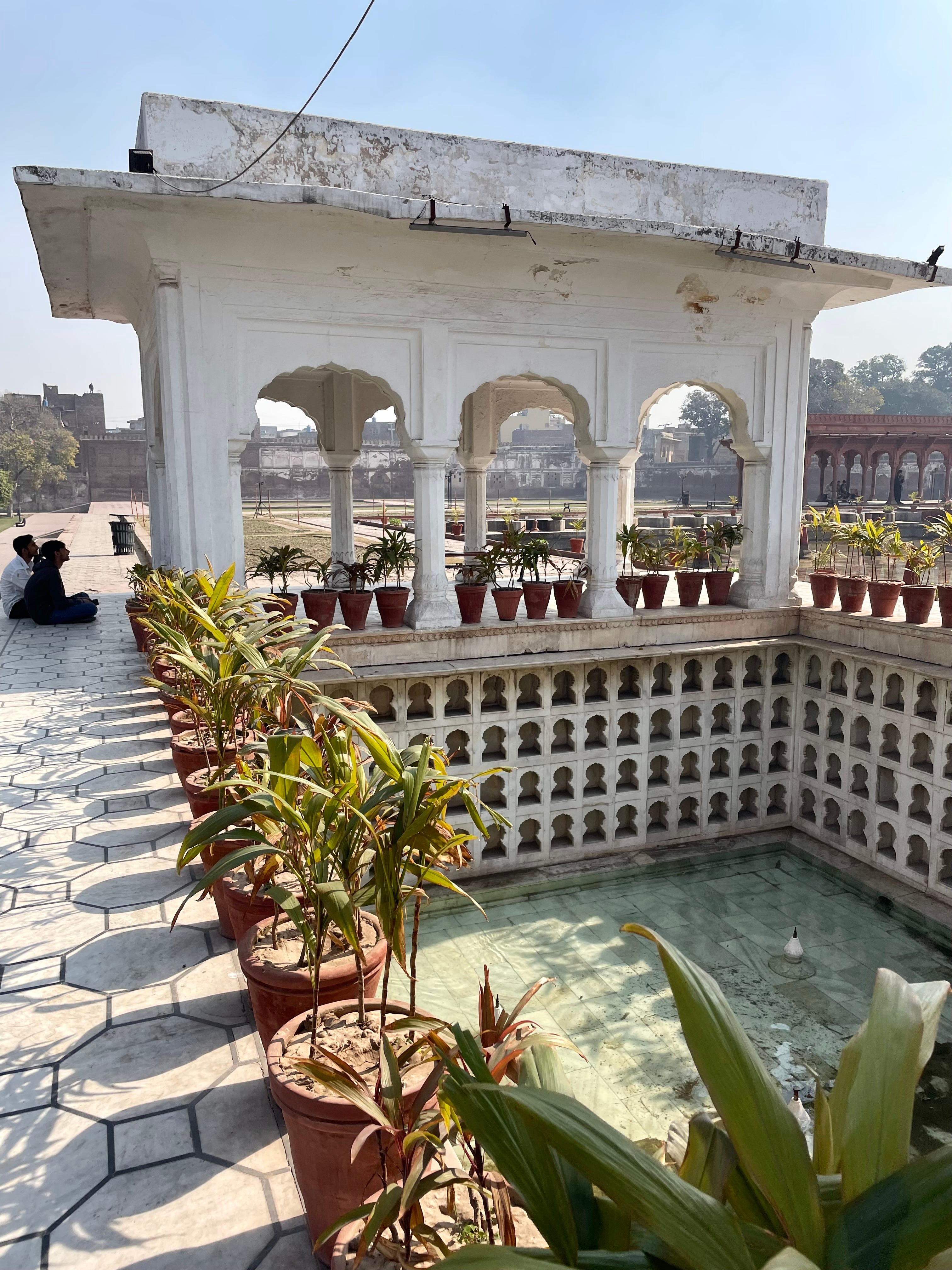
I’m currently in the smoggy heart of the Punjab. As usual, I go where the poems lead. Pakistan has been kind to me. My cousin used to study here, and our family paid his university fees. I would have visited him back then but, like so many other times and with so many other people, guilt and rage kept me away. The past few years have felt like orbiting the people and places I have kept at arm’s length, unable or unwilling to let go, resisting my inevitable arrival. I don’t even bother anymore. Keeping away has never lessened the angst.
Lahore is a dusky love bite. The sky splits open in the afternoon and it feels like a revelation each time. The locals have been uncommonly generous. I whispered a few prayers for Allama Iqbal at his tomb. Elsewhere, I bumped into his grandson. I was invited here by Faiz Ahmed Faiz’s daughters. I don’t take these moments lightly, especially these connections to the poetic universes which have left trampling imprints all over my thoughts and words. Faiz believed in the universality of “restless hearts”, which rings as true to me now as it did when I first read his poems, filtered through the deficient beauty of translation. During his exile, Faiz lived in a tiny seafront Beirut apartment, overlooking the Raouché rock formations. I like to think of him as another writer ensnared by the Mediterranean, letting it flood his work. I like to think of all the ways we know a place before we know it.
Comments
Nothing yet. Say the first thing.
Sign in to join the conversation.