
This year began with what can only be described as a near-death experience. That set the tone for what was to come. Certainty was the pervading feeling of 2025. I know, more than ever, what I want and what stands in my way. I know what I’m willing to bear and what I will shield with my life. A year where I definitively abandoned many traits and thought patterns that were no longer serving me, to the concern and pride of family and friends. Some parts of me did die, going down screaming.
Patience isn’t always a virtue. Once a weight falls off your shoulders, you can’t sit still. You have to straighten your back and get moving again. Indulge me. 2025 demanded the overwrought language of healing. (Ironic for someone with a distaste for therapeutic culture and its platitudes). I have a feeling my own metaphors will get more and more laboured in the future, my analogies stretched to the brink. But if you don’t self-mythologise your own journey, who else will?
Here are some sights, sounds, works, and encounters that left an impression on me this year. A groove in the brain or a grazed heart. I look to art to shake me up or steady my focus, and this was especially necessary this year. This isn’t a “Best of 2025” list, more of a record of shifts and jolts, stimulants and incitements to keep creating, trying, agitating.
Words
Kathy Burke’s A Mind of My Own, a memoir crackling with wit. Discovering the work of Adriano Spatola. Reading and revisiting as much Alice Notley as possible. Stumbling across Gboyega Odubanjo’s pamphlet Two Stops Short Of Barking, featuring a conversation with veteran filmmaker John Smith, an intergenerational dialogue between two unselfconscious East Londoners. Mónica de la Torre’s Pause the Document. The poetry of Miyó Vestrini because I wanted to intensify the year-long feeling of vertigo. Dog Heart, Breyten Breytenbach’s groggy memoir of reluctant returns. Miral al-Tahawy’s The Tent, published in 1996, found on a friend’s bookshelf in 2025. Tony Harrison’s sinewy poems about Fulani washerwomen, the writings inspired by his years teaching in Nigeria. (I learnt, this year, that Harrison was good friends with Wole Soyinka). These poems are splattered with first rains and drums. This poem, written in response to a Gulf War atrocity, that’s so insane, it could only have been written by Harrison.
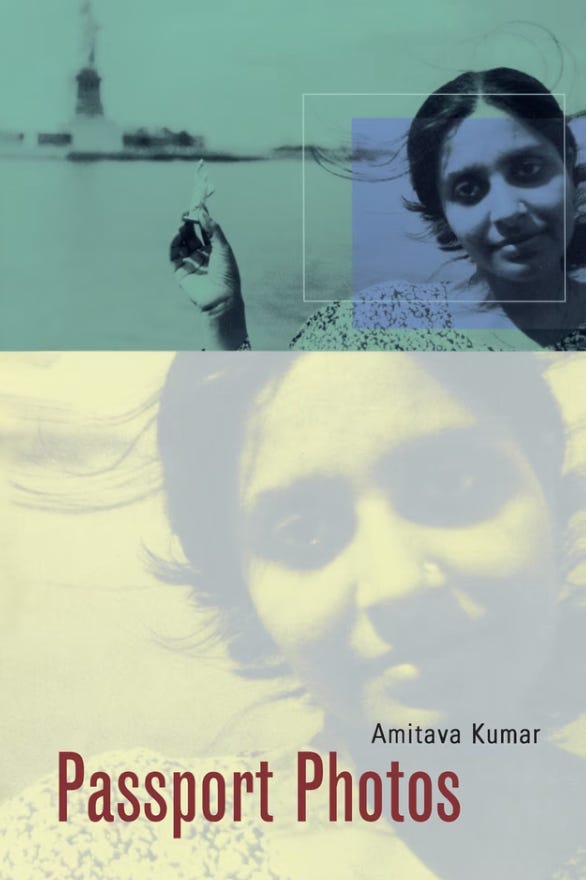
Rejection by Tony Tulathimutte, a book so compulsively hideous I couldn’t help but finish it in a day. A stretch of months where I kept reading Amitava Kumar. Passport Photos, described as an “act of artistic and intellectual forgery”, is a personal favourite, put into my hands by the wonderful bookseller and bibliophile Siddhartha Lokanandi, who recommended this book after hours of lively conversation in Berlin. (Loved this recent Wasafiri conversation with Lokanandi). I’ve also picked up Kumar’s Husband of a Fanatic, an exploration of communal violence, the Kargil War, and the “hatreds and intimacies joining Indians and Pakistanis” through the lens of his marriage. I enjoyed this 1994 interview with Anita Brookner, a writer I find so enigmatic. In the midst of this summer’s Oasis-mania and the general suffocating grip the long nineties has on the British psyche, I revisited Neil Kulkarni interviewing Disco Inferno, a reflection brimming with warmth and bile. One of my favourite music critics sitting with one of my favourite bands, a group who, in Kulkarni’s words, exemplified the battle between “a shaky, scary, thrilling, possible future and a definite, drab, permanent past.”
Scenes, Images
Robert Frank’s Me and My Brother (1969). Working through my knowledge gaps RE the canon of 90’s Black America and appreciating 1997’s Soul Food. Marianne Jean-Baptiste’s shivering rage in Hard Truths. Christopher Eccleston’s furious performance in Jude, Michael Winterbottom’s 1996 adaptation of Thomas Hardy’s last novel. How to Build a Library, a documentary filmed over eight years, tracking a duo’s struggle to save and transform Nairobi’s oldest library, an institution that was once off limits to ordinary Kenyans. I have met these two women, Angela Wachuka and Wanjiku Koinange, and it was so satisfying to see their commitment bear fruit onscreen. This film made me reflect on the community spaces which made me, and what it means to rewrite an institution’s story.
I love cinematic depictions of buoyant friendship, the kind that graces and galvanises. Amel Guellaty’s Where the Wind Comes From fizzes with sweetness, a road trip movie capturing the frustrated dreams of post-revolution Tunisian youth. The island of Djerba shimmers palpably.
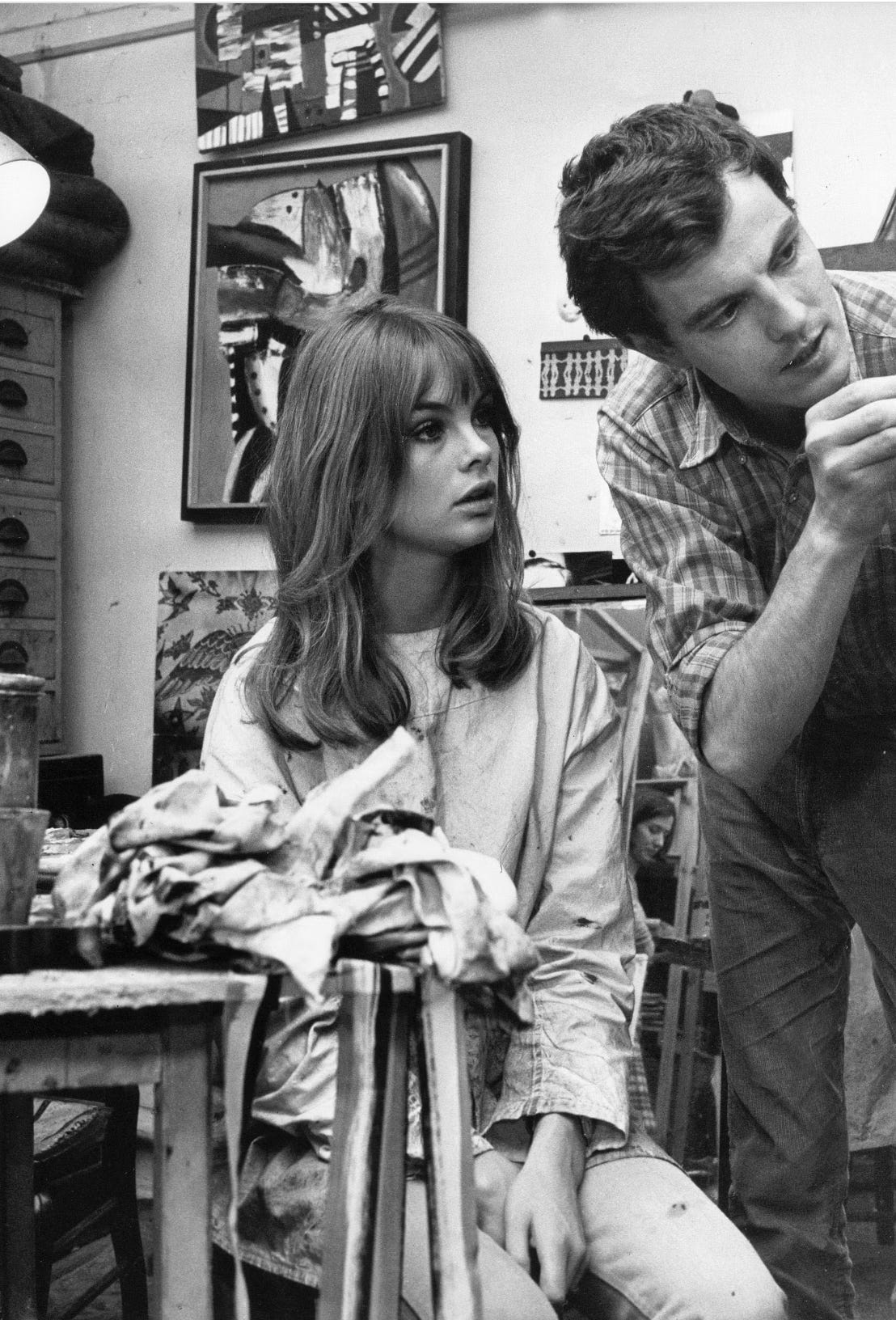
RIP to Peter Watkins and his unforgettable, unbroadcastable films. Watching 1971’s Punishment Park is still a shot to the arm. Watkins had a slog of a career, facing bans and blacklists every step of the way. A natural risk-taker, he made The War Game at the age of 30, a docudrama so incendiary and terrifying in its depiction of nuclear war that it was buried by the BBC, to be aired two decades later. Watkins challenged what he called the “monoform”, our numbing, standardised media landscape, its role in diminishing the public’s capacity to imagine anew, planting itself in the subconscious as a kind of inevitable common sense. I keep thinking about the audiences Watkins was denied. How can one work within an unworkable system? How do you reach the people who most need to hear you? In Dakar, I learned about Ousmane Sembène’s unrealised mission to make a biopic about Samori Touré, a 19th century Malinke spiritual leader and military mind who resisted French colonial expansion. Sembène struggled to make this film for forty years, nursing his obsession, raising funds and support, envisioning a picture as epic as the life Touré led. “If I die without having made Samori, you have my permission to write that Ousmane Sembène has failed in life”, he would reiterate. The film was never made. The obstacles in our way are sometimes immovable. The climb too steep and the climate too hostile to our imaginations. What do you do with a record of impassioned failures, of in-spite-ofs and might-have-beens?
Sounds
This gorgeous version of “Lady” by D’Angelo, featuring Raphael Saadiq, Ali Shaheed Muhammad, and Questlove. Klein’s sleep with a cane. Pa Salieu’s album Afrikan Alien (“Round & Round” is a love song that keeps on giving). Kokoroko’s Tuff Times Never Last. Horsegirl’s Phonetics On and On. Hearing that Joé Dwèt Filé and Burna Boy collab everywhere (kompa just does something for/to me). PinkPantheress on Victory Lap. Dur-Dur Band’s “Gorof/Elixir” going viral, dripping with heartbreaking, scuzzy nostalgia.
Encounters
MANZAR: Art and Architecture from Pakistan 1940s to Today, an exhibition presented in collaboration with the National Museum of Qatar. Eighty years of Pakistani art and architecture. 200 works, including paintings, installations, drawings, plans, videos, and installations. A stand-out of the year for me.
Designer’s Note at Istanbul’s Salt Beyoğlu, exploring the evolution of Turkish graphic design during the 20th century. An embarrassment of riches for publishing and book design enthusiasts. I discovered the “multi-medium, multi-form, multi-environment and multi-timeline” work of İsmail Saray, an artist who bounced around between Istanbul, Kutahya, London, and Paris.
Writing and Reading: Yesterday, Today, And Tomorrow at The Museum of Black Civilisations, a dive into notebooks written between 1933 and 1958 by students of the École normale William-Ponty. A testament to the colonial school’s failures to keep the outside world at bay, intruded upon by the political and spiritual fortitude of its students.
What Lies Between, with Photo España, at Madrid’s Casa Árabe, featuring the work of Taysir Batniji, Tamara Kalo, and Tanya Traboulsi.
Hamad Butt: Apprehensions at Whitechapel Gallery. He really was special.
Emergency Exits at London’s Imperial War Museum, revealing the human and political costs of three independence wars in the 1950s: in Malaya, Kenya and Cyprus, characterised as “emergencies” by the British. Londoners, you can still catch this.
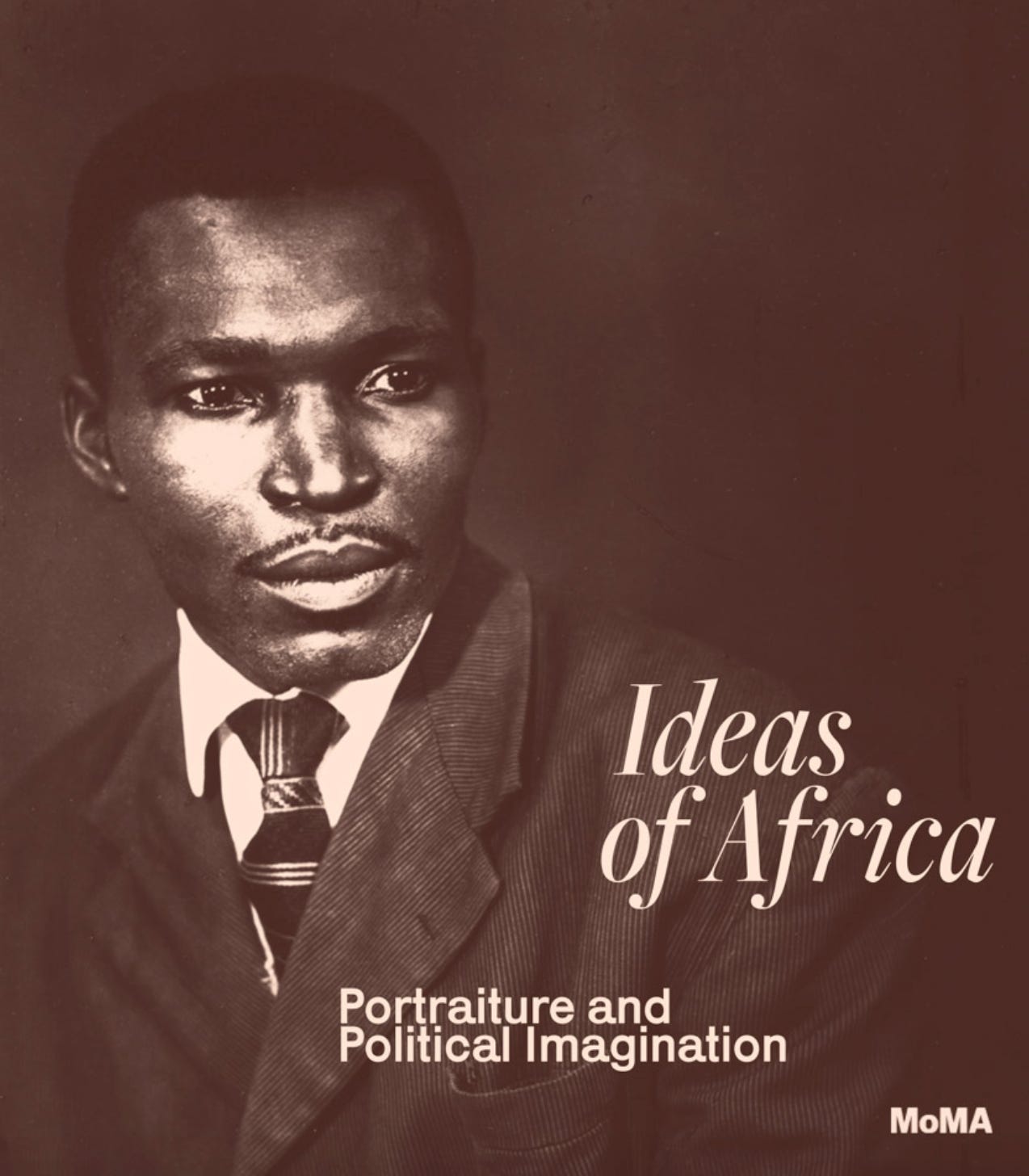
And of course, the ground-breaking exhibition Ideas of Africa, opening this December at New York’s Museum of Modern Art. Curated by the inimitable Oluremi Onabanjo, with Chiara M. Mannarino, this exhibition features the likes of Malick Sidibé, Seydou Keïta, James Barnor, and Kwame Brathwaite. Portraiture as a portal into the hopes and dreams of mid-20th century Africa. I spent last year thinking and working with the team behind this, so believe me when I say it’s not to be missed. On until July 2026.
Hoping some of this recommendations can stick with you, as they have stuck with me.
Comments
Nothing yet. Say the first thing.
Sign in to join the conversation.