
Art is a meeting ground for an artist and a viewer, even if they never really meet. Through art, an artist places their humanity on display. The viewer, in turn, receives and reacts. Despite a two-way connection, art’s essential exchange is one-way:
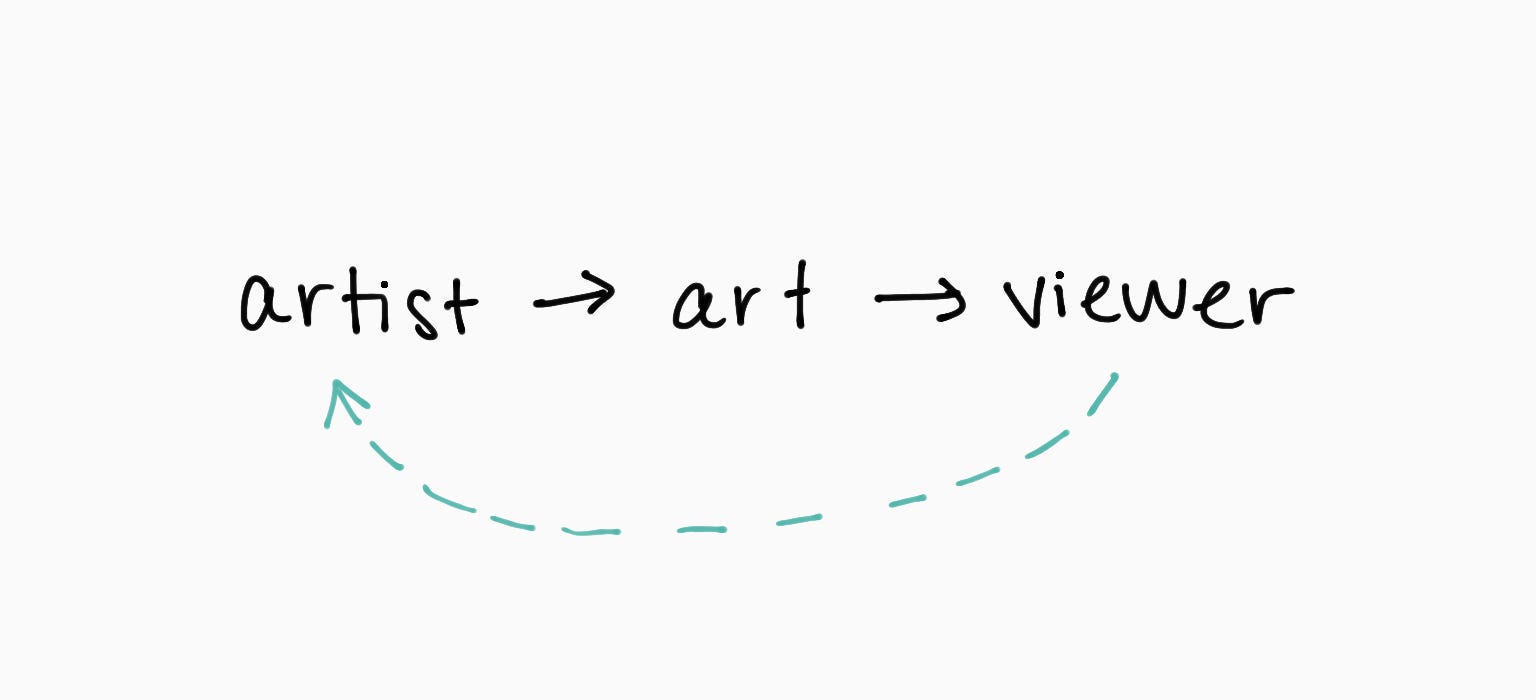
Inevitably, the impact of art ignites the viewer’s curiosity to swim upstream (blue dashed). Who is behind the work? Who is the human behind the humanity? When gaze shifts from art to artist, the artist faces a choice: to retreat, to ignore, or to embrace. The latter, I argue, is true and complete artistry — and the key to a lasting impact in the field.
This short essay tracks an evolution in the art of embracing the viewer’s gaze through three artists: Judith Leyster, Marina Abramović, and Lady Gaga. These artists understood their own visibility as a medium within their artistic arsenal, and it made them into icons.
Judith Leyster was a painter of the prosperous Dutch Golden Age, where artists shared in the riches of an emerging merchant class. A contemporary to Rembrandt and Vermeer, Leyster was one of few women painting professionally at the time — and the first to achieve notable financial success. Her portraits and genre paintings captured the simple joys of everyday life, but it is her 1630 self-portrait that represents her legacy.
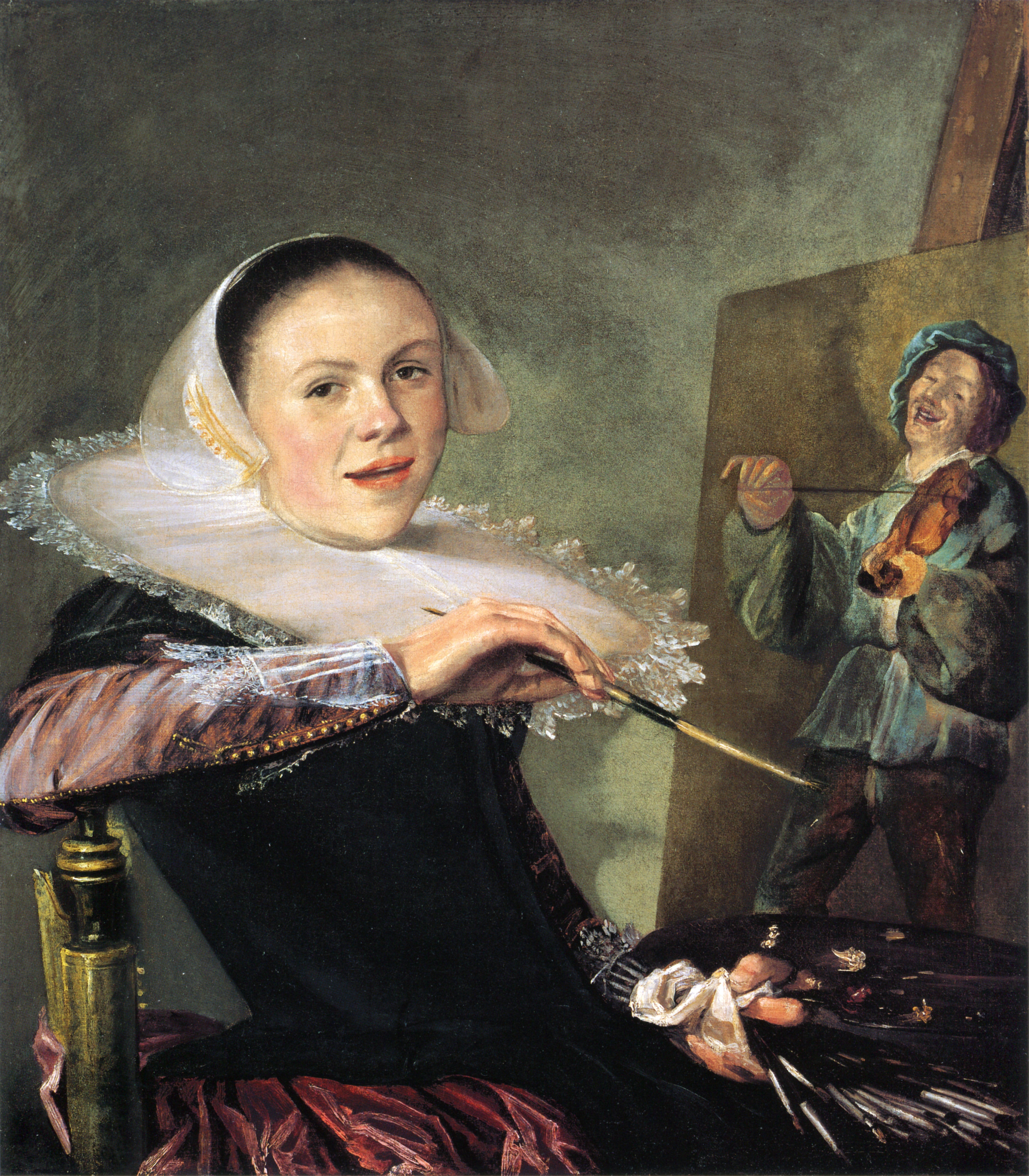
In the self-portrait, Leyster presents herself at her easel, smartly dressed with a brush in hand. While it is unlikely that she ever dressed this way to paint, she made a choice to be seen at her best while highlighting her mastery of lace. In the male dominated art world of her time, Leyster may have felt the need to prove her legitimacy as an artist. Self-portraiture offered that opportunity, but ironically, her efforts were undermined regardless. The portrait was mistakenly attributed to the male artist Frans Hals until 1949. With her authorship finally restored, Leyster is known and remembered as she intended, though with the added layers of the challenges she faced as a woman of her time.
In 2010, the iconic performance artist Marina Abramović created the ultimate self-portrait in The Artist is Present. In the performance piece, the viewer was invited to sit across a table from Abramović while she silently returned their gaze. No speaking, no physical contact, just the radical intimacy of shared eye contact. Nowhere has the artist-viewer gaze been more direct, or more vulnerable. Participants laughed, cried, and fell in love — all while Abramović maintained her stoic gaze for 736.5 hours over three months (she famously broke her composure only once, during an emotional reunion with her former partner, Ulay).
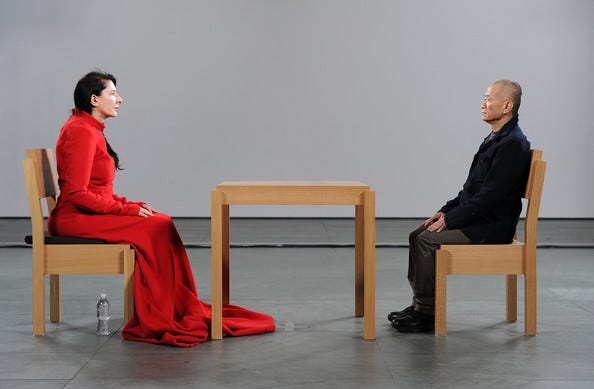

As a performance artist, Abramović has long understood the power of presence. Over her decades-long career she has spooned a skeleton for hours, stood nude in a public passageway, and even allowed (or rather endured) a stranger holding loaded gun to her head. All of that and yet The Artist is Present, in its stark simplicity, is arguably her most powerful work. It posits that her long developed and hard earned artistry is imbued entirely within her being, and accessible through her gaze.
As a mentee and friend of Abramović, Lady Gaga brought lessons of embodied artistry from the art world into pop culture. Perhaps Gaga’s most blatant Abramović-esque moment was leaving her hotel slowly in 2013. In the performance, Gaga took several minutes to take about 10 steps. The intention, the discipline, and the sheer absurdity of its simplicity all felt so signature Abramović. Whatever mastery of the inner world Abramović bestowed upon her pupil must have been rich with the same emotional depth that brought her The Artist is Present viewers to tears — Gaga ended the hotel performance the same way.
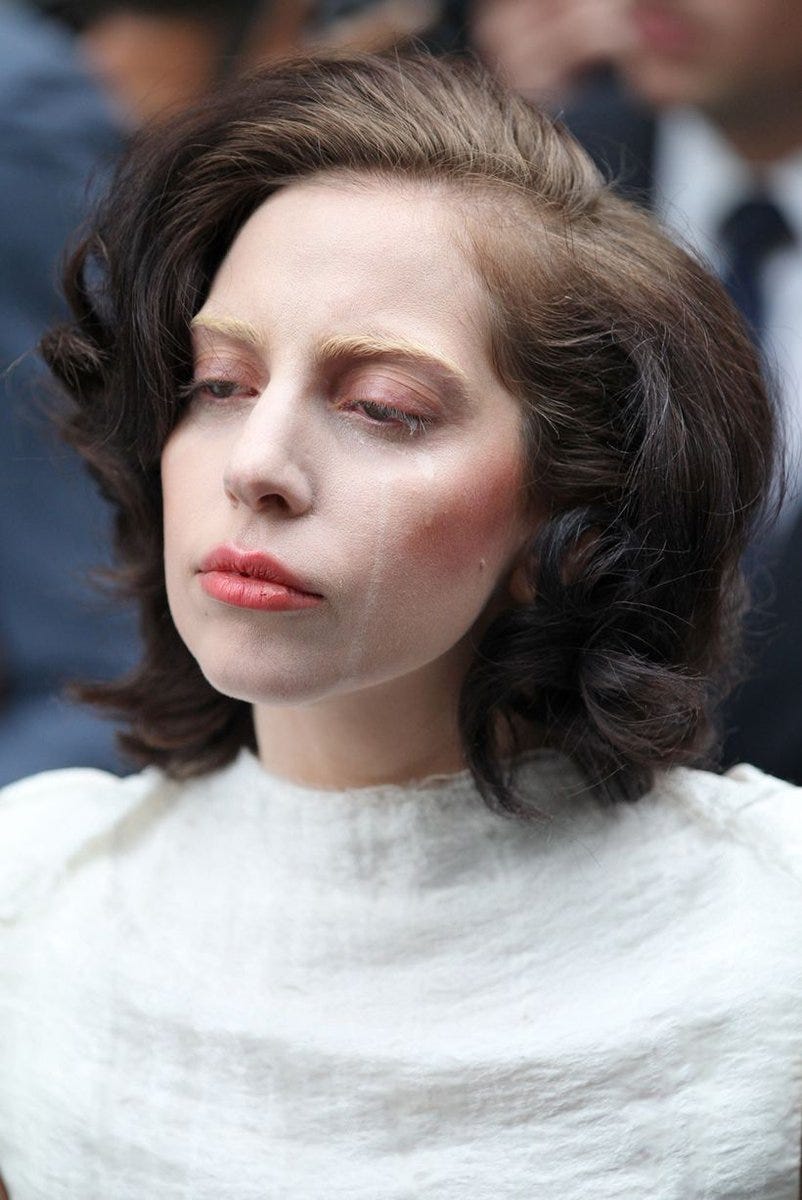
During the ARTPOP era, Gaga’s interest in testing the art of fame was at its peak. She regularly took advantage of the peripheral moments of fame — leaving a hotel, a restaurant, or an airport — moments where fans and paparazzi wait for a glimpse at their idol (or subject) in the real, everyday world. Other celebrities treat these moments carelessly by comparison: they’ll smile, wave, sign a few autographs, and be on their way — often resenting the inconvenience of attention. Gaga understood that her artistry does not end with music. In fame, her very personhood is a medium within her creative body of work. Through the spectacle of Gaga, she asserted personal power and undeniable self-direction — not unlike Leyster with her painted pose and Abramović with her directed presence.
Each of these women used their visibility to shape the narrative through which they are remembered. They blurred the boundaries between medium and platform, between artwork and artist. Had Judith Leyster painted only genre paintings, Abramović only staged performances, and Gaga only songs, they would not have been remembered the same… if at all. By stepping into their artistry with their complete being, Leyster, Abramović, and Gaga crafted lasting legacies.
The necessity of viewership can be such a burden to contemporary artists. I feel this myself. This essay is, in part, a study for myself to see viewership as an art form.
No posts
Comments
Nothing yet. Say the first thing.
Sign in to join the conversation.