
Welcome to your Friday Best of Bylines newsletter of the week, bringing you a standout story from one of our 10 UK national and regional publications.
This time Stephen McNair, of East Anglia Bylines, provides a vital update on Donald Trump’s attempts to sue the BBC for defamation over a Panorama item about the January 2021 attack on the Capitol.
Last December, the American President claimed to have suffered financial and reputational damage because the programme juxtaposed two unrelated video clips in a way that implied he actively incited rioters. The BBC accepted this was a mistake and apologised. However, Trump has persisted in his demand for $10bn compensation – almost double the BBC’s annual income. It is a dramatic claim, designed to attract headlines, but the Corporation has come out fighting.
Throughout his career, Trump has used lawsuits aggressively against opponents, and even when they believe themselves innocent, they often choose to settle out of court rather than fund a long and expensive court case.
But the BBC is made of sterner stuff. They have offered a symbolic response to the US’s 47th President. They have issued 47 subpoenas for witnesses to testify, exposing Donald Trump to far more scrutiny than he may have expected.
Online, a number of lawyers have discussed the case. Two California lawyers, Brian Kabateck and Shant Karnikian, have discussed this on their YouTube channel. They explain the legal hurdles Trump now faces.
The first issue is that, because he is a public figure, Trump has to prove actual malice, showing that the BBC knew the material was false or acted with reckless intent. A mere editing mistake would not be enough for a defamation win.
The BBC has moved to dismiss the case, on the grounds that the court in Florida, where the case has been brought, has no jurisdiction, since the material was never broadcast in the United States. The judge gave Trump a deadline to respond to this, warning that sanctions could follow. The deadline has passed and Trump has not complied, The court has yet to rule on this.
But meanwhile, the BBC has other weapons up its sleeve.
Unbiased. Independent. Honest. A community that champions everyday citizens and unheard voices. We don’t have oligarch owners, corporate controllers or political paymasters – we have a community of 2,500 volunteer writers and editors, and over 350,000 readers. Help power Britain’s biggest citizen journalism movement. Become a member of our Friends of Bylines Network scheme today.
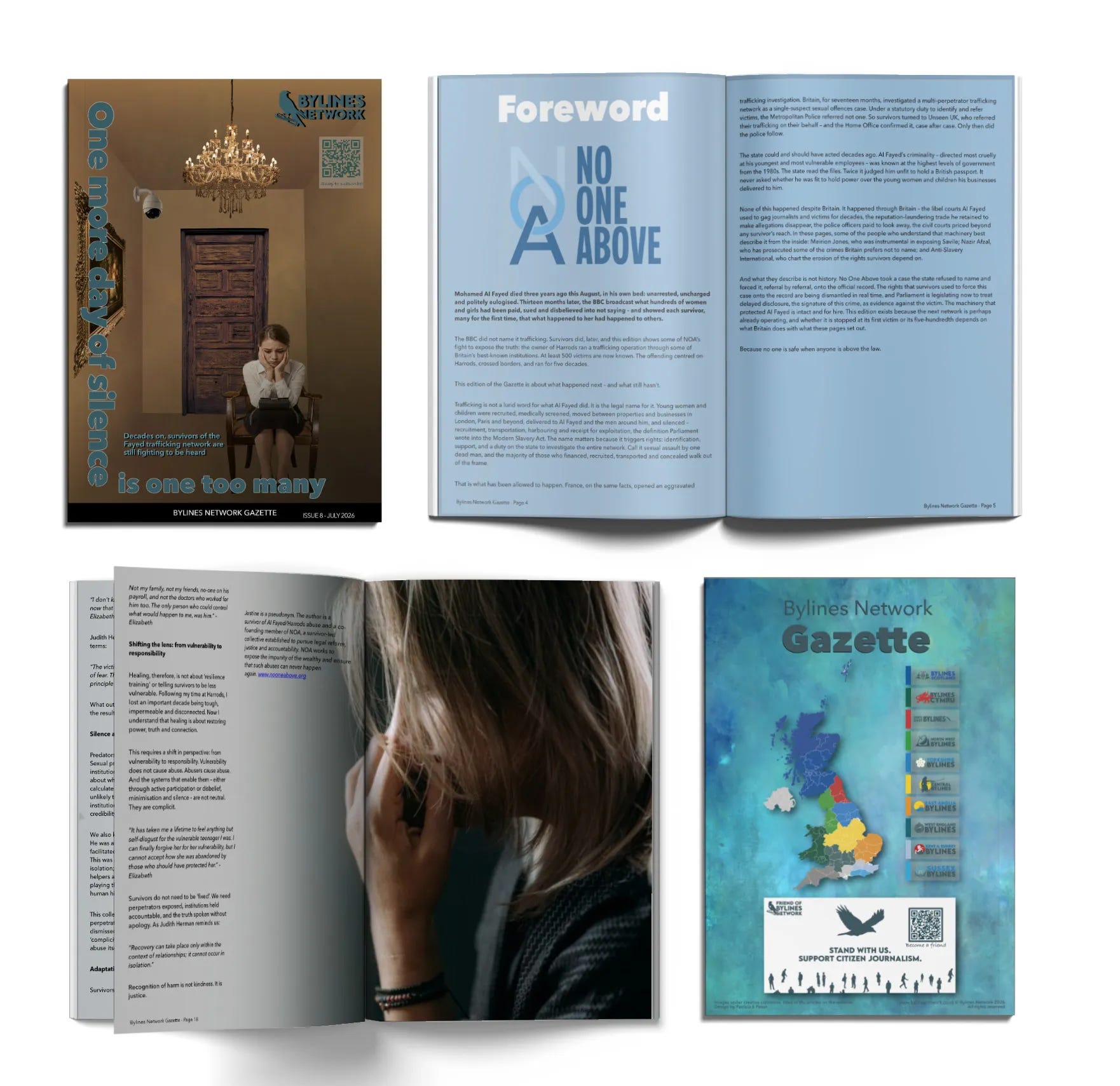
And that’s not all! Every month we release a Bylines Network Gazette, which is delivered directly and free to all our Friends. This month’s Gazette is devoted to survivors of abuse at the hands of Mohammed al Fayed and their quest for justice – which is still routinely denied. This 86 page special features articles from the No One Above organisation, survivor stories in their own words, and exclusives from Nazir Afzal and Meirion Jones. Become a Friend now to get yours.
If you prefer to take out a paid Substack subscription, you can do that too. It’s exactly the same as setting up Friends of Bylines Network registration, just managed through the Substack platform.
Become a Friend of Bylines Network
And now back to Stephen’s important article about the BBC.
Trump seems to have expected a quick win: that like many of his previous enemies, the BBC would settle quickly out of court. What he was unprepared for was a fight. But his decision to sue gives the BBC the legal right to ‘discovery’. This entitles both parties to call for evidence and summon witnesses to justify his claims in depth.
So far, in response to discovery requests from Trump’s lawyers, the BBC has produced 87,000 pages of documents. In contrast, Trump’s lawyers have produced 735 pages, which the BBC claims are mostly news articles and material from the internet.
The list of subpoenas includes key people and companies in Trump’s orbit, including all close family members and some very high profile associates, like Steve Bannon and Stephen Miller. They will have to testify in open court to Trunp’s reputation, and his state of mind on 6 January, to prove that, when he told people to ‘fight’, he did not intend to incite a riot.
And to justify the claim of financial damage, Trump must release detailed information on some 400 companies owned by the trust created to manage his investments while he is President. Trump’s lawyers have now tried to avoid producing the financial information, by withdrawing the claim of financial loss. But the court has ruled that, because of the scale of the claim, which would threaten the viability of the BBC, the financial records are relevant and must be disclosed. And the cutoff for discovery is in October
Trump’s next line of defence may be to claim that some of the deposition materials are confidential, but the lawyers doubt that this will satisfy the court. They suspect that Trump will now be seeking a “graceful exit”, which he can present as some sort of victory, before the scheduled hearing date next February. Or, perhaps everyone will quietly forget about the whole affair.
He will probably lose. It would be a huge relief to all who believe in independent public broadcasting. It seems he picked the wrong enemy when he chose the BBC.
Running updates on this issue can be found on these websites Legal AF, and Katie Phang.
Comments
Nothing yet. Say the first thing.
Sign in to join the conversation.