
Welcome to your Friday Best of Bylines newsletter, sharing a standout article from one of our 10 UK national and regional publications. This time we hand over to Adam Green of North West Bylines, who takes a deep dive into an important story from South Manchester.
For more than 30 years, local residents have been fighting to protect Ryebank Fields, a rewilded and biodiverse green space in Chorlton – that campaigners say has become one of the area’s most valuable urban wildlife habitats – from housing development.
The latest chapter in that dispute has seen residents submit their own community-led planning application in direct opposition to proposals for housing development on the site. Campaigners argue that there is no justification for building on Ryebank Fields when Manchester already has sufficient brownfield land to meet its housing targets, while concerns over contamination, biodiversity loss and the destruction of a unique community asset continue to dominate the debate.
The campaign dates back to 1996, when Manchester Metropolitan University (MMU) was refused planning permission to build 90 houses on the site. Residents say the site has been regarded as community land since the 1970s, when it operated as public playing fields following remediation works carried out by Manchester City Council (MCC) after the former clay pits were used as landfill. The land was subsequently made available for use as sports pitches by Manchester Polytechnic, the predecessor institution to MMU. A further attempt at development of the fields in 2004, involving the proposed sale of the land for housing development, was not validated by planning officers and did not progress any further.
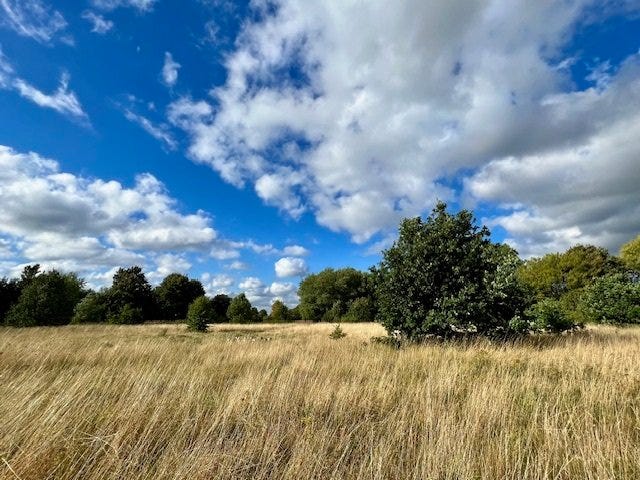
Ryebank Fields Community Group (RFCG) explains that there is no justification for destroying one of South Manchester’s most valuable urban wildlife habitats. The area now contains more than 1,400 trees and acts as an important urban wildlife corridor connecting green spaces across South Manchester and Trafford. Campaigners say that the woodland also functions as a carbon sink, natural floodplain, and buffer against air pollution in a densely populated part of the city.
Under the National Planning Policy Framework (NPPF), previously developed ‘brownfield’ land should be prioritised for housing development before undeveloped ‘greenfield’ sites. Ryebank Fields is officially classified as greenfield land and, according to MCCs Strategic Housing Land Availability Assessment (SHLAA), the city already has a surplus of brownfield sites capable of meeting its housing targets. The group is also seeking designation of Ryebank Fields as Local Green Space through MCC’s Local Plan process, arguing that the fields meet the criteria for special protection because of their environmental, recreational and heritage value.
The proposed development also appears to conflict with MCCs own environmental policies. The Council’s Green and Blue Infrastructure Strategy and Our Parks, Our Plan 2025–2028 seek to protect, improve and expand the city’s natural environment to support public health, increase biodiversity and help tackle climate change.
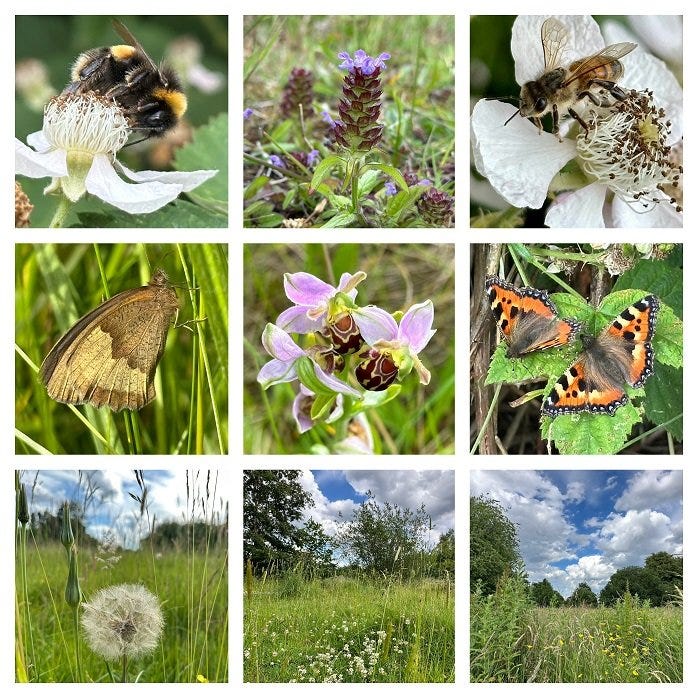
RFCG members question why a site that aligns so closely with these objectives continues to face development pressure. Campaigners argue that Ryebank Fields has become an informal community asset used for dog walking, recreation, wildlife watching and even stargazing, serving residents on both sides of the Manchester-Trafford boundary. RFCG says the land has become a focal point for community activities, including guided walks, educational projects, nature events and links with local schools and social prescribing initiatives aimed at improving health and wellbeing.
Tom Butler, RFCG Secretary and one of its spokespersons, says:
Ryebank Fields has been allowed to rewild naturally for decades and now supports a rich variety of wildlife and habitats,. At a time when both local and national policy recognise the importance of biodiversity and access to green space, its destruction would be difficult to justify.
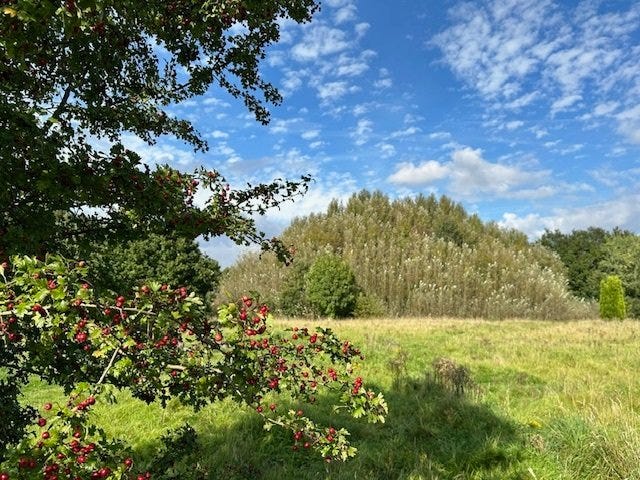
Residents describe the fields as a rare example of urban rewilding, containing mature woodland, meadow habitats and what campaigners describe as a unique aspen grove.
The group also says the fields contain one of the UK’s rare native black poplar trees, confirmed through DNA testing, alongside protected hedgerows that have been recognised as “important” under national criteria. Ryebank Fields also contains part of the historic Nico Ditch, an Anglo-Saxon earthwork dating from between the seventh and tenth centuries. Campaigners say the feature is recognised as a nationally important, although non-scheduled, archaeological monument requiring consultation before works can proceed nearby.

Unbiased. Independent. Honest. A community that champions everyday citizens and unheard voices. We don’t have oligarch owners, corporate controllers or political paymasters – we have a community of 2,500 volunteer writers and editors, and over 350,000 readers. Help power Britain’s biggest citizen journalism movement. Become a member of our Friends of Bylines Network scheme today.
Become a Friend of Bylines Network
There are concerns about the history of the land. Ryebank Fields consists of former clay extraction pits that were backfilled with unregulated waste many decades ago. Ryebank Fields consists of former clay extraction pits associated with historic brickworks operations which were later used as landfill before being remediated and capped during the 1970s. The group says the fields formed part of the former Jackson’s Brickworks and was remediated under the publicly funded Operation Eyesore programme before being transferred to Manchester Polytechnic, now MMU, for use as playing fields.
RFCG argues the scale and depth of contamination was considered too extensive to remove safely at the time and that disturbing the cap today could create environmental and public health risks. They warn that disturbing the ground could potentially mobilise contaminants, including hydrocarbons present in groundwater, and increase the risk of pollutants affecting neighbouring land. RFCG describes Ryebank Fields not as a “low risk” contamination site but as a “known risk” contamination site because of its historical use as landfill. The group fears that large-scale excavations might expose local residents, schoolchildren and users of the nearby Longford Park Conservation Area to airborne toxic and carcinogenic substances.
Given the known contamination history, the safest and most environmentally responsible option is to leave the ground undisturbed.
Butler added. RFCG’s planning consultant has advised that MMU’s housing application (Planning Application Ref: 142223/FO/2025) should include a detailed remediation strategy and argues that, without a comprehensive remediation plan, there is insufficient information available for decision-makers to determine whether the scheme is viable or deliverable.
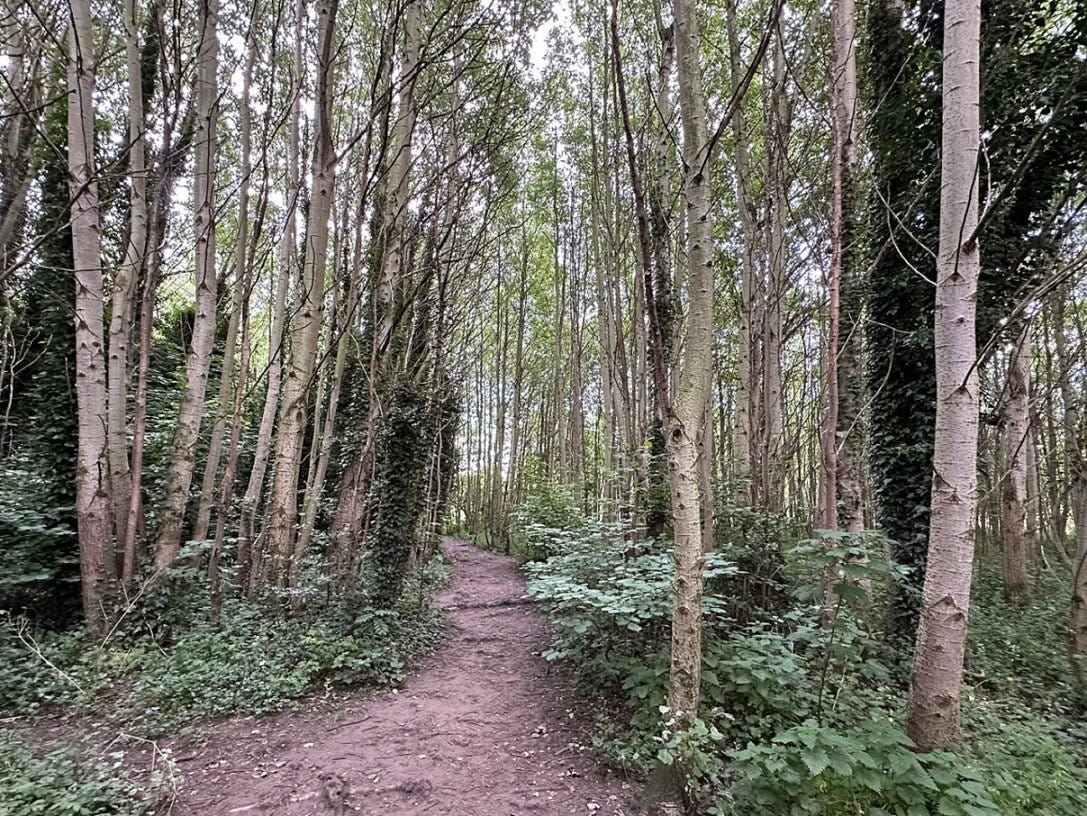
RFCG has submitted what it describes as a positive alternative to development. The community-led and funded planning application seeks to retain Ryebank Fields as a Community Woodland and Meadow (Planning Application Ref: 143413/FO/2025). The application was submitted to Manchester City Council on 11 July 2025 and was validated on 28 August 2025. According to RFCG, all issues raised by statutory consultees and the Council’s Highways Services team were resolved to their satisfaction by February 2026. The group says its application attracted approximately 700 to 800 expressions of support during consultation, which campaigners describe as an unprecedented level of community backing.
However, almost twelve months after submission, the application has yet to be determined by the Planning Committee. The delay has prompted growing frustration among campaigners. RFCG says the application process has been entirely community-funded, with residents raising approximately £15,000 through donations to cover professional costs associated with preparing the submission.
Tom Butler says:
Our application is ready to be heard, yet we are still waiting for a committee date. We believe the community deserves clarity on why a fully validated application that has addressed all consultation responses remains undetermined.
The group also questions MMU’s continued pursuit of development on the fields. Tom Bulter says on behalf of the group:
In my opinion, Manchester Metropolitan University presents itself as a sustainable and environmentally focused institution. I am concerned that some of its decisions may not fully reflect those stated values. I believe there are unresolved questions regarding potential impacts on wildlife, community wellbeing and possible contamination issues that deserve careful consideration.
RFCG says its proposal would deliver environmental, health and community benefits while preserving a unique green space for future generations. Campaigners envisage a ‘light-touch’ management approach that would preserve the area’s ecological value while allowing continued public access. The group has even explored obtaining charitable status to support long-term management of the site and enable access to environmental and community grant funding if the application succeeds. The group’s longer-term vision includes educational activities, volunteering opportunities, conservation projects and community events designed to strengthen residents’ connection with nature and local heritage.
Tom Butler:
We believe community engagement in planning decisions is essential if developments are to reflect the needs, aspirations and values of the people most affected by them. Local authorities have a responsibility to listen to communities and properly consider their views when making decisions that affect our future health, wellbeing and environment.
RFCG argues that Ryebank Fields reflects a wider national debate over the loss of urban green spaces to development and says stronger protections are needed for community green spaces across the country.
The future of Ryebank Fields now rests with Manchester’s planning system. For campaigners, however, the issue extends beyond a single site. They argue that the decisions taken over Ryebank Fields will determine not only the future of one rewilded green space, but also the extent to which community voices, environmental considerations and long-term public wellbeing influence planning decisions in the years ahead.
Ryebank Fields is a functioning green space that would see significant biodiversity loss, unresolved contamination risks, and a planning case that relies heavily on issues being addressed after permission is granted.
At a time when Chorlton already has hundreds of homes being delivered on brownfield land, the question isn’t whether we need housing, it’s why we are losing green space to deliver even more.
In a city with enough brownfield land to meet housing needs, and not enough green space, the justification for building here is extremely difficult to make.

North West Bylines brought you this story first, back in January last year when we carried a story written by local residents. Here is what they said in their article: What do Ryebank Fields mean for Manchester?
Comments
Nothing yet. Say the first thing.
Sign in to join the conversation.