
Welcome to your Friday Best of Bylines newsletter, bringing you a standout article from one of our 10 UK national and regional publications. This time, from East Anglia Bylines, discussing solar car parks.
Across much of England and Wales this week, finding a parking space in the shade has felt like winning the lottery. Drivers who weren’t so fortunate have returned to cars that feel more like ovens. Steering wheels are almost too hot to hold, seatbelt buckles burn your fingers, and the blast of hot air that escapes when you open the door is enough to make you question whether it’s worth getting in at all.
It’s something most of us simply accept. Large supermarket, hospital and station car parks are designed to store vehicles, not to make life comfortable. But what if they could do more?
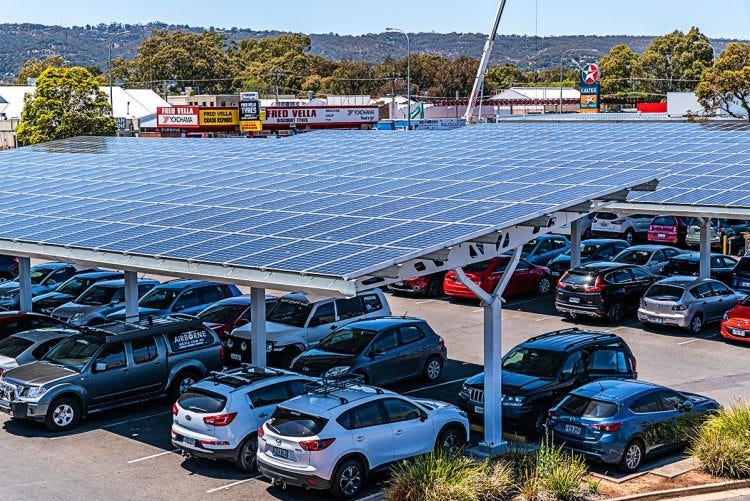
Imagine canopies stretching across rows of parked cars. In summer they’d provide welcome shade. And when it rains, they’d keep shoppers, patients and commuters a little drier on the walk to and from their vehicles. Better still, the roofs themselves would generate electricity, helping to power nearby buildings or electric vehicle chargers while earning money rather than just costing it.
It sounds like an attractive idea. It’s also one that Britain has just decided not to pursue.
Last year, the Government launched a consultation on whether new large outdoor car parks should be required to include solar canopies. According to its own figures, a typical 80-space car park could save around £28,000 a year in electricity costs while generating renewable energy on land that has already been developed.
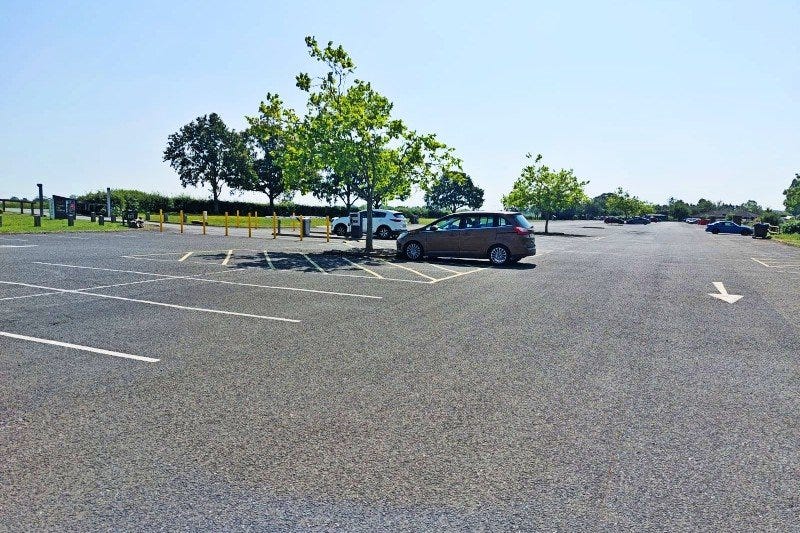
Unlike solar farms, these structures wouldn’t need additional countryside. The parking spaces remain exactly where they are. The only difference is that the empty air above them starts working too.
The consultation had highlighted concerns over costs, differing site conditions and whether a single national requirement was appropriate.
Despite those potential benefits, ministers concluded in a single-sentence update on the consultation page that the proposal “will not be taken any further at this point“. The decision was so understated, it attracted little attention outside specialist energy publications.
The update appeared on the Government’s website the day before Britain entered a record-breaking May heatwave. Now, as another spell of exceptional heat grips large parts of the country, the decision suddenly feels rather more relevant.

Unbiased. Independent. Honest. This is what Bylines Network is, in the words of the 1000s of supporters who took part in our 2025 survey. We don’t have oligarch owners, corporate controllers or political paymasters – we have a community of 2,500 volunteer writers and editors, and over 350,000 readers. Help power Britain’s biggest citizen journalism movement. Become a member of our Friends of Bylines Network scheme today.
Become a Friend of Bylines Network
This isn’t a concept that has to be invented from scratch. They can already be found in corporate and council car parks, but they remain an exception rather than the rule. France has introduced legislation requiring them over many large outdoor car parks, with at least half of their surface expected to be covered unless exemptions apply. The aim is straightforward: generate renewable electricity without taking additional land, while making car parks more pleasant places to use.
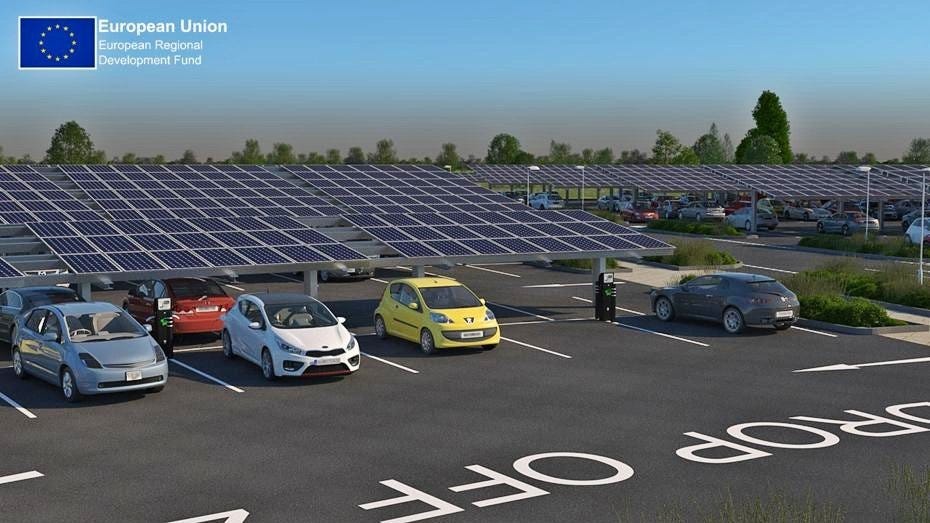
1MW of solar was installed at the St Ives Park & Ride | Awarded before Brexit, the St Ives park & ride car park was partially funded by the EU development fund. Credit for photos: Cambs County Council
As Britain looks to replace fossil fuels with low-carbon electricity, solar carports also offer a way of producing more renewable energy without sacrificing productive farmland or other green spaces.
The countryside charity CPRE was among those disappointed by the government’s decision. Although often critical of large solar developments on agricultural land, it has consistently argued that more solar panels should be installed on rooftops, warehouses, car parks and other previously developed sites instead.
For regions such as East Anglia, where debates over large solar farms have become increasingly contentious, the idea has an obvious attraction. Rather than covering productive farmland – 17,000 acres of solar farms are planned in Norfolk alone – solar carports make use of land that is already covered by asphalt.
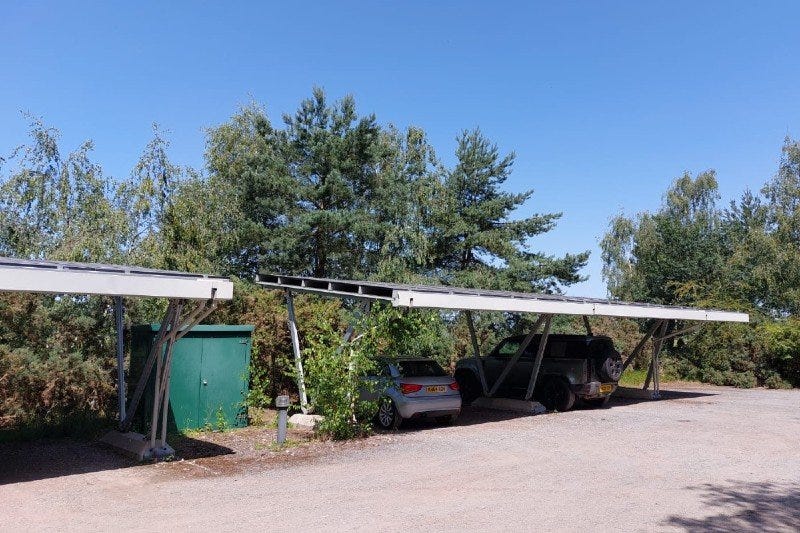
As Britain adapts to hotter summers, ideas like this may become harder to ignore. Solar canopies don’t just produce electricity. They keep cars cooler, offer shelter from rain, reduce exposure to ultraviolet light and make every day journeys a little more comfortable.
On a hot day, large car parks don’t just sit in the sun. Their dark surfaces absorb heat throughout the day before slowly radiating it back into the surrounding air, making already warm places feel hotter still, particularly in urban areas.
Think about what it’s like walking across a supermarket car park in the middle of a heatwave. Compare that to making the same journey in the shade. The difference isn’t only comfort; it’s also a reminder that some climate adaptations don’t need complicated or unproven technology. Sometimes they just need us to look at familiar places a little differently.
For now, Britain’s open air car parks will carry on doing what they have always done: absorbing the sun’s heat while an opportunity to generate renewable electricity – and make life a little more comfortable – remains largely untapped.
Stephen McNair reveals findings of an authoritative new report on artificial intelligence, suggesting that Europe needs to grasp the nettle of AI much faster if it is to survive. Read the full story here.
Comments
Nothing yet. Say the first thing.
Sign in to join the conversation.