
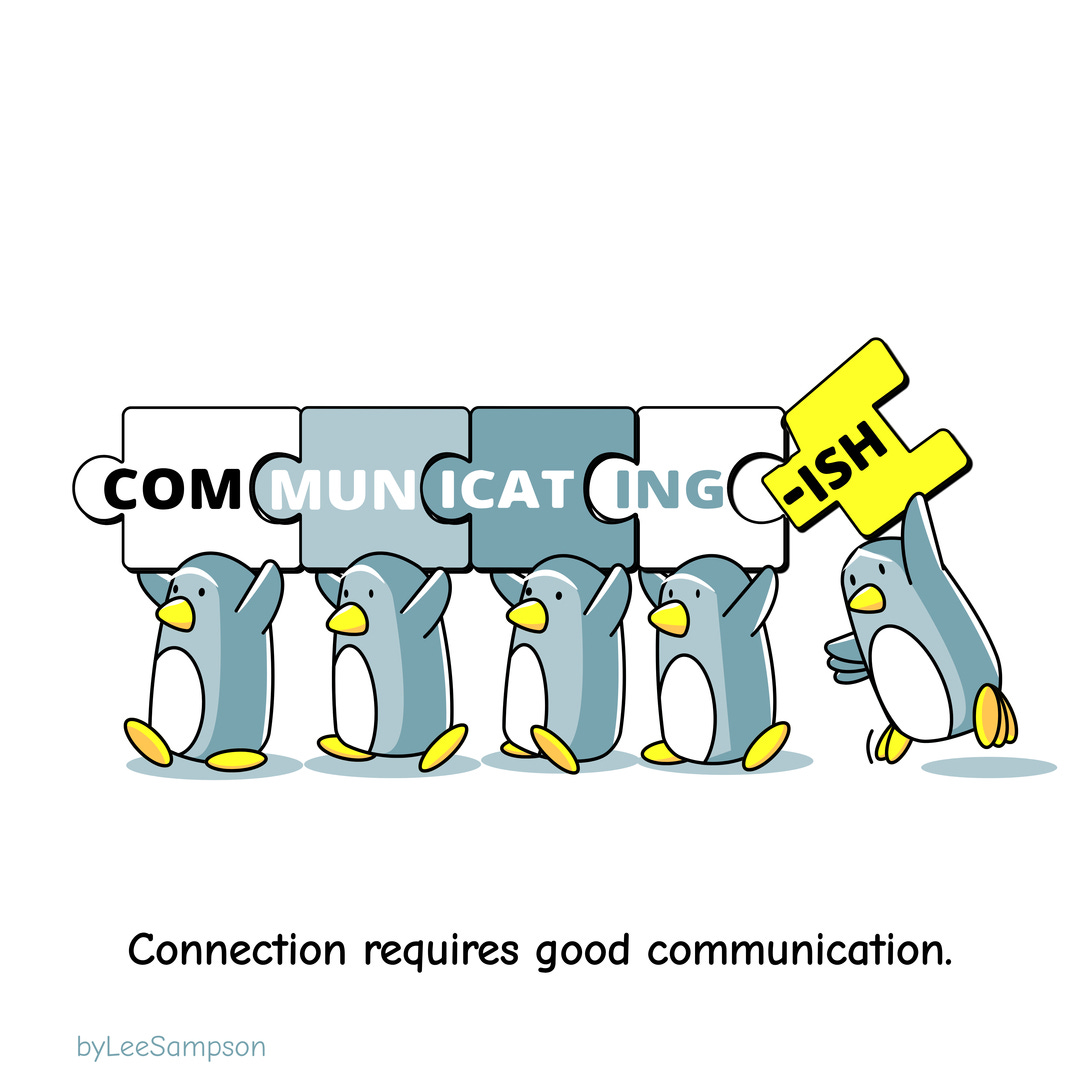
Leadership isn’t just about hitting targets or strategic thinking, it’s also about creating environments where people feel valued, understood, and supported. This requires a continued focus on reflection and refining your communication style for the recipients.
If you want to succeed in leadership and relationships, learning to communicate effectively and with clarity is one of the most critical skills to grow and continue to develop. This requires a commitment to practice, feedback loops and honesty.
Building an environment that fosters quick, clear communication is in everyone's best interest because people will always assume that the words chosen are the ones intended.
Leadership isn't about being right. It's about sharing and understanding that we aren't just what we eat; we are also what we hear.
Thoughtless Communication

Self-awareness is a key to navigating the perils of thoughtless communication.
Why is a takeaway sauce packet a good analogy for this?
When tired or not fully present in the moment, communication can feel like struggling to open a ketchup packet. It can become a challenge to get a firm grip, and if you rush it, you find the contents unexpectedly spurt in an undesired direction, leaving a mess.
It can be a sign to take yourself off autopilot and be present and more mindful of your responses because what we say, stays.
Guessing Game
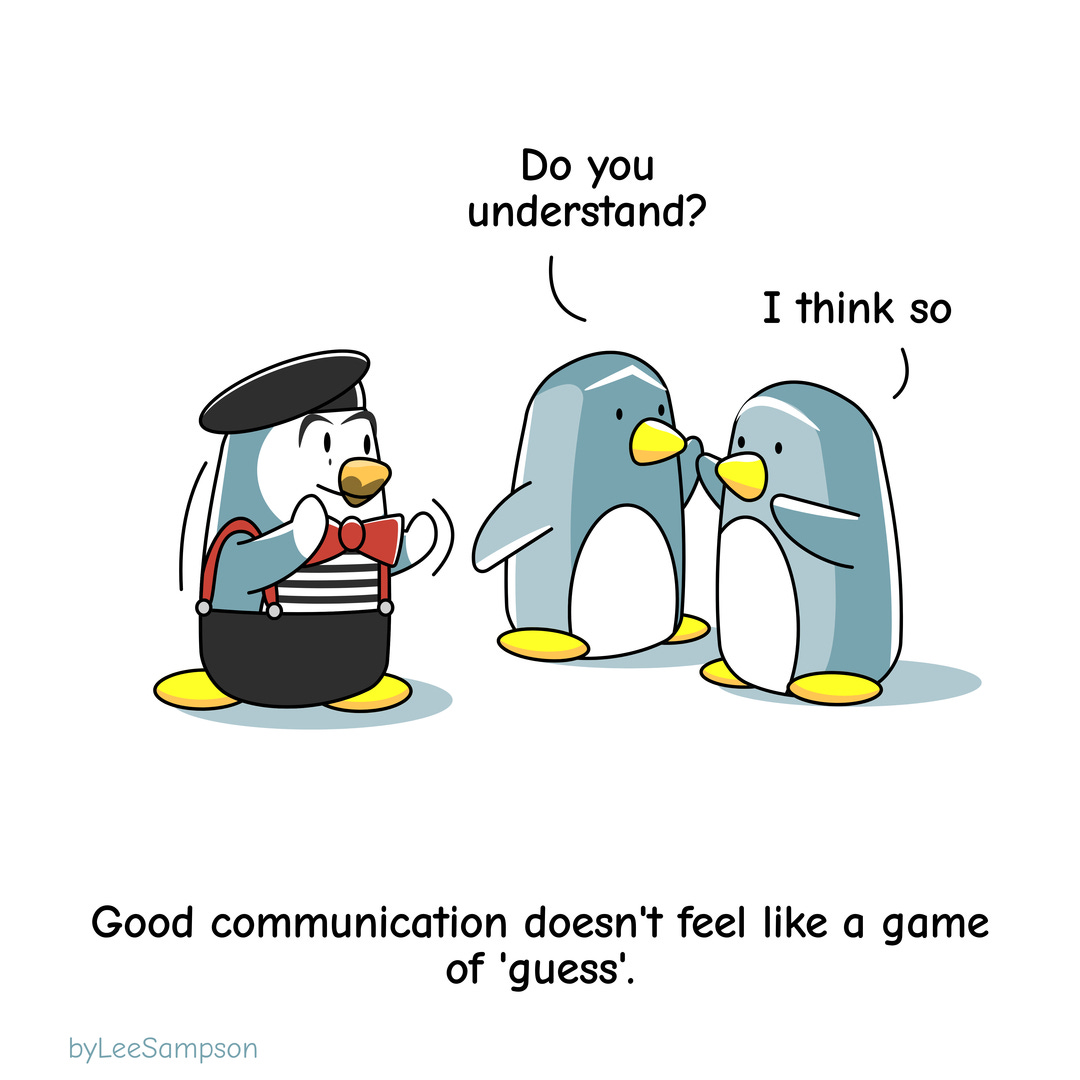
As a leader, hoping the other person can correctly guess your motives, intentions and thoughts through body language turns communication into a game.
There are probably some very good reasons that everything we want, think or feel doesn't come out of our mouths, but the flipside can be an over-reliance on avoidance and non-verbal means of communicating.
Think first, then say what you mean and mean what you say.
Passive Aggressive Communication
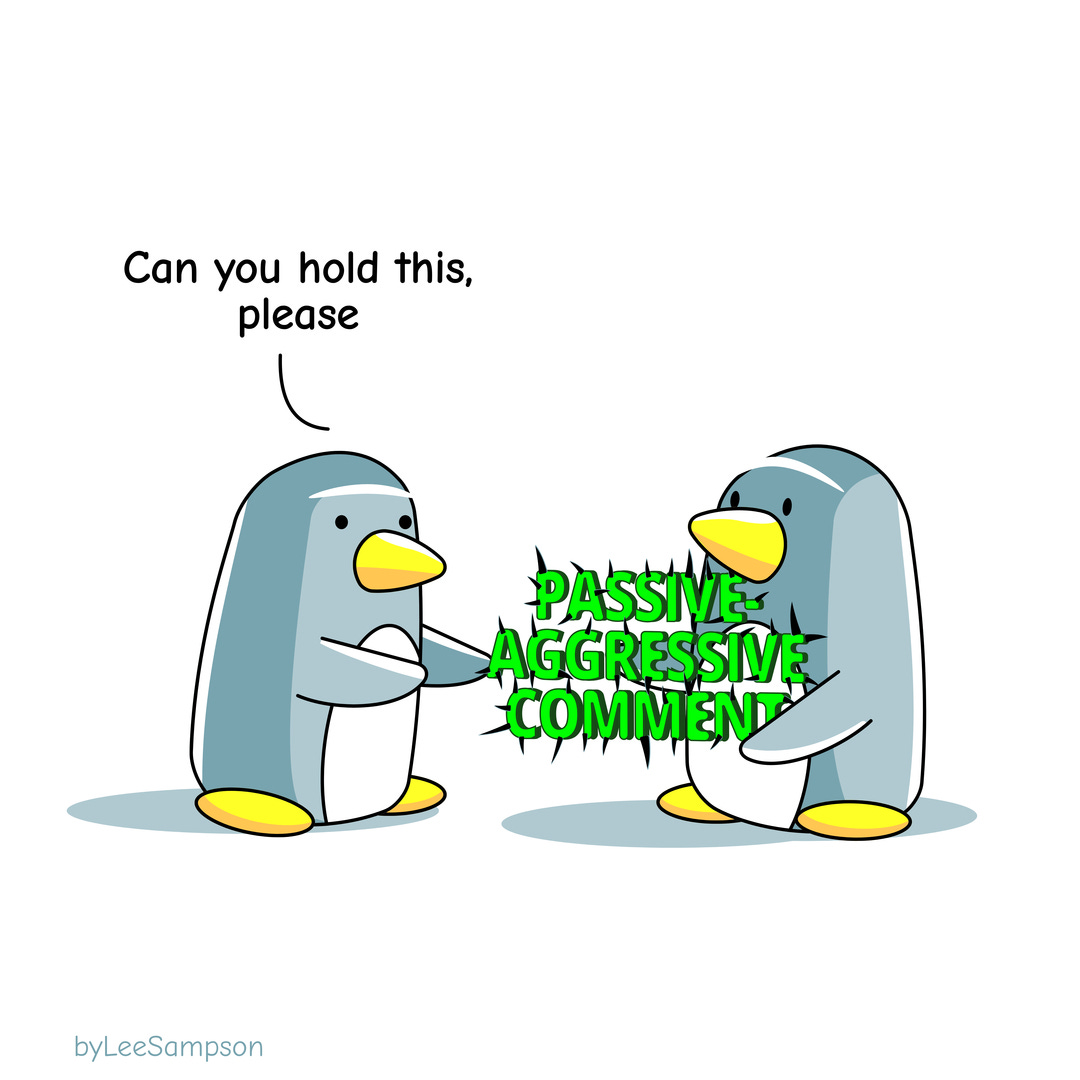
When it comes to passive-aggressive techniques, there are better, more productive and healthier ways to address frustration than hoping someone will understand cynical feedback dressed as kindness.
It might feel good to get it off your chest, but it doesn’t feel great to be left holding and what is it communicating apart from the fact you can’t?
Communication shouldn’t be the punishment it should be part of the solution.
Volume
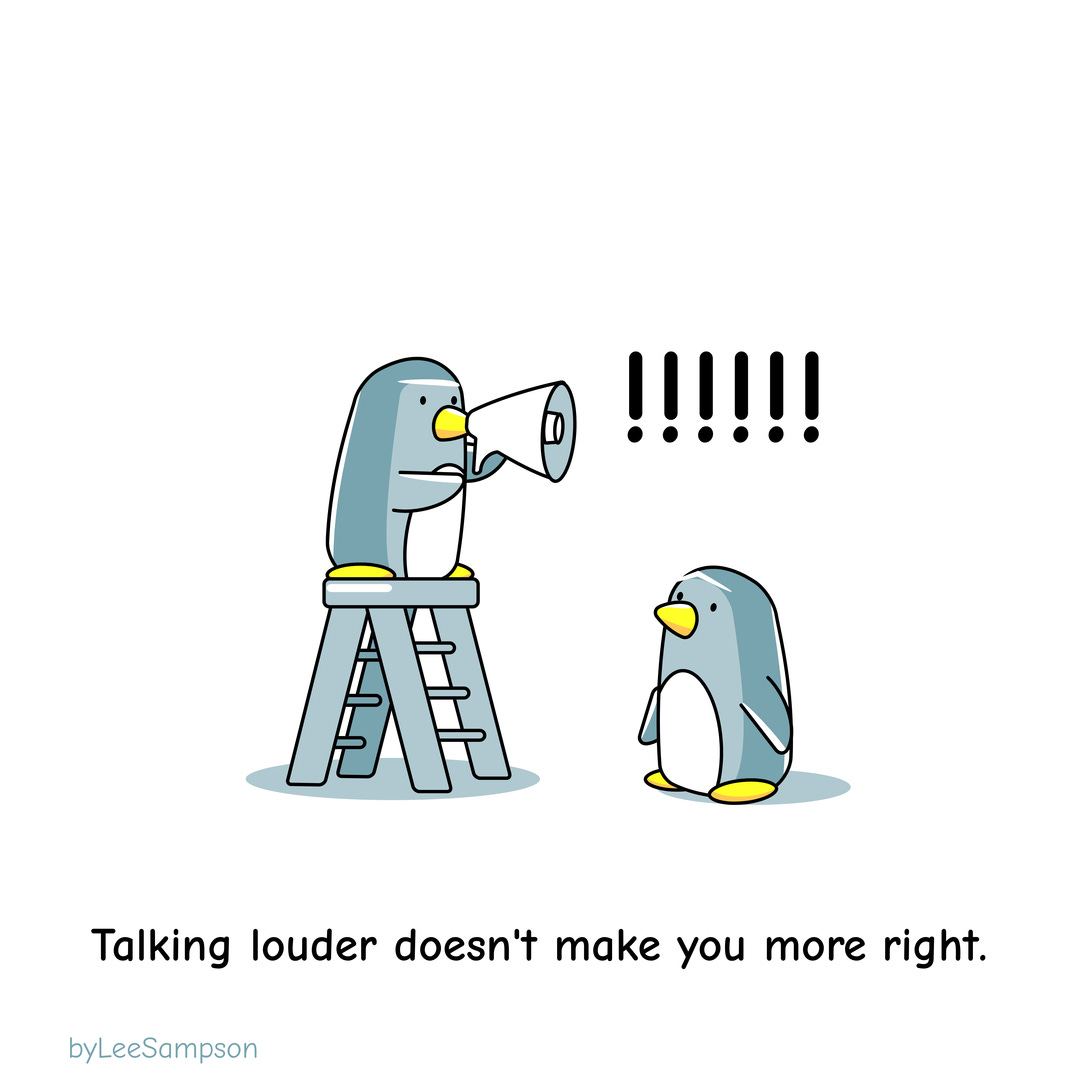
Turning up the volume doesn't necessarily turn up the motivation.
Over-talking or talking louder to get your message better heard, is a good sign your communication might be slipping into coercion.
Coercive communication changes the relationship into a "because I told you to" dynamic, setting the expectation that respect only flows one way.
If the goal of your communication is to connect, grow a sense of team and working together, then ensure you focus equally on the volume you use and the balance of talking to listening.
Listening
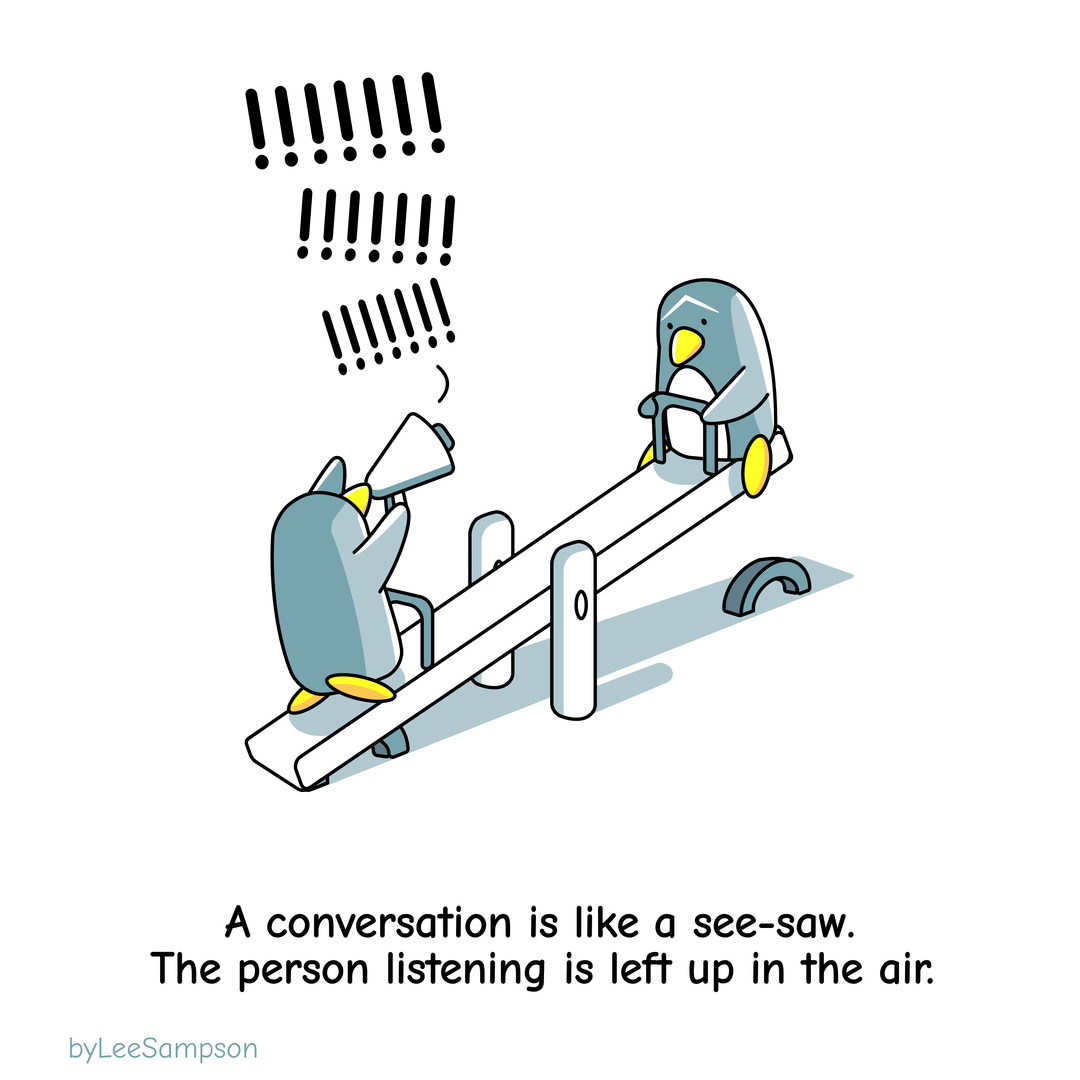
An open door policy means letting the other person's conversation too.
This is especially important in setting the tone around communication because how a leader listens is just as important as how a leader talks.
A conversation is similar to a see-saw, imagine the person talking remaining closer to the ground while the person listening is stranded up in the air until it is their turn to talk.
Some strategies to bring balance to your conversations are:
Try asking open-ended questions and then be prepared to listen
Learn to be comfortable with the time and silence it takes for a thoughtful response.
Consider using the see-saw imagery.
Opinions vs Facts

Instinctively we know there are two sides to an opinion. But that's not always how our conversations play out.
Not everyone is coming to a situation with your perspective and with your insight and they are making the best decisions they can with the information they have at hand biased by past experiences, bubble wrapped in ego.
Everyone has an opinion, not everyone can be right and you can be right about something but wrong about how it is delivered.
More is to be gained from understanding than demonstrating.
The Quiet Ones
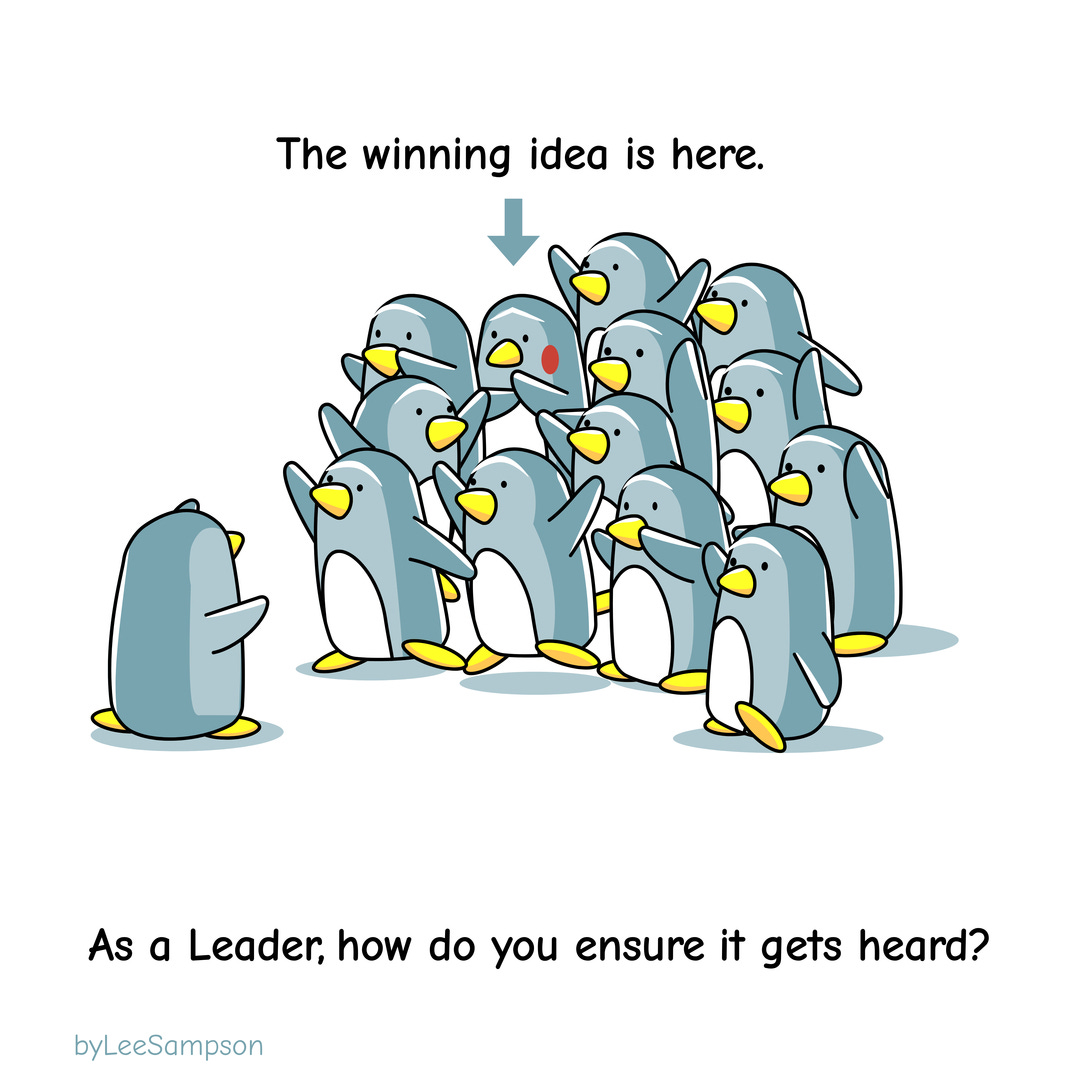
Being comfortable creating silence for a team to pause, think, digest and take stock of what's being discussed is a nuanced leadership skill to learn.
Just as making space for everyone to be heard is equally important. It is not the strength of one that wins, but the strength of many.
In Conclusion
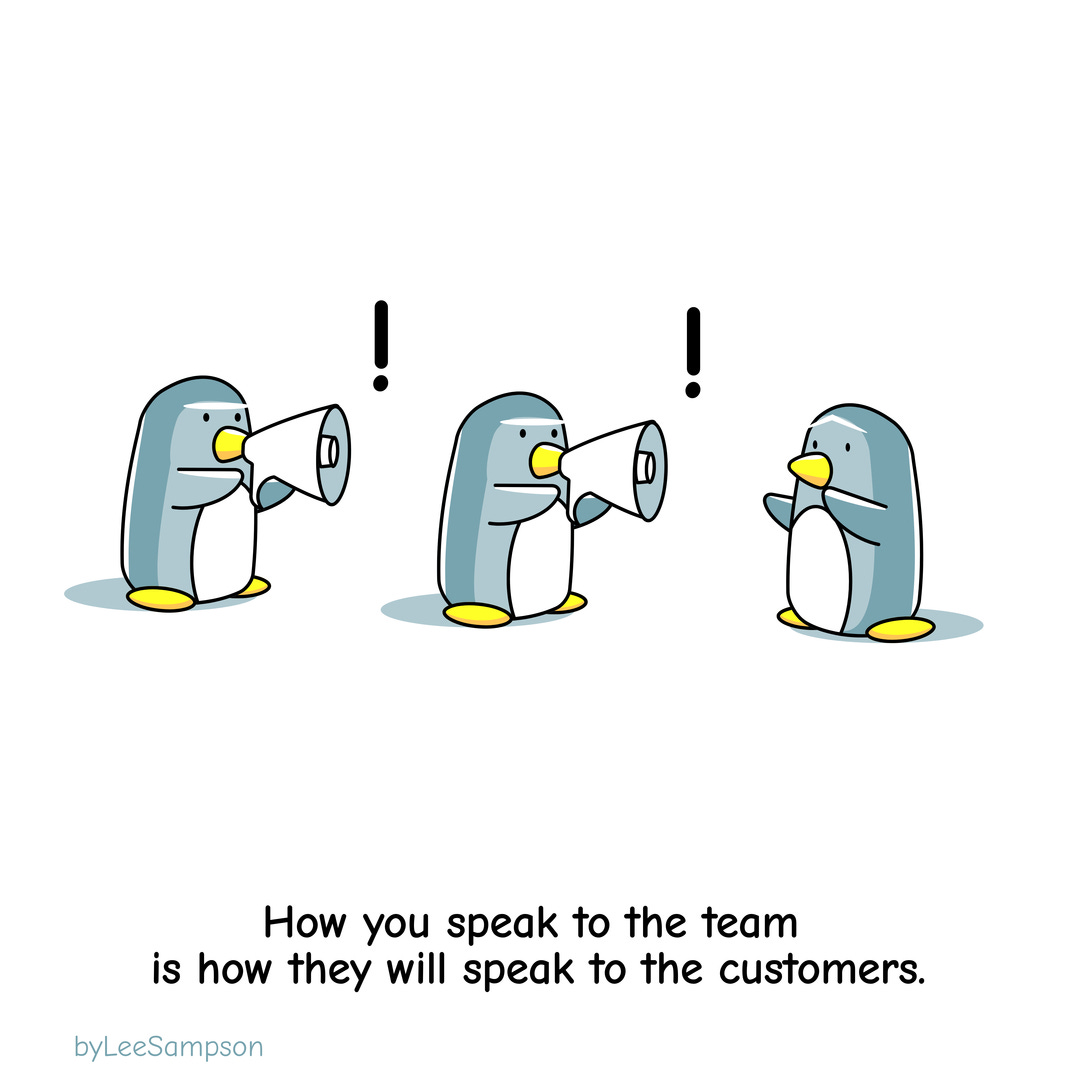
Before you start to even try to define, build and sustain a winning team culture you have to ensure you have a solid base of, empathy, a sense of oneness, trust and respect and have refined your communication skills to reinforce this.
This is the fourth article in my series based on my book, “The Illustrated Guide to Leadership Soft Skills” using the leadership wheel, a cornerstone of my approach, a method I have distilled from my leadership experiences.

Author and Illustrator Lee Sampson uses a people-centric approach and creative vision to make leadership development accessible and enjoyable. Inspired to illustrate over 1,000 Penguin cartoons on LinkedIn, Lee believes that we all have the potential to change our world for the better, by starting from the inside out.
Disclaimer:
This article has been created using insights from my book, “The Illustrated Guide to Leadership Soft Skills”. I have used my own expertise combined with the capabilities of Google AI Studio. which has helped me to polish my thoughts, improve readability and structure the content
Comments
Nothing yet. Say the first thing.
Sign in to join the conversation.