
All of this was pulled from the Byblos live feed - 600+ VC firms, 27500+ newsletters, one place.
See what else came in today at byblos.digital →
The feed mix this week was womething like this.
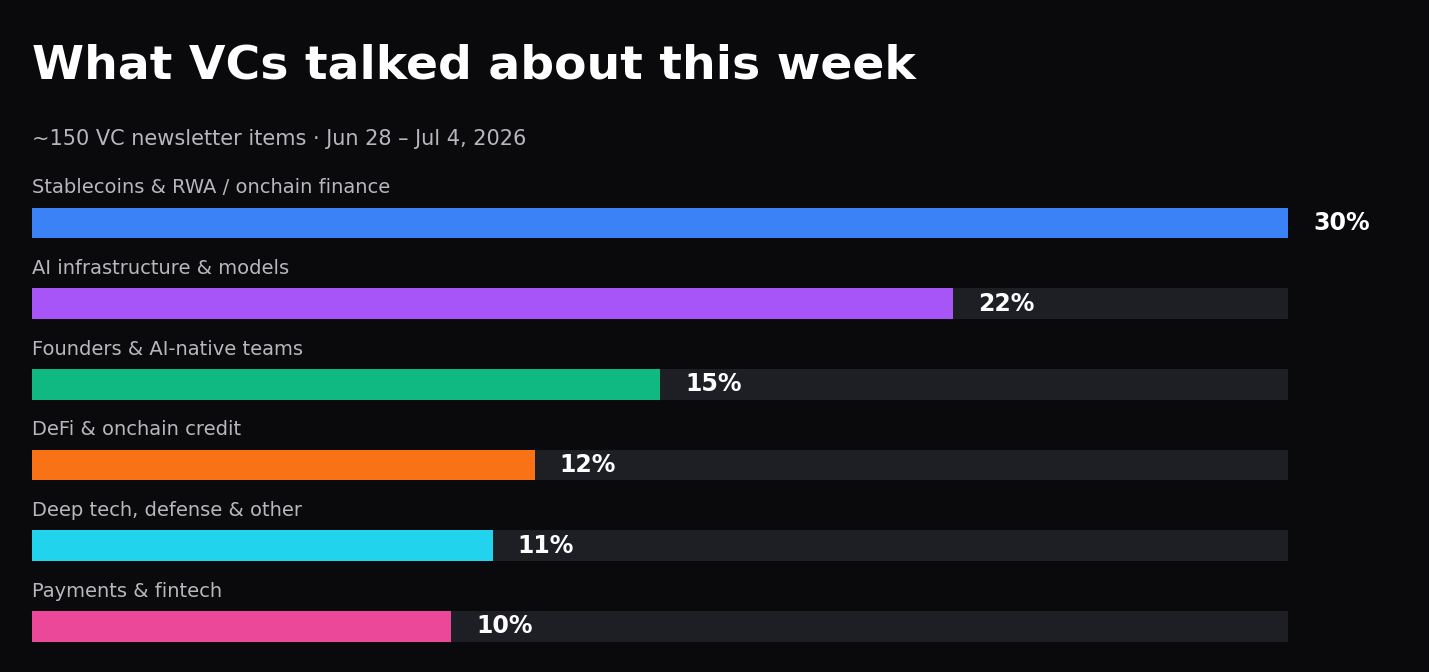
In short, what we received was:
Fintech / web3? Sell the plumbing.
AI? Own your data and workflow, rent the model.
Raising anything? Lead with efficiency.
Continued: Wall Street on chain
Robinhood launched its own blockchain, and Apollo — old-money finance, over a trillion dollars in credit — bought into a crypto lending protocol.
BlackRock plugged a stablecoin (USDe) into Aladdin — its risk software that trillions of dollars run through, so this is crypto getting a real seat at the grown-ups’ table. DTCC — the invisible plumbing behind almost every US stock trade, sitting on ~$114T in custody — set an October date to start doing this onchain. Securitize went public on the NYSE. All in two weeks.
The one to actually watch is the Robinhood’s July 1 event in London, “The World is Flat.” They shipped Robinhood Chain — a fast, cheap layer built on Arbitrum, with no token of its own (fees paid in ETH, a clear “we’re useful, not pumping a coin” move). Tokenized stocks now trade in 120+ countries. And their 7% “Earn” product quietly runs on Morpho — the same DeFi rails the crypto natives use. So an app with ~28M users just put its customers onto DeFi without them noticing.
Institutions came for the boring stuff: 24/7 markets, settlement in seconds not days, yield they can pass on.
The opening is the plumbing institutions now have to buy — credit rails, custody, compliance, price oracles, token issuance. Real demand, real budgets. Building there? Timing’s on your side. Building the 400th retail wallet? Read the room.
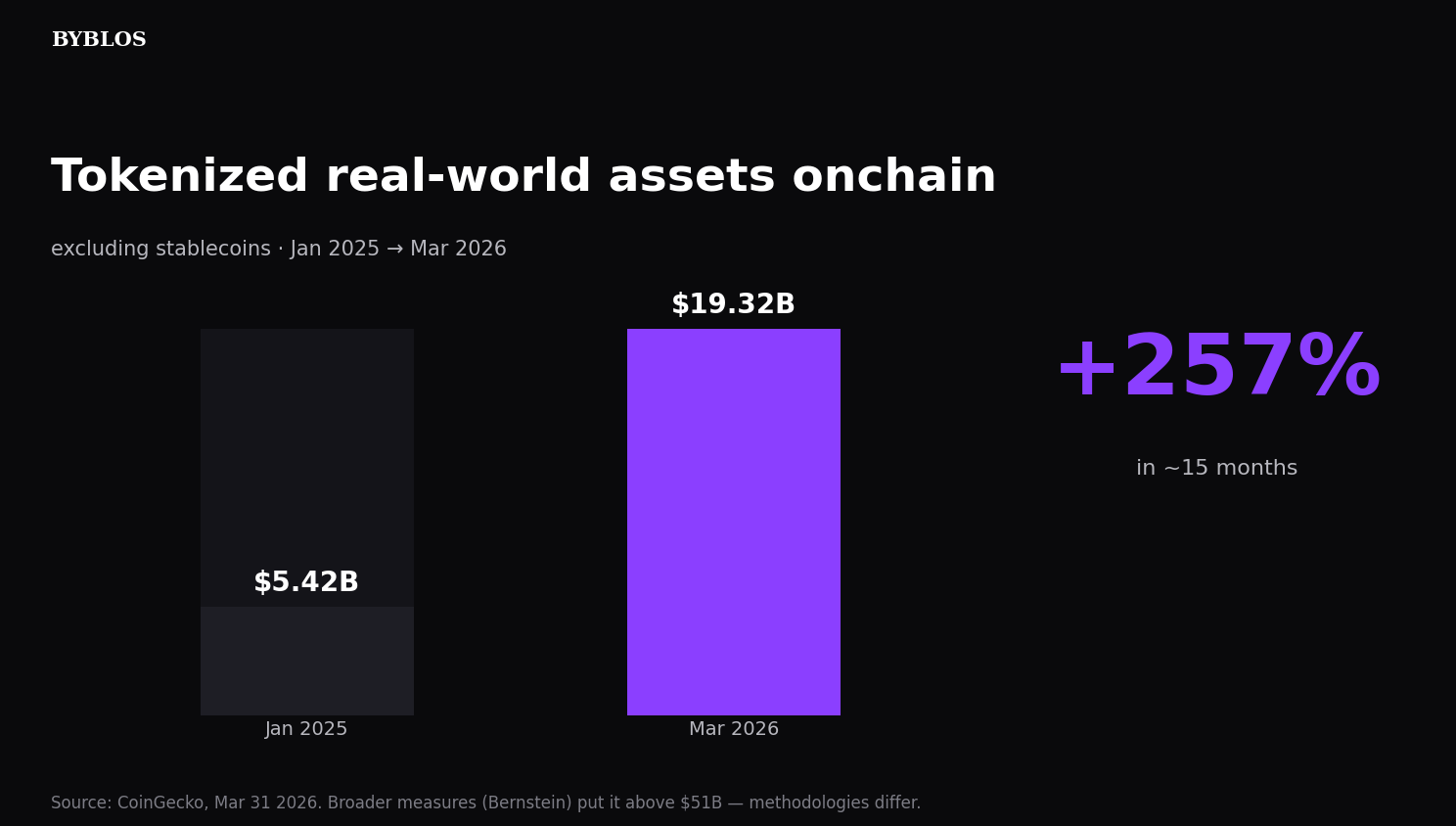
And the money’s showing up: real-world assets onchain went from ~$5.4B to ~$19B in about 15 months (+257%). Trackers count it differently and some go higher — so cite your source.
The tiny team is the new flex
Stripe Atlas (they see who’s incorporating) says solo founders are now 63% of new US companies — a record. And a Harvard/INSEAD study of 515 startups found the AI-native ones needed ~40% less capital — and it was a proper controlled study, not a survey, which is why it lands.
Zoom out: revenue per employee (total revenue ÷ headcount) runs ~$300K at old-school SaaS. Lean AI-native startups do $2–4M.
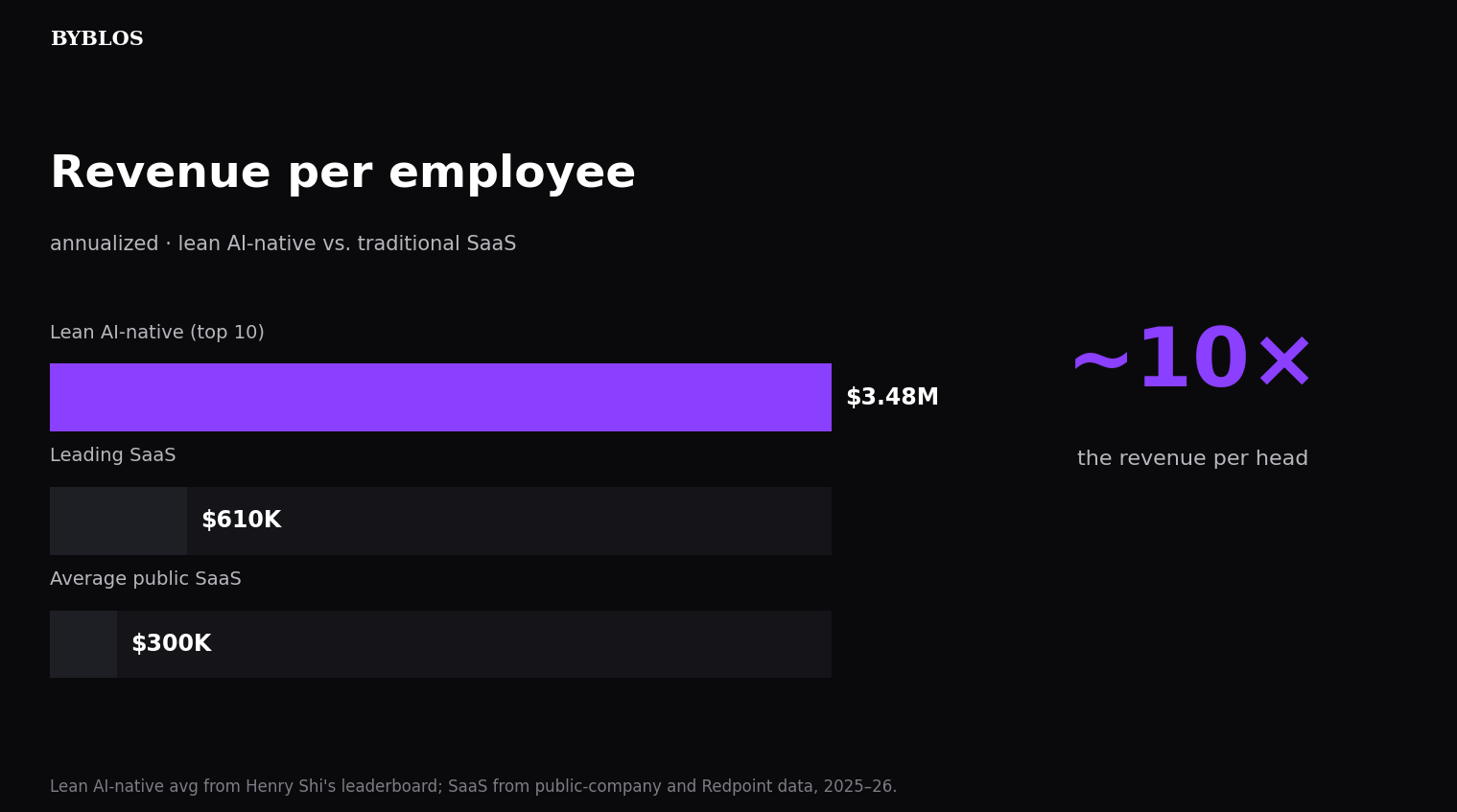
And solo operators clearing $1M+ a year more than doubled from 2023 to 2025.
The anchor is Elias Torres. He sold Drift for $1.2B, watched it swell to thousands of people, and capped his new company (Agency) at 100 — while aiming for $1B in revenue, 80–90% engineers. Building big on a tiny frame.
AI made small teams possible, and also made big teams a liability — more burn, more coordination, more dilution, for output a sharp small team now matches.
Capital efficiency is the price of admission now. Raise less than you think you need, stay small on purpose, and put revenue-per-employee near the top of your deck. “We did this with six people” is becoming more and more common.
Everything in today’s digest came from the Byblos live feed. The full newsletter archive, the VC directory, and tomorrow’s signal are all waiting for you at Byblos.digital - the investor interned, curated.
Our X (for timely updates and founder/investor opps)
Our Linkedin (for connections and professional insights)
Our app (for VC index cards, the feed of newsletters, and upcoming AI summaries)
That’s the data. Now go build something.
Comments
Nothing yet. Say the first thing.
Sign in to join the conversation.