
All of this was pulled from the Byblos live feed - 600+ VC firms, 27500+ newsletters, one place.
See what else came in today at byblos.digital →
VCs are paying for the layer above the model
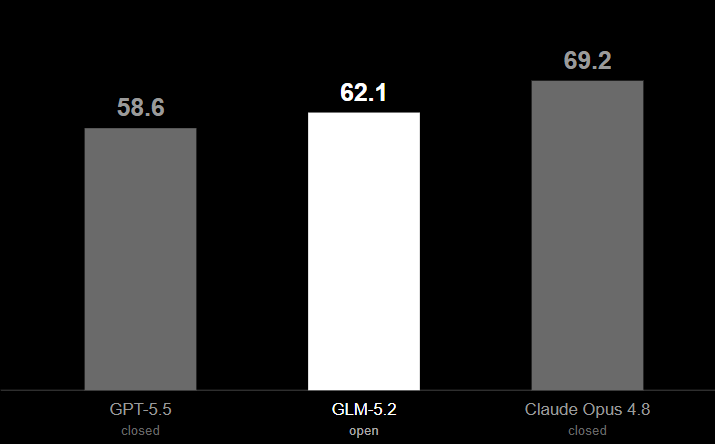
Open-source AI was the fastest-moving topic in the newsletters this week. The trigger was GLM-5.2, an open-weight model from the Beijing lab Z.ai. It beats GPT-5.5 on some coding benchmarks and runs at about a sixth of the price. Open-weight models now cost 50–90% less to run than the frontier, and API prices have dropped 90%+ since 2023.
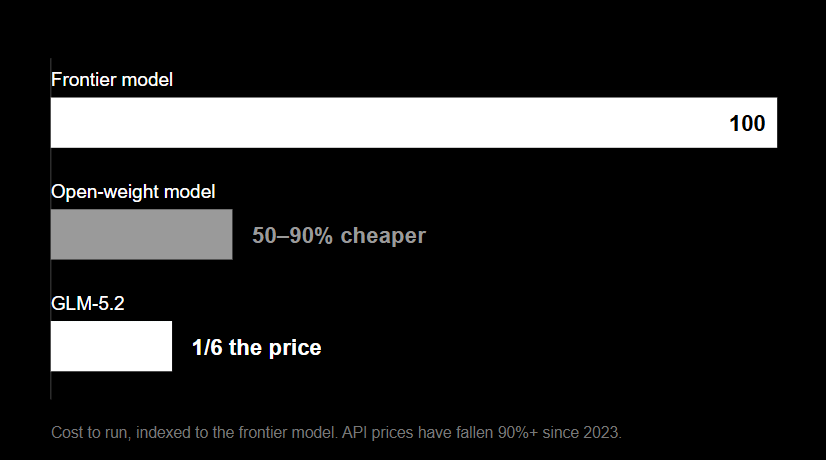
Madrona said that once the model gets this cheap, it stops being the prize. The value moves up to whoever orchestrates it - the routing, the governance, the wrapper that sits on top.
Gradial, an enterprise wrapper, took a $65M Series C from Insight Partners. Baseten raised $1.5B on inference — the plumbing that runs models, not the models themselves. OpenRouter's Fusion doesn't bet on one model at all; it routes prompts across many and beats any single one.
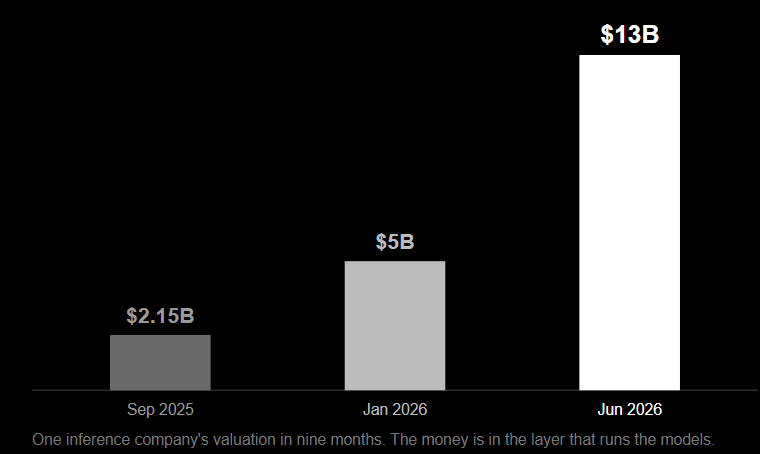
Right now VCs are writing checks to orchestration and inference startups — Gradial, Baseten, OpenRouter — over teams trying to train a cheaper base model. The reason is simple: the cheap base model already exists, and it's open and Chinese. If you're in AI infra, that's the side of the stack the money is on this week.
One caveat: New Capital Partners pointed out it's still not clear who actually keeps the money in this layer. And Databricks admitted one of its "cheap" open training runs really cost about $20M once you counted downtime and mistakes. The thesis is hot.
The smart money already crossed into Chinese open models
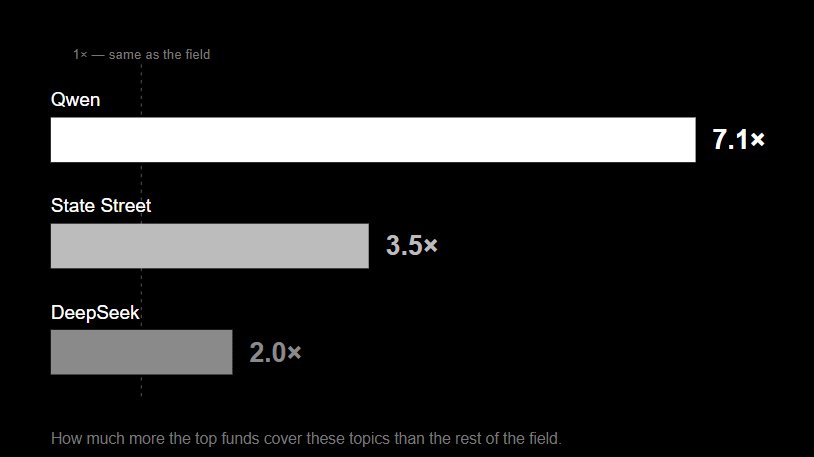
The whole China cluster lit up at once this week. GLM-5.2 showed up new. Qwen mentions rose along with those about DeepSeek. The top funds are covering Qwen 7.1× more than the rest of the field. When elite funds are that far ahead of everyone else on a topic, it's usually early.
What lit the fire was policy. On June 12 the US government ordered Anthropic to switch off its top models (Fable 5 and Mythos 5) for all foreign nationals, worldwide, on national-security grounds. Anthropic complied within hours. Overnight, "which model do I build on" turned into a geopolitical question.
Nazaré Ventures' line: "virtue is not a business model" — meaning being the good guys didn't protect Anthropic when the state flipped the switch. Zhipu's founder Tang Jie went the other way and dunked on Elon Musk's timeline, saying Chinese models would close the gap faster than Musk predicted. Both point the same direction: the closed frontier looks less safe to depend on than it did a month ago.
The money's already moving to the open side. Poolside raised at a $12B valuation (Nvidia, Bain, DST). Mistral is sitting around $23B. These are the open-weight bets, and they're getting funded at scale while the closed leaders deal with export controls.
If you build on top of one closed model, that dependency is now a risk an investor can see in your data room. The funds tracking it earliest are the T1s over-covering Qwen and DeepSeek — Social Capital, Madrona, Nazaré, New Capital Partners. If you're in this niche, those are the newsletters to read and the names to pitch.
The stablecoin fight moved from the coin to the money behind it
TradFi walked into stablecoins this week without issuing a single coin. State Street showed up new in the data. Fidelity showed up new. Franklin Templeton jumped a lot. State Street is also being over-covered by the top funds at 3.5× the field — another early-money signal.
Insight Partners said the real question isn't whose logo is on the coin, it's who manages the reserves behind it. State Street and Fidelity both launched money-market funds built to hold stablecoin reserves under the GENIUS Act. Fidelity's launched June 17.
It's not just funds. Avalanche launched a Payments Collective with 28 organizations, including Franklin Templeton, VanEck, Paxos and Anchorage — TradFi institutions plugging into crypto rails directly. On the venture side, the checks went to the rails and the on-ramps, not to new coins: Flutterwave raised a $3.2B Series E led by Ripple, Trace Finance took $32M (CoinFund), El Dorado got $9M (Paradigm).
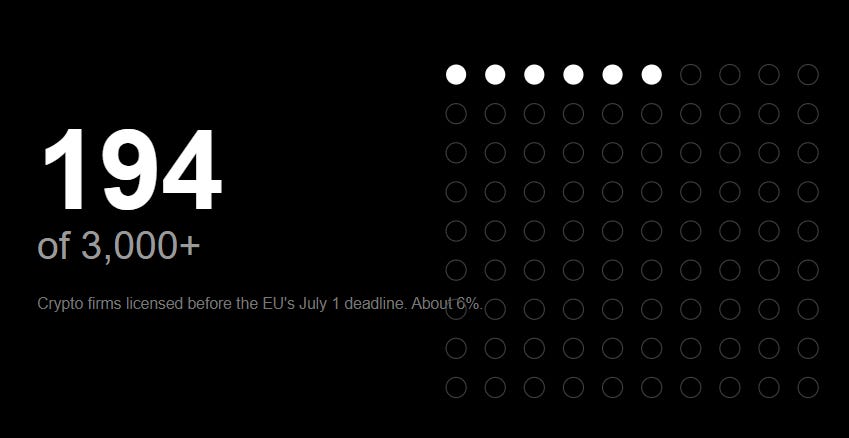
Meanwhile the field is about to thin out. Europe's MiCA licensing deadline hits July 1, and only 194 of more than 3,000 crypto firms have a license. Binance may get rejected in Greece. Tether's USDT is already getting pulled from major EU exchanges. The unlicensed players are about to be cleared off the board.
Right now the money is going to reserve management, payment rails and compliance infrastructure — State Street, Fidelity, Flutterwave, Trace — not to "launch another stablecoin." If you're building in this space, a real EU license is turning into a moat, and the reserve layer is where the institutional attention sits. The funds to watch here are Insight Partners and Theta Capital.
Everything in today’s digest came from the Byblos live feed. The full newsletter archive, the VC directory, and tomorrow’s signal are all waiting for you at Byblos.digital - the investor interned, curated.
Our X (for timely updates and founder/investor opps)
Our Linkedin (for connections and professional insights)
Our app (for VC index cards, the feed of newsletters, and upcoming AI summaries)
That’s the data. Now go build something.
Comments
Nothing yet. Say the first thing.
Sign in to join the conversation.