
At six months shy of 30, I’ve been thinking a lot about death.
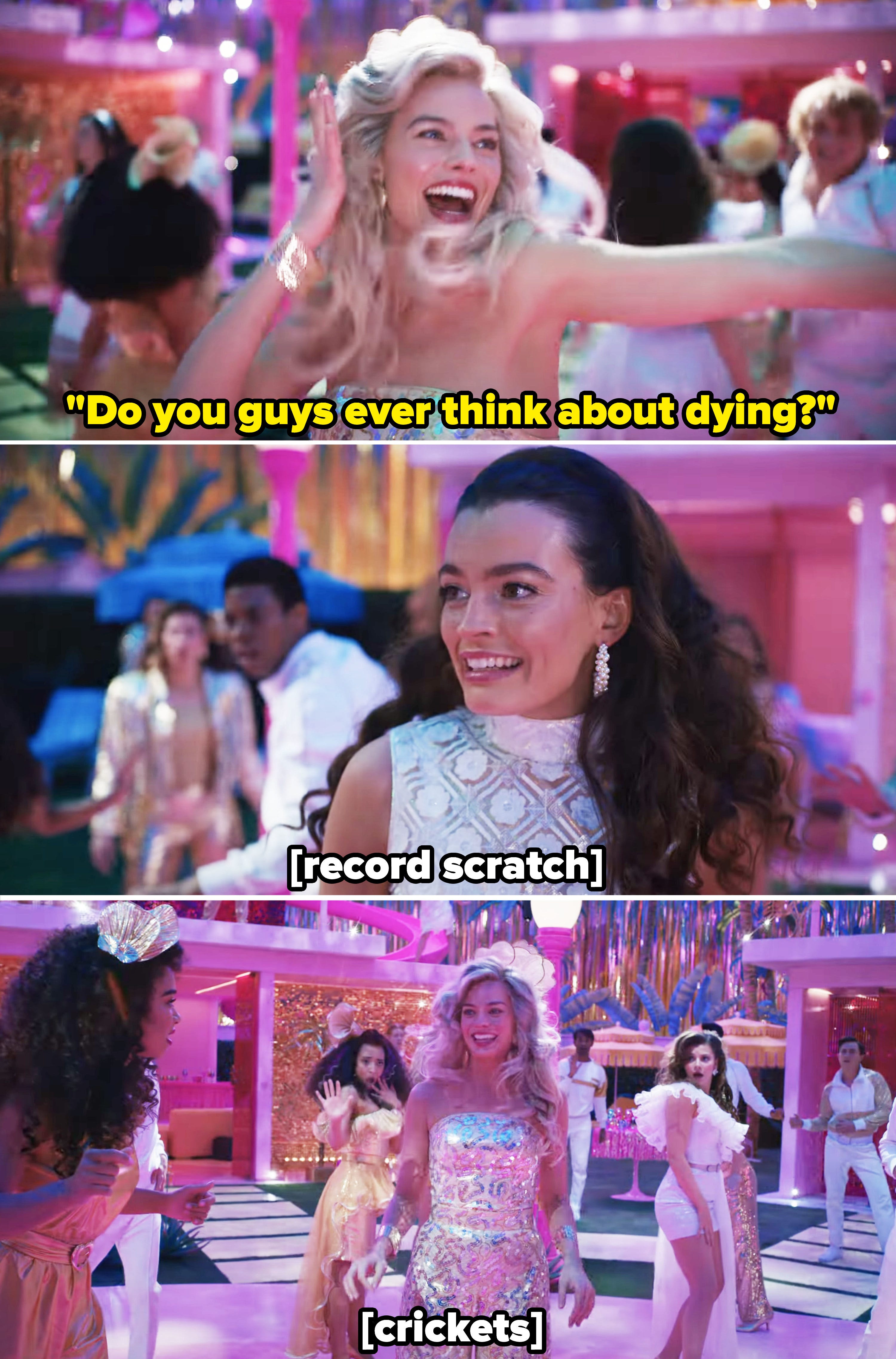
🚨Hold up, don’t call a help line on me yet! Allow me to explain.1
Throughlines is a newsletter filled with creative exploration, intellectual deep-dives, and novel-writing updates written by Ashley Hackett. If you enjoy this piece, please consider subscribing (free or paid!) or sending me a tip. Thank you for reading!
At the weird age of 29-and-a-half, a lot of ~things~ are happening simultaneously.
I can feel the cooling effects of my frontal lobe development on my decision making skills and shrinking feeling of invincibility—by now, enough shitty things have happened to me in life that the whole “that could never happen to ME” ideology that governed most of my twenties doesn’t work anymore.
I’m also about to step into my Saturn Return, that astrological upheaval that allegedly hits between 27 and 30, if you believe in that sort of thing.
Oh, and I’m interviewing dozens of strangers about death.
The resulting slurry of existential crises is not, I’m sure, uncommon—most people in the U.S. make it to 30, and most women existing in our capitalistic, youth-worshipping zeitgeist will experience some mix of dread and relief upon reaching this milestone birthday.
But, hey, you only turn 30 once, so as an Internet Writer it’s my humble burden to try to make new sense of this hyper-specific-yet-widely-felt crisis.

The other day I was on step three of my ever-lengthening skincare routine. I usually zone out or assume a thousand-yard-stare during this ritual but, on this day, I squinted into the mirror and noticed a little wrinkle forming near the corner of my mouth.
shit, do i need to start getting botox? Less a thought than a reflex, the statement seemed to float above me in the mirror.
I imagined a needle piercing the flesh of my cheek, neurotoxins magicking away that little line.
I frowned, disliking that image. But the motion didn’t align with my new wrinkle.
I forced a smile in the mirror and watched my skin settle into the line etched there. proof, I thought, exhaling. maybe she can stay.
Overwhelmed by some emotion I couldn’t name yet, I opened Instagram, hoping to numb my mind (admittedly a horrible coping mechanism. perhaps i’ll find a better one in my thirties). Instead, the first video I saw was this:
I don’t even know why it was at the top of my algorithm—it was first posted last August—but my favorite poet Andrea Gibson was sending me a message from the grave.
I hope you take 30 seconds to watch the video above, but if you don’t, it shows Andrea and their partner using the “old” TikTok filter that shows what you might look like with silver hair and your wrinkles fully settled. Andrea breaks down—they knew by this point that they would never live long enough to age like this, or to see the years sag their partner’s skin.
Heartbreaking is such an empty word to describe the depth of that short video.
And, just as Andrea has done for me so many times in the past, that video did the opposite of numbing my crash out.
It reminded me of David,2 whose smile lines deepened as he recounted his first night at a DC gay bar in the 70s. Of Sarah,3 whose eyes crinkled as she told me the happy memories she had with some friends who died of AIDS in the early days of the epidemic.
As mentioned earlier in this essay, I’ve been interviewing dozens of people who lived through the AIDS crisis in Washington DC to help inform my book. Many of their friends didn’t make it past 30.
By all measures, David should not have made it past 30. He miraculously lived with HIV for ten years before being placed in a clinical trial that would later save his life.
And there I was, staring at my baby wrinkle in the mirror, immediately considering botox, silently spiraling about the privilege so many of us have to expect to age long enough for botox to actually make a difference.
But what difference would it make, really? Did I actually want to erase the evidence of a life well-lived?

I asked David what it felt like to survive when so many around him didn’t, when all scientific evidence tells us that he should have died decades ago.
“In Judaism, there’s a phrase Tikkun Olam,” he said, “which means ‘repairing of the world.’” That simple concept has propelled him through life, through survival.
He had no idea why he survived while those around him didn’t, just as there was no reason for Andrea Gibson to die.
If survival is arbitrary, what we do with it isn’t.
David chose to repair the world. Andrea chose to write it more honestly. The people I’ve interviewed chose to love loudly, even when—in many ways—that love was sometimes lethal.
I don’t know yet what my thirties will demand of me. But I know this: if aging is a privilege, then it is also an assignment.
So yes, six months from 30, I am thinking about death. Not because I want it. Quite the opposite, in fact.
I’m thinking about death because I am starting to really understand that getting older is not a given. It is a gift with strings—expectations—attached.
You only turn 30 once. Some people never get to.
If I’m lucky, one day my whole face will fold into itself when I smile.
I hope I’ve earned every line.
I feel the need to caveat with I’m definitely not suicidal, but these days I do find myself thinking about death a little more than I ever have before (I know my therapist is reading this; take a deep breath girl we’re good!).
Name changed for anonymity.
Name changed for anonymity.
Comments
Nothing yet. Say the first thing.
Sign in to join the conversation.