
Once upon a time, a man named Newton Smith died at home in Batavia, Illinois, a small city west of Chicago.
After his death in the 1970s, Newton Smith’s house would change hands, but his soul would never manage to leave the physical confines of the building. And one day, a young girl and her family would move in.
That little girl is named Ariane Elizabeth Scholl.
Welcome to the first edition of DEEPLY/INVESTED, a series where I interview people about their hyperfixations. This week, I sat down with Ariane Elizabeth Scholl, a fellow Substack writer who is working on her debut novel. Please give her a follow!
As a kid, Ariane and her siblings moved through a house split in two: an “old side” where Newton died, and a newer addition her dad built after their family moved in.
The house began displaying some ‘quirks’ not long after Ariane’s family moved in: wind chimes rattling in the middle of a perfectly still night, footsteps creaking the floorboards upstairs when nobody was actually up there.
Instead of scaring Ariane and her family, Newton’s ghost eventually became a normal part of their lives. Her parents reassured her with a funny kind of domestic ghost logic: “My parents were like, well, your bedroom is on the ‘new’ side of the house. The ghost can’t go through a new wall. So I was just like, okay, cool.”
Admittedly, when Ariane told me this, it struck me as shockingly blasé—if ghosts were walking around in my house, I’d have a ‘for sale’ sign up YESTERDAY.
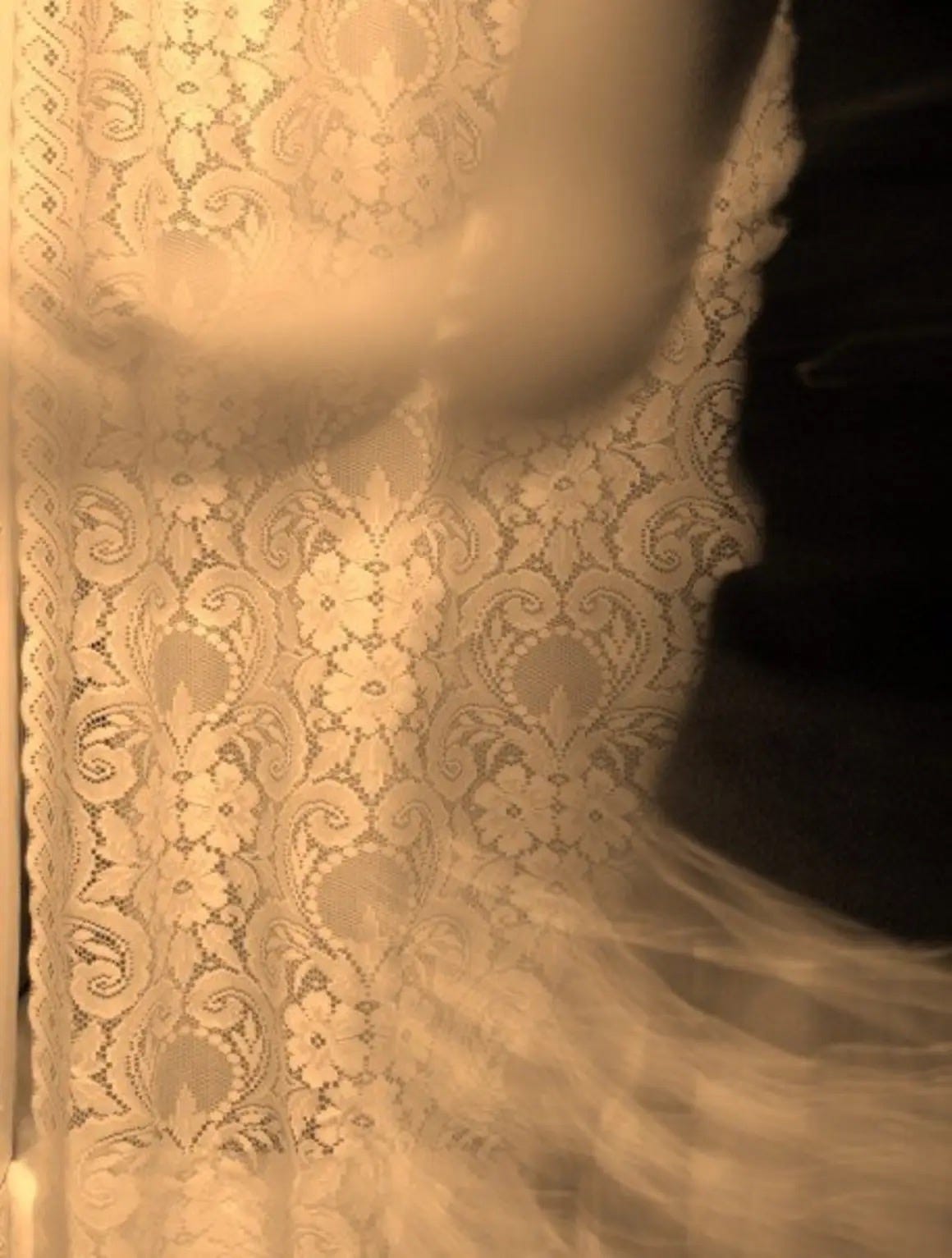
Indeed, she had a first-grade friend over for a sleepover who, upon hearing Ariane’s casual mention of the ghost upstairs, cried and immediately needed to be picked up. I can relate, girl.
“There were a couple times where it felt scary,” Ariane told me, “but the ghost wasn’t a mean presence.”
I guess if you grow up with something, it becomes normal?
But the concept of living with Newton Smith’s ghost didn’t exactly fade into the background for Ariane. Instead, it became her hyperfixation.
“I became fascinated by ghosts,” Ariane said. “And then, I became fascinated by ghost stories.”
From there, the fixation mushroomed. Ariane and her best friend—who she’s known since kindergarten—spent “literally all of our time in the library with the ‘G’ card catalogs…trying to find ghost books.”
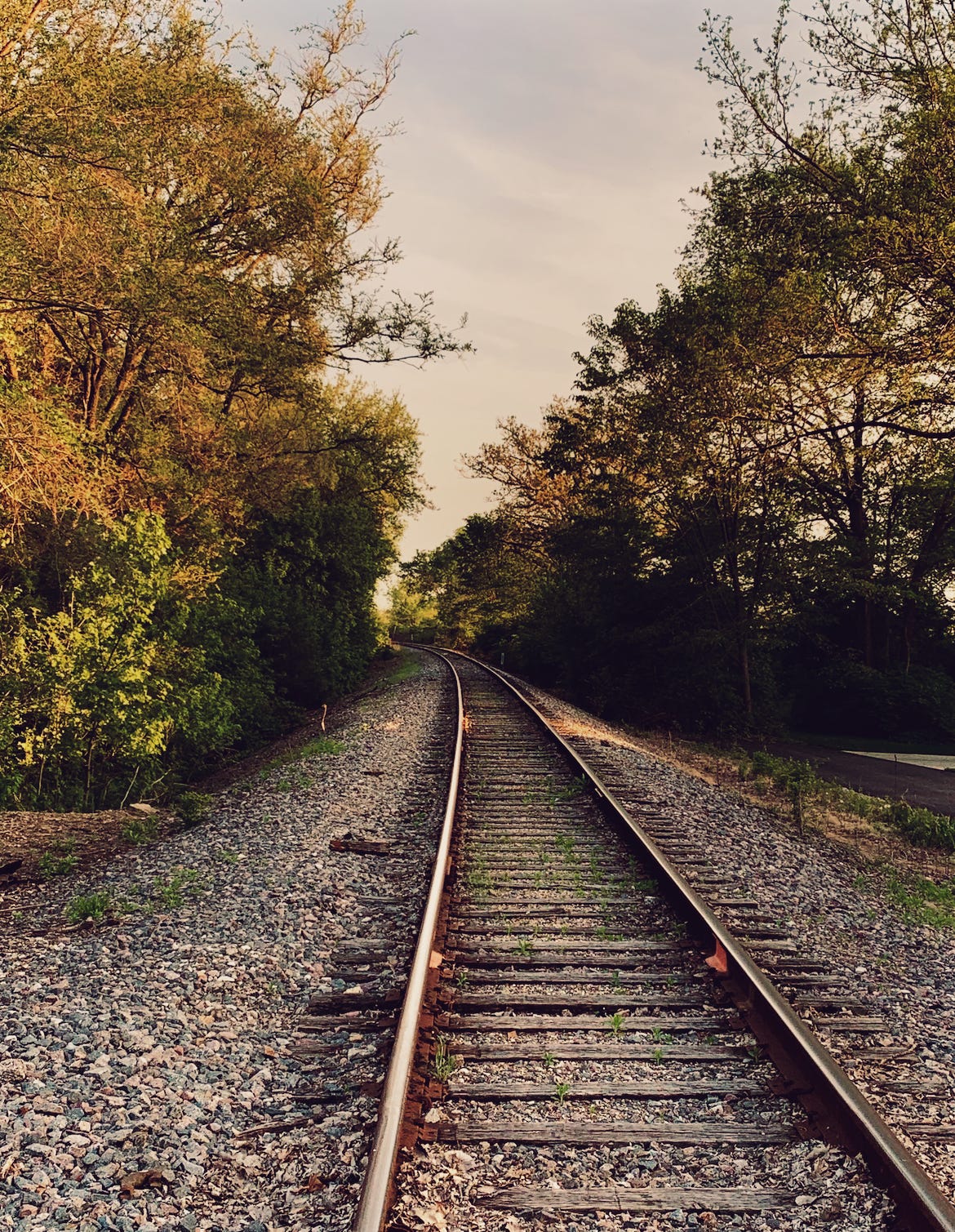
The girls also became obsessed with a train that ran by Ariane’s house at night that they dubbed the “ghost train.” They made up a story that the train tracks would open up in the middle of the night so that it could bring its deceased passengers to hell.
“Obviously I was just born to be a writer,” she laughed.
The train tracks curved near her house; she remembers lying awake, doing the math in her head and deciding that it was possible for the train to hop the tracks and crash into their house.
The ghost story was a fun childhood quirk, but also a tool—it helped her give a reason (even a fictional one) for the anxiety she had felt about the train as a child.
As Ariane and her friend grew up, so too did their interests. And as two ghost-obsessed girlies, it was really only a matter of time until they picked up a Ouija board.
Their Ouija era started around sixth grade, in that same best friend’s oversized bedroom.
“We had the Ouija board, and we were asking who we were talking to. Then the board spelled out ‘JA,’ which now I know, ‘Jah’ is also a name for God in Hebrew. So then we asked it questions and it would respond.”
Her friend hit her limit. “She was actually petrified.” After that, they tried to put the board, and the fear, away. They buried it out in the woods by her friend’s house.
Fifteen years later, though, Ariane’s friend was walking her dog in those same woods when she hit something with her foot. She looked down, and it was the corner of the Ouija board sticking out of the dirt.
Her friend called her freaking out—to this day, neither of them know what to make of the situation. But they agreed to leave the board there, afraid of waking up “the JA.”
If Ariane’s home life primed her for her ghost obsession, her mom curated the fieldwork.
“My mom is also a big lover of ghosts and ghost stories. We would always go on ghost tours when we went places, because she loves history.”
One high school family vacation still stands out to her: They went to Jerome, Arizona, home to the Jerome Grand Hotel, which used to be a hospital and mental institution. Her mom booked rooms there without much preamble.
Their room for the night was across the hall from one of the asylum’s padded rooms—now used as a pantry, but still very much padded. On the TV, instead of generic hotel promos, was all the stories of people who had died in the hospital-turned-hotel. Ariane was freaked out.
Luckily, nothing paranormal happened to her that night; the horror was purely anticipatory. But this trip wasn’t the only haunted one: her mom often tried to sneak ghost tours into their family vacations.
As a kid, Ariane did wonder, “Why can’t we just go to a beach or something?” But she was also all in: “I was like, oh, this is fascinating.”
As an adult, Ariane’s hyperfixation has a more defined shape: books, podcasts, trips, and the way she spends her alone time.
“I think the thing I like about ghost stories is that they’re often rooted in history,” she said.
She listens to Haunted Road, a podcast that tells the history of a place first, then interviews someone who has experienced ghosts or haunting there.
“It’s a way that history can feel alive, like the spirits aren’t quite dead.”
This blend of ghost story and history shows up in Ariane’s reading life as well. She prefers to read Gothic horror, and is currently reading Edith Wharton’s ghost stories.
Most notable, though, is Ariane’s novel-in-progress.
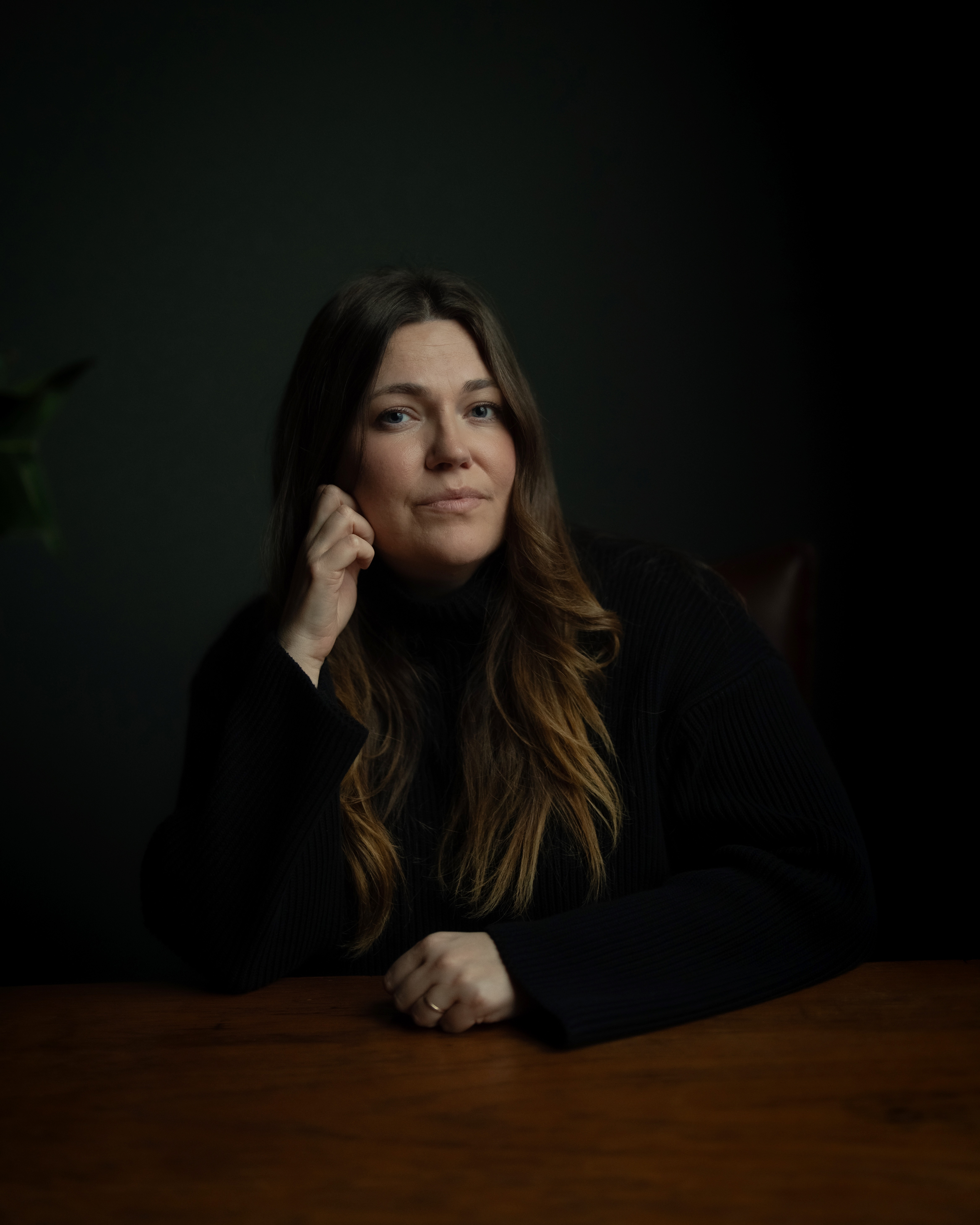
Her childhood self would likely be proud and excited to hear that she’s kept up the habit of making up ghost stories: Ariane’s debut novel is a psychological horror set at a writers’ retreat in Michigan’s Upper Peninsula. In the book, the house these writers stay in is haunted and sentient.
“But the horror is more about the way these people interact with each other and their own bodies,” she said.
That layering—women’s bodies and minds, isolation, a sentient space—is part of a broader theme in Ariane’s work. Before this book, she wrote and queried another manuscript “written in the container of the pandemic.” Agents weren’t sure what to do with debuts that brushed up against COVID, so she shelved it and turned to a project that feels, as her best friend put it, inevitable.
Ariane finishes the thought: “I’ve been doing research my whole life for this book.”
The horror is personal. More than an extension of the ghost stories she’s been creating since childhood, the book is “about the horror of motherhood and living in a female body. Those are things that I think are important to talk about, and it’s a lot easier to do it in the scheme of a Gothic horror story.”
During our conversation, I kept thinking about the underlying “why.” Plenty of people love movies like “Ghostbusters” and “Paranormal Activity,” and some folks make careers out of ghost hunting.
I even confessed to Ariane that I used to mainline true crime podcasts in college, until I started to feel crazy paranoia that I would be the next victim and subject of “My Favorite Murder.”
But Ariane made a key distinction there: She gets the draw, but ghost stories scratch a different itch for her.
“Historical ghost stories are a good adjacent, but you’re not feeling like you’re gonna be murdered afterward,” she said. “There’s some tragedy, but it’s older,” and more removed from our current reality.
Ghosts, in other words, are a way to be close to fear, tragedy, and unresolved history without always centering contemporary violence. They make the past feel “alive” again. They offer a structure for thinking about what lingers—memories, injustices, bodies that were never properly buried—without having to look only at the news.
Ghost stories also give us a way to think about death and the afterlife that isn’t necessarily religion-bound.
And, of course, Ariane has thoughts on that, too: “I’m definitely interested in where we go and what happens after we die,” Ariane said. “Especially because I don’t necessarily believe in a heaven.”
She’s drawn to different theories: ghosts as residual energy, ghosts as people “stuck here and need to solve something.” She jokes that she’s already made plans for her own afterlife.
“I told my husband if I died, though, I was gonna haunt him.” His response: “Of course you would. Obviously I would expect nothing less.”
By the time our interview came to a close, I’d scribbled down a long list of things to google later.
For Ariane, though, this isn’t a phase. When I asked if the obsession had ebbed and flowed over time, she didn’t hesitate.
“It’s very steady,” she said. “Very.”
She’s been doing research for this book—and for whatever haunts her next—ever since she first shared a house with the ghost of Newton Smith.
Comments
Nothing yet. Say the first thing.
Sign in to join the conversation.