
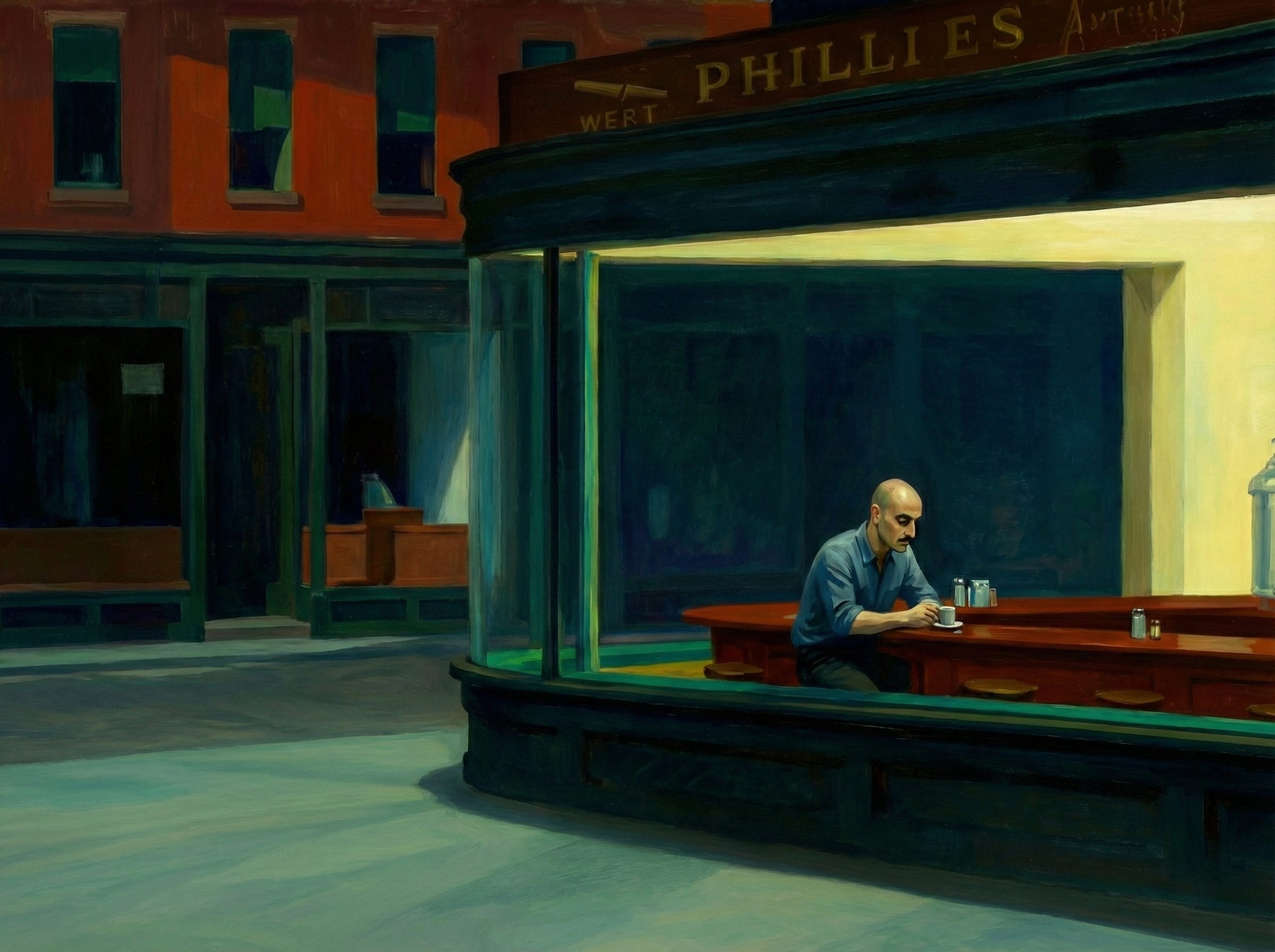
My tongue tingles first.
Before the words register. Before you’ve processed what the client just said or clocked the temperature shift in the room. The body knows. Something’s gone wrong — or is about to — and your nervous system is already there, already bracing, while your face is still doing the professional thing.
Thanks for reading! Subscribe for free to receive new posts and support my work.
I’ve been in that room more times than I can count.
And every time it’s the same. The team has worked hard. The work is good. You believe in it. And then the client starts talking. And you realize, somewhere around the third sentence, that what you’ve built and what they were expecting are not the same thing. Not even close.
And nobody said so until right now, in this room, with everyone watching. I used to think that feeling meant I’d done something wrong. That somewhere I’d screwed up.
I don’t think that anymore.
What I think now is that the gap — between what was needed and what was expected, between what was said and what was meant, between what an organization believes about itself and what it actually does — that gap is the whole job. Not the embarrassing part. Not the failure.
The job.
Most of my career has been spent learning to stay in that room, in some version of that situation, instead of leaving it. To ask the question nobody is asking. To put the solution in context, grounded in what it actually solves, not in how hard we worked or how clean the craft is. To coach instead of defend. To lead toward something better instead of protecting what already exists.
That’s harder than it sounds. Because the instinct, for everyone in that room, is to protect. The client protects their expectations. The team protects their work. The leader protects the relationship. And while everyone is busy protecting, the actual problem sits in the middle of the table, untouched.
I write about that problem.
Not the design problem. The organizational one underneath it. The structures that determine whose judgment gets trusted, whose questions get answered, and whose work ends up upstream of the decisions that actually matter. The invisible architecture that explains why good teams keep building the wrong things — not because they’re careless, but because the system was never designed to help them find out.
I’m a Design Director, a photographer, a musician, and a father. I’ve spent twenty years inside the gap — building products, building teams, trying to understand why the second is so much harder than the first.
This isn’t a design newsletter. No tool roundups. No component libraries. No tips.
Field notes from the inside of the problem. Personal when that’s what it takes. Honest about what it costs when organizations say they value design and then quietly make sure it can never do its job.
I write about culture the way a chef writes about a kitchen, not as a concept, but as a set of conditions. Who controls the heat. What happens when the prep falls apart at 7pm. What gets served anyway.
The people I’m writing for have been in that room too. The founder who knows something is broken but can’t name it. The executive who’s hired three design leaders and watched all three stall. The operator who’s shipped good work into a broken system and is starting to wonder if the problem was never the work.
If something lands, reply. I read everything.
Welcome to the gap.
— Agustin
Thanks for reading! Subscribe for free to receive new posts and support my work.
Comments
Nothing yet. Say the first thing.
Sign in to join the conversation.