
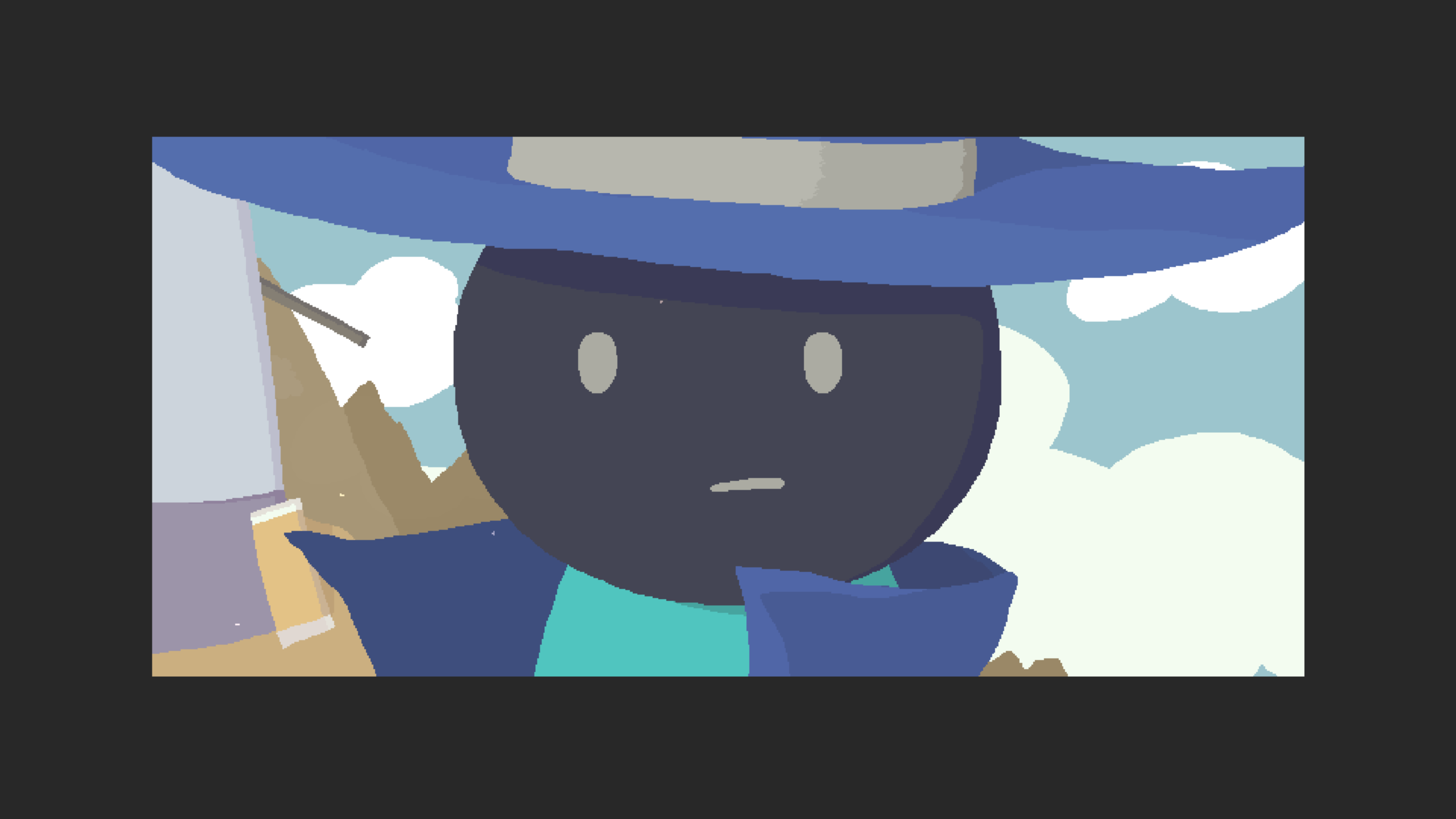
You are Blue, a mediocre Wizard who doesn’t particularly stand-out in a magical academy filled with Wizard as or more capable than you. That is until you are defenestrated— I coincidentally learned this word while playing Scrabdackle, pure magic in itself. It means being thrown out of a window.
Your journey begins post-defenestration in a world wholly unfamiliar to you, and to Blue, who’d never left the Academy before. Explore the world, learn what happened, and enjoy your time in the best metroidvania you’ve never heard of.
What The Hell Is A Scrabdackle!?
I heard about Scrabdackle on November 12, 2025, courtesy of Jasmine James, an excellent PR person working with Double Jump. I was late to the party, but not late to the release, thankfully. The game came out in Early Access December 2, 2025, but its story begins considerably earlier.
March 16, 2021. Scrabdackle’s Kickstarter campaign goes live. An ambitious jakefriend is asking for CA$ 24,000 to make their first game into reality. Here is how Jake describe it then:
Explore a curious world worth getting lost in, armed with wizardly skill and unwizardly empathy.
Not a lot has changed since then, even though Jake wildly underestimated how much time it would him to get the game released, even in early access. Back in 2021, he was hoping to get Scrabdackle out sometime during 2022. Here we are, at the end of 2025, and the game’s first act just came out.
But before we get into that, what the hell is a Scrabdackle, after all? Jake explains:
Every name I tried to think of for the game sounded very generic, like “Wizard Adventure” and things like that. It seemed like a better approach to come up with something that had the right mood and build around that. I made up “Scrabdackle” because it made me laugh and it’s fun to say, and nothing better ever came to mind - and that was pretty much that.
What The Hell Is Scrabdackle, Though?
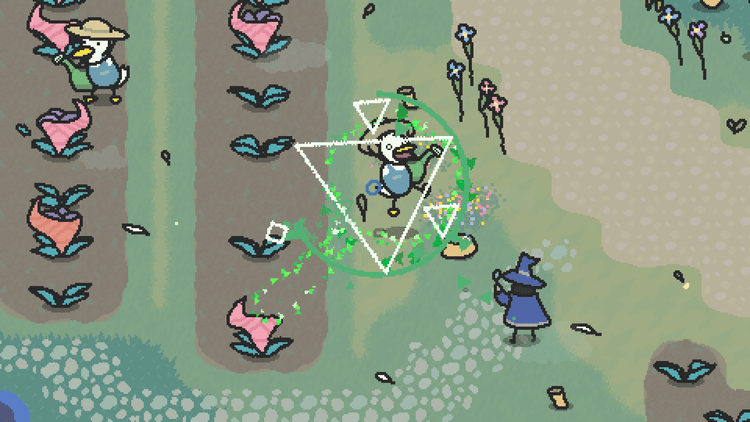
Besides a word that’s fun to say, Scrabdackle is a scribbly, hand-drawn, unexpectedly deep metroidvania. At the time of writing, Jake has only released the first act of three, but that already comes with 12 to 15 hours of gameplay. These include:
6 spells to learn,
9 bosses to challenge,
1011 regions to explore,60 unique stickers and stars to find,
90 minutes of music to nod to,
122130 notebook entries to scry,and about
70,00080,000 words to read!
The two final acts promise a similar amount of content as free updates. That would put Scrabdackle in a price-to-scope ratio similar to the likes of Hollow Knight, with both games costing around 15€ while offering dozens of hours of play. But there’s more to this comparison.
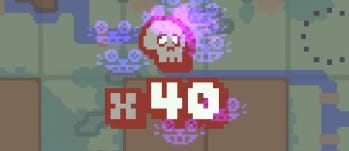
Jake names Team Cherry’s masterpiece as one of his main inspirations, and it shows. Scrabdackle looks simplistic with its scribbly artstyle and limited moveset, but that is a cute facade. This is a complex game which will humble you in its highest difficulty, all while keeping count of your deaths in each encounter as a mini-map pop-up.
You begin your journey with a single spell, Scry. It serves no purpose other than letting you scan creatures or objects to learn more about them. During the first few minutes of your foray into the wilderness, you’ll encounter your second spell, the Strata Blast. Simply press left click to throw a bundle of geometric shapes with a wave of your wand. This is your basic attack, and your first Primary spell.
This category of spell is your main combat arsenal. Scry is a Tertiary spell, a category which encompasses situational magic. A few hours into your journey, you’ll be able to invest some Magic Bits— the only currency you own— to buy a pair of Dashing Boots, allowing you to dash. This is considered a Secondary Spell, a category reserved for mobility-focused abilities.
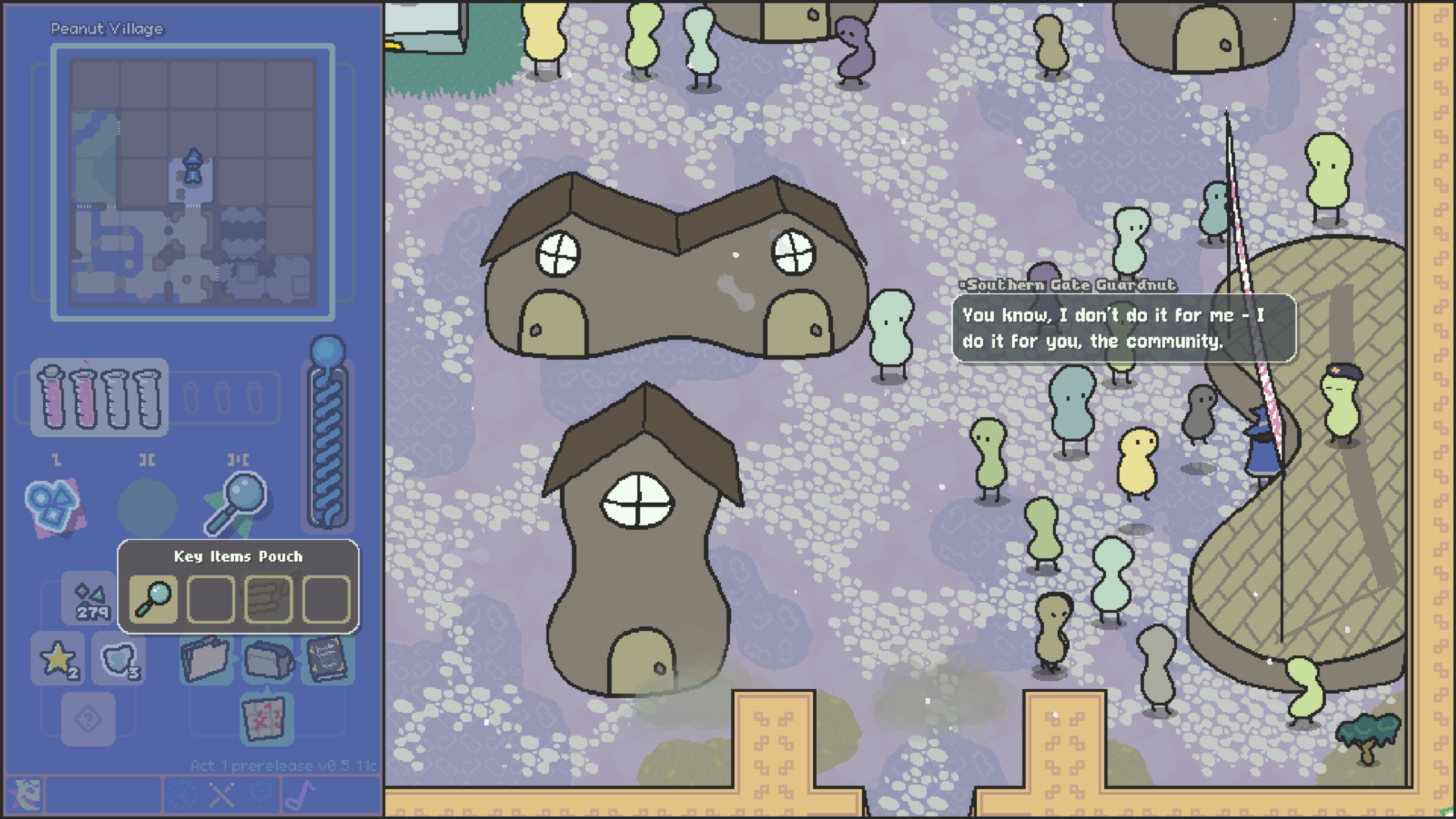
For the majority of your time in Scrabdackle’s first act, you are limited to the following actions:
Left-click to attack enemies or objects with Strata Blast.
Hold Right-Click to Scry, scanning enemies or objects for information.
Press Spacebar to Dash. Dashing does not have invincibility frames.
WASD to walk.
Despite featuring so few mechanical tools, Scrabdackle uses these four simple ingredients to cook a cake that is packed with flavor and, crucially, variety.
Although it is tagged as a Soulslike on Steam, Scrabdackle shares few similarities with FromSoftware’s creations. At its heart, Jake’s passion project feels like a modernized, yet classic take on the original Metroid games, but with an isometric perspective, and with a focus on dialogue and lore that puts it closer to Hollow Knight.
Swashbuckling In Scrabdackle
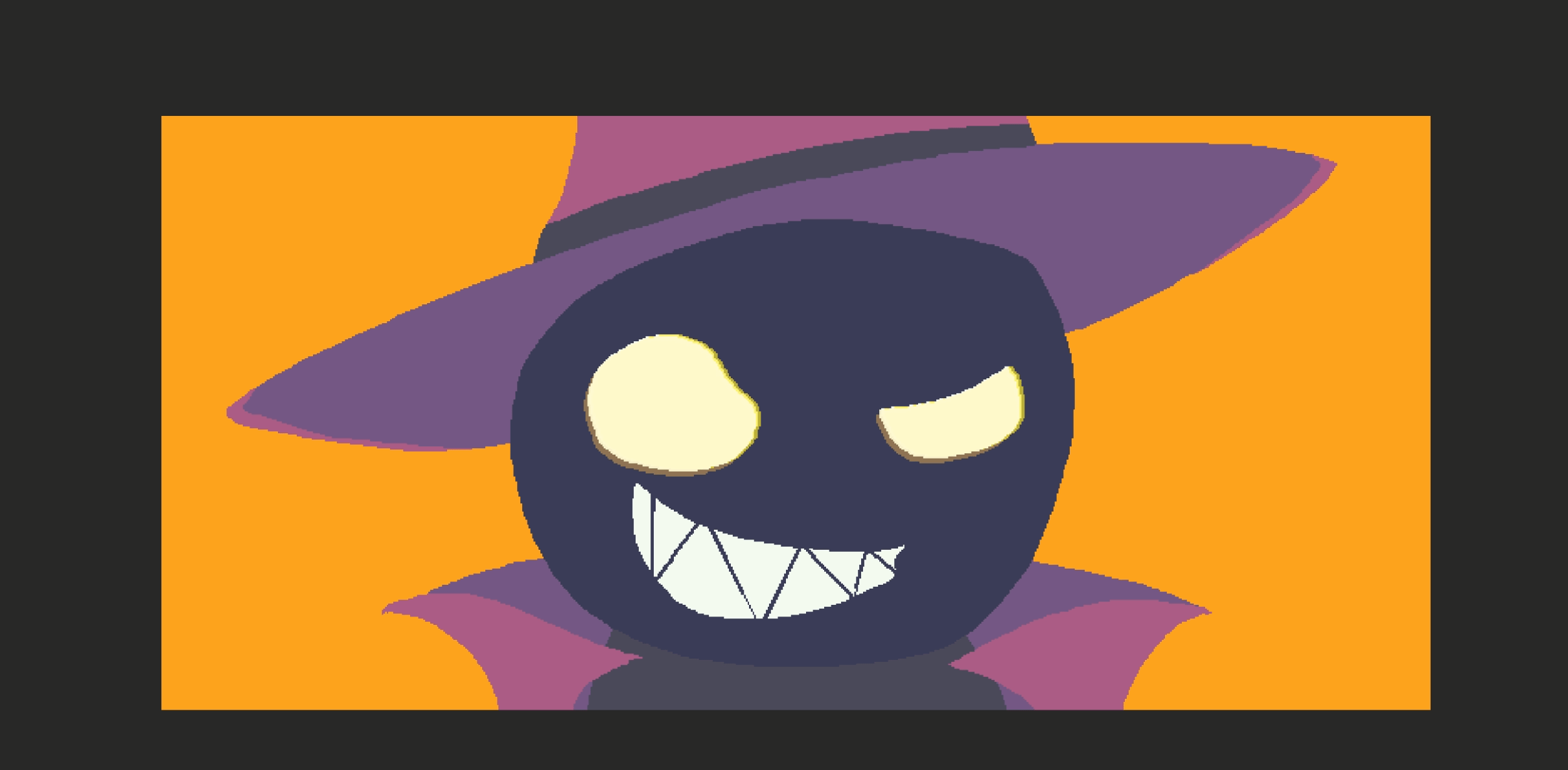
My biggest problem with Scrabdackle is with one of its best systems: the combat. Not because it is bad, but because it is so close to greatness yet keeps stumbling an inch from the finish line, which ends up being frustrating.
I played Scrabdackle in its highest difficulty, Dramaturge. It is likely that Poet, the second highest, is Jake’s intended experience. I would argue that Scrabdackle is best experienced with a considerable challenge, but the higher difficulty does exacerbate the issues I had with its combat.
As previously mentioned, Scrabdackle does a lot with few and simple ingredients, and that includes common combat encounters and bossfights. But the problem with cooking with few ingredients, is that if you overdo or underdo with any of them, it will stand out.
Scrabdackle underdoes it with the way it implements its parry system. As you progress through the game, you will unlock a second Primary Spell, Witchbrand. It is a melee attack in which Blue materializes a sword. It can destroy projectiles and parry melee enemy attacks if you attack as you’re getting hit.
In another happy coincidence, I bumped into this great piece written by Khehoon Khan for Game Developer titled “What goes into a good parry system?”. In it, Khan speaks to a few developers about what makes parrying good in video games, and there is a key detail that keeps popping up that isn’t present in Scrabdackle: risk versus reward.
Parrying in Scrabdackle is incredibly risky, especially when you are playing in a high difficulty. Missing your timing means you lose one and a half Vial Brews (out of four total), and you only recover half a Vial per boss phase. It isn’t rewarding, though. At best you get one hit more than you would if you dodged, and that’s it.
![[optimize output image]](https://substackcdn.com/image/fetch/$s_!Onmn!,f_auto,q_auto:good,fl_progressive:steep/https%3A%2F%2Fsubstack-post-media.s3.amazonaws.com%2Fpublic%2Fimages%2F6f8f4419-7a75-45a4-baae-ddb60566bd3e_800x450.gif "[optimize output image]")
In general, Scrabdackle consistently nails risky, but tends to feel lackluster on the reward. You don’t heal in the game unless you find vial blobs or a Place of Power (save-point). During boss fights, you get a vial blob per phase change (which recovers half a Vial in Dramaturge difficulty). This sounds fine on paper, and it is in most scenarios. The longer the bossfights and the tougher they are, though, the more this system crumbles.
In most games, namely in Soulslikes, you own some sort of healing item, Estus Flask, whatever it may be. You have control over using it, and the reward you get for not taking damage is that you have more uses of it left in the future. This makes it a perfect system in multi-phase boss fights that you bash your head against multiple times. The better you get at the early phases, the less potions you’ll use, the more you’ll have available for the phases you haven’t yet mastered.
In Scrabdackle, though, you get a half-vial blob regardless of your current HP. There is a boss in the game with six phases. If you get through the first three without getting a single hit, you die in four hits in the fourth phase. If you got hit twice in the first phase and didn’t get damaged in phase two and three, you still die in four hits in the fourth phase. You played better in the first occasion, but the end result is the same.
You are not rewarded for mastering an early phase in Scrabdackle, which can turn the hardest fights in the game into a chore when you’ve died a couple dozen times— I finished my Act 1 playthrough with 148 deaths. In the aforementioned six phase boss fight, I ended up breezing through the first two phases by the time I got to attempts 20-25. I beat the boss at attempt 49.
I was not being rewarded for reaching phase four without getting touched, I was simply being punished with having to do phases one-to-three over and over again, even though I had already mastered them. A game with would potions would minimise this issue by rewarding me with a surplus of healing which I didn’t use in the first three boss phases. Scrabdackle’s system does not function like that.
This can be fixed by giving the player a shield blob instead of a health blob, or even by just dropping Magic Bits upon phase changing instead of health that they don’t need. Alternatively, the healing blobs could remain indefinitely in the boss room instead of de-spawning after a few seconds, so the player could still have use for them if he made it through the first phases unscathed.
The six phase boss also exacerbated my biggest issue with Scrabdackle’s combat: randomness, the ingredient which this game overdoes the most, giving the entire cake a funny taste. The most tried-and-true method of raising complexity is stacking mechanics. You start a boss fight off with a simple attack pattern which the player has to dodge. Second phase brings in an extra attack, an AOE, for example. Third phase combines those two together, forcing the player to come up with a new solution.
The last boss you fight before rolling credits in Scrabdackle’s first act is a masterclass in mechanic stacking and was my favorite encounter in the game. Six phase boss is the one I wanted to love the most though, and it takes all my boxes: thematically interesting, extremely challenging, a marathon of a fight, forces you to use most mechanics in the game. Yet it all falls short due to an over-indexing on randomness.
In the pre-credits boss, you’re fighting three enemies, each with a different attack pattern. During the first phase, you fight one at a time. Phase two has them fighting you interspersed. Enemy 1 comes in for an attack, and retreats when enemy 2 shows up. The third and last phase throws them all at you at the same time. Perfect boss design.
Six phase boss has the makings of being the best fight in the game, but it squanders the mechanic-layering design due to how random it feels. I beat it on my 49th attempt, but that wasn’t my best one. Instead, it was an attempt in which I happened to play decently at the same time as the mechanics didn’t stack in a nearly-impossible way.
While pre-credits boss layered mechanics like clockwork every time I tried to kill it, six-phase boss seemed to do it entirely at random. I had runs in which mechanic B and C didn’t overlap once. In other attempts, mechanic B and C overlapped together with D all in the same phase, multiple times. This led to frustration, felt unfair and, worst of all, made my victory feel unearned. Partially, I beat the boss because I got lucky and, after 49 attempts, that sucks.
I might be sounding too negative here, but that is not my intention. Scrabdackle’s combat doesn’t infuriate me because it is bad, it infuriates me because it is so close to perfect. With that out of the way, let’s get into what truly makes this the best metroidvania you’ve never heard of.
Scrabdackle’s Scribbly Spell
There was one spell inside Scrabdackle which I didn’t learn in Act 1: Whimsical Sense of Wonder.
Besides Hollow Knight, Scrabdackle’s Kickstarter page mentions Link’s Awakening and An Untitled Story as two other inspirations. It shares with the 1993 and 2007 classics the sense of wonder brought by a lack of handholding that is sorely missing from games released in the past decade. While Blue is literally thrown onto the outside world through a window, you are defenestrated alongside her, on this side of the monitor. You’re both dropped into Junk Heap, given mild directions by a fishing Peanut (don’t ask), and the rest is up to you.
You’ll find NPCs willing to give tips— for a price, of course—, but if you don’t pay for these minor instances of hand-holding, the game will never volunteer its hand to you. You’ll miss entire areas and boss fights if you’re not paying attention, but if you are, you will be rewarded time and time again as you explore the whimsical scribbly world of Scrabdackle.
While there are some ingredients in excess and a lack of others, the one ingredient that Scrabdackle perfectly nails is “show, don’t tell”. There is a wonderfully illustrated journal full of lore, backstory, and information, but you can play through the entirety of Scrabdackle without ever opening it. Not only that, you can play through the majority of Scrabdackle without opening your map. You’ll still be able to follow the intriguing story and understand what is going on in the world, as long as you’re willing to pay attention.
![[optimize output image]](https://substackcdn.com/image/fetch/$s_!eXaY!,f_auto,q_auto:good,fl_progressive:steep/https%3A%2F%2Fsubstack-post-media.s3.amazonaws.com%2Fpublic%2Fimages%2F9ff7c298-a6eb-4b3d-8f18-fd8d8a36fc53_800x450.gif "[optimize output image]")
Despite the scribbly minimalistic veneer, this flawless execution makes Scrabdackle one of the most immersive open-worlds I’ve played in recent memory, and cements it as the best metroidvania you’ve never heard of. Wizard hats off to you, Jake and co., and thank you for casting Whimsical Sense Of Wonder on me.
Scrabdackle is available to purchase on Steam for 13,49€ until December 16, when it will go to its MSRP of 14,99€. For either of these two prices, it is a steal. Support indie devs and, in this case, the maddeningly ambitious project being done by mostly one maniac— Jake does most things in the game, including “world and concept, design, art and animations, music, writing, programming, UI/UX, some sound design”, but is supported by a small team.
Comments
Nothing yet. Say the first thing.
Sign in to join the conversation.