
I have more tomatoes than I know what to do with. It would be wonderful if I weren’t about to have none.
The tomatoes sit on my kitchen countertop, its dark maroon-brown wood long overdue for a new finish. Some look drawn by a happy-go-lucky cartoonist: perfect, red, and plump. Others are wonky and bulbous, shaped like flying saucers and various planets, especially the ugly ones. Each day they get riper and most mornings, I bring in more from the garden. But the thing is, all my tomato plants will be dead soon. It’s septoria leaf spot, a fungal cheetah print that destroys the leaves and starves the plant. There are maybe two or three dozen more tomatoes waiting to be picked, and then my tomato season will be over—a full two months before it should be.
Here is where I will mention the woodchuck whom I call Chuck.
Last year, Chuck only devoured plants in the Brassicaceae family: my dinosaur kale, late-season Brussels sprouts, and, occasionally, some parsley. Perhaps to freshen his breath. But this summer, he has been helping himself to the tomatoes. In fact, the other week, I watched him dart across my yard with a softball-sized tomato in his mouth. Now that my tomatoes are especially numbered, I’ve set out a steel catch-and-release trap and have been researching predator urine, which is apparently also available as “granules” in a shaker jar, like the world’s most unappealing seasoning. Chuck evaded capture all of last summer. I’d roll out of bed around 9 A.M. and hazily check the trap, only to find the melon had been eaten down to the rind with the door wide open; other mornings, the trap closed and empty. I’d imagine Chuck taunting me from the bushes: Remember when you used to spring out of bed at 6 A.M.?
You plan your garden to the best of your ability, but the garden keeps changing the rules. I’ve learned that my acidic soil and the Hudson Valley’s July heat turn any lettuce I plant bitter and inedible. After years of growing basil plants up to my hips, this year’s crop is a child bringing home a report card littered with Cs and Ds. Luckily, I have been swimming in shishito peppers, and my earliest dahlias could easily coast through life based on their looks alone.
In July, I bought a box of apricots from a nearby farm stand so charming and picturesque you’ll puke. Every time I eat one, I think of my grandparents’ backyard in Southern California, which had two trees: one apricot and one loquat. George and Terry were both from rural, freezing Canada. In 1961, they packed up their lives and children and moved to the golden land. Their backyard had a patch of grass the size of an R.V. There was a rectangular cement patio, a table with a tempered glass top, and Tropitone vinyl chairs—the kind of chairs that seemed to exist everywhere when I was a child and nowhere now. Summer days felt endless, and the air smelled of damp wood and warm asphalt. My grandmother would look out the kitchen window into the yard and wave to my brother and me. When she walked away, we went back to shoving each other below the trees.
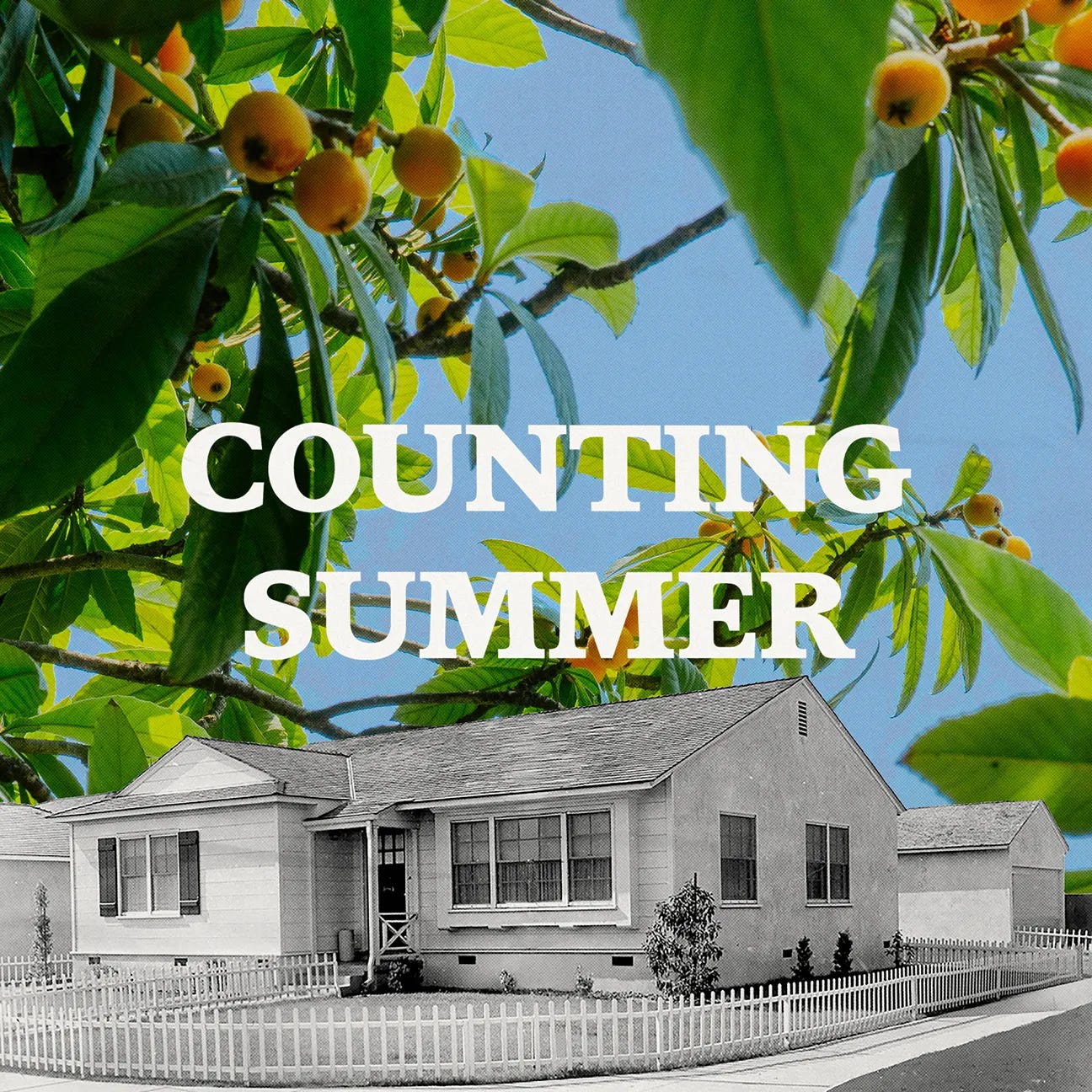
It was easy to lose count of how much fruit you ate. There seemed to be no reason to keep track. There would always be another fruit. As a kid, it felt like there were at least a thousand of them on the tree, tiny bulbs of orange flickering against the long, dark leaves. There was so much fruit that we let it fall on the ground. We’d pluck them off the lower branches and eat them in the yard, the fruit warm from the Pacific sun. My grandma, the Meryl Streep of gentle scolding, would tell us we needed to wash them first. We listened, placing them in a melamine bowl and bringing them into the kitchen, our bare feet against the dull, brown-and-yellow linoleum. Once washed, we’d return outside to the shaded patio table to eat them. Occasionally, my grandfather came outside and joined us, sitting in silence as he helped himself to a few. When there were no adults around, I’d hurl the shiny pits over the fence into the neighbor’s yard.
As I write this, there are six weeks of summer left. I know that because I counted. My grandparents have been dead for ten and sixteen years, respectively. I haven’t had a loquat in at least twenty. Hell, I’m not quite sure of the last time I visited California in the summer. (Maybe 2014?) There are at least sixty tomatoes of all shapes and sizes on my kitchen counter: Indigo Apple, Blush Tiger, Brandywine, Green Zebra. The kinds of names that sound like colors from an old Revlon catalog.
Lately, for lunch, I toast two slices of bread and take two ripe tomatoes to a box grater, extracting the sweet, pulpy flesh from their glossy skins. Mix in olive oil and salt; spoon the red goop over the toast, which has been rubbed with garlic while still warm. The other day, in a rush, I ate my lunch over the kitchen counter, accidentally dripping tomato water and guts onto the other tomatoes. When I was done, I washed my hands and face in the sink and gulped down a glass of cold water from the fridge. I only wished I had a few loquats for dessert.

Comments
Nothing yet. Say the first thing.
Sign in to join the conversation.