
Oye! It’s been a minute. Welcome back to another newsletter, where today I will tell you that you don't need to be efficient. Hear me out. In today’s workforce, we are constantly told we need to be efficient to compete and produce, and while that is true, the extent to which the rhetoric is being pushed is different. I know what you’re thinking: if I’m not the best, I will get laid off or not hired. However, that’s not the case; there is a difference between efficiency and effectiveness. Today, I want to convince you that striking a balance between the two is the valid key to building a successful and more enjoyable career.
The Modern Landscape
“I work from the moment I wake up to the moment I go to sleep. I work seven days a week. When I’m not working, I’m thinking about working... I sit through movies, but I don’t remember them because I’m thinking about work” -Jensen Huang (Nvidia CEO)
If the above quote really resonated with you, please close this article and seek professional help. You need a day off and some space to breathe. For everyone else, you can see the extremism in this quote. Efficiency as the sole goal of work is not sustainable or rational. How did we get here? Well, Capitalism, of course!
Capitalism is a system that rewards efficiency and improvements. New technology that reduces cost and increases performance is heavily invested in. This, in turn, leads to the emergence of new industries and lower costs for consumers. In the long run, the law of supply always kicks in. If there is more money to be made in a field, the producers will come. Revenue from high demand drives entrants into an industry, and technology improvements lower costs.
Employers care about efficiency for a straightforward reason: it protects their bottom line. If a company can squeeze ten widgets out of you in the time it used to take to make five, that’s twice the revenue without twice the payroll. From their perspective, efficiency equals profit. That’s why you see management fads obsessed with metrics, “time-on-task,” and key performance indicators—it’s not about making you feel good about your work, it’s about making sure every drop of labor gets wrung out like a sponge.
But here’s the tradeoff: what’s efficient for the company often feels alienating for the worker. Karl Marx called this labor alienation—the idea that workers become disconnected from the products they create, the process they follow, and even from themselves. When your value is measured solely by how quickly you can hit targets or complete tasks, your creativity, humanity, and sense of purpose are stripped away. You’re no longer building or solving—you’re just a gear in a larger machine. And gears don’t get coffee breaks.
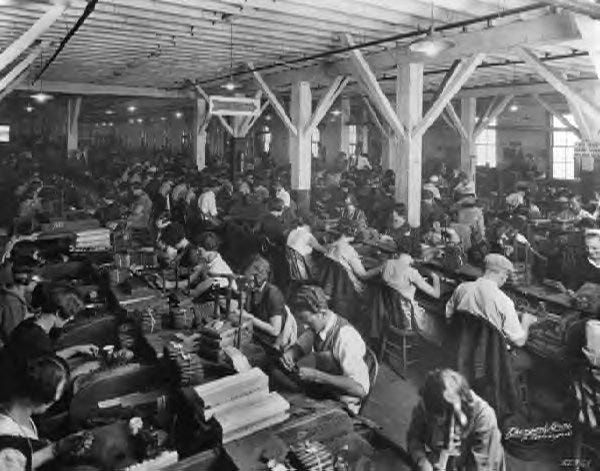
This obsession with efficiency is precisely why people brag about burnout as if it were a badge of honor. It’s how we end up with CEOs casually admitting they think about work even when they’re watching movies. That’s not productivity—that’s pathology.
And here’s where nature throws us a curveball. Photosynthesis—the process that literally sustains every breath we take—is hugely inefficient. Only about 1–2% of the sunlight plants capture is converted into usable energy. If photosynthesis had to pass a corporate efficiency review, it would be deemed a failure. Yet despite its inefficiency, it’s effective enough to keep every living thing on this planet alive.
That’s the lesson: effectiveness, not efficiency, is what actually sustains life and progress. You don’t have to work yourself to the bone to be valuable. You just have to be effective enough to create results that matter, in a way that allows you—and the system you’re part of—to keep going. That is it for now, but join me next time when I will be starting a new series looking at some of the biggest transactions in history. Until then, be effective.
“I will always choose a lazy person to do a difficult job, because a lazy person will find an easy way to do it.” — Bill Gates
No posts
Comments
Nothing yet. Say the first thing.
Sign in to join the conversation.