
Como 1907 is the most interesting business in European football. Not the biggest, not the richest - the most interesting. Bought for €850,000 in 2019, the club has just qualified for the Champions League, rejected 9-figure bids, and is building something that looks less like a football club and more like a diversified consumer business that happens to own one. We sat down with the man running it. Here are the five moments that stayed with us.
“We said, okay, let’s talk about how beautiful the place is. Let’s talk about how beautiful the people are... It’s never about football. It’s always about a sports tourism destination.”
The whole Como project flows from a basic assessment of football maths. In Serie B, TV rights paid the club €5 million a year while the average squad cost €11–15 million to run, and Como’s stadium held 5,000 people. There was no version of the traditional football club model that closed that gap. So they stopped trying to be a football club.
The origin story of this bold plan is special: a supporters’ trip from the Isle of Wight who came to Italy for an AC Milan game, found Milan were playing away, drank on the lake, wandered into a 500-person crowd at Como, and have come back every year since.
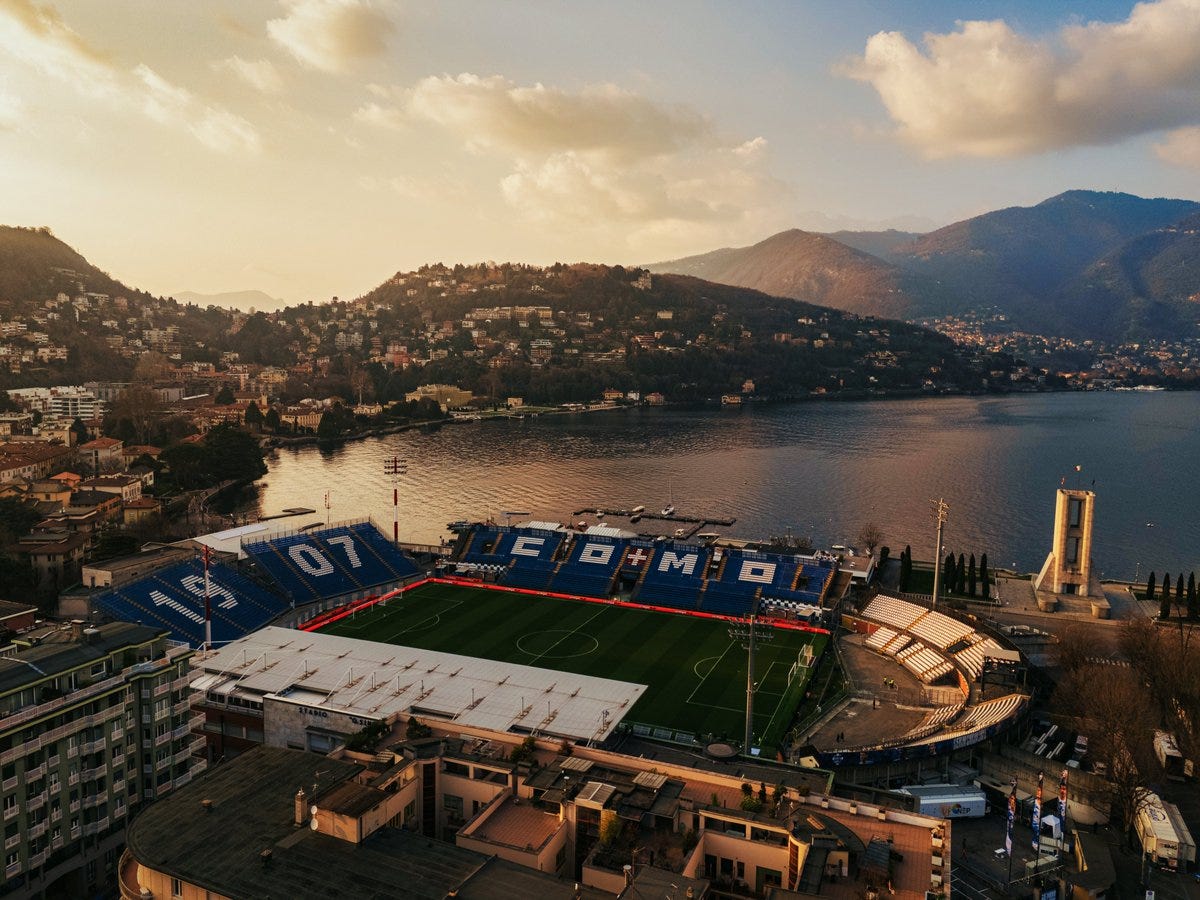
In other words, that accident became the strategy. Suwarso’s stated ambition is to be “the LA Lakers of Italian football”: entertainment first, results as a byproduct. When your product is the destination, the football only has to be worthy of it. And with Cesc Fabregas in charge, the football will likely be very pleasing…
Caveat: When your city is only 85,000 people and stadium is on the ‘small side’, you have a little more flex to test that theory without the incessant fan pressure for results above all else.
“Uber didn’t pay us a lot of money. But we’re allowed to operate and manage Uber in northern Italy... that revenue will be bigger than almost any sponsorship deals.”
Buried in the middle of this conversation is, for our money, the most important commercial idea in the episode. Como’s original Uber deal was worth less than €1 million in cash. The renewal is worth north of €10 million, for the same inventory. What changed is the structure: Como is now Uber’s operating partner in northern Italy, launching Uber boats on the lake and Uber Maseratis in the town, and taking a share of the revenue it generates.
This is the shift most rights holders still haven’t made. Traditional sponsorship sells a brand some space: a shirt, a board, a few hospitality seats. What partners increasingly want is distribution: access, customers, product integration, an operator on the ground. Como has taken that logic to its conclusion, building a ticketing and F&B platform it plans to distribute to 30 Italian clubs, and a network of 900 “touch points” (pharmacies, hotels, family run businesses) that it can hand to finance partners as ready-made acquisition channels.
Proud of this one…the club isn’t renting out a shop window anymore. It IS the shop.
“Every decision is best made together so that if it’s wrong, it’s everybody’s mistake. If it’s good, it’s everybody’s decision.”
No single football genius runs Como. Recruitment decisions pass through what Suwarso calls a senate: data is the first filter, then behavioural analysis, then a financial test, then a fit test against the playing style…and only then does a target reach Cesc Fàbregas.
Cesc can push a €3–5 million conviction bet through on instinct. He cannot push through €30 million. The data, in Suwarso’s words, is “60, 70% guidance”, and the humans argue over the rest.
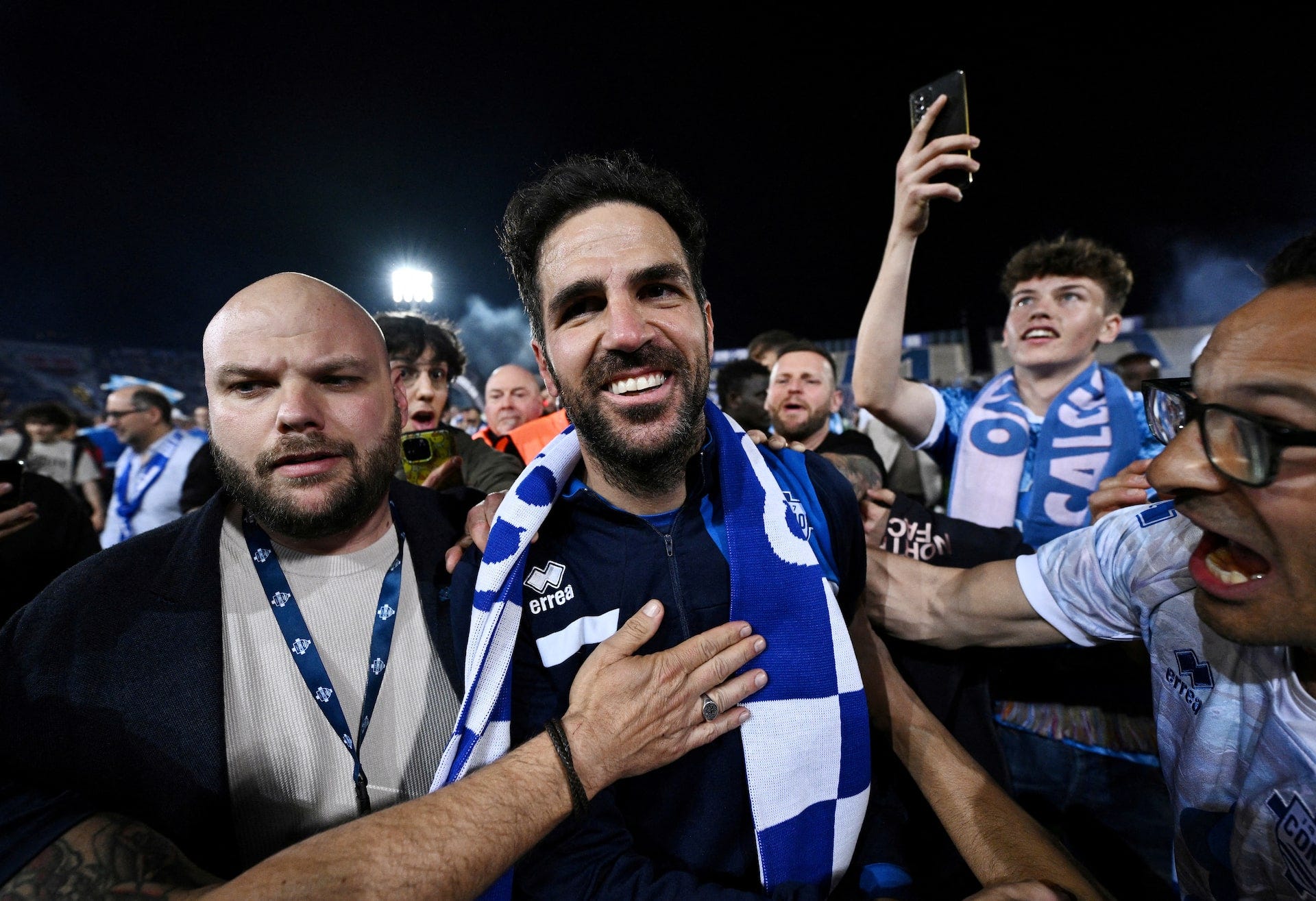
But the most quietly brilliant piece of the system is what happens before every match. Fàbregas writes a game plan and submits it to the board 24 hours before kick-off: how the team will build up, who drops to create space, what the striker’s actual job is. After the game he writes a report on how it played out, alongside an independent prediction from the data team.
Think about what that really does. Football’s most reliable failure mode is the owner watching a match with no context, deciding the striker “doesn’t score,” and reaching for the phone. By giving the owners the framework in advance(!!), Fàbregas removes the need for them to form their own judgements about things he understands far better than they do. If the plan said the striker’s job was to drag defenders out of position, nobody upstairs is asking why he didn’t score. The owners are converted from back-seat drivers into informed passengers, and the coach has, in effect, built himself a protection mechanism in a sport where ownership interference has wrecked more projects than relegation has. It costs him a written document twice a week.
“If you have to fine us, fine us. It becomes part of our obstacles that we have to overcome. It’s a regular part of business”
You will not hear another club executive talk about UEFA compliance like this. Suwarso openly concedes Como is not currently compliant with financial regulations, and argues, reasonably, that there is no precedent for judging them: the rules assess the last two to three years, which for Como covers the leap from Serie B to the Champions League. Comparing them to Juventus or Aston Villa, he says, is comparing a seed-stage startup to a growth-stage business on the same metrics.
What’s striking is the posture. No lobbying theatre, no victimhood, just a calculation that a fine is a known, bounded cost of moving at this speed, while the owners’ own discipline (break-even targeted by the end of next season, no more capital injections after that) does the real work. Whether UEFA shares his relaxed view is another matter, and this is a thread worth pulling on as the Champions League campaign unfolds. But as a statement of how a challenger club prices regulation, it’s remarkably honest.
“All I want is the lake-facing side to become the commercial side of it. The rest of it has to be something that is beneficial for the community.”
While English clubs chase billion-pound bowls, Como has filed to build a new stadium for €64 million with a capacity of just 15,000, and Suwarso is “ecstatic” with that. The logic is pure yield over volume. Two years ago the club had roughly 100 hospitality places; by renting villas behind the ground and a boat on the lake, it now has around 1,000, and ticket revenue has gone from about €5 million to €14–15 million without meaningfully adding seats. Top matchday experiences sell for €2,500. Community tickets have stayed at €20.
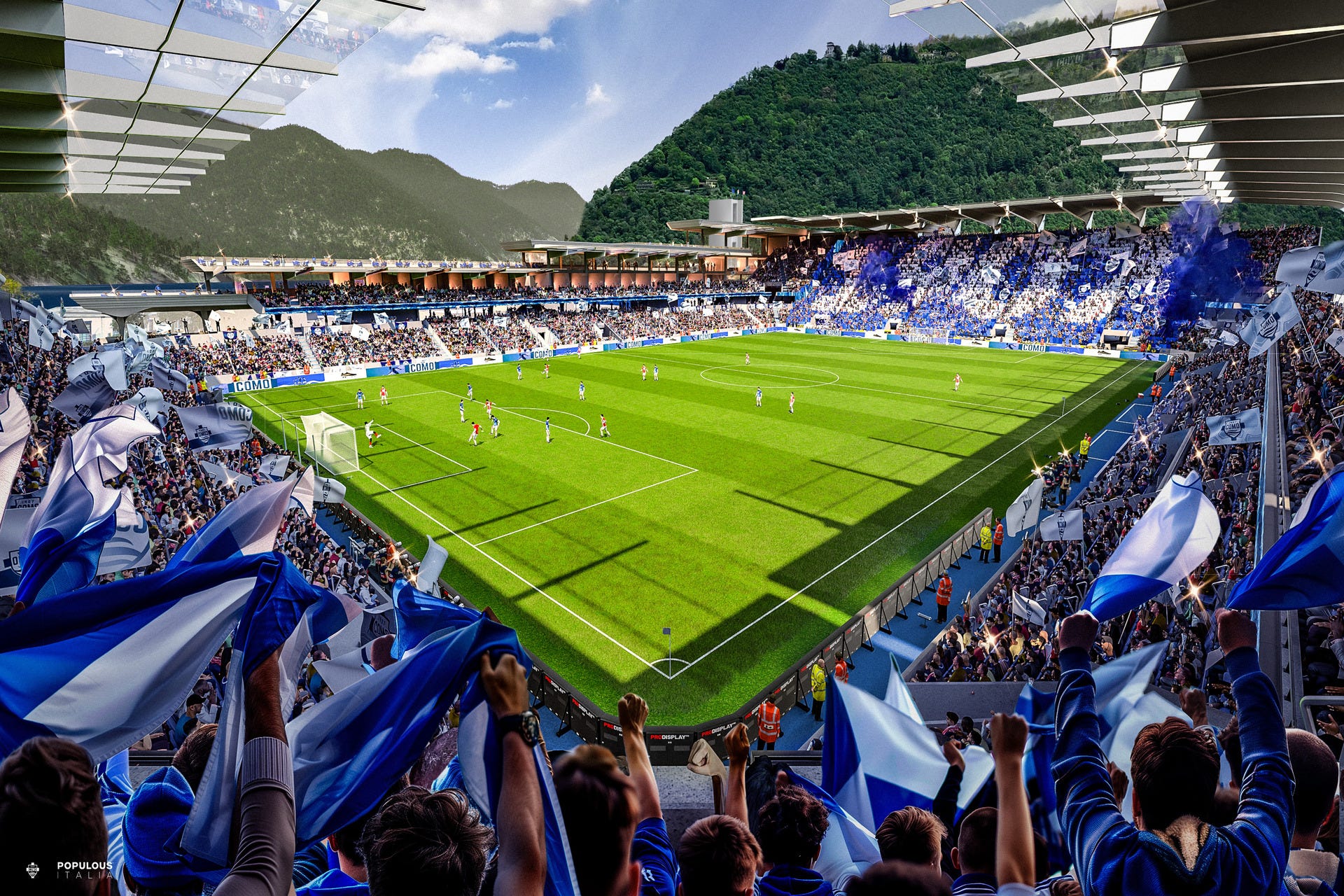
The new build extends the same philosophy: six lakefront restaurants and a rooftop bar projected to generate €25 million a year on their own, open 365 days in a town whose tourist numbers have grown from 1.9 million to 5.6 million annually. And the planning politics have been smoothed the same way everything at Como is: by making the club useful! A community health centre and subsidised rents for local businesses are built into the scheme.
The lesson for every club fighting its council over a new ground: the community doesn’t have to love football to want your stadium. It has to benefit from it.
No posts
Comments
Nothing yet. Say the first thing.
Sign in to join the conversation.