
We’re back, and we know you’ve missed us.
In this edition, you’ll hear from Colorado College’s “Reporting on Wildfires” journalism students Tia Peterson, Max Landy, Olivia Xerras, Pierce Sullivan, and Will Sylvain.
This fall, we heard from experts while on field trips across Colorado to learn about ongoing issues surrounding large destructive wildland fires. From the effectiveness of fireproof safes to a review of a new documentary, we have plenty of information to share. Buckle up.
I’m Tia Peterson, a molecular biology major and biochemistry minor, writing about the reality of fireproofness.
People who live in wildfire-prone areas might purchase “fireproof” safes to store their important documents and belongings, trusting that they will survive even the most extreme flames. However, one Colorado family returned to their charred property after an inferno to find their “fireproof” safe and its contents destroyed.
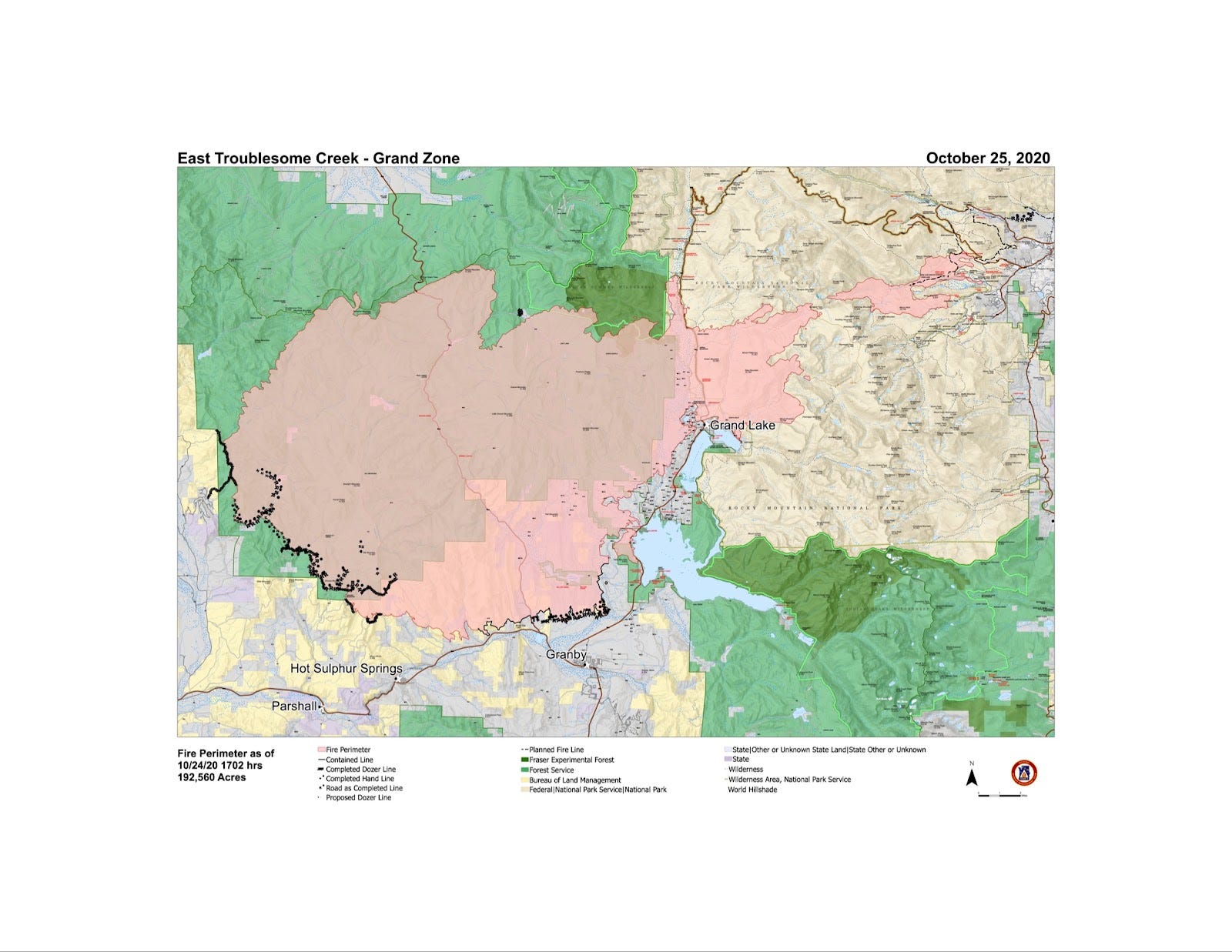
Matt Reed’s hand-built log home was reduced to ash in October 2020 when the East Troublesome fire roared across Grand County. When he fled the fire with just 14 minutes notice to evacuate, he left behind a SentrySafe, expecting that it could survive the approaching hellscape.
But, like nearly everything else he owned, it was taken by the flames.
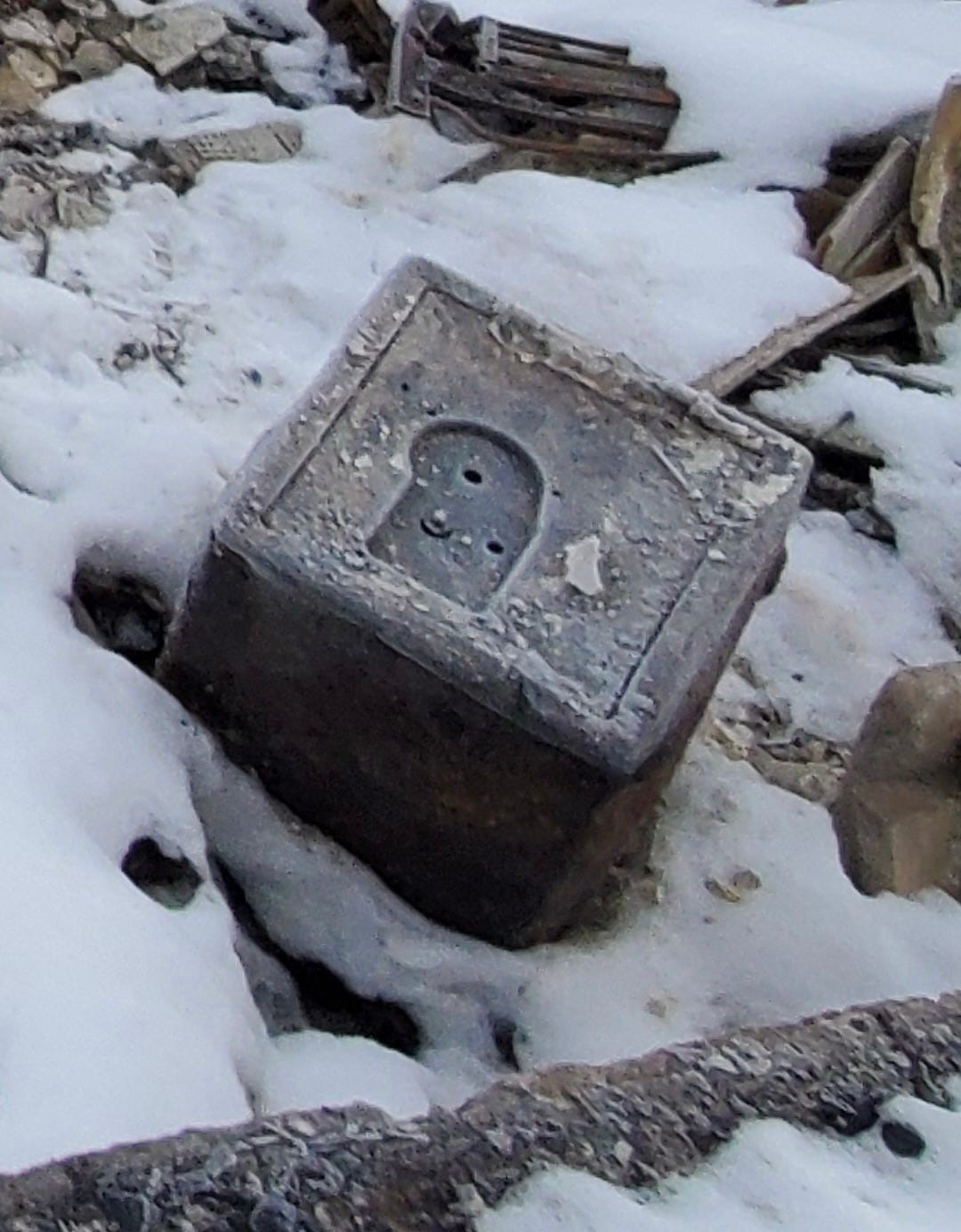
Earlier this fall, at the site of his former home, Reed recalled what was left after the burn: There was nothing salvageable in the document safe, which he said was locked and closed. He described the lockbox as “totally useless.” Any safe he buys now, he said, would simply be for theft — “not for fire protection.”
In a world of larger, hotter fires, that’s at odds with SentrySafe’s tagline: “Creating peace of mind for a lifetime.”
The website and the company’s products go back and forth from using labels such as “fireproof” and “fire-resistant.” The company logo shows a soldier protected from flames.
Reed’s neighbor, Schelly Olson, says the fire that burned Reed’s home was 3,000ºF. “My Porcelain toilets and granite countertops disintegrated,” she said. “No fire safe can survive that heat.”
“Fireproof” safes from SentrySafe are built to withstand fire somewhere between 30 minutes to two hours at up to 1400º-1850ºF, depending on the model, according to the company’s website. Glass melts at 2,600º-2,800ºF, granite melts at about 2,000ºF, and porcelain at above 2,000ºF.
When Reed returned to his home to pick through the debris on his property, he found melted glass — “the window had melted,” he said. No wonder his safe didn’t withstand the burn — the fire was at least 2,600ºF, well over the temperatures the safes were designed to withstand.
A typical wildfire burns at 1,472ºF, but the East Troublesome Fire was not typical.
With an unknown origin, presumed to be human caused, this fire burned for over a month, charring 193,812 acres, making it the second-largest fire in Colorado’s history. The flames forced thousands of people to evacuate their homes, and it ultimately killed two.
There is no doubt that we can expect to see more wildfires of this caliber. This is, of course, due in part to a changing climate; increased drought, lack of snowfall, and higher temperatures, each variable priming the land to be more susceptible to burning. Additionally, the buildup of debris on the forest floor from years of putting out fires as soon as they start gives fire more fuel; more fuel equals hotter and larger blazes. How are people expected to adapt to these new fires?
Given Reed’s experience, people facing the threat of wildfire might want to reconsider what they leave behind when they evacuate. They may also want to give more thought to what’s covered under their insurance policies.
I’m Max Landy, a design major who will be writing about information that homeowners living in the Wildland Urban Interface (WUI) should know about insurance.
As wildfires increase across the West, more people are finding it difficult to get insurance for their homes. But there are steps property owners can take to make sure they have the best policy.
After the 2018 wildfire season, the state’s worst to date at the time, 350,000 businesses and homeowners in California were unable to get insurance. The situation was particularly dire for homeowners because banks won’t offer mortgages on uninsured homes, making properties nearly impossible to sell and thus reducing their value.
As more people move to the mountains and forests to have their own bit of seclusion and privacy, they move into areas that are within the WUI but might not understand the associated risks. What can an individual do to protect their home and their family?
California’s legislature took steps to prevent people and businesses from losing their insurance, but there are steps that anyone can take to increase the odds of being assisted by insurance companies after a fire.
Some insurance companies are meeting homeowners in the middle to share the risk with them, allowing them to keep their regular rates on the condition that they take the proper precautions to defend their homes.
These are the basic recommendations being made by insurance adjusters:
Create a defensible space around the home; cut back brush and potential fuel sources within a 100 foot radius around the home.
Hardening the home, add metal roofing, close off soffits, eves, and gutters, to prevent flying embers from getting in the house and starting fires.
Document items of value on your property, so you have a list to give to your insurance company. A simple way to do this is take a video walking through your home showing anything of importance or value so that there is proof that you owned it. Keeping receipts or information about your purchases can also help with making a claim.
While homeowners need to be aware of the steps that they can take to mitigate their risk, this isn’t a perfect solution. In our changing climate there have been drastic upticks within wildfire severity, this threat means more homes will burn each year. A fact that insurers are starting to account for.
In California, a state that is often plagued by wildfires, homeowners are noticing a shift with their insurance companies. Providers are changing their coverage policies for areas that are prone to wildfires and in some cases dropping coverage altogether. This is the result of over $20 billion in claims filed after the 2017 and 2018 fire seasons, more than all of the profit that California insurers had made since 1991. At this point wildfires are becoming one of the largest threats to homes within California with over 1.2 million homes at risk of wildfire damage creating a situation where local insurers can’t take the overhead to support their customers, leaving only the largest insurance companies to support homeowners.
In an attempt to save costs, insurance companies are considering new factors when calculating rates. Part of this new algorithm includes future risk, a practice that many companies have used when insuring homes within earthquake risk areas. This policy allows them to make their own assessment about how natural disasters are going to impact communities and increase the monthly costs to account for more events in the future.
With many homes in the WUI unable to get insurance and subsequently secure mortgages, selling one's home or trying to move out has become an uphill battle resulting in people trapped in the situation of either having to pay higher premiums or being uninsured, leaving homeowners with few options except to wait for the fire.
I’m Olivia Xerras, an international political economy major and journalism minor here to talk about all things fire trucks.
Wildland firefighters have a lot of different vehicles at their disposal. Each one has specific capabilities. Understanding the difference between a Type 1 and Type 7 truck is important. I’m here to break it down for you.
When our class visited with Grand Fire Protection District Chief Brad White earlier this fall in Grand County, he explained the difference between the types.
The National Fire Protection Association (NFPA) Standard 1901 classifies firefighting vehicles by specific model and function, thus creating a universal code for firefighters to follow. When determining which trucks to send out to fires depending on severity, a classification is necessary through this label of types.
Ranging from Types 1-7, each truck has different engine capabilities, and are stocked with different levels or amounts of water, hoses, equipment, and personnel.
The lower numbers mean the most equipped or best suited for the most complex fires. While the higher types typically travel to smaller fire missions or fires in hard-to-reach places.
Training Captain Adam Gosey, based out of Grand Fire Protection District No.1, explains the Type 1 Engine best.
“By and large, they're pretty well just regarded as pavement queens,” he said. “They're not really meant to leave the streets.”
Gosey explained that the Type 1 unit may not hold the highest water per gallon out of all the types, typically an estimated capacity of 300 gallons, but does obtain the top spot for pump minimum flow (GPM) and longest water hose length. This forces the vehicle to use all of its length and size in accessory capabilities.
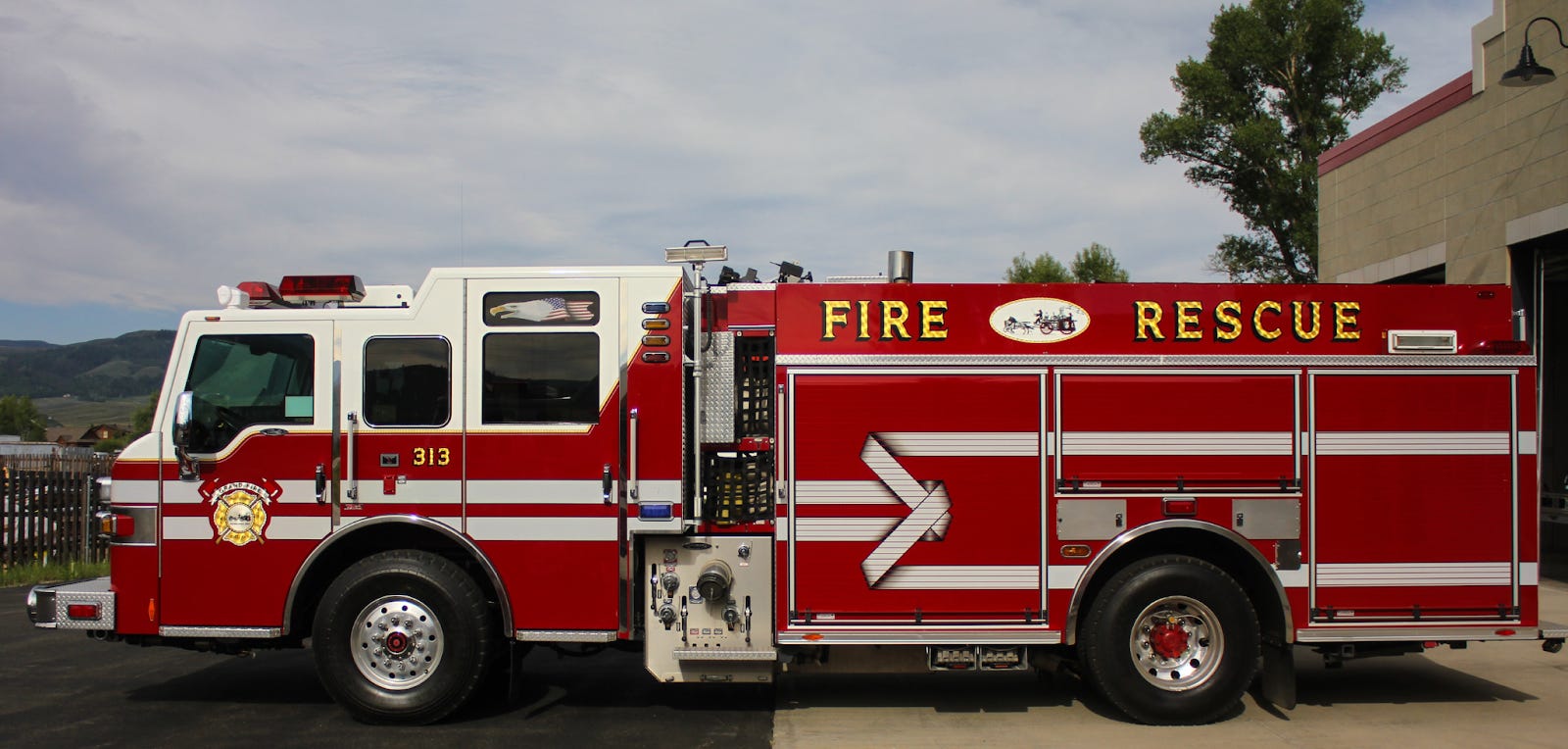
Although he did not have much to say about Type 2, he assured that similar to Type 1, this vehicle carries about the same amount of resources yet has a smaller GPM, holding about half the water capacity of Type 1 engines.
Gosey continued to speak on the size and durability of the Type 3 model.
“They're actually meant to be more maneuverable,” he said. “They typically will have four wheel drive so they'll have a higher center of gravity. You have to be trained on where your center of gravity is and how it's going to handle the curve.”
The advantage with Type 3’s seems to be the larger tank capacity, putting less pressure on fire hydrant proximity.
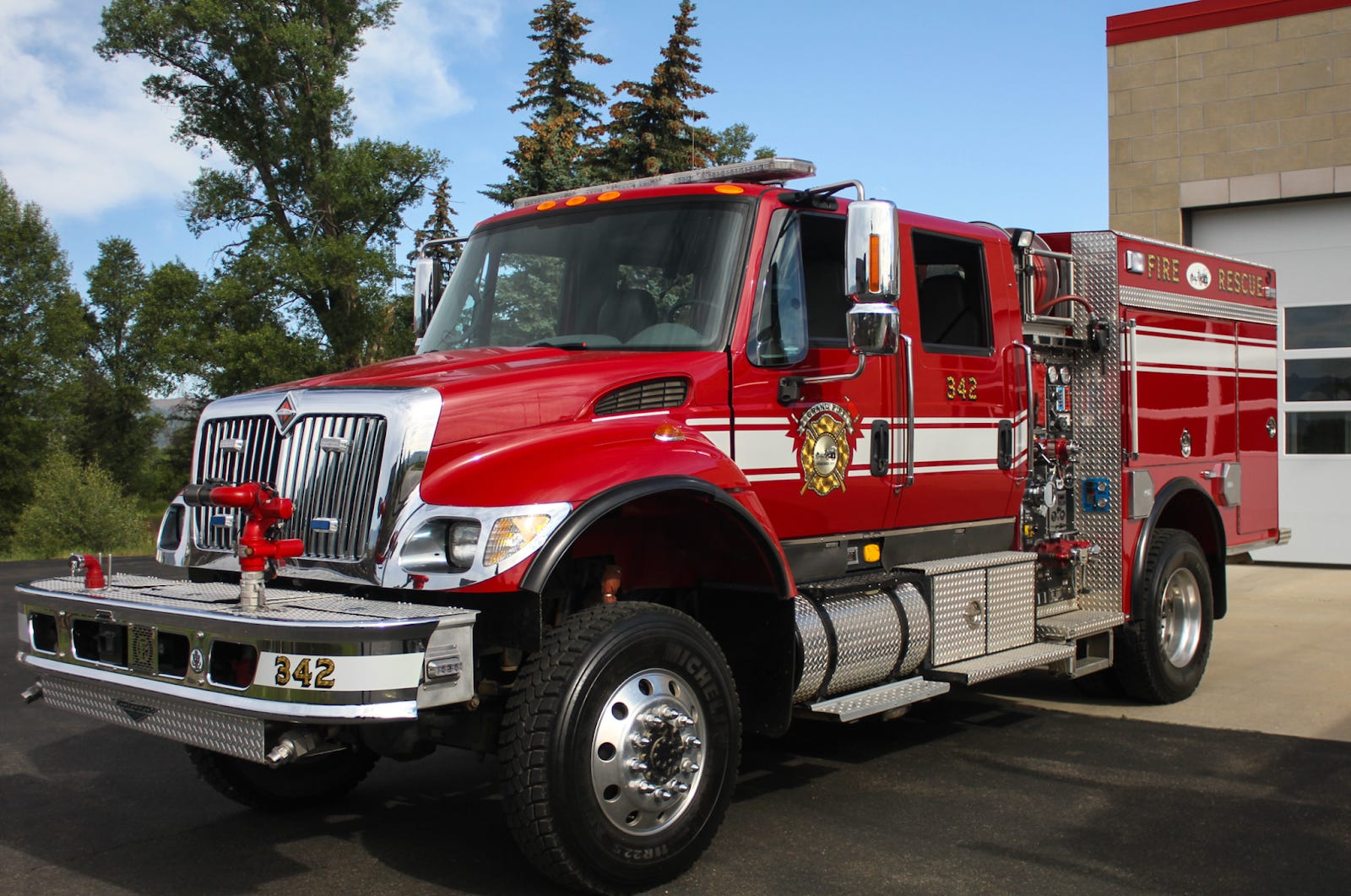
Like most stations in Colorado, Gosey’s station does not house a Type 4. He explains that despite having the largest water capacity, at about 700 gallons of water, this truck matches the same capabilities of Types 5-7.
Most Type 5, Type 6, and Type 7 models appear similar although differ greatly in tank capacity and weight. These models have the following characteristics:
Squat and appear slightly larger than the average pickup truck
Small enough to fit on narrower roads
Type 7, carrying only 50 gallons in its tank, must be able to tie to a nearby hydrant to fill up on water
Gosey explains the tank size roughly measures the same as a “large fish aquarium.”
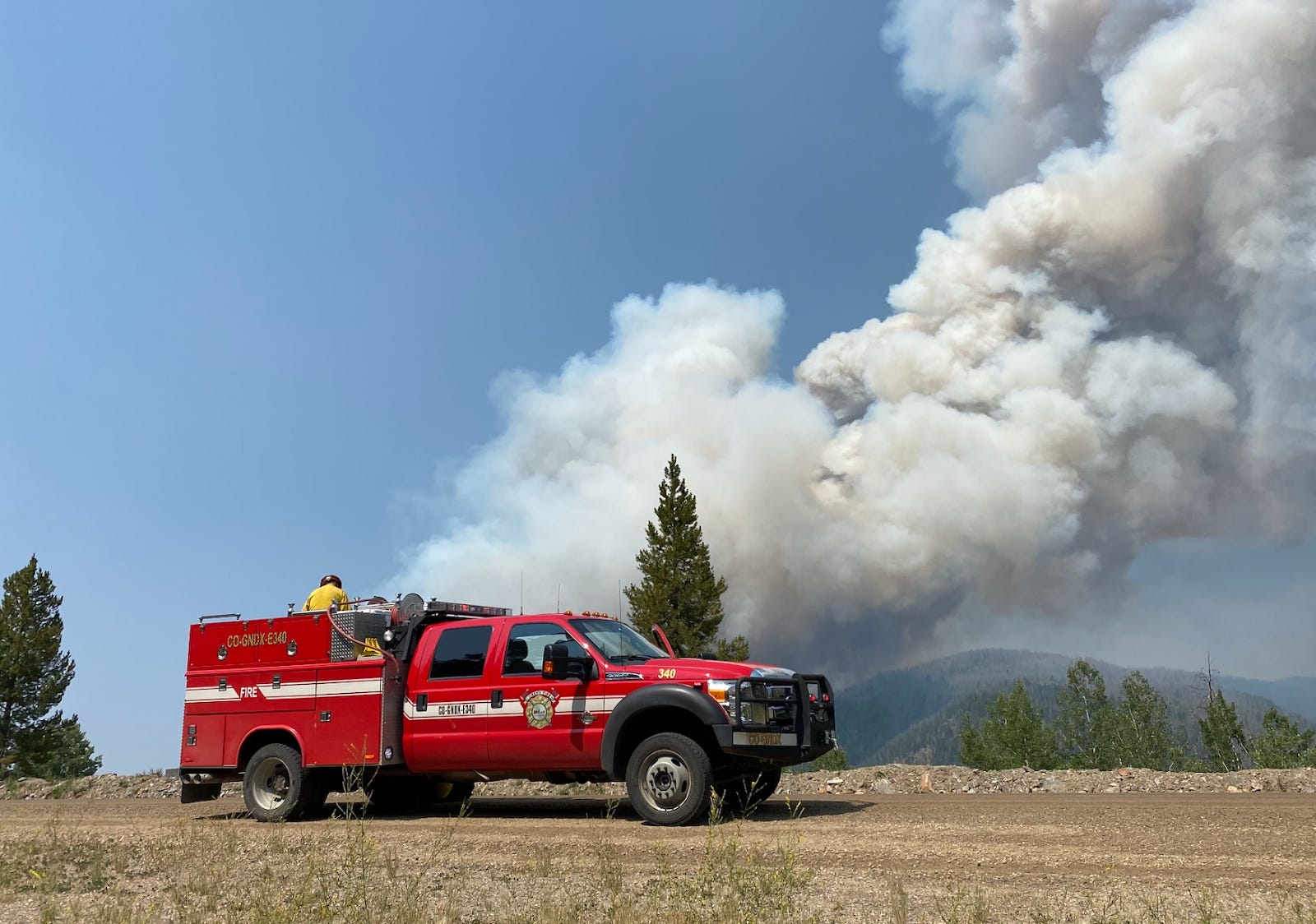
Why it’s important to know the different types: Local news organizations, when reporting on fire, often mention the type of trucks brought to the scene — but they sometimes don’t help their audience understand the different designations.
The Colorado Springs Gazette offered an example of not explaining the meaning behind the type of fire truck brought up in a story. In it, a reporter wrote about a donation of a firetruck to Nuevo Casas Grandes, Mexico, a sister city of Colorado Springs, in early 2021.
“The Colorado Springs Fire Department donated a 1997 HME Becker Type 1 fire engine to the fire department in Nuevo Casas Grandes and its surrounding communities as a way of putting to use some of the Colorado Springs' older emergency equipment,” the story reads.
El Paso County Sheriff's Wildland Fire Management also lacked any explanation when introducing a new fire truck to their office in a 2019 announcement.
“On August 15, 2019, we took delivery of our first replacement Type 6 Brush Truck,” the office wrote.
So the next time you might read or view a local news report discussing the types of fire trucks visible in your area, you now have the information to panic or smile based on which trucks might be driving towards your home.
I’m Pierce Sullivan, a physics major and journalism minor, here to discuss a new documentary “Elemental: Wildfire Reimagined.”
Wildfire coverage can be very reactive. The national discussion tends to heat up when there are active fires, and tends to fall to the backburner when fire is not in season. “Elemental: Reimagine Wildfire” seeks to be a new voice in this discussion.
Earlier this fall, our class has done a deep dive into wildfires, reading about and speaking with numerous experts on wildfires and wildfire reporting. What has become clear is that “reimagining wildfires” is exactly what the public needs.
In the class, we have heard from multiple people affected by wildfires and those who fight them. Some told us about issues they have had with news coverage. Some of those in the industry feel that coverage can be out of touch with what is happening on the ground (or in the air).
“Elemental,” which came out in 2022, approaches the topic of wildfires in a drastically different way from other media I have seen on wildfires. Wildfire seems to be hopelessly intertwined with disagreement and gridlock. As was seen by Colorado’s struggle to pass legislation on a building code in the Wildland-Urban Interface, which I have previously reported for this newsletter, there are simply so many players in the wildfire response game that a consensus is nearly impossible.
“Elemental” does not tell this story. It actively rejects it.
“We used the landscape, we used wildlife, timelapse, night lapse, and scientists doing their thing, a good score, we tried to find that authenticity, and trust that authenticity to get people interested, versus a finger pointing takedown,” said the film’s executive producer, Ralph Bloemers, in a recent phone interview.
“Elemental” also was created with the intention of letting people know that there are things they can do “to support firefighters and fire response before fire comes,” he said. Those range from ember-proofing homes on a budget or following in the footsteps of the Yurok people native to Northern California who use prescribed burns as part of their culture.
The documentary did not sensationalize wildfires. Although there were some of the disaster documentary tell-tales: shaky vertical cell phone footage with blurred edges to fit a widescreen, audio clips of news broadcasts playing over montages of destruction, and a rather robust collection of shots of cute animals frolicking in freshly burnt forests, the intent of this movie feels different.
Philanthropic sources who funded the film did not seek a return on their investment, Bloemers said. And he made clear that the endeavor was not about making money, but telling a story while showing viewers how they can be a part of that story. Bloemers said he sought to “present people with the A plus B equals C,” and let them reach their own conclusion, as opposed to telling them exactly what the problems are and how they can be solved.
When I first saw the film, a few things about it struck me as bothersome. I initially had qualms with the way the film engaged with climate change — or didn’t — and also what I thought was an omission involving the efficacy of prescribed burning to mitigate fuel source-build-up in forests.
But after watching the documentary twice more, it struck me that this film is not directed to those who are not as familiar with wildfires. This is not to say that those who are firefighters or affected by fire will not enjoy it — these groups have been highly responsive to the film, Bloemers says — but it is worth noting that “Elemental” is designed to appeal to as broad a group as possible.
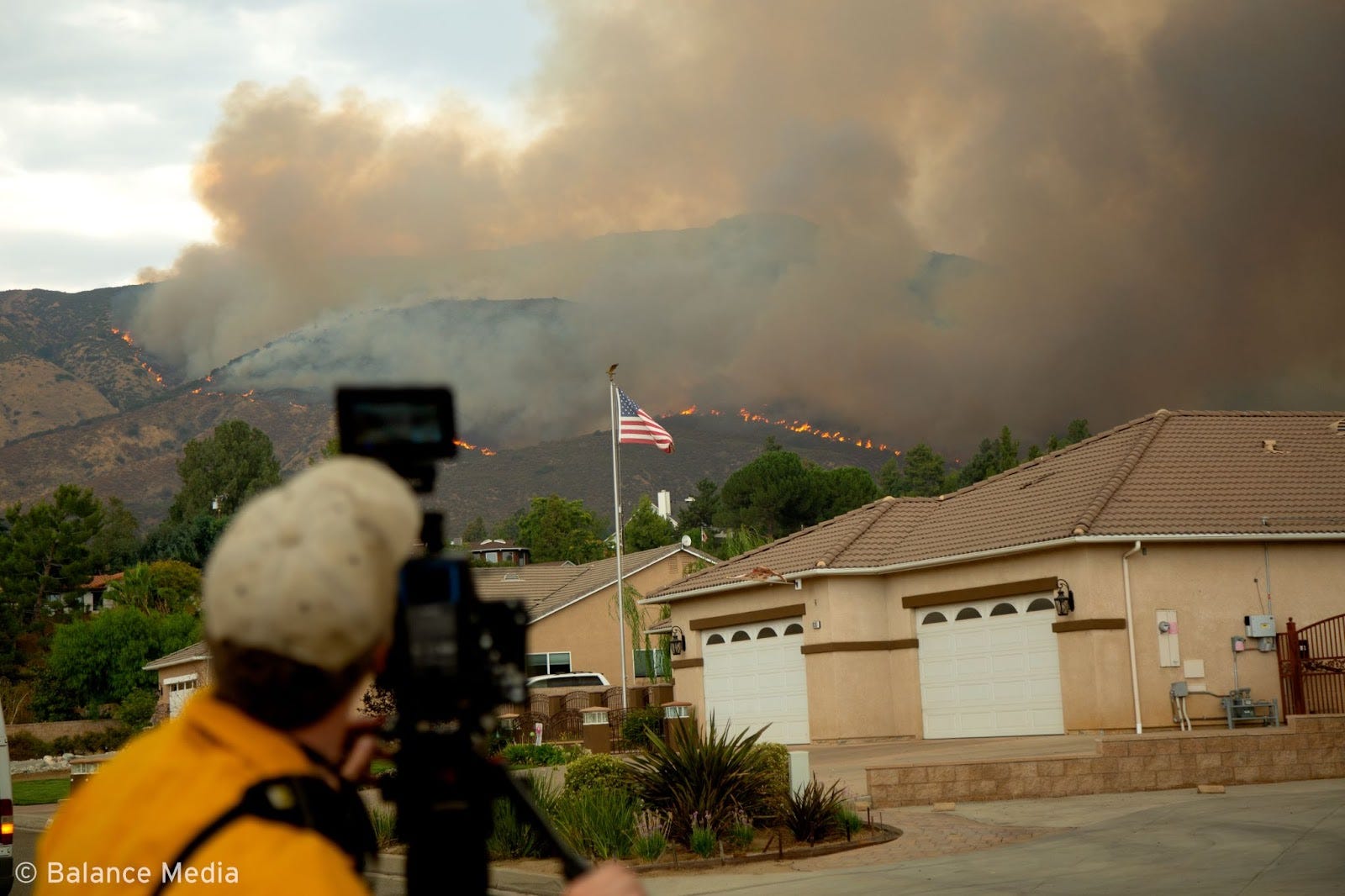
The approach “Elemental” takes to the discussion of climate change highlights this. “People are much more comfortable talking about the weather,” he said.
If the point of the film is to spread information on how the average person can aid wildfire prevention, what would they gain from alienating a vast number of more conservative viewers?
Not only this, but simply referring to climate change is not necessarily the most accurate, he said.
“It is an easy thing to do for journalists, to say ‘oh it's just climate change,’” he said about causing wildfires. “It’s kind of lazy. What is it? It’s a multi-faceted complex problem.”
For the producers of “Elemental,” the film is about what people can do to help their communities coexist with fire.
And that is exactly what I think this documentary does: Educate the average person on how complex the issue is and what small steps they can start taking to protect their homes and support fighting and mitigating fire.
“Elemental: Reimagine Wildfire” is touring the United States, with showings to Congress and the National Fire Academy. You can stream it now on Amazon Prime Video.
Come in, come in – do you read me? Tune into this frequency to learn from Will Sylvain about how technology might help firefighters effectively communicate.
One of the first things wildland firefighters are taught is to never lose the communication link with their supervisor or other crew members.
But despite that cornerstone tenet — it’s the seventh “Watchout Situation” in the wildland firefighters’ 10s and 18s, common commands and situations they must know by heart — communication miscues often lead to problems on the fire line.
“It is a thing,” said Dan Boyce, a reporter for Colorado Public Radio who has spent years covering wildfires. Communication mishaps happen on many fires, he said, but only the most impactful ones get covered by the media.
Here are some examples of high-profile wildfires in Colorado that posed challenges to communications:
Marshall Fire; Boulder County, Colorado, 2021
According to an after action report, “Communication throughout the event was difficult. Numerous agencies using multiple radio channels, and multiple phones and other communication channels allowed for information to be missed.” The Marshall Fire burned 6,026 acres and more than 1,000 buildings.
High Park Fire; Larimer County, Colorado, 2012
In a recent book titled Megafire, Jim Schanel, a former battalion chief of the Colorado Springs Fire Department, told author Michael Kodas, “Communications, command and control, interagency doctrine, standard operating procedures, I mean, pick something. We have completely different agencies with different philosophies.”
Waldo Canyon Fire; Colorado Springs, Colorado, 2012
An after action report noted issues with phone communications in high-risk areas: “The cellular and wireless connectivity in the WUI area is sporadic, based on terrain and the service provider. This lack of connectivity resulted in significant concerns at the Type 1 Incident Management Team location.” The fire went on to burn 72 square kilometers, 346 homes, and killed two people.
Lower North Fork Fire; Foxton, Colorado, 2012
“The maps we use… don’t have addresses written on them, no houses. Basically about as primitive as it gets,” said Elk Creek Fire Chief Bill McLaughlin in the book Megafire. “They’re not even as nice as the typical road map you would pick up if you went into a gas station,” he said.
From the ashes of these fires, a common thread seems to emerge: their technology was alarmingly outdated. From spotty cell coverage to gas station maps, firefighters hardly seemed prepared for a road trip, let alone a wildfire. But with some of these fires burning over a decade ago, one might wonder whether better technology might have hit the scene since.
In 2014, the Forest Service created the Center of Excellence for Advanced Technology Aerial Firefighting (CoE) to “drive technological advancements to improve firefighting practices and influence innovation across the public safety community,” according to their website.
In 2022, they unveiled something called the Wildland Fire Team Awareness Kit. “WFTAK provides up-to-the-second location tracking and mapping capabilities to firefighters, as well as cutting edge connectivity solutions and integrations of sensors and cameras for use by firefighters,” CoE said in a press release.
And WFTAK isn’t the only innovation that’s helped firefighters coordinate effectively. Below are some other examples:
Radio repeaters: in mountainous areas like Colorado, “dead zones” – places where cell and radio coverage cuts out – can make radio communication about as effective as shouting across an airport runway. Repeaters receive and transmit radio signals from one radio to another, extending the range at which the devices can communicate with each other, and allowing signals to bypass obstacles.
COWS: shorthand for cell on wheels, COWs are essentially radio repeaters, but for cellular signal. They amplify cell coverage to provide better digital modeling and communications for firefighters.
FirstNet: AT&T was selected to create a public safety network that brings all first responders onto one communication channel. FirstNet provides better connectivity in remote areas, which means more advanced data in real time.
Drones: unmanned aerial vehicles (UAVs) can reach areas that are too dangerous for ground crews, and are increasingly being used for wildfire mitigation and suppression efforts.
But even with these new technologies, wildfire response is still haunted by communication breakdowns.
“In just about every after-action review you sit in on, communications is an issue,” said Brad White, fire chief at the Grand County fire station. Especially in rural Grand County, where cell service in most of the region is spotty at best, communication lapses are just part of the job.
And when it comes to innovating, sticking with what’s familiar is often more attractive than the shiny new radio or drone tech.
“Two-way radio, for instance, is kind of a low-tech solution that is tried and true, and it keeps on working,” he said. So while it may be outdated, it’s what firefighters know, and making the switch to a new system could be more trouble than it’s worth.
Plus, new technologies often are not standardized enough to even be fully effective. “There’s a lot of new stuff being tried,” White said, “so no one’s really zeroed in on one, saying ‘hey, we all need to buy this one.”
But that doesn’t mean the fire industry is unwilling to evolve. On the contrary, innovation in firefighting is hugely important, but the road from invention to adoption can be slow because officials are hesitant to uproot familiar systems.
“New technology is great,” said Carmen Thomason, coordinator of the Wildland Fire Radio Standards and Use subcommittee from the National Wildfire Coordinating Group.
“But it’s just about having an understanding of how to use it,” she said. “That’s what I’m excited for, the learning curve of us being able to embrace new technology, understand what works, and what doesn’t work about it, and then how that fits into the wildland fire world.”
You’re reading Burning Questions, a newsletter produced out of the Colorado College Journalism Institute with support from a National Science Foundation grant. Students produced this edition in their class “Reporting on Wildfires” in the fall of 2023. Learn more about this newsletter here. 📬 Enter your email address to subscribe and get Burning Questions delivered to your inbox each time it comes out. You can reach us with questions, feedback, or tips by emailing burningquestionscc@gmail.com
No posts
Comments
Nothing yet. Say the first thing.
Sign in to join the conversation.